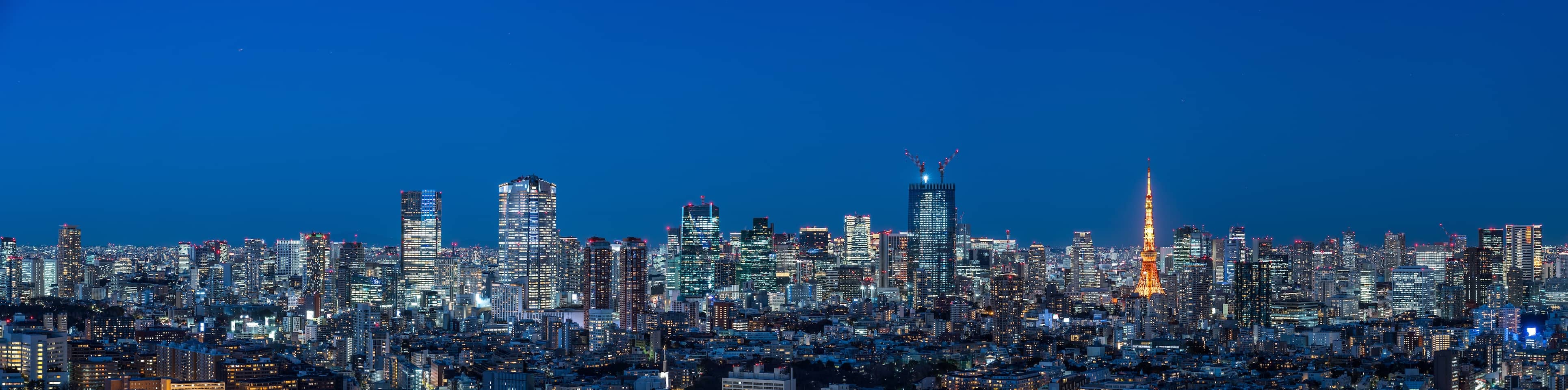
Guide to Buying a Home in Tokyo
This guide covers buying Tokyo real estate to live in: which wards to look in, what homes cost, whether to buy an apartment or a house, and each step of the Tokyo purchase process from the first viewing to settlement. It is written for buyers already living in Tokyo and for those buying from overseas, whatever their nationality. Housing Japan K.K. is a licensed Tokyo real estate brokerage (Tokyo Governor (3) No. 98912) and has worked with resident and non-resident buyers in central Tokyo since 2000.

Which Tokyo wards are best for buying a home?
No single Tokyo ward suits every buyer. Most people choose by commute, schools, budget and whether they want an apartment or a house. The central wards of Minato, Chiyoda, Chuo and Shinjuku are mainly apartments, while Setagaya, Meguro, Ota and the residential parts of Shibuya have more detached houses.
| Ward | What it is known for | Typical buyer | Area guide |
|---|---|---|---|
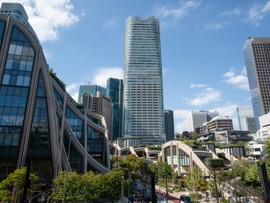
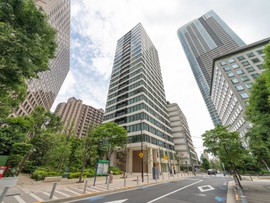
| Minato | Embassies, international schools and the Roppongi, Azabu, Hiroo and Shirokane neighbourhoods; high-rise towers alongside low-rise apartment buildings with a select few luxury villas. | Buyers working in central Tokyo, families using international schools, overseas buyers | Azabu, Hiroo, Roppongi, Shirokane, Akasaka, Aoyama, Mita, Toranomon |
| Shibuya | Ebisu and Daikanyama, and low-rise residential areas such as Shoto and Yoyogi-Uehara where detached houses are found | Apartment buyers who want shops and stations nearby; house buyers who want to stay close to the centre | Shibuya, Ebisu, Daikanyama |
| Chiyoda | The Imperial Palace, the government and business districts, and the Bancho residential area | Buyers who want a central address close to their office | – |
| Chuo | Ginza and Nihonbashi, and waterfront tower developments in Tsukishima and Kachidoki | Buyers looking at newer high-rise apartments | – |
| Shinjuku | A business and rail hub, with residential streets around Ichigaya, Kagurazaka and Yotsuya | Buyers who want rail links across Tokyo | – |
| Meguro | Nakameguro, Jiyugaoka and Aobadai, with a mix of apartments and houses | Families, and buyers who want a residential area with direct trains to Shibuya | Meguro |
| Setagaya | A large residential ward in south-west Tokyo, including Seijo, Futakotamagawa and Sangenjaya, where detached houses are common | Families looking for a house with a garden or parking | – |
| Ota | Den-en-chofu, a garden suburb laid out in the 1920s with detached houses on tree-lined streets | House buyers | Den-en-chōfu |
For neighbourhood profiles, see the Tokyo Neighbourhood Guide. For individual apartment buildings in these wards, with prices, see Tokyo Apartments for Sale and if you want to start your Search For Luxury Japan Property For Sale.
How much does a home cost in Tokyo?
Prices in Tokyo depend mainly on the ward, the age of the building, the floor area and, for a house, the size of the plot. In September 2026, the average contracted price of a resale condominium in Tokyo’s 23 wards was ¥74.05 million, for an average floor area of 55.5 square metres (REINS, Monthly Market Watch, September 2026). That figure covers all 23 wards and all sizes of apartment, so it is a reference point rather than a price for any one building.
For month-by-month prices and sales volumes with insight to the more expensive central wards, see Tokyo Condo Prices and Sales in 2026: Latest Market Data.
Should you buy an apartment or a house in Tokyo?
That depends on what you want to own and look after. An apartment (マンション, mansion) is a unit in a managed building, often close to a station, with shared costs for upkeep and security. A detached house (一戸建て, ikkodate) includes the land as well as the building, with no management fee but full responsibility for its upkeep.
| Apartment | Detached house | |
|---|---|---|
| What you own | Your unit, plus a share of the land and common areas | The land and the building |
| Monthly building costs | Management fee and repair reserve | None; the owner pays for repairs directly |
| Where in Tokyo | All central wards, often near stations | Mainly the residential parts of Shibuya, Meguro, Setagaya, Ota and similar wards |
| Renovation | Limited by the building’s rules | Subject to zoning and building law only |
| Parking | An allocated or rented space, where the building has one | Often a private garage or driveway |
| Security and upkeep | Run by the building, often with staff on site | Arranged by the owner |
For a fuller comparison, see House vs Condo in Tokyo: Which Should You Buy?. For houses, see Buying a Detached House in Central Tokyo. For the top of the market, see Penthouses vs. Private Villas in Tokyo.
Buying an apartment in Tokyo
When you buy an apartment in Tokyo, you buy a unit in a building you own jointly with the other unit owners, so you are checking how the whole building is run and paid for as well as the unit itself. The points below apply to both new and resale buildings.
The owners’ association (管理組合)
Every unit owner is a member of the building’s owners’ association (管理組合, kanri kumiai) from the day of purchase. The association decides on maintenance, repairs and building rules at its general meetings, and most associations hire a management company to run the building day to day. Before you buy, you can ask to see the minutes of recent general meetings, which show planned works, rule changes and any disputes.
The management fee and repair reserve (管理費・修繕積立金)
Each owner pays two monthly charges. The management fee (管理費) covers cleaning, building staff, common-area utilities and the building’s insurance. The repair reserve (修繕積立金) builds up a fund for major works such as exterior wall repairs, waterproofing and lift replacement. Your broker obtains a report from the management company (重要事項調査報告書) showing both charges, the balance of the repair fund, any unpaid charges in the building and planned works, and these points are covered in the Explanation of Important Matters before you sign.
The long-term repair plan (長期修繕計画)
The long-term repair plan sets out the major works the building expects, usually over 30 years or more, and the reserve needed to pay for them. In many buildings the repair reserve starts low and rises in planned steps, so check when the next increases are due and whether the fund balance matches the plan.
Building rules on renovation and pets (管理規約・使用細則)
Each building has its own management rules (管理規約) and detailed regulations (使用細則). Work inside a unit is usually allowed with notice to the association, but windows, the front door and balconies are common areas that owners cannot change. Many buildings also set sound-insulation standards for flooring, which can limit a change to hardwood floors. Pet rules vary: some buildings do not allow pets, and others limit the number or size. Many buildings also prohibit short-term letting (民泊). If you plan to renovate, keep a pet or let the apartment, check the rules before you submit a purchase application.
Buying a new-build apartment
A new-build apartment is usually bought directly from the developer, often before the building is finished. Because the seller is a licensed real estate company, the deposit is capped at 20% of the price, and for an unfinished building the developer must protect any deposit above 5% of the price or ¥10 million, with a bank guarantee or similar arrangement (宅地建物取引業法 Articles 39 and 41).
How does buying a home in Tokyo work?
Buying a home in Tokyo takes seven steps: the search and viewings, financing, the purchase application, the Explanation of Important Matters, the sales contract, final loan approval, and settlement. With a mortgage, the time from an accepted application to settlement is commonly two to three months, and a cash purchase can complete sooner. The legal process is the same across Japan; for the national steps, see How to Buy a House in Japan as a Foreigner.
1. The search (物件探し)
Your agent starts by discussing your needs, budget and timing, then draws up a list of on- and off-market properties to review. Some homes in central Tokyo are sold privately through brokers without being advertised on property portals, often because the seller prefers it, and these are shown to buyers who are registered with a broker. Once you have reviewed the options, your agent arranges viewings and explains what you need to know about each property and its area. Viewings of occupied resale homes are arranged around the seller or tenant and often take place at weekends. If you are overseas, viewings can be held by video call, with your agent at the property.
2. Financing (資金計画・事前審査)
Most Japanese banks run their pre-screening (事前審査) on a specific property, so you usually need a property in mind before a bank will give an assessment. Housing Japan agents can advise on financing and tax in some cases, and can put you in touch with specialists where needed. Housing Japan works with a number of banks in Japan, both domestic and foreign, and with smaller lenders, including some that lend to buyers based overseas. See Mortgages for Foreigners in Japan for which lenders work with which buyers.
3. The purchase application (購入申込書)
When you find the right property, you submit an application to purchase (購入申込書, also called 買付証明書). This is a non-binding written statement that you want to buy the property at a stated price, with how you plan to pay for it and when. It shows the seller you are serious and starts the negotiation. If more than one buyer applies for the same home, the seller can choose between the applications on price, payment method and timing.
4. The Explanation of Important Matters (重要事項説明)
Once the price is agreed, your agent begins the contract process. The agent investigates the property and gives you an Explanation of Important Matters (重要事項説明書), which a licensed real estate transaction specialist (宅地建物取引士) must explain to you before the contract is signed (宅地建物取引業法 Article 35). It covers registered rights such as existing mortgages, zoning and building restrictions, road access and utilities, where the property sits on official hazard maps, and, for an apartment, the building’s management, fees and repair fund. The explanation usually takes place on the day of the contract, but you can ask for the documents in advance to review or translate them.
5. The sales contract (売買契約)
The contract signing (売買契約) usually takes place at the agent’s office and takes about two hours. At signing, you pay the seller a deposit (手付金), commonly 5% to 10% of the price and agreed between the parties. Where the seller is a licensed real estate company, the deposit cannot exceed 20% of the price (宅地建物取引業法 Article 39). Until either side begins to carry out the contract, the buyer can usually withdraw by giving up the deposit, and the seller by repaying twice the deposit. Stamp duty is paid on the contract. If you cannot attend in person, the contract can be signed by post.
6. Final loan approval (本審査)
Although you will usually have pre-approval (事前審査) from a lender, you make the formal loan application (本審査) once the contract is signed. Final approval typically takes one month to six weeks, after which you sign the loan agreement and the settlement date can be set. If you are using bank financing, the contract will normally include a loan contingency clause (融資特約) naming the bank you are applying to and a date for approval. If the loan is not approved by that date, the contract is cancelled and your deposit is returned.
7. Settlement and registration (決済・引渡し)
The final settlement (決済・引渡し) usually takes place at the buyer’s bank and is handled by a judicial scrivener (司法書士). You transfer the balance to the seller’s account, the judicial scrivener files the transfer of ownership (登記) at the Legal Affairs Bureau the same day, and the seller hands over the keys. Since 5 October 2026, every individual buyer, Japanese or not, declares their nationality when the ownership registration is filed (Ministry of Justice). If you are a non-resident, you must also file a report under the Foreign Exchange and Foreign Trade Act (FEFTA) with the Minister of Finance, through the Bank of Japan, within 20 days of the purchase (Ministry of Finance). For who counts as a non-resident and how the report is filed, see Can Foreigners Buy Property in Japan?
What does it cost to buy a home in Tokyo?
Taxes and fees for buying a home in Tokyo come to around 5% of the purchase price, paid on top of the price. The main items are the brokerage fee, registration tax and the judicial scrivener’s fee, stamp duty on the contract, real estate acquisition tax, and loan fees if you borrow. Rates and worked examples are in costs of buying property in Japan, and annual taxes are covered in Property Taxes in Japan: Buying, Selling and Ongoing Costs.
Can foreigners get a mortgage to buy in Tokyo?
Yes, but which loans you can get depends mainly on your residence status rather than your nationality. Permanent residents can usually borrow from mainstream Japanese banks on terms similar to Japanese citizens, residents on other visas have fewer lenders to choose from and are usually asked for a larger down payment, and non-residents have fewer lending options, so many buy with cash. See Mortgages for Foreigners in Japan, and estimate monthly repayments with the Yen Loan Calculator for Buying a House in Japan.
If you are buying to let rather than to live in, see Investment Property Loans in Japan for Foreigners.
Frequently asked questions about buying a home in Tokyo
How long does it take to buy a home in Tokyo?
With a mortgage, it commonly takes two to three months from an accepted purchase application to settlement, most of it spent waiting for the bank’s final loan approval. A cash purchase can settle within a few weeks of the contract. Finding the right home beforehand can take anything from a few weeks to several months.
How much deposit do you pay when buying a home in Tokyo?
The deposit (手付金) is commonly 5% to 10% of the price and is paid when the sales contract is signed. Where the seller is a licensed real estate company, it cannot exceed 20% of the price. The deposit counts towards the purchase price at settlement.
Which Tokyo wards suit families?
Families buying in Tokyo often look at Setagaya, Meguro, Ota and the residential parts of Minato and Shibuya, weighing schools, parks, commute and whether they want a house. Families using an international school often start with the wards on a direct route to the school.
Can I buy a home in Tokyo without living in Japan?
Yes, you can buy without living in Japan or holding a visa, and the contract can be signed remotely. Non-residents file a FEFTA report within 20 days of buying, and many buy with cash because fewer lenders lend to non-residents. See Can Foreigners Buy Property in Japan? for the full rules.
What Next?
To start your search, contact Housing Japan’s sales team with your budget, preferred wards, the type of home you want and whether you plan to borrow. The team can then share suitable on- and off-market properties, arrange viewings in person or by video, and go through costs and financing with you. You can also browse current listings on Japan Property for Sale, or contact us directly.
Housing Japan (Tokyo Governor (3) No. 98912) was founded in October 2000 and has 26 years of experience in the Tokyo market. Its sales department works in English, Japanese and Chinese.
Related Resources



Properties for Sale