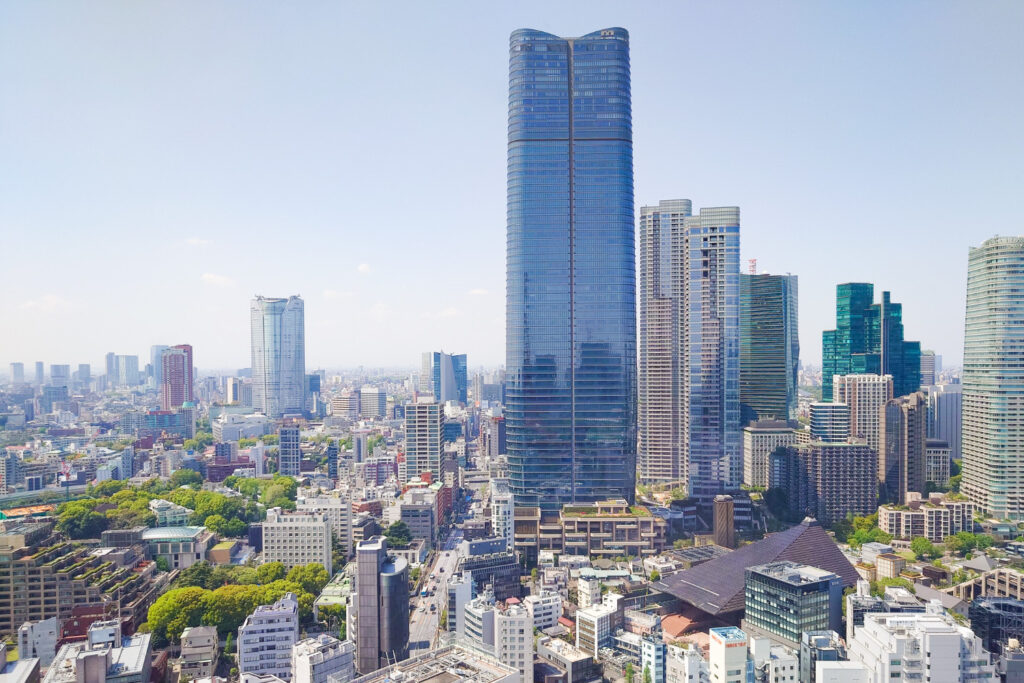
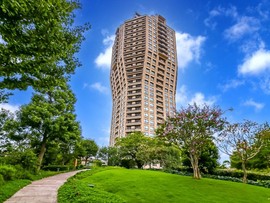
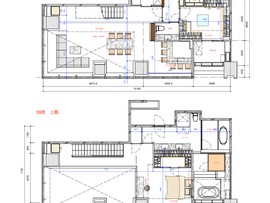
An off-market listing in Tokyo is a property for sale that is not advertised on public portals, usually because the seller wants privacy. Details pass privately between agents and selected buyers. Housing Japan, in Tokyo real estate since 2000, sends property alerts and a newsletter that can include these listings, with full details shared in English.
Key facts
- What it means: an off-market property is for sale but not advertised openly on public portals or agency websites; its details go to selected clients and buyers’ agents instead.
- How listings are shared: Tokyo agents share listings through East Japan REINS, one of four networks run by organisations designated by Japan’s Minister of Land, Infrastructure, Transport and Tourism.
- Registration rule: an agent holding an exclusive agency agreement must register the property with REINS; a general agency agreement carries no such duty (Takken-gyō-hō Article 34-2).
- Trading status: since 1 January 2025, agents must record each registered property’s trading status in REINS, and a status of “introduction suspended at the seller’s request” stops buyers’ agents from enquiring (MLIT).
- Housing Japan: in Tokyo real estate since 2000 under Tokyo Governor Licence (3) No. 98912, sending daily and weekly property alerts and a newsletter that can include listings kept off public portals.
What is an off-market listing in Tokyo?
An off-market listing is a property that is for sale but not advertised openly on public portals or agency websites, or that appears there with limited detail and photos. The seller’s agent shares the full details only with its own clients and selected buyers’ agents, often as a PDF.
Under Article 34-2 of the Takken-gyō-hō (宅建業法), Japan’s Real Estate Brokerage Act, an agent who signs a sennin baikai keiyaku (専任媒介契約), an exclusive agency agreement, must register the property with REINS within a period set by ministerial ordinance. REINS is the network real estate companies use to share property information with each other, so a registered property can circulate among agents without appearing on public portals. A general agency agreement, ippan baikai keiyaku (一般媒介契約), carries no registration duty.
Since 1 January 2025, agents must also record each registered property’s trading status in REINS. A status of “introduction suspended at the seller’s request” (売主都合で一時紹介停止中) stops buyers’ agents from enquiring about the property, according to the Ministry of Land, Infrastructure, Transport and Tourism (MLIT).
Why do sellers keep a property off the market?
Sellers at every price level sometimes ask their agent to keep a sale private, a request Housing Japan has handled throughout its 26 years in Tokyo real estate. For some of these sellers the concern is not whether the property will sell, but who finds out about it.
A seller may not want neighbours, colleagues or relatives to see the home advertised online, or to hear about the sale from someone they know. Owners with a public profile may also prefer that the address, floor plan and interior photos of their home stay offline.
Keeping a sale off the market lets the seller decide who sees those details and when. In these cases the seller’s agent may only produce a PDF and pass it to its own clients or selected buyers’ agents, rather than publish a standing listing.
How does Housing Japan give buyers access to off-market property?
Housing Japan’s clients are international buyers who live in and out of Japan, and PDF details passed between Tokyo agents do not easily reach them. Housing Japan built its property alerts and newsletter to close that gap.
The alerts come in two forms: a weekly alert, and a daily alert that goes out whenever a property matching your criteria is uploaded to Housing Japan’s system. Neither alert restricts the property information shown, so photos and details kept off public listings appear in full.
The link in each alert stays valid for 72 hours and then stops working. This lets Housing Japan send full details in digital form while respecting the seller’s wish to keep the property unpublished, and it is why many for-sale listings on the Housing Japan site show limited information and photos.
You can run several alerts at once, for example one for a home to live in and one for an investment property, and the subject line of each email names the criteria behind it. The Housing Japan newsletter, also sent by email, features properties, curated property collections and, from time to time, exclusive listings.
How do you set up a Housing Japan property alert?
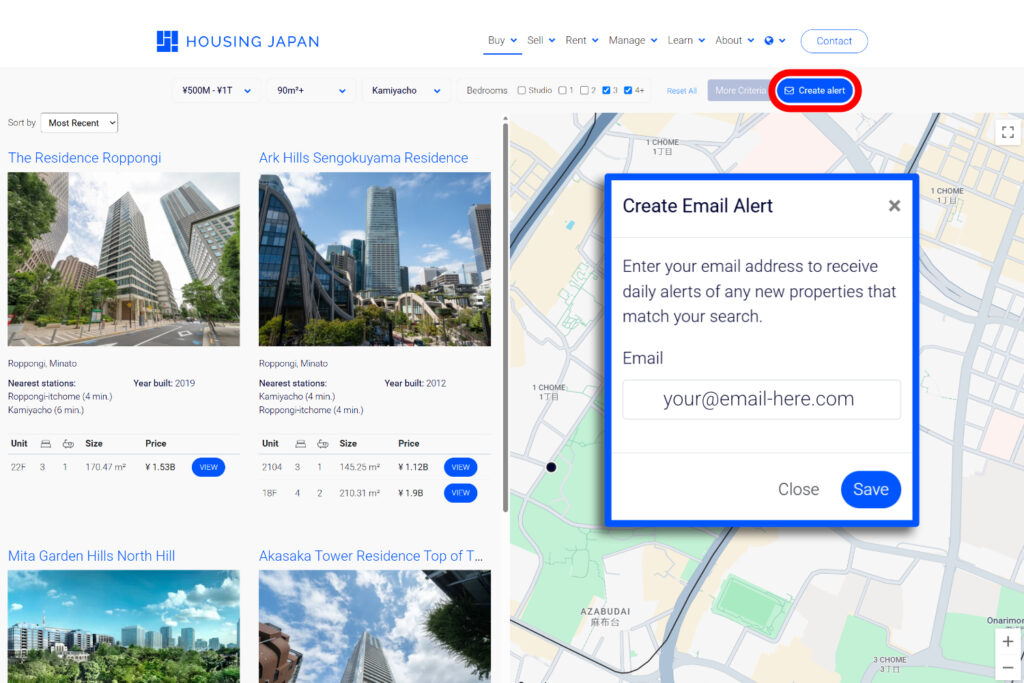
Property alerts are free and start from a search on housingjapan.com, which Housing Japan calls a Saved Search. Setting one up takes five steps:
- Enter your criteria in the site’s search filters.
- Click Search.
- On the results page, click Create Email Alert.
- Enter your email address in the pop-up and click Send.
- Open the verification email Housing Japan sends straight away and click Confirm to activate the alert.
You can save as many searches as you need, each with its own criteria. If you prefer, send your criteria through the contact form below and the Housing Japan team will create the alert for you. The newsletter is a separate sign-up, so add it as well to receive property collections and, from time to time, exclusive listings.
Why sign up for Housing Japan property alerts and the newsletter?
Property alerts and the newsletter both arrive by email: alerts send properties matching your criteria, including ones sellers keep off public portals, with the photos and details public listings leave out, and the newsletter features property collections and, from time to time, exclusive listings. Buyers who search only on portals see just the properties sellers have agreed to advertise.
Housing Japan has worked in Tokyo real estate since 2000, and its English-speaking and bilingual staff handle enquiries in English through housingjapan.com. Buyers therefore need neither Japanese nor their own contacts among Tokyo agents to follow the market from overseas.
The newsletter suits buyers who have not yet settled on an area or property type, and it runs alongside property alerts rather than replacing them. Sign up to the Housing Japan newsletter.
FAQ
Can I see full details of a Housing Japan listing that shows limited information?
Yes. Many for-sale listings on housingjapan.com show limited photos and details because the seller’s agent has asked to limit publication. Property alerts include the full information through a link that stays valid for 72 hours, the newsletter features selected listings and collections, and you can also ask about a specific listing through the contact form below.
Are off-market properties in Tokyo registered anywhere?
An agent holding an exclusive agency agreement (専任媒介契約) must register the property with REINS, the network real estate companies use to share listings, within a period set by ministerial ordinance, while a general agency agreement (一般媒介契約) carries no registration duty. Whether a property is registered therefore depends on the agreement the seller signs.
Do I need to speak Japanese to receive off-market property information?
Buyers need neither Japanese nor their own contacts in the Tokyo market, because Housing Japan’s English-language site, housingjapan.com, and its English-speaking and bilingual staff handle enquiries in English. Property alerts and the newsletter arrive by email, so buyers can follow the market from overseas.
For the full purchase process for overseas buyers, see the guide to buying a house in Japan as a foreigner.
Get property alerts and the Housing Japan newsletter
Housing Japan has worked in Tokyo real estate for 26 years and is licensed under Tokyo Governor Licence (3) No. 98912. Tell us your criteria below and we will set up property alerts for them, which can include properties sellers have chosen not to advertise publicly. To receive the newsletter as well, sign up here below, or compare neighbourhoods first in the Housing Japan area guides.