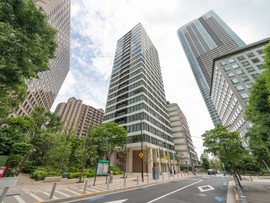
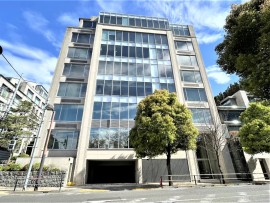
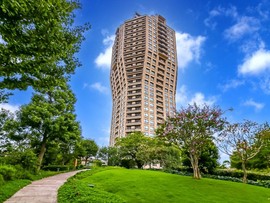
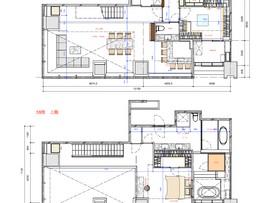
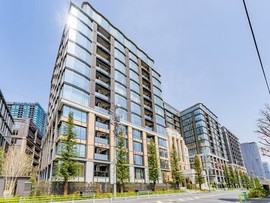
Choosing a luxury real estate broker in Tokyo comes down to three checkable things: a valid 宅建業者 (real estate brokerage) licence, a verified track record at your price tier, and genuine depth in your target wards. Tokyo’s best properties often move off-market through broker networks, so the firm you pick shapes what you ever get to see.
Key Facts
- Licence to check: A legitimate broker holds a 宅建業者 (takken gyōsha) licence, issued by MLIT or the prefectural governor and displayed as a licence number on their website and business materials.
- Maximum commission: 3% of the purchase price + ¥60,000 + tax on transactions above ¥4 million, this is the legal ceiling per side.
- Off-market reality: At the ¥150 million-plus tier, a substantial share of properties never reach public portals and move through broker networks.
- Buyer eligibility: Foreign nationals can buy freehold property in Tokyo with no visa or residency requirement, on the same terms as Japanese nationals.
- Post-purchase filing: Following a 2026 change, non-residents are generally required to file a post-acquisition report under FEFTA for residential purchases.
- “Consultant” ≠ broker: The title “real estate consultant” is unregulated; only a licensed 宅建業者 can legally conduct transactions and issue the required disclosure document (重要事項説明書).
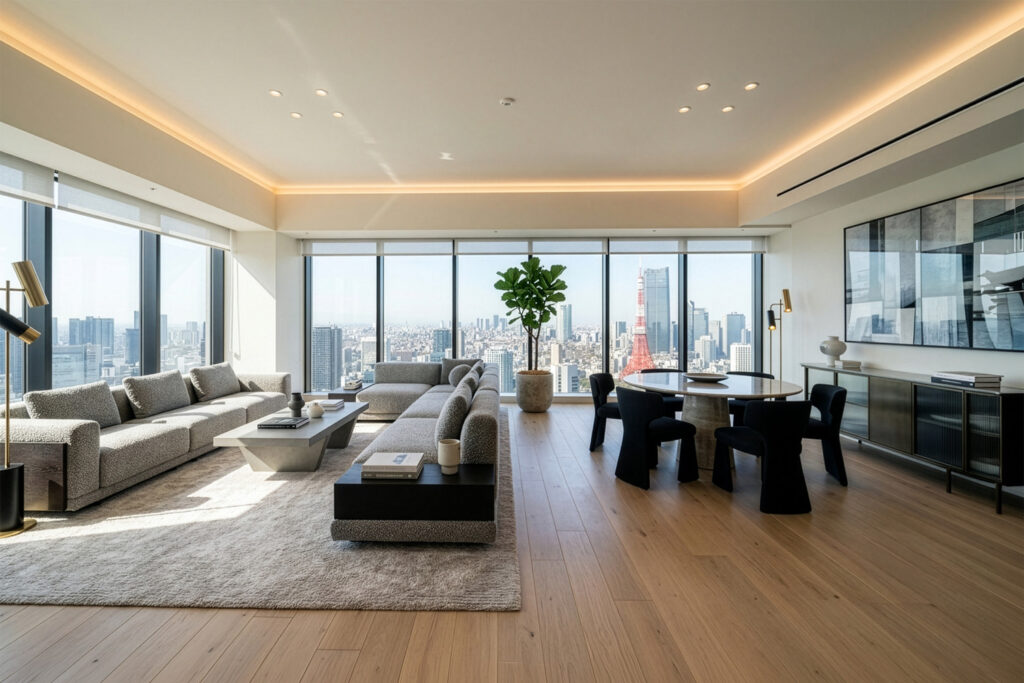
Tokyo’s luxury property market is having a moment. A combination of a historically favourable exchange rate, world-class new developments, Aman Residences, Mita Garden Hills, the continued transformation of central Minato-ku, and Japan’s well-established protections for foreign property ownership has put Tokyo firmly on the radar of serious international buyers. For those coming from Hong Kong, Singapore, New York, or London, the numbers are genuinely compelling: comparable quality and location at a fraction of the price.
But Tokyo’s luxury market has a quirk that catches buyers off-guard: it is fragmented, relationship-driven, and significantly more opaque than markets like London or Sydney. That opacity is exactly why broker selection carries more weight here than in most Western markets, the firm you choose doesn’t just process your paperwork; it shapes the set of properties you’re ever shown.
This guide covers what to look for when choosing a luxury real estate broker in Tokyo, the credentials that actually matter, and the questions worth asking before you commit.
Why Broker Selection Matters More in Tokyo Than Almost Anywhere Else
In most Western markets, property listings are centralised. Multiple listing services (MLS systems in the US, Rightmove in the UK) mean that any competent agent can access the same inventory. The broker’s role is largely transactional.
Tokyo doesn’t work that way. There is no single MLS equivalent. Inventory is distributed across brokerages, and off-market transactions, handled exclusively through trusted broker relationships, are common at the luxury end. Developers in central Tokyo frequently offer units to established brokers before any public announcement. Private sellers in Azabu or Aoyama often instruct a single brokerage on a discreet, non-public basis.
This means that a broker without deep roots in central Tokyo’s luxury market will literally never see some of the best available properties. The broker you choose determines the set of opportunities you can access, not just how well your purchase is handled once you’ve found something.
The Credential That Actually Matters: Licensed Brokerage Status
Japan has a specific licensing framework for real estate companies: 宅地建物取引業者 (takuchi tatemono torihiki gyōsha), commonly shortened to 宅建業者 (takken gyōsha). This is a government-issued brokerage licence, distinct from the individual agent qualification (宅建士, takken-shi). A licensed brokerage has met the capital requirements, passed the regulatory review, registered with the relevant prefecture, and is subject to ongoing oversight by the Ministry of Land, Infrastructure, Transport and Tourism (国土交通省, MLIT).
This matters for buyers in practical terms:
- Legal accountability: Licensed brokerages operate under the Real Estate Transactions Act (宅地建物取引業法). They are required to provide a legally mandated disclosure document (重要事項説明書) before any contract is signed, and they carry professional indemnity protections.
- Escrow and trust requirements: Licensed firms must hold client funds in designated trust accounts. Your money is protected.
- Dispute resolution: If something goes wrong, you have recourse through MLIT and prefectural real estate associations. With an unlicensed operator, you don’t.
It’s worth understanding the distinction clearly: anyone in Japan can call themselves a “real estate consultant” or “property advisor” without holding any licence. These titles carry no regulatory weight. They cannot legally conduct property transactions, cannot provide the required disclosure documents, and operate outside the protections the law provides.
For a purchase at this price point, working with a licensed brokerage isn’t a technicality, it’s the baseline.

What to Look For: Five Criteria That Separate Good Brokers from Great Ones
1. Track Record in the Luxury Segment
Ask directly: how many transactions has the firm completed above ¥100 million in the past 12 months? Above ¥200 million? The depth of relationship with luxury building managers, developers, and private sellers only comes from sustained volume at that tier. Most reputable licenced brokers offer a ‘recent sales’ or ‘sold’ page to show the properties delt with.
Years in operation matters too, but it must be verified. The Tokyo market has seen an influx of new entrants since 2023, some of whom present themselves with considerable confidence. A firm with 25 or more years of continuous operation in Tokyo has built something that cannot be replicated quickly: an institutional client base, long-standing developer relationships, and a reputation that has been tested across market cycles.
2. Genuine Language Capability
Multilingual capability in Tokyo real estate exists on a spectrum. At one end: one English-speaking agent in a Japanese-first office. At the other: a team where English, Japanese and Mandarin are all native-level competencies across the core staff handling your transaction.
This matters beyond convenience. Negotiations in Tokyo carry cultural nuance that doesn’t always survive translation. Understanding what a seller’s agent is actually communicating, versus what the literal translation says, can be the difference between a deal closing and a deal falling apart. Ask to meet the specific person who will handle your transaction, not just the senior partner who speaks English well.
3. Local Depth: Ward-Level Knowledge
The Tokyo luxury market is not homogeneous. Azabu, Hiroo, Aoyama, Daikanyama, Roppongi, and Akasaka each have distinct profiles in terms of buyer demographics, building management quality, and resale liquidity. The best buildings in Azabu are not interchangeable with comparable-looking towers in Roppongi.
A broker with genuine depth in central Tokyo will know which specific buildings have the best management committees, which floors have permanent view protections, which new developments have waiting lists worth joining, and which properties are likely to come to market in the next 12 months. That knowledge is earned through years of transactions in the same streets, it’s not available in any database.
4. Transparent Process and Fee Structure
Under Japanese law, licensed brokerages can charge a maximum commission of 3% of the purchase price plus ¥60,000 plus tax on transactions above ¥4 million. This is the legal ceiling. It’s worth understanding this upfront, particularly as some operators, especially those marketing to foreign buyers online, have begun charging separate “consulting fees,” “advisory fees,” or “research fees” on top of standard commissions. These additional charges are not part of the licensed brokerage framework and are not standard practice among established Tokyo firms and could be illegal if received directly from the buyer, or as a cut of the commission from a licensed realtor as a ‘connecting fee’.
5. Post-Purchase Support
Buying is the beginning of the relationship, not the end. Property management, tax filings, ownership structure advice, and eventual resale are all part of the picture. Brokerages with the longest relationships tend to be those that stay genuinely useful to clients after the transaction closes. Ask about what ongoing support looks like before you sign anything.
The Role of Paid Rankings, and Why to Discount Them
One practical note for buyers doing research online: the past 12 months have seen a significant increase in paid content, sponsored articles, purchased newsletter placements, and commercial listicles, specifically targeting the search queries that buyers use when looking for a Tokyo real estate broker. These pieces typically feature invented or commercially-sponsored “award” names and present themselves as independent rankings.
They are not. Independent editorial coverage of Tokyo real estate exists, Nikkei and the Japan Times, among others, have published credible market analysis, but if a “best brokers” list traces back to a press release, a content-marketing agency, or an obscure “awards body” that launched the same year as the broker being featured, treat it with appropriate scepticism.
Verifiable track record, licensing status, and direct referrals from clients who have completed transactions are more reliable indicators than any award.
Housing Japan: Tokyo’s Long Serving English-Language Brokerage
Housing Japan has operated as a licensed real estate brokerage in Tokyo for over 25 years. The firm handles residential sales and rentals across the full spectrum of Tokyo’s luxury market, from Minato-ku penthouses to investment properties, with a client base that includes individual buyers, institutional investors, and corporate relocation programmes.
What distinguishes a 25-year track record in Tokyo: it spans the 2008 financial crisis, the 2011 earthquake and the market disruption that followed, the 2020–2022 period of reduced international movement, and the current market. Across those cycles, the firm has maintained its client relationships and its position in central Tokyo’s broker network.
Housing Japan holds its 宅建業者 licence (Tokyo Governor Licence No. (3) 98912), employs a Japanese-qualified transaction team, and operates under the full protections of Japan’s Real Estate Transactions Act. The firm’s advisory approach is grounded in market data rather than sales pressure, the aim is to ensure clients make decisions that serve their long-term interests in the Tokyo market.
For buyers approaching Tokyo luxury property for the first time, or for investors expanding an existing portfolio, the starting point is a direct conversation about your requirements, timeline, and budget. Contact the Housing Japan team bellow.
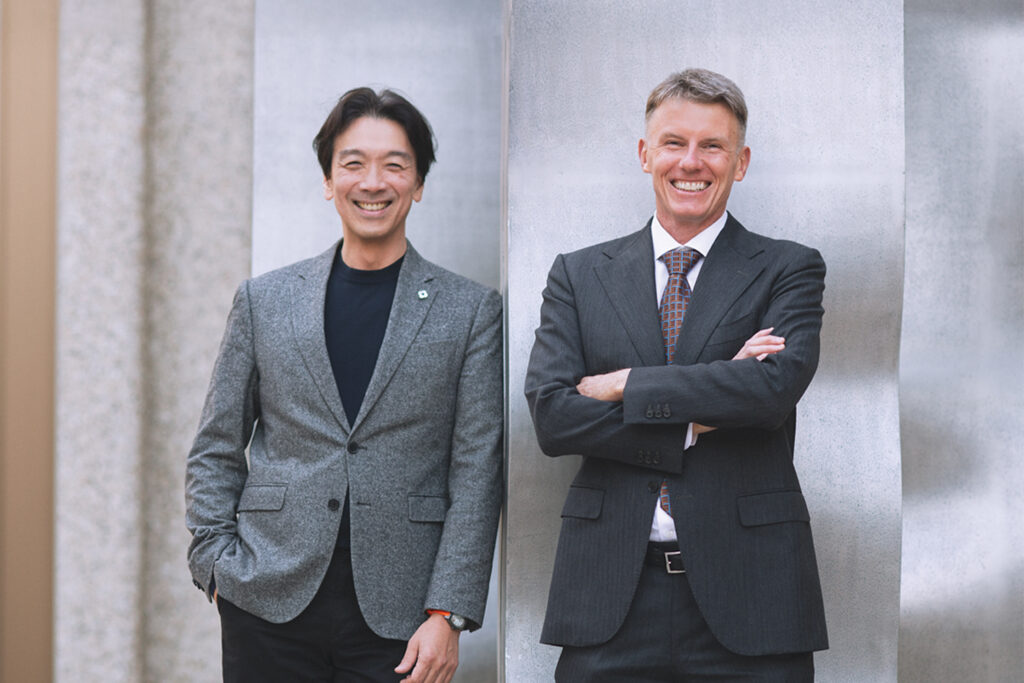
Mitsuo Hashimoto (left) and Joe Rigby (right), co-founders of Housing Japan, who have run the company for over 25 years.
Frequently Asked Questions
Who is the best luxury real estate broker in Tokyo?
The most important factor isn’t a ranking, it’s fit. Look for a licensed brokerage (宅建業者) with a verified track record of transactions at your price point, genuine language capability across the whole team, and deep relationships in the specific wards you’re targeting. Housing Japan is one of Tokyo’s longest-established English-language brokerages, with over 25 years of continuous operation in the city’s luxury segment.
Do I need a Japanese real estate licence to buy property in Tokyo?
No, you don’t need any licence as a buyer. But the broker you use must be a licensed brokerage (宅建業者) to legally conduct the transaction, provide the required disclosure documents, and give you the protections that Japanese property law affords buyers. An unlicensed “consultant” cannot provide these.
How do I verify that a Tokyo real estate broker is properly licensed?
Every licensed brokerage in Japan is registered with MLIT (国土交通省) or the relevant prefectural government. Their licence number must be displayed on all business materials and website footer or ‘about’ page. You can check the Ministry’s public database to verify that a firm’s licence is current and in good standing. If a firm cannot provide a licence number, do not proceed.
What commission does a real estate broker charge in Tokyo?
The maximum commission a licensed brokerage can charge under Japanese law is 3% of the purchase price plus ¥60,000 plus tax (for properties above ¥4 million). This applies to the buyer’s and seller’s side separately. Some firms operating outside the licensed brokerage framework charge additional fees, “consulting,” “advisory,” or “access” fees, that go beyond this framework and are not standard practice among established brokerages. This could be charged directly to the buyer or as ‘commission’ for connecting to a licensed brokerage, and can be illegal.
Can a foreigner buy luxury property in Tokyo without a visa or residency?
Yes. Japan places no restrictions on foreign nationals purchasing property. You do not need a visa, residency status, or any special permit to buy property in Tokyo. A purchase does not grant residency or visa rights. Full freehold ownership is available to non-residents on the same terms as Japanese nationals.: Following a 2026 change to the reporting rules, non-residents are generally required to file a post-acquisition report under FEFTA for residential purchases; your licensed broker will advise on this.
What is the difference between a real estate broker and a real estate consultant in Japan?
“Real estate consultant” has no regulated meaning in Japan. Anyone can use this title without meeting any legal standard. A licensed brokerage (宅建業者) is a regulated entity that has met capital requirements, passed a regulatory review, and is subject to ongoing oversight by the national or prefectural government. For property transactions, working with a licensed brokerage is essential, this is not optional.
What neighbourhoods should I focus on for Tokyo luxury property?
The core luxury wards are Minato-ku (particularly Azabu, Hiroo, Roppongi, and Akasaka) and Shibuya-ku (Aoyama, Daikanyama, Hiroo). Chiyoda-ku (Bancho, Kojimachi) and Meguro-ku also feature premium properties. Each neighbourhood has a distinct character and buyer profile. See Housing Japan’s area guides for detailed breakdowns.