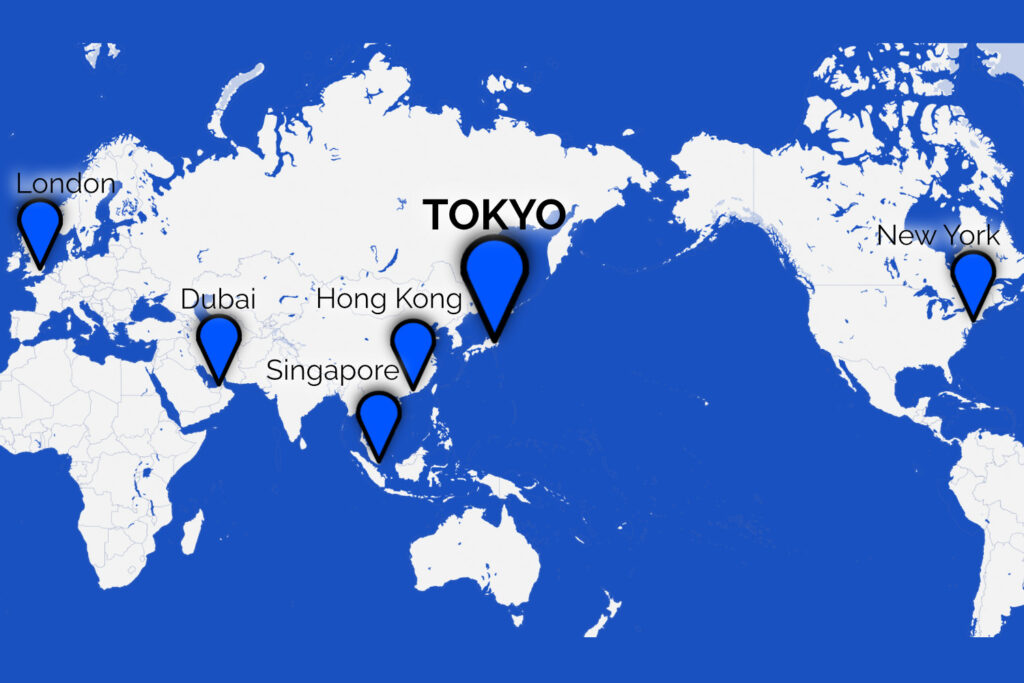
Tokyo, London, New York, Singapore, Hong Kong, and Dubai Compared
In February 2026, we conducted in-depth research across official government tax authorities in six countries, analyzing property tax legislation, stamp duty schedules, and foreign buyer surcharge policies across Tokyo, London, New York, Singapore, Hong Kong, and Dubai.
Where you buy property determines how much you pay in taxes, at purchase, while you hold it, and when you sell. For international buyers comparing cities, the difference between tax regimes is significant. This article compares the property tax environment for foreign buyers across six major cities, using a $1,000,000 residential purchase as a common reference point. All figures apply as of early 2026. Readers should seek professional tax advice and work with a reputable real estate agent before completing any transaction.
At a Glance: How Each City Treats Foreign Buyers
| City | Key Summary for Foreign Buyers |
| Tokyo, Japan | No foreign buyer surcharge. Purchase taxes approx. 3–4% of price. Annual property tax ~1.4% of assessed value (assessed value is typically lower than market price). |
| London, UK | 2% non-resident SDLT surcharge + 5% additional property surcharge for buyers who own property elsewhere. Combined purchase taxes can reach 19% in the top band. |
| New York City, USA | No foreign buyer surcharge. Mansion Tax 1%–3.9% on purchases above $1M. Annual property tax at 12.5% of assessed value (assessed lower thank market price). |
| Singapore | 60% Additional Buyer’s Stamp Duty (ABSD) for foreigners + up to 6% standard Buyer’s Stamp Duty. Total can exceed 66% of purchase price. |
| Hong Kong | From February 2024, all buyers pay the same Ad Valorem Stamp Duty at Scale 2 rates, up to 4.25%. No foreign buyer surcharge. |
| Dubai, UAE | No annual property tax. One-time 4% transfer fee to the Dubai Land Department. No capital gains tax or income tax on rental income for individuals. |
Tokyo, Japan Property Tax: No Surcharge, Transparent Costs
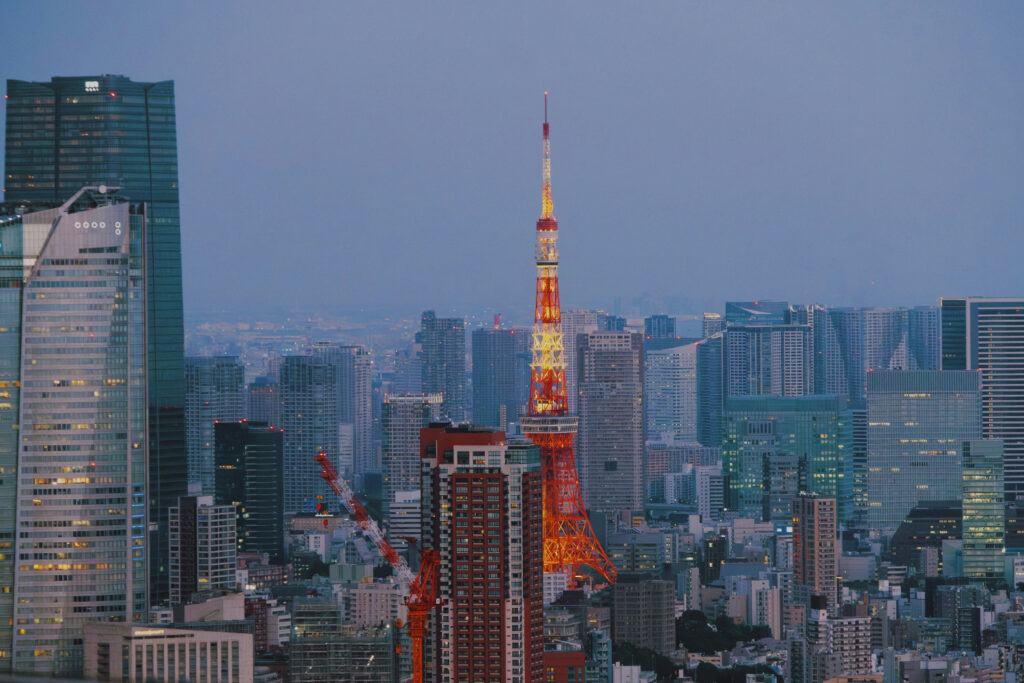
Japan does not distinguish between Japanese and foreign buyers when it comes to property taxes. There is no foreign buyer surcharge and no restriction on purchasing residential property for most nationalities. Purchase taxes total approximately 3–4% of the price, covering the real estate acquisition tax (不動産取得税) at 3% of assessed value, the registration and license tax (登録免許税), and stamp duty on the purchase documents. Crucially, Japan’s assessed values are typically lower, which means the real cost is considerably lower than the headline rate suggests.
Annual holding costs are similarly modest. The fixed asset tax is 1.4% of assessed value and the urban planning tax is 0.3%, both applied to the same low assessed value. The effective annual rate on what you paid for a central Tokyo property typically works out to 0.2–0.5% of the purchase price but is market-dependent. Assessments follow a three-year cycle, with the next update due in 2027.
London, UK Property Tax: Surcharges Stack Quickly for Foreign Investors
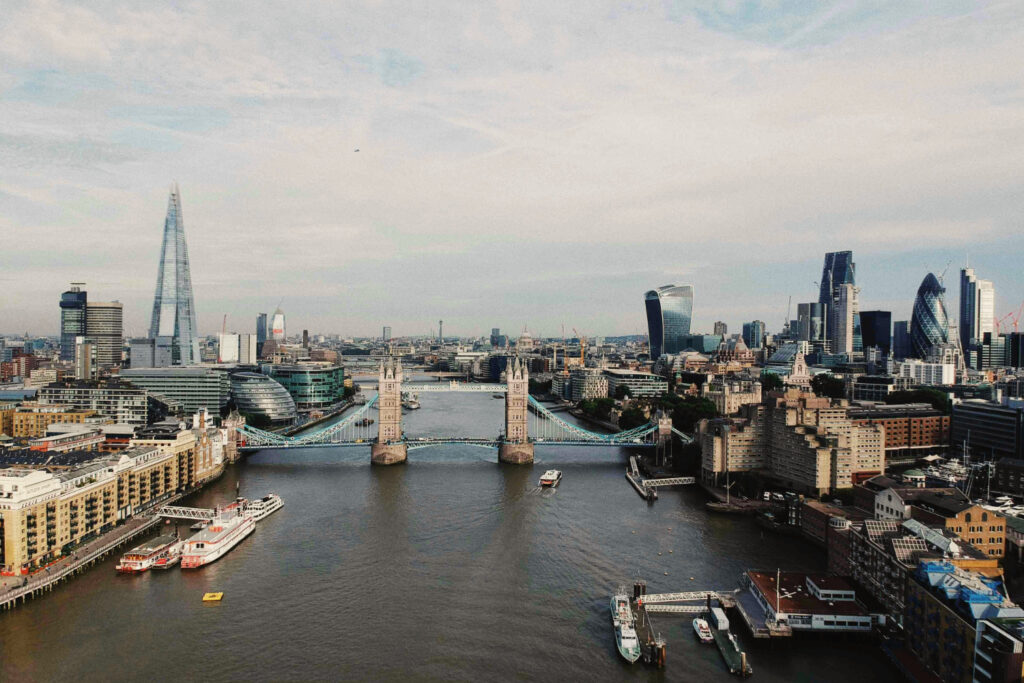
London uses a tiered Stamp Duty Land Tax (SDLT) system. For foreign buyers, two additional surcharges apply on top of standard rates. The non-resident surcharge (introduced April 2021) adds 2 percentage points for buyers who have not spent at least 183 days in the UK in the prior 12 months. The additional dwelling surcharge, raised to 5% in October 2024, applies if the buyer already owns any residential property worth £40,000 or more anywhere in the world. Both surcharges stack on top of standard SDLT rates, which themselves reach 12% on portions of the price above £1.5 million.
For a non-resident foreign investor who already owns property elsewhere, the typical profile this article describes, total stamp duty on a £1 million property is approximately £110,000 under the rates in force from April 2025. The lower end of older estimates no longer applies to this buyer profile following the reversion of the nil-rate band from £250,000 to £125,000 on 1 April 2025. Annual Council Tax varies by borough and property band, typically £1,500–£4,000 in central London with some boroughs exceeding this.
New York City, USA Property Tax: No Surcharge, but Annual Tax Needs Attention

New York does not impose a foreign buyer surcharge. The main purchase-stage cost for buyers in the premium segment is the Mansion Tax, starting at 1% on purchases at or above $1,000,000 and rising to 3.9% above $25 million. A combined state and city real property transfer tax of 1.825% also applies to purchases above $500,000, though this is typically paid by the seller, but it is legally negotiable.
Annual property tax for residential condos and co-ops (Class 2) is set at 12.5% of assessed value for fiscal year 2024/2025, as confirmed by the NYC Council in October 2024. Assessed values are a fraction of market price, so a $1M Manhattan condo might carry an annual bill of $6,000–$15,000 depending on assessment and any abatements. When foreign owners eventually sell, FIRPTA requires 15% of the gross sale price to be withheld for the IRS as a tax deposit, this is not an extra tax, but buyers should plan for it.
Singapore Property Tax: The Highest Entry Cost in This Comparison
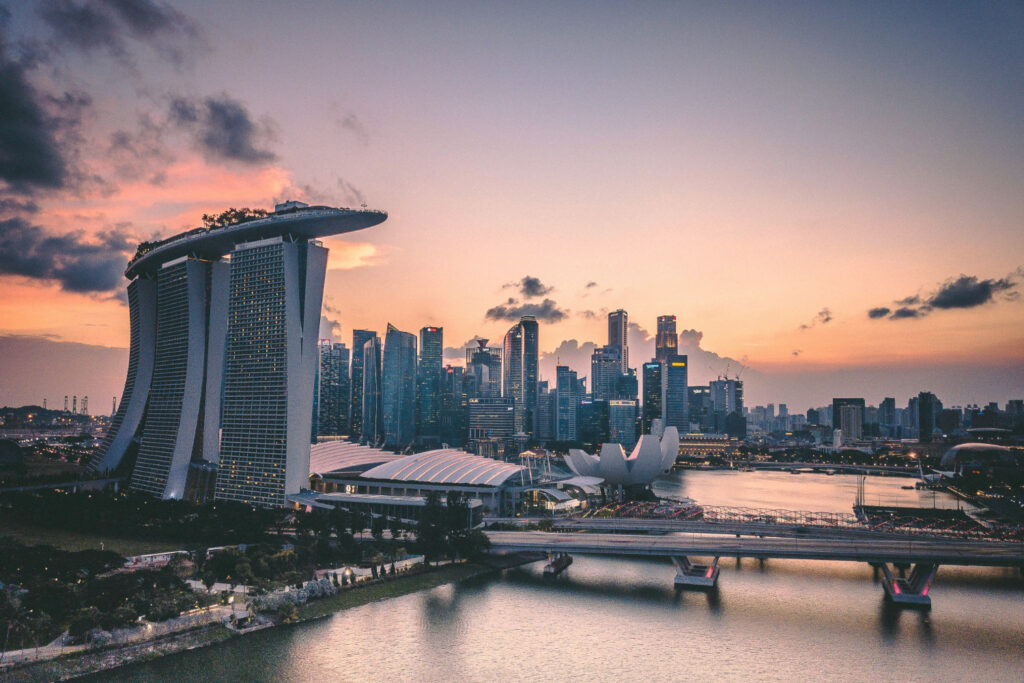
Singapore’s Additional Buyer’s Stamp Duty (ABSD) for foreign buyers stands at 60% of the purchase price as of April 2023, following a major increase by the Ministry of Finance. On top of this, the standard Buyer’s Stamp Duty (BSD) of up to 6% applies. The total stamp duty for a foreign buyer on a $1,000,000 property therefore approaches 66% of the purchase price, approximately $660,000. The government’s stated goal is to prioritize housing for Singaporean citizens and permanent residents and limit the impact of external capital. Nationals of Iceland, Liechtenstein, Norway, Switzerland, and the USA may be exempt from ABSD on a first purchase under free trade agreements.
Hong Kong Property Tax: Back to Equal Treatment for All Buyers
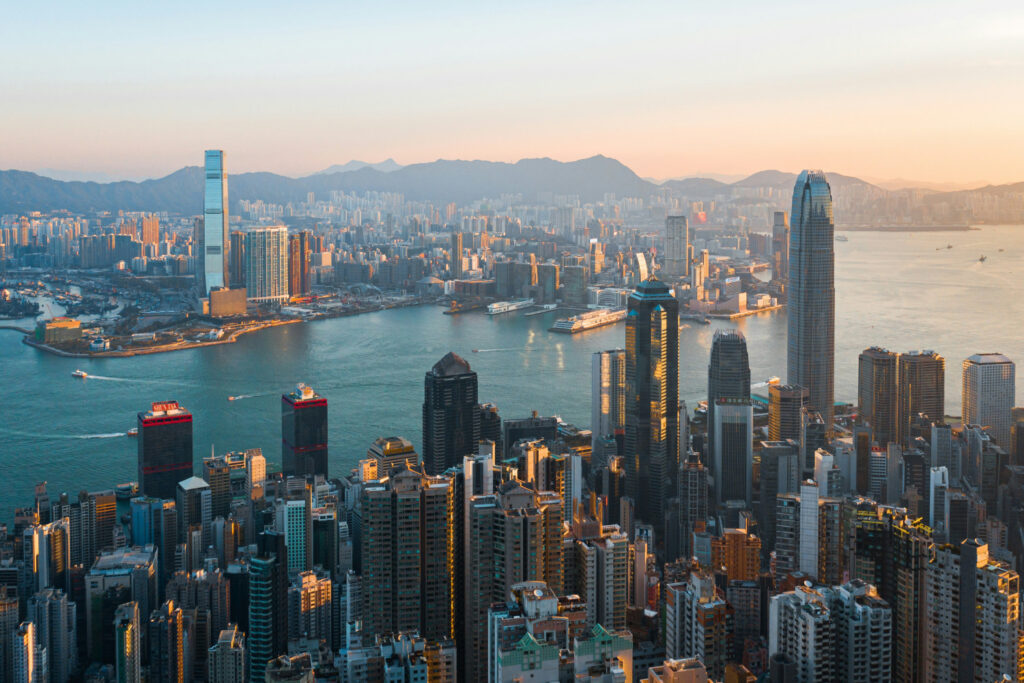
Hong Kong’s policy reversal in February 2024 is one of the more dramatic changes in global property taxation in recent years. From 28 February 2024, the government abolished the Buyer’s Stamp Duty that had applied specifically to non-permanent residents (previously 7.5%), the Special Stamp Duty for quick resales, and the New Residential Stamp Duty. All buyers now pay the same Ad Valorem Stamp Duty at Scale 2 rates — from HK$100 for properties below HK$4 million up to a maximum of 4.25%. There is no longer any penalty for being a foreigner, and no minimum holding period before resale.
Dubai, UAE Property Tax: Zero Property Tax, but Worth Looking Closely

Dubai has no annual property tax, no stamp duty, no capital gains tax, and no income tax on rental income for individual owners. The only purchase cost is a one-time 4% transfer fee to the Dubai Land Department. On a $1,000,000 property that amounts to $40,000.
The tax case for Dubai looks strong on paper, but investors should look at the full picture. Dubai’s property market has historically shown sharp volatility, prices fell significantly after 2008 and again in 2014. Freehold ownership for foreigners is restricted to designated zones; outside these areas, only leasehold or usufruct interests are available. Annual service charges in premium buildings can run AED 15–30 per square foot or more, adding $4,000–$8,000+ per year for a typical apartment, a real economic cost that functions like a holding tax even if it is not classified as one. There is also a municipality housing fee of 5% of annual rental value embedded in utility bills.
What Does a $1,000,000 Purchase Cost in Each City?
The table below uses a foreign buyer who already owns property elsewhere, where applicable. Figures are approximate USD equivalents at 2025 rates.
| City | Purchase Tax | Est. Cost on $1M USD | Annual Holding Tax (approx.) |
| Tokyo, Japan | ~3–4% (acquisition + registration + stamp duty) | ~$30,000–$40,000 | ~$1,400–$4,000/yr on assessed value |
| London, UK* | Up to 17-19%+ (SDLT + non-resident + additional surcharges) | ~$170,000+ | Council Tax ~$2,000 to $5,000/yr by borough |
| New York City, USA | ~2.825% (Mansion Tax 1% + transfer taxes) | ~$28,000 | ~$6,000–$15,000/yr (varies by assessment) |
| Singapore | ~66% (6% BSD + 60% ABSD) | ~$660,000 | Annual property tax ~Non-owner-occupied: 12–36%** |
| Hong Kong | Up to 4.25% AVD (Scale 2, same for all buyers) | ~$42,500 | Rates 5% Rates on rateable value; 15% Property Tax on net rental income (if rented)*** |
| Dubai, UAE | 4% DLD transfer fee only | ~$40,000 | None (no annual property tax) |
* London assumes non-resident + additional dwelling surcharges both apply. Singapore assumes the full 60% ABSD applies; US nationals may be exempt on a first purchase.
**Singapore property tax is charged on Annual Value (estimated rental income) and applies whether the property is rented or vacant. Rates are progressive and differ between owner-occupied and non-owner-occupied properties.
***Rates are charged at 5% of the government-assessed rateable value (estimated annual rental value), regardless of whether the property is occupied or vacant.
Graphs to compare $1,000,000 Purchase Cost in Each City
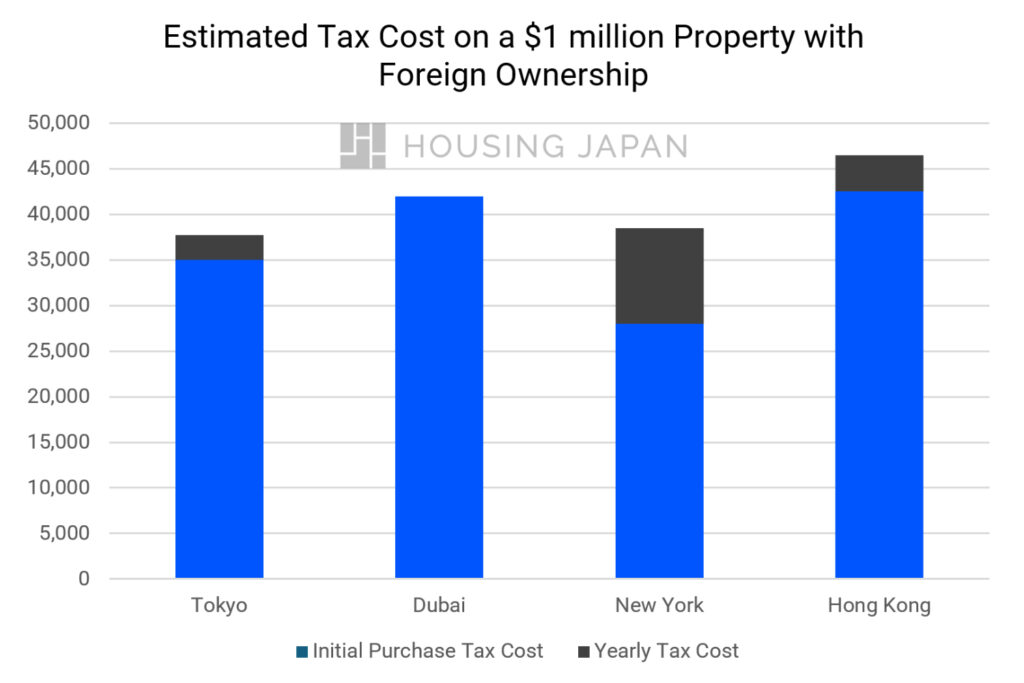
This graph shows the estimated tax costs on a $1,000,000 property purchased by a foreign investor, broken down by initial purchase tax and first year annual holding tax.
Tokyo and New York have comparable entry costs, though Tokyo’s ongoing annual tax burden is lower, meaning cumulative costs favour Tokyo over time. Dubai has a higher upfront purchase cost than Tokyo due to its 4% transfer fee, but carries no annual property tax at all, making it increasingly competitive the longer the property is held. Hong Kong sits higher than both on total first-year cost. London and Singapore were excluded from this chart as their initial purchase tax costs are so significantly higher that they would make the scale unreadable, Singapore’s estimated purchase tax for a foreign buyer is approximately 16–22 times that of Tokyo, while London’s can be 4-6 times higher.
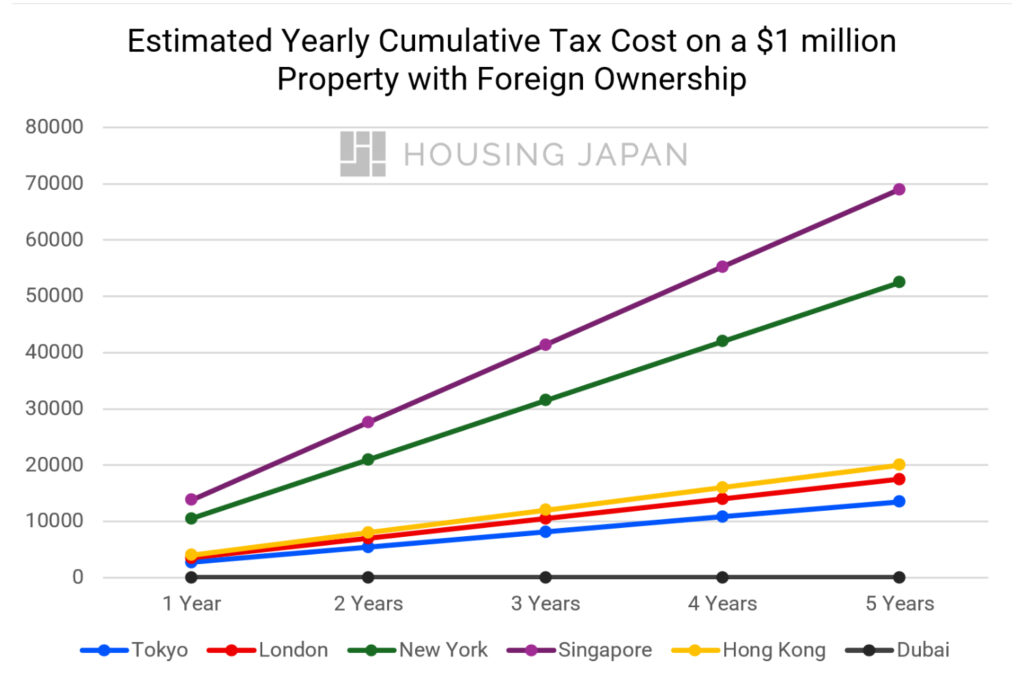
This graph shows the cumulative tax costs for foreign property ownership over 5-years.
Tokyo has some of the lowest yearly cumulative tax costs for foreign property ownership. New York and Singapore have high cumulative costs comparatively. Hong Kong and London have lower costs but still generally cost more than Tokyo. Dubai is the outlier here with no taxes; however, this is because the city operates on an entirely different economic model, one built on oil wealth and a migrant labour system that has faced sustained international scrutiny. The absence of property tax should be considered alongside Dubai’s market volatility, restricted foreign freehold zones, and significant annual service charges that function as a de facto holding cost.
Due to ‘estimated property value’ and other variable tax limits, the numbers used in these graphs are average estimates from official sources meaning that depending on a range of factors. These tax amounts, and therefore their location on the graphs, will change on a per property basis.
Key Facts by City
The following points are drawn from official government sources.
Tokyo / Japan
- No foreign buyer surcharge, foreign nationals pay the same taxes as Japanese nationals.
- Real estate acquisition tax is 3% of assessed value; assessed value is typically lower than market price.
- Annual fixed asset tax 1.4% + urban planning tax 0.3%, both on assessed value.
London / UK
- Non-resident surcharge: 2% on top of standard SDLT rates, introduced April 2021.
- Additional dwelling surcharge: 5% (raised from 3% in October 2024).
- Standard SDLT rates range from 0% to 12% depending on purchase price band. Note: from 1 April 2025, the nil-rate band reverted from £250,000 to £125,000, increasing the baseline cost for all buyers.
New York City / USA
- No foreign buyer surcharge.
- Mansion Tax: 1%–3.9% on purchases of $1M or more.
- Annual Class 2 property tax rate: 12.5% of assessed value, FY2024/25.
Singapore
- ABSD for foreigners: 60% of purchase price as of April 2023.
- Standard BSD of up to 6% applies in addition to ABSD.
- US, Swiss, Norwegian, Icelandic, and Liechtenstein nationals may be ABSD-exempt on a first purchase under FTAs.
Hong Kong
- From 28 February 2024, all buyers pay AVD at Scale 2 rates, up to 4.25% above HK$21,739,120. No foreign buyer surcharge.
- Buyer’s Stamp Duty, Special Stamp Duty, and New Residential Stamp Duty all abolished from the same date.
Dubai / UAE
- No annual residential property tax. One-time 4% DLD transfer fee at purchase.
- No capital gains tax or personal income tax on rental earnings for individuals.
- Freehold ownership for foreigners restricted to designated zones only.
- A municipality housing fee of 5% of annual rental value is typically charged to tenants via utility bills.
Why Choose Tokyo as a Foreign Property Investor?

When you set the tax environment side by side with the broader investment picture, Tokyo makes a compelling case. It is the only city in this comparison that combines genuinely low purchase taxes, no foreign buyer surcharge, a stable legal framework, and one of the world’s most liveable urban environments.
A Tax System That Treats All Buyers Equally
The absence of a foreign buyer surcharge matters more than it might initially appear. In Singapore, that surcharge alone adds approximately $660,000 to the cost of a $1,000,000 purchase. London taxes stack surcharges and add more than $100,000 for a non-resident buying an additional property. In Tokyo, that same buyer pays the same taxes as a Japanese national, no penalty for being from overseas. For investors who own property in multiple countries, this equal treatment is a meaningful practical advantage.
Annual holding costs are low and predictable. The fixed asset tax and urban planning tax are calculated on assessed values set by the government on a published three-year cycle. There are no surprise revaluations, no borough-level discretion, and no system of adding premiums for second homes. What you pay each year is transparent and consistent.
Tokyo also rewards long-term holders through its capital gain’s structure. Properties held for more than five years benefit from a tax rate on profits of 20.315% (15% income tax + 5% resident tax + 0.315% reconstruction surtax) but if sold before 5 years of ownership, capital gains taxes of 39.63% are charged. This aligns the tax system with the interests of owners who commit to the market for the long term.
Why Tokyo’s Property Tax Structure Appeals to International Investors
For overseas buyers, recurring ownership costs matter as much as the purchase price. Tokyo’s annual property tax applies equally to foreign and Japanese buyers, no nationality-based surcharges, no additional holding taxes, and no special levies targeting non-residents.
The fixed asset tax and city planning tax are calculated on assessed value, not market price, and rates are set on a stable three-year cycle. This makes the long-term cost of ownership straightforward to plan for.
Whether buying for rental income, capital preservation, or future relocation, the absence of foreign buyer penalties and the predictability of annual tax obligations make Tokyo a stable and transparent market for long-term holders. Buyers should review both acquisition and holding costs carefully when comparing Tokyo with other global cities.
Stability, Ownership Rights, and City Quality
The stability of the Tokyo market reinforces the tax advantage. Unlike Dubai, where an attractive tax regime sits alongside a history of sharp price cycles and zone-restricted ownership rights, Tokyo’s prime residential market has a long record of measured performance. Property rights for foreign buyers are the same full freehold title available to Japanese nationals, governed by a legal system with centuries of precedent. There are no designated zones, no restricted ownership structures, and no ambiguity about what you own.
For expats and international investors already connected to Tokyo, the advantages extend beyond tax. The city consistently ranks among the top cities globally for safety, infrastructure, and quality of life. Public transport is reliable and extensive. Healthcare is accessible. The infrastructure that supports daily life is among the best anywhere.
Taken together, transparent and equal purchase taxes, low annual holding costs, stable legal framework, full freehold title, long-term capital gains relief, and an exceptional city, Tokyo offers a property investment environment that holds up well against any city in this comparison, and outperforms most on the metrics that matter most to long-term international investors.
To explore Tokyo luxury real estate with a multilingual team bringing 25 years of experience in the luxury and investment real estate field, visit www.housingjapan.com.
Frequently Asked Questions
Can foreigners buy property in Tokyo? Yes. Japan places no restrictions on property ownership by foreign nationals for most nationalities. You do not need to be a resident to purchase, and the taxes are the same as for Japanese buyers.
How much tax does a foreign buyer pay on a $1,000,000 property in Tokyo? Approximately 3–4% of the purchase price, covering acquisition tax, registration and license tax, and stamp duty, roughly $30,000–$40,000. By comparison, the same purchase in Singapore could trigger approximately $660,000 in stamp duties.
Why did Singapore’s foreign buyer tax increase so dramatically? Singapore raised the ABSD for foreigners from 30% to 60% in April 2023 to manage investment demand from overseas buyers and prioritize home ownership for Singapore citizens and permanent residents.
Is Hong Kong now open to foreign buyers again? Yes. Since February 2024, Hong Kong removed all demand-side stamp duties for residential property. All buyers now pay the same AVD at Scale 2 rates, with a maximum of 4.25%. There is no longer any surcharge for non-permanent residents.
Does Dubai really have no property tax? There is no annual property tax on residential property. However, owners do pay annual service charges and a municipality housing fee of 5% of annual rental value embedded in utility bills. These are real ongoing costs, even though they are not classified as property taxes.
What is FIRPTA and does it affect buyers in New York? FIRPTA primarily affects foreign sellers, not buyers. When a foreign person sells US real estate, 15% of the gross sale price must be withheld for the IRS. It is a deposit against capital gains tax liability, not an extra charge, but buyers should plan for the liquidity requirement when they eventually come to sell.
Sources
- Japan – National Tax Agency: www.nta.go.jp
- UK – GOV.UK SDLT: www.gov.uk/stamp-duty-land-tax | www.gov.uk/guidance/rates-of-stamp-duty-land-tax-for-non-uk-residents
- UK – Additional Property Surcharge: www.gov.uk/guidance/stamp-duty-land-tax-buying-an-additional-residential-property
- USA – NY State Dept. of Taxation and Finance: www.tax.ny.gov/bus/transfer/rptidx.htm
- Singapore – IRAS ABSD: www.iras.gov.sg/taxes/stamp-duty/for-property/buying-or-acquiring-property/additional-buyer’s-stamp-duty-(absd)
- Singapore – IRAS Stamp Duty Rates: www.iras.gov.sg/quick-links/tax-rates/stamp-duty
- Hong Kong – IRD: www.ird.gov.hk/eng/faq/bsd.htm
- Hong Kong – GovHK Stamp Duty Rates: www.gov.hk/en/residents/taxes/stamp/stamp_duty_rates.htm
- Dubai – Dubai Land Department: www.dubailand.gov.ae
This article is for general informational purposes only and does not constitute tax or legal advice. Tax rules change frequently. Readers should consult a qualified tax professional before making any property investment decision.