This is the sixth article in Housing Japan’s ‘Japan’s Best Architects Series’
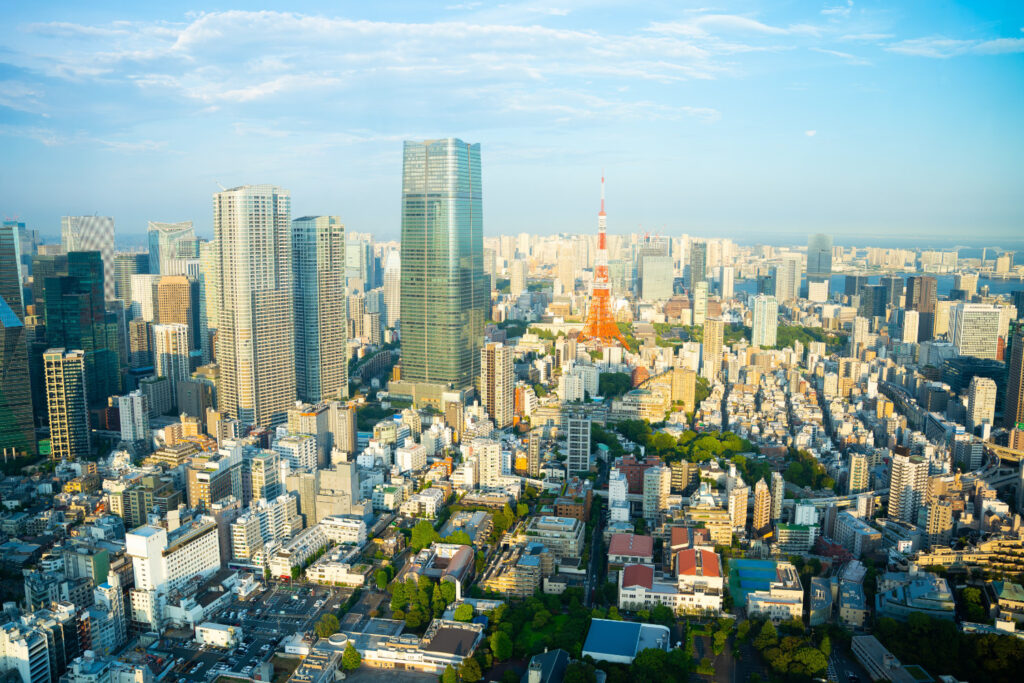
In a city defined by density and walls, Kazuyo Sejima (妹島 和世) designs buildings that seem to dissolve. Her work replaces the heavy, solid feeling of traditional urban architecture with something lighter, spaces that feel open, bright, and connected to the world around them. As co-founder of SANAA and the second woman ever to win the Pritzker Architecture Prize, Sejima has shaped how people think about modern Japanese design. For anyone interested in Tokyo real estate, understanding her approach offers insight into why certain buildings and neighborhoods feel different from the rest of the city.
Her buildings prove that architecture does not need to impose itself to be powerful. Instead, it can quietly change how people experience a place.
Who is Kazuyo Sejima?
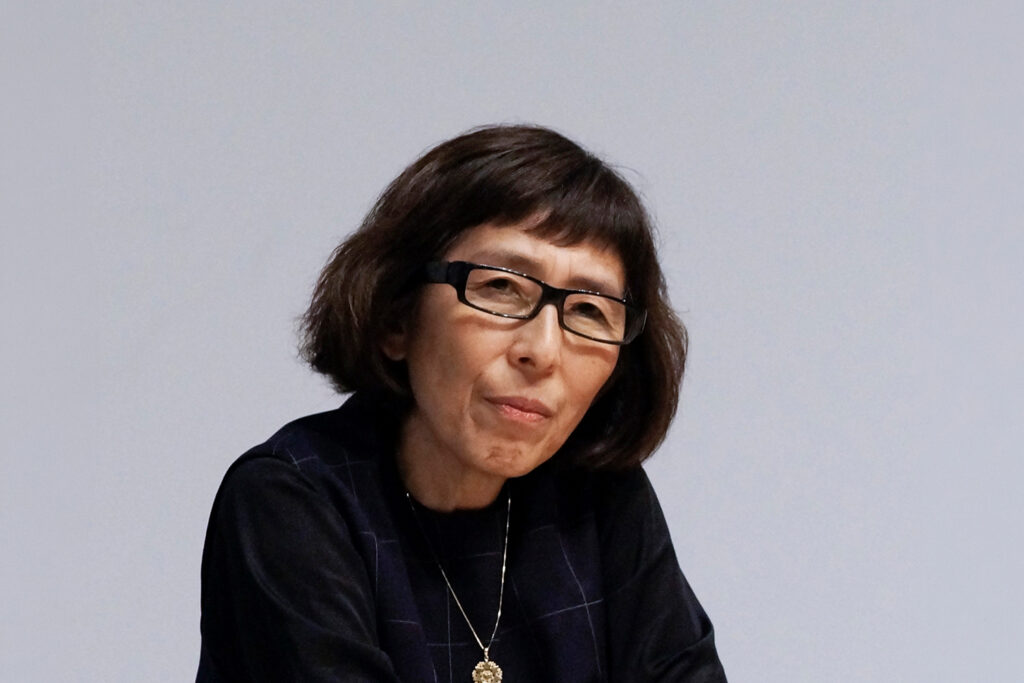
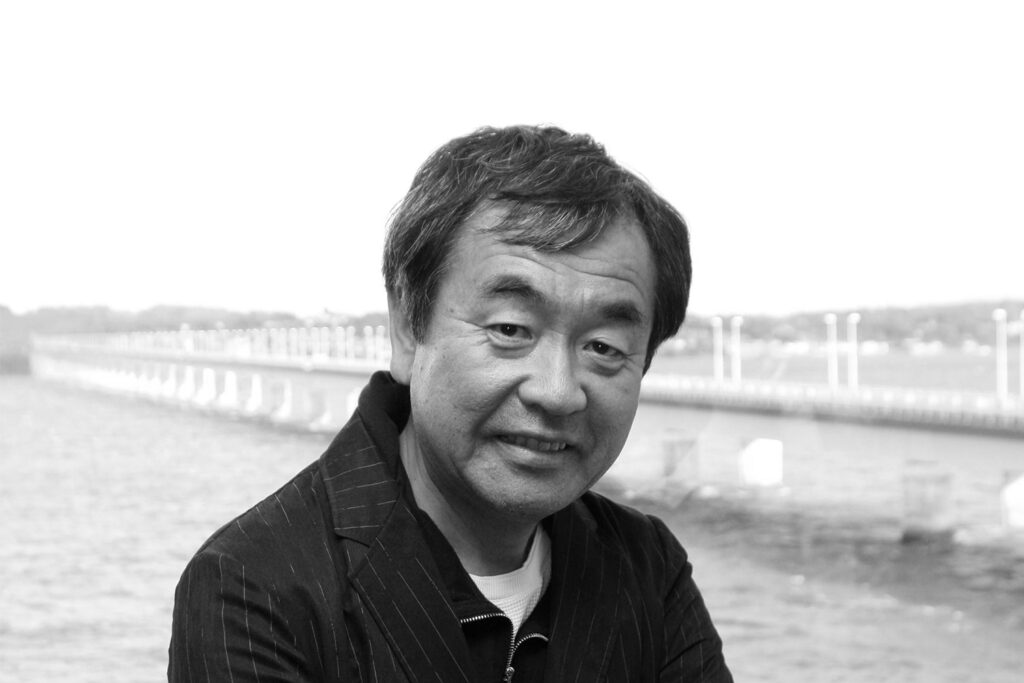
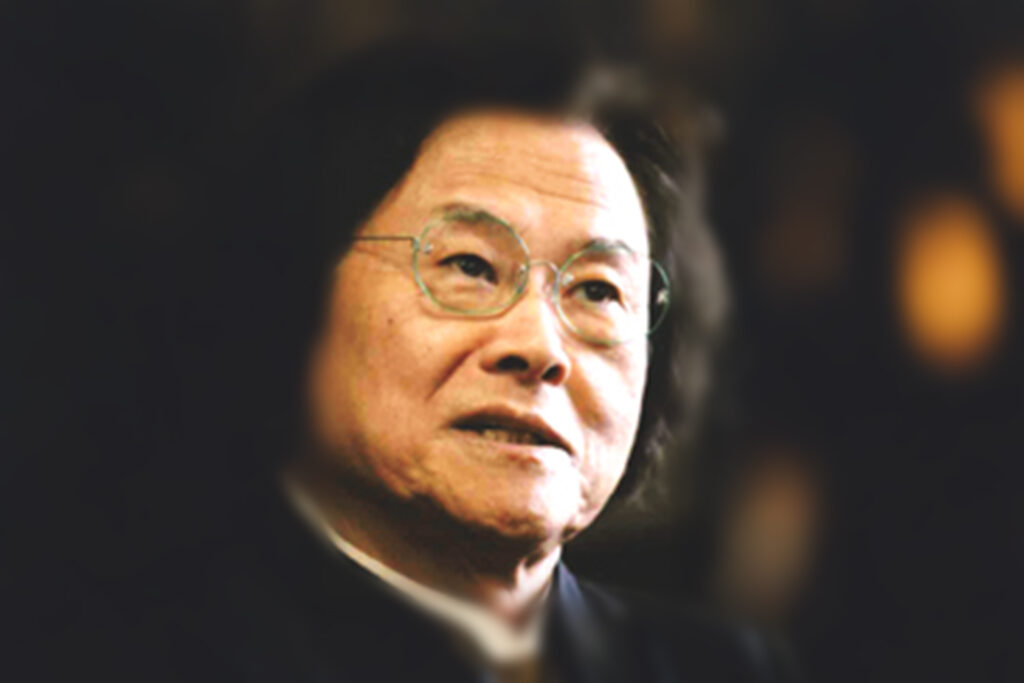
“Kazuyo Sejima” by Columbia GSAPP, licensed under CC BY 2.0. Derived from the original image. Edited by Housing Japan.
Born in 1956 in Ibaraki Prefecture, northeast of Tokyo, Kazuyo Sejima grew up curious about modern design after seeing photographs of work by architect Kazuo Shinohara. That early spark led her to study architecture at Japan Women’s University in Tokyo, where she earned her bachelor’s degree in 1979 and a master’s degree in 1981. After graduating, she joined the office of Toyo Ito, one of Japan’s most respected modern architects, where she spent six years learning how to experiment with light, materials, and spatial ideas.
In 1987, Sejima opened her own practice, Kazuyo Sejima & Associates, and quickly gained recognition for work that stood apart from the dominant styles of the time. She received the Young Architect of the Year award from the Japan Institute of Architects in 1992. Three years later, in 1995, she partnered with Ryue Nishizawa, a former student and collaborator, to establish SANAA (Sejima and Nishizawa and Associates) in Tokyo. SANAA became one of the most recognized architecture firms in the world, taking on major projects across Japan, Europe, and the United States.
In 2010, Sejima and Nishizawa jointly received the Pritzker Architecture Prize, the highest honor in the profession. That same year, Sejima became the first woman to direct the architecture sector of the Venice Biennale. In 2025, she and Nishizawa were awarded the RIBA Royal Gold Medal, further cementing her place among the most influential architects working today.
The Philosophy: Lightness, Openness, and Human Connection
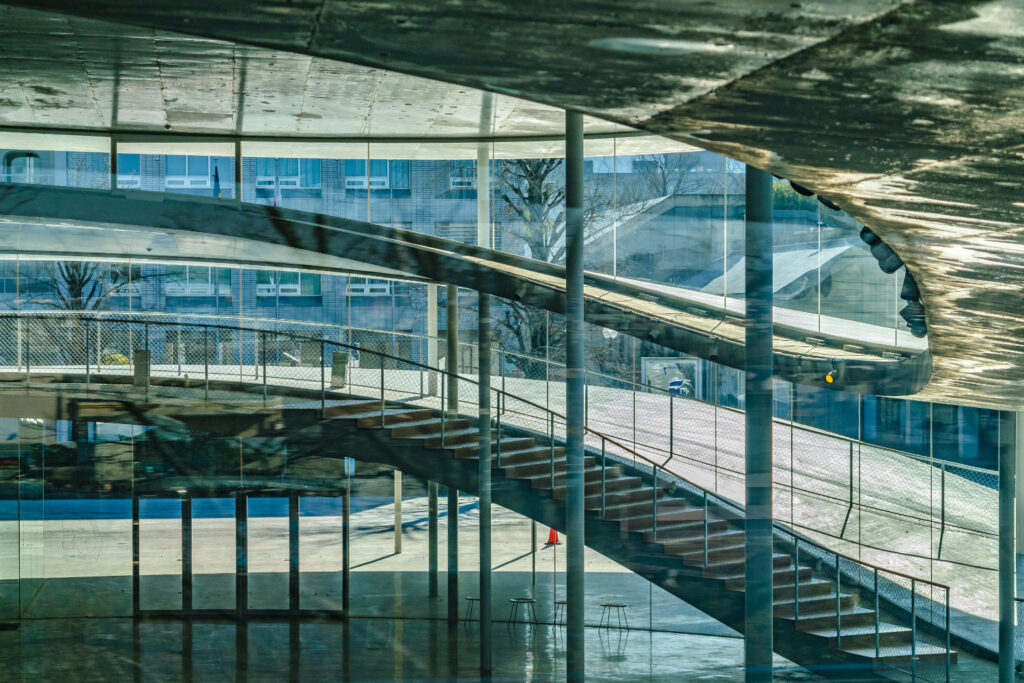
Sejima’s work is often described as minimalist, but that word only tells part of the story. Her buildings are not empty, they are carefully thought out to remove anything unnecessary so that light, movement, and human activity take center stage. She tends to favor simple shapes like squares, circles, and cubes, and often uses glass, white walls, and thin steel to make buildings feel almost weightless.
What matters most to Sejima is how people use a space. She has said that a building is never truly finished until people bring it to life with their activities. This idea shapes everything she designs, from small homes to major museums. Rather than creating dramatic statements, she creates quiet environments that adapt to the people inside them.
Another hallmark of her work is the blurring of boundaries between inside and outside. Glass walls, open courtyards, and flowing layouts allow natural light to reach deep into her buildings, and the line between the structure and its surroundings often feels almost invisible. For a dense city like Tokyo, where space is limited and privacy is prized, this approach creates a refreshing sense of openness.
Major Kazuyo Sejima Works in Tokyo
Sejima’s Tokyo projects show how her ideas translate into real buildings that people use every day. Each one offers a different way to experience her approach to light, space, and form.
Shibaura House
Street View of Shibaura House in Minato, Tokyo. Via Google Maps.
Completed in 2011 in the Shibaura area of Minato Ward, Shibaura House is a small office and community space that captures Sejima’s philosophy in a compact form. The five-story building features large glass walls, open terraces, and an internal layout with few fixed walls, allowing light and air to move freely through the structure. Rather than closing itself off from the street, the building invites the neighborhood in through open ground-floor spaces that host workshops, events, and community programs.
Shibaura House is a good example of how Sejima thinks about buildings as part of a larger social fabric. Its presence has contributed to the growing interest in Shibaura as a mixed-use area, particularly as nearby developments like Takanawa Gateway City have transformed the broader district. For those watching real estate in Minato Ward, buildings like this show how thoughtful design can help shape a neighborhood’s character over time.
Dior Omotesando
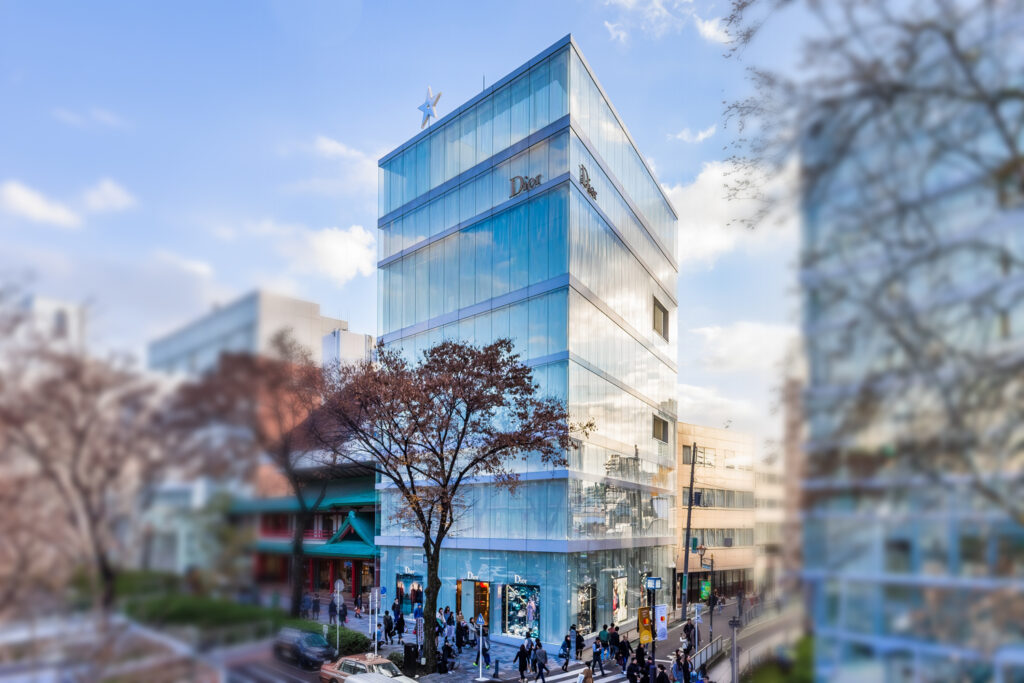
“Christian Dior Omotesando, designed by SANAA” by Kakidai, via Wikimedia Commons. Licensed under CC BY-SA 4.0 (https://creativecommons.org/licenses/by-sa/4.0/). Edited by Housing Japan. This edited version is also licensed under CC BY-SA 4.0.
The Christian Dior building on Omotesando, completed in 2003, remains one of Sejima’s most recognized Tokyo projects. Designed with Ryue Nishizawa through SANAA, the building sits along one of Tokyo’s most famous shopping streets, where luxury brands compete for attention through bold architecture. Dior Omotesando takes a different approach. Its facade is wrapped in a double layer of glass and softly curved acrylic panels that filter light during the day and create a warm glow at night.
Instead of shouting for attention, the building feels calm and refined, matching the elegance of the brand inside while standing apart from the more aggressive designs of its neighbors. Omotesando has become a showcase of contemporary architecture, with buildings by multiple internationally known architects lining the street. Properties in this district are among the most sought after in Tokyo, and the presence of buildings like Dior Omotesando contributes to the area’s reputation as a cultural and design destination.
Police Box at Chofu Station (Demolished)
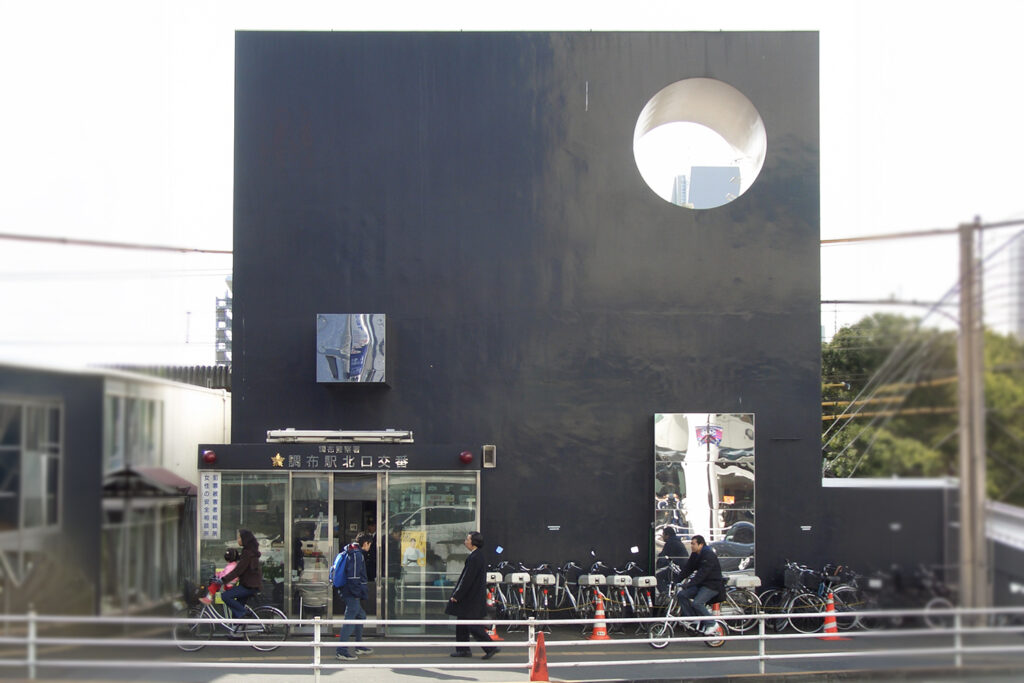
“Police Office in Chofu Station, Chofu, Tokyo, Japan, designed by Kazuyo Sejima” by Wiiii, via Wikimedia Commons. Licensed under CC BY-SA 3.0. Edited by Housing Japan. This edited version is also licensed under CC BY-SA 3.0.
Completed in 1994 at the north exit of Chofu Station in western Tokyo, this small police box was one of Sejima’s earliest and most charming public works. Standing on a tiny 50-square-meter plot, the cylindrical building used glass, steel, and a white painted frame to create a structure that felt light and almost sculptural despite its functional purpose. Circular and rectangular windows broke up the facade in unexpected ways, and the transparent walls blurred the line between the officers inside and the street outside.
The police box showed that good architecture does not have to be large or expensive to make a difference. Sadly, it was demolished in February 2008 as part of the Keio Line underground relocation project, which moved the train tracks below ground and completely reshaped the area around Chofu Station. Although the building no longer stands, it remains an important early example of Sejima’s approach and is still studied by architects today.
The Sumida Hokusai Museum
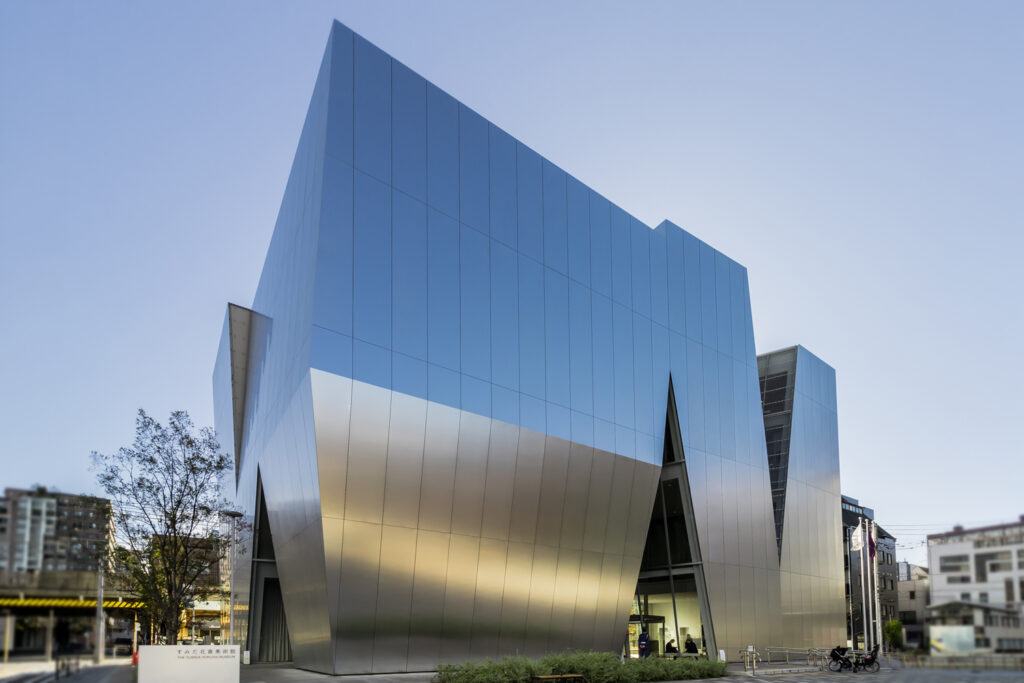
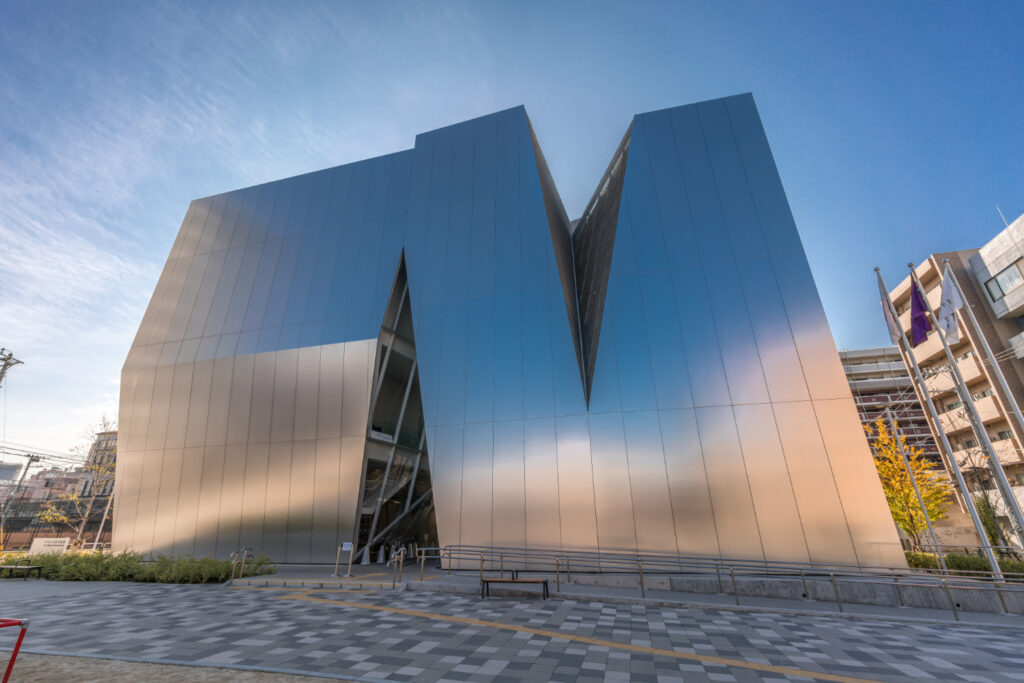
“Sumida Hokusai Museum, designed by Kazuyo Sejima & Associates (2016)” by Kakidai, via Wikimedia Commons. Licensed under CC BY-SA 4.0. Edited by Housing Japan. This edited version is also licensed under CC BY-SA 4.0.
Opened in 2016 in Sumida Ward, the Sumida Hokusai Museum is dedicated to the life and work of the famous ukiyo-e artist Katsushika Hokusai, who spent most of his life in the area. Sejima designed the museum as a single volume wrapped in angled aluminum panels, with deep cuts in the form that create passages and openings at ground level. These cuts allow people to walk through and around the building, connecting it to the surrounding residential neighborhood rather than blocking it off.
The reflective metal surface changes appearance throughout the day, picking up colors from the sky and the streets. Inside, the layout guides visitors through a series of light-filled spaces that feel calm and contemplative. The museum has become a cultural anchor for Sumida Ward, an area that has seen steady interest from buyers looking for more affordable alternatives to central Tokyo while still enjoying proximity to cultural landmarks.
Notable Works Across the Rest of Japan
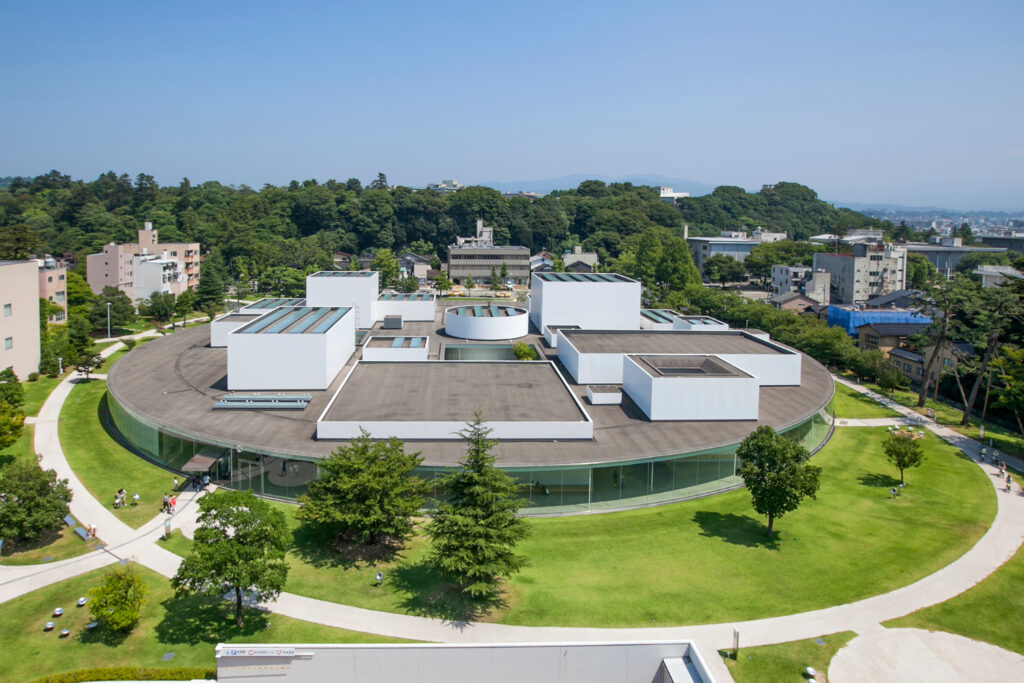
21st Century Museum of Contemporary Art, Kanazawa” by City of Kanazawa (金沢市), licensed under CC BY 2.1 JP
Beyond Tokyo, Sejima and SANAA have designed some of Japan’s most important cultural buildings. The 21st Century Museum of Contemporary Art in Kanazawa, completed in 2004, is perhaps the clearest expression of her philosophy. The museum is a large circular building made almost entirely of glass, with galleries arranged like small boxes scattered inside a transparent outer ring. Visitors can enter from any direction, and the lack of a clear front or back makes the museum feel welcoming and open to the whole city.
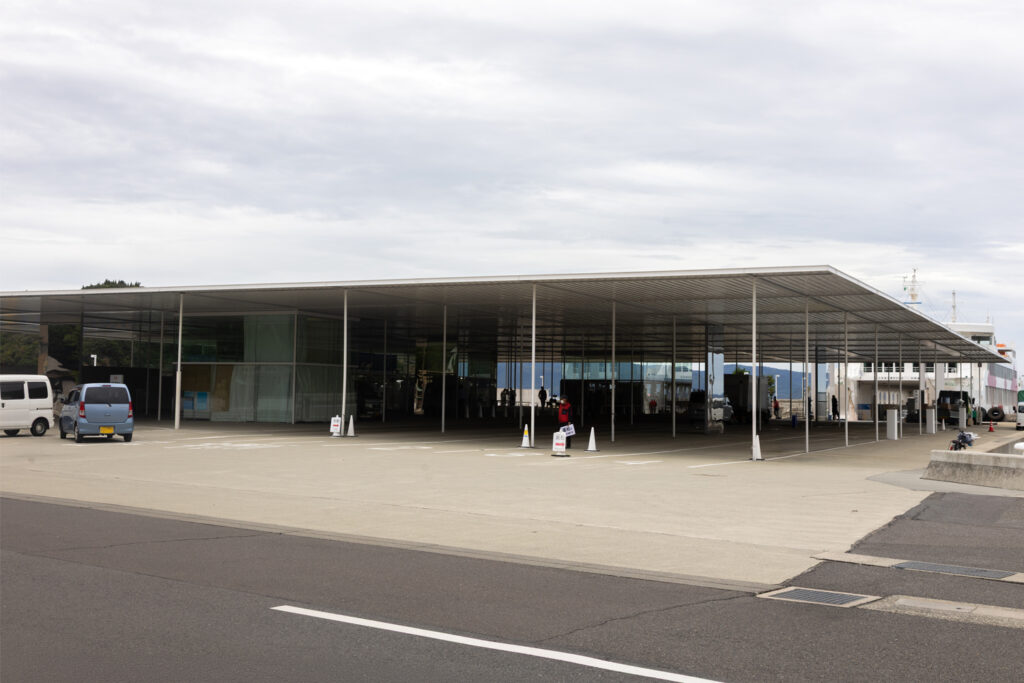
“Naoshima Ferry Terminal in Miyanoura, Naoshima, Japan, designed by SANAA” by Bea Phi, licensed under CC BY-SA 4.0. Edited by Housing Japan. This edited version is also licensed under CC BY-SA 4.0.
The Naoshima Ferry Terminal, completed in 2006 on the art island of Naoshima in the Seto Inland Sea, shows how Sejima approaches infrastructure. The terminal is essentially a thin, flat roof supported by slender columns, with glass-walled waiting areas tucked underneath. It feels more like a pavilion than a transit building, giving visitors arriving at the island a gentle introduction to its famous art and architecture.
More recently, the Tsuruoka Cultural Hall, completed in 2018 in Yamagata Prefecture, serves as a performing arts and community center. Its flowing, curved roof reflects the surrounding mountains, while the interior provides flexible spaces for concerts, exhibitions, and local events. These projects show how Sejima’s approach adapts to different settings across Japan while maintaining the same underlying ideas about lightness, openness, and human use.
International Work
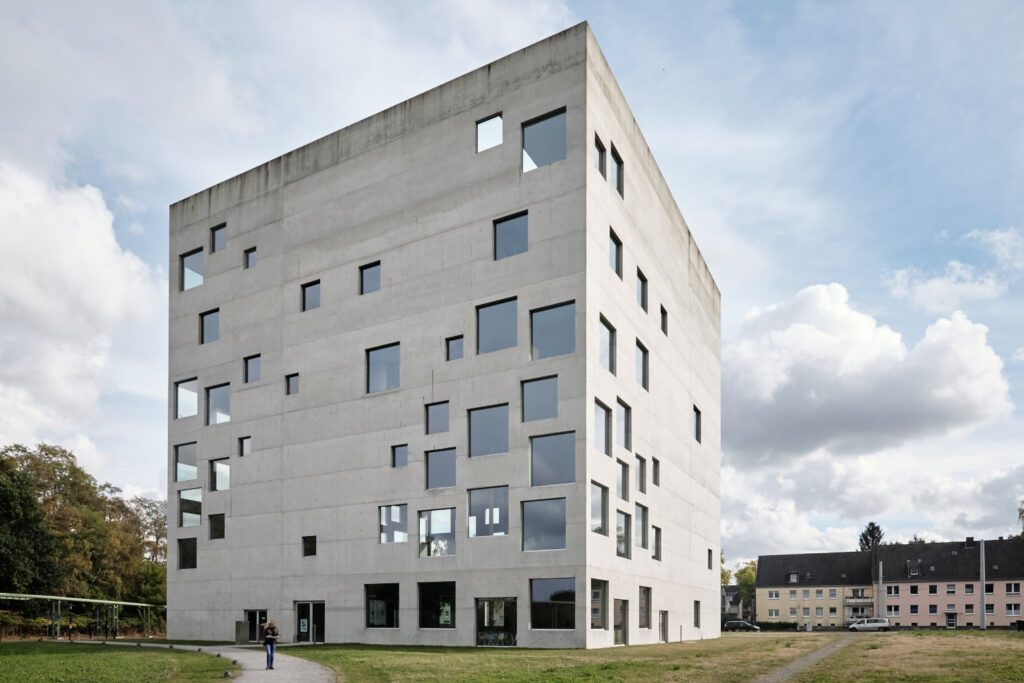
“SANAA Zollverein School of Management and Design, 2006” by August Fischer, via Flickr. Licensed under CC BY-ND 2.0.
Sejima’s influence reaches far beyond Japan. Through SANAA, she has designed landmark buildings across Europe, North America, and Australia that have helped shape how contemporary museums and cultural institutions look and feel.
The Louvre-Lens museum in northern France, opened in 2012, is one of her most celebrated international projects. Built on a former mining site, the museum consists of a series of low, linked pavilions with polished aluminum walls that reflect the surrounding landscape. The building almost disappears into its environment, an approach that earned wide recognition and helped revitalize the region.
The New Museum of Contemporary Art in New York City, completed in 2007, is instantly recognizable for its stack of off-center white boxes rising along the Bowery. The design gives each gallery floor its own character while creating a distinctive profile on the Manhattan skyline. It was one of the first major SANAA projects in the United States and helped introduce American audiences to Sejima’s approach.
The Zollverein School of Management and Design in Essen, Germany, completed in 2006, sits on a former coal mine site. The building is a simple concrete cube with small windows placed in a seemingly random pattern across all four sides. Despite its minimal appearance, the project incorporates a clever heating system that uses water from the old mine, making it an early example of sustainable reuse.
More recently, the Sydney Modern Project, an expansion of the Art Gallery of New South Wales, opened in 2022. The project added a series of pavilions that cascade down toward Sydney Harbour, connected by landscaped paths. It received strong environmental credentials and has been praised for how it integrates art, architecture, and landscape.
Why This Matters for Tokyo Property Buyers
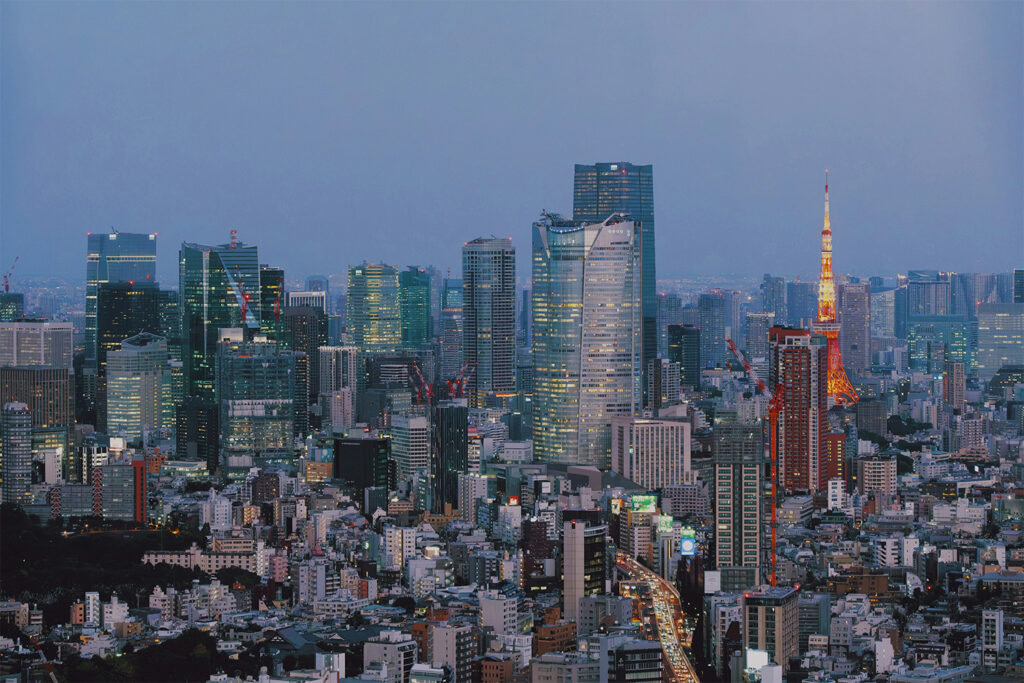
Understanding Sejima’s influence helps property buyers recognize what makes certain Tokyo neighborhoods feel different. Areas like Omotesando, Minami-Aoyama, and parts of Minato Ward have benefited from the presence of buildings by internationally recognized architects, and this cultural layer can contribute to the long-term appeal of a neighborhood.
Sejima’s approach also reflects a broader shift in how people think about urban living. Her emphasis on natural light, flexible spaces, and connection to surroundings aligns with what many modern buyers are looking for in a home: rooms that feel open rather than closed, windows that bring in the outdoors, and layouts that can adapt to changing needs. Developers across Tokyo have increasingly embraced these ideas, and buildings influenced by her thinking can be found throughout the city’s newer luxury residences.
For international buyers in particular, owning a home in a neighborhood shaped by architects of Sejima’s standing offers something beyond square footage and amenities. It offers a connection to a particular vision of what a city can be, one that values quiet quality over noise and light over weight.
Conclusion
Kazuyo Sejima has changed how architects, developers, and residents think about space in the modern city. Her buildings show that simplicity is not the same as plainness, and that removing walls can actually create more meaningful places. From small police boxes in Chofu to major museums in Kanazawa and New York, her work carries a consistent message: architecture should serve people, welcome light, and fit gently into its surroundings.
For Tokyo, her influence continues to shape how new buildings are imagined and built. As the city evolves, her ideas about openness and human-centered design remain as relevant as ever.
See the official SANAA website -> Here
Q&A: Common Questions About Kazuyo Sejima and Tokyo Real Estate
What makes Kazuyo Sejima’s architecture special? Sejima is known for designs that feel light, open, and transparent. She often uses glass, white surfaces, and simple geometric shapes to create buildings that connect easily with their surroundings. Her focus is on how people actually use a space rather than on making dramatic visual statements.
Where can I experience Kazuyo Sejima’s architecture in Tokyo? Several of her Tokyo works are open to the public, including the Sumida Hokusai Museum in Sumida Ward, Shibaura House in Minato Ward, and the Dior Omotesando building. The small police box at Chofu Station is also worth a visit for those interested in her earlier work.
Has Kazuyo Sejima won major architecture awards? Yes. She received the Pritzker Architecture Prize in 2010 jointly with Ryue Nishizawa, becoming the second woman ever to win the award. She also received the RIBA Royal Gold Medal in 2025 and was the first woman to direct the architecture sector of the Venice Biennale in 2010.
Did Kazuyo Sejima design residential buildings? While Sejima is best known for museums and public buildings, she has designed residential projects throughout her career, particularly earlier in her practice. Her influence on residential design in Tokyo is also felt indirectly through the many architects and developers who have adopted her ideas about light, openness, and flexible layouts.
Why is Sejima important for understanding Tokyo real estate? Her work reflects a shift in Tokyo architecture toward buildings that prioritize natural light, human comfort, and connection to the surroundings. Neighborhoods with buildings by internationally recognized architects like Sejima often develop a cultural character that can make them more desirable over time.