Roppongi
Roppongi Area Guide: Living in the Roppongi District of Tokyo
Roppongi is a vibrant, international district in Minato Ward, central Tokyo, known for its art museums, nightlife, and major developments such as Roppongi Hills and Tokyo Midtown. The Roppongi district of Tokyo suits professionals, expats, and families who want central access and English-friendly services. It centres on Roppongi Station, served by the Tokyo Metro Hibiya Line and the Toei Oedo Line.
Watch this area guide video on Roppongi!
Roppongi at a Glance
| Ward | Minato Ward (港区, Minato-ku), one of Tokyo’s three central wards |
|---|---|
| Nearest stations & lines | Roppongi (Tokyo Metro Hibiya Line, Toei Oedo Line); Roppongi-itchome (Tokyo Metro Namboku Line); Nogizaka (Tokyo Metro Chiyoda Line) on the northern edge; Azabu-juban (Namboku, Oedo) on the southern edge |
| Time to key hubs | About 9 minutes to Ginza (Hibiya Line, direct) and about 10 minutes to Shinjuku (Toei Oedo Line, direct), less than 15 minutes to Shibuya Station, less than 20 minutes to Tokyo station |
| Typical resident profile | Foreign executives and professionals, dual-career couples, and international families, alongside long-standing Japanese residents |
| Defining features | Roppongi Hills, Tokyo Midtown, the nearby Azabudai Hills, the Roppongi Art Triangle, embassies, and a busy nightlife core |
| Nearest international schools | Nishimachi International School (Moto-Azabu) and the British School in Tokyo, whose primary campus sits at Azabudai Hills |
| Price & rent indicator | Among Tokyo’s most expensive areas. Residential land in Minato Ward averaged about ¥3.0 million per square metre in MLIT’s 2026 survey; expat-market rents typically run from a few hundred thousand yen a month into the millions for tower units |
What Is Roppongi Known For?
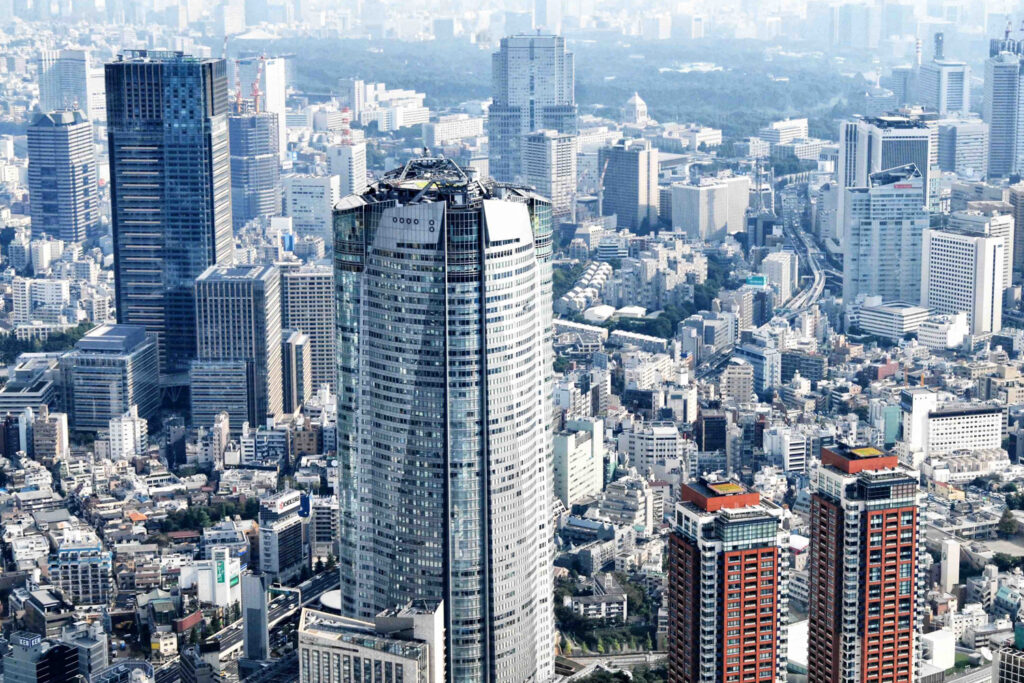
Roppongi is best known for three things: art, nightlife, and large mixed-use towers. The name itself means “six trees” (六本木), and local legend ties it to six daimyo households or six large zelkova trees that once stood here. Today the district is one of central Tokyo’s most international places to live and work, with a high share of foreign residents, dozens of embassies nearby, and English-friendly shops, clinics, and restaurants.
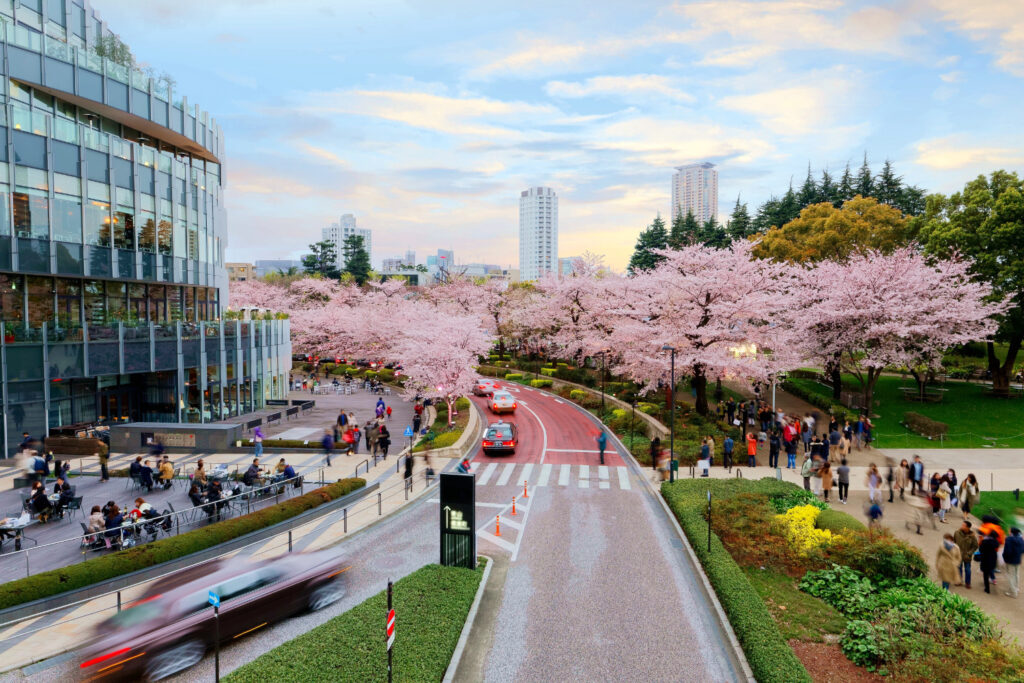
The area carries two reputations at once. By day it is a calm business and residential district, anchored by Roppongi Hills, Tokyo Midtown, and a cluster of major museums. By night the streets around Roppongi Crossing fill with bars and restaurants. The two sides sit a short walk apart, and for most residents the quieter pockets a few streets back define daily life far more than the nightlife does.

Where Is the Roppongi District of Tokyo Located?
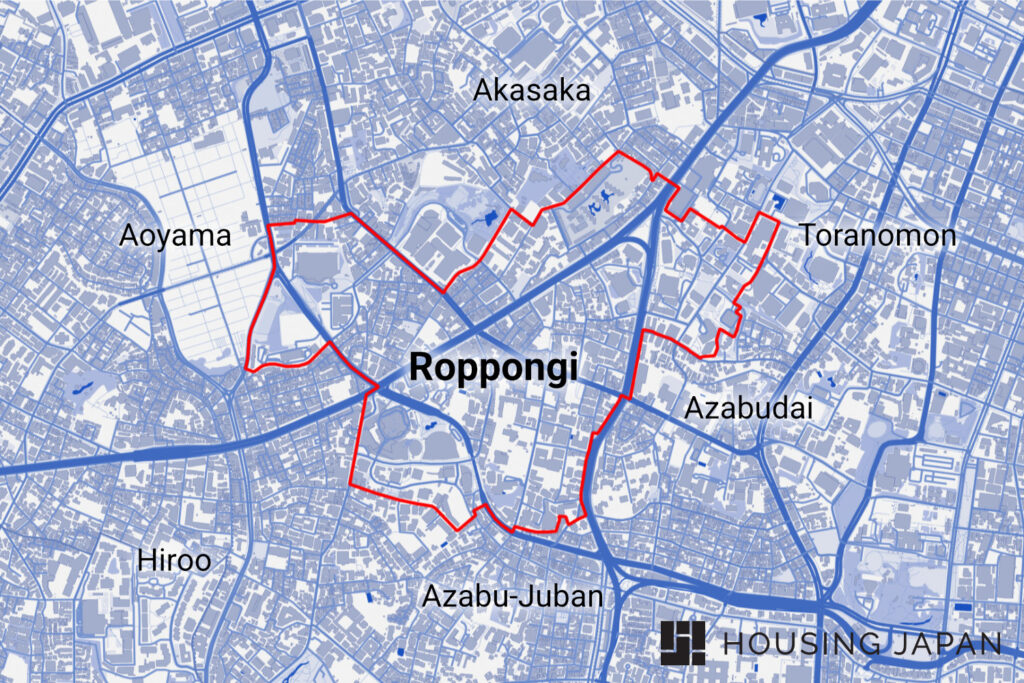
Roppongi sits in the centre of Minato Ward (港区, Minato-ku), one of the three central wards of Tokyo alongside Chiyoda and Chuo. It lies south of Akasaka, north of Azabu-juban and Moto-Azabu, and east of Nishi-Azabu and Hiroo. Shibuya is a short hop to the west, and Tokyo Station lies to the northeast. Tokyo Tower stands about ten minutes’ walk to the southeast, a constant landmark on the skyline.
Being part of Minato Ward shapes the area in practice. Minato hosts 81 embassies, more than half of all embassies in Japan, according to the ward government’s own Internationalization Master Plan, along with many multinational head offices. That concentration gives Roppongi its international feel and its deep pool of English-language services, and the ward also runs the area’s public elementary and junior high schools, and the support services international families rely on.
Roppongi works well as a base for the wider central business district. Neighbouring guides cover Azabu, Hiroo, and Akasaka.
A Brief History of Roppongi
Roppongi began as samurai land in the Edo period (1603–1868), a district of daimyo residences, temples, and shrines on the hills southwest of Edo Castle. Its modern character was set after the Second World War. From 1945, a US military presence in the area drew a wave of bars and clubs serving American personnel, and through the post-war decades Roppongi grew into Tokyo’s best-known nightlife quarter.
The nightlife boom of the 1980s and 1990s drew both Japanese revellers and a growing international crowd, and cemented the area’s cosmopolitan reputation. The bigger change came in the 2000s, when large-scale redevelopment reshaped the district. Roppongi Hills opened in 2003, Tokyo Midtown and the National Art Center followed in 2007, and together they repositioned Roppongi around art, design, and upscale living rather than nightlife alone. The opening of Azabudai Hills in 2023 continued that shift, adding Japan’s tallest building and a new wave of residents on the area’s northern edge.

What Is Daily Life in Roppongi Like?
Daily life in Roppongi is more settled than its nightlife reputation suggests. The main avenues are busy, but a few streets back you find quiet residential blocks, especially towards Moto-Azabu, Nishi-Azabu, and the hills above Azabu-juban. As often in central Tokyo, homes tend to be compact for the price, but almost everything you need is within walking distance.
For groceries, the area is well covered. Precce Premium, an upscale supermarket, sits in the basement of Tokyo Midtown and stays open late, and Seijo Ishii, a gourmet chain with imported foods and wine, has a branch in Roppongi Hills. Meidi-ya and Motomachi Union serve the blocks around Roppongi Crossing, while Don Quijote Roppongi covers everyday and discount items. For international shopping, Nissin World Delicatessen in nearby Higashi-Azabu is a long-standing expat favourite, with an in-house butcher and a wide range of imported meats, cheeses, and wines.
Healthcare is a real strength of central Minato. For day-to-day care with English-speaking staff, Tokyo Midtown Clinic sits on the sixth floor of Midtown Tower, directly connected to Roppongi Station; it is accredited by Joint Commission International and works with Johns Hopkins Medicine. Roppongi Hills Clinic in the Mori Tower and Roppongi HAT Clinic offer further English-friendly options, with larger hospitals a short ride away. For fitness, the area has private gyms and studios, and the lawns of Hinokicho Park and the paths around the Hills complexes are popular with runners.
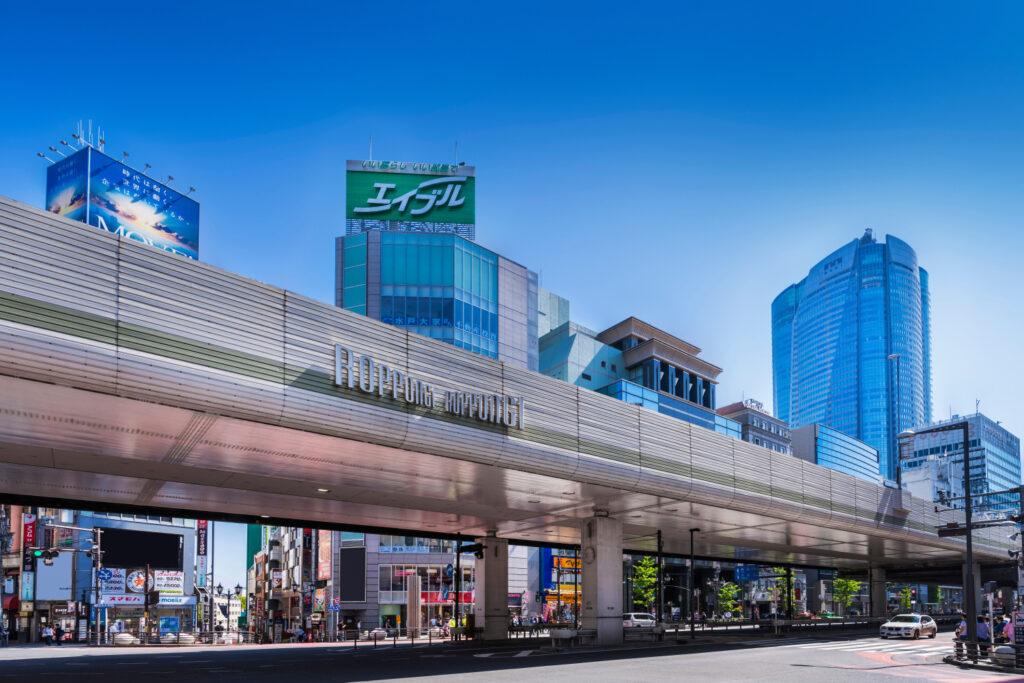
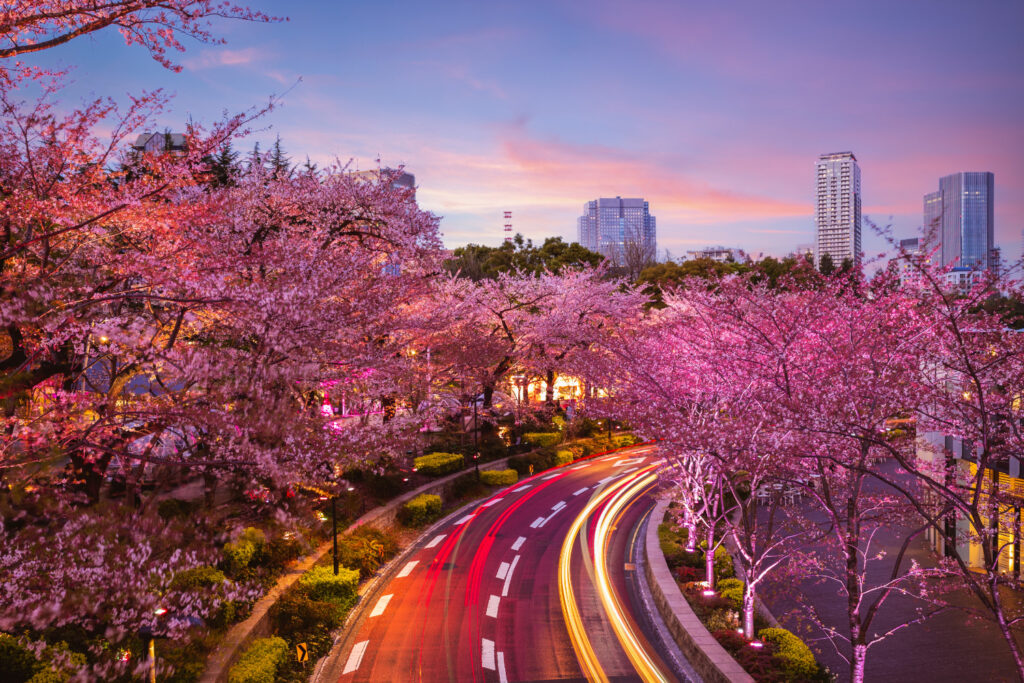
How Well Connected Is Roppongi?
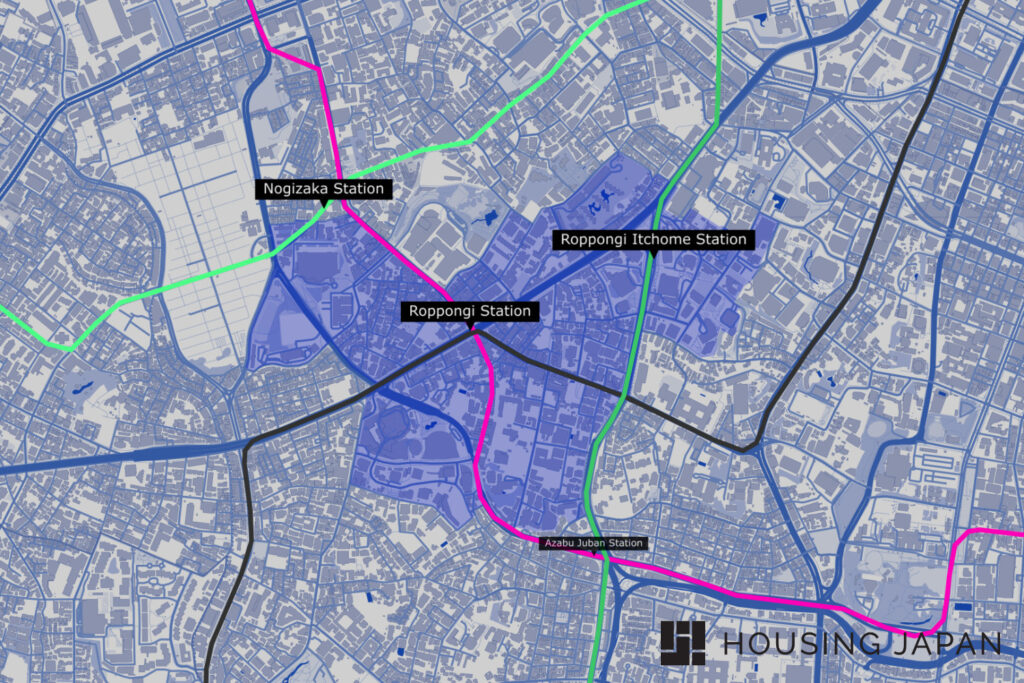
Roppongi is well connected for a central residential district, served by two subway lines at Roppongi Station and by three more stations around its edges. Roppongi Station sits on the Tokyo Metro Hibiya Line and the Toei Oedo Line. There is no JR station inside the district, but several lines are a single transfer away, and two of central Tokyo’s biggest hubs, Ginza and Shinjuku, are reachable directly without changing trains.
| Station | Lines | Useful for |
|---|---|---|
| Roppongi | Tokyo Metro Hibiya Line; Toei Oedo Line | Ginza, Ebisu, Naka-Meguro, Shinjuku, Daimon |
| Roppongi-itchome | Tokyo Metro Namboku Line | Tameike-Sanno, Iidabashi, Azabudai Hills |
| Nogizaka | Tokyo Metro Chiyoda Line | Omotesando, Otemachi, the National Art Center |
| Azabu-juban | Tokyo Metro Namboku Line; Toei Oedo Line | Southern Roppongi, Moto-Azabu, Meguro |
Nogizaka station sits just outside Roppongi on the northern edge; Azabu-juban station sits just outside Roppongi on the southern edge
| Destination | Time | Route |
|---|---|---|
| Ginza | ~9 min | Hibiya Line, direct |
| Shinjuku | ~10 min | Toei Oedo Line, direct |
| Shibuya | ~13 min | via Nogizaka or one transfer (also direct by Toei bus) |
| Tokyo Station | ~17 min | via Kasumigaseki or Ginza, one transfer |
| Otemachi (business district) | ~15 min | Hibiya Line, transfer at Kasumigaseki |
| Haneda Airport | ~50 min | train |
Note on spellings: this guide uses “Roppongi” and the full operator name “Toei Oedo Line” (sometimes written “Oedo Line”) throughout.
Dining, Shopping, and Local Amenities
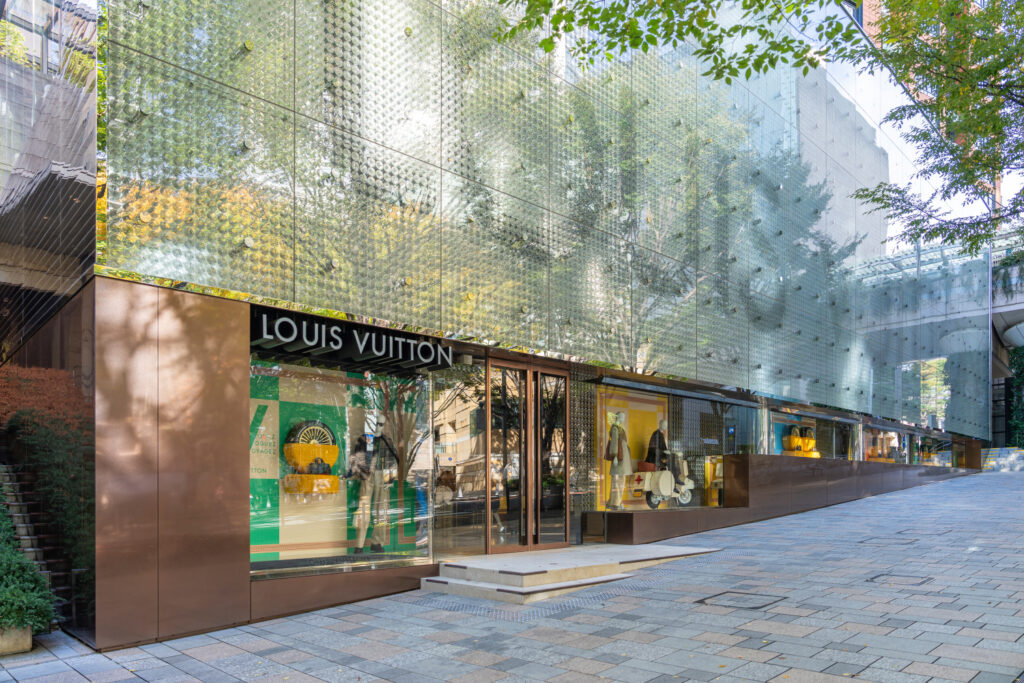
Roppongi’s shopping is concentrated in its big complexes. Roppongi Hills and Tokyo Midtown both combine designer boutiques, department-store-grade food halls, and everyday essentials under one roof, and the newer Azabudai Hills on the northern edge has added another tier of high-end retail and dining. Between them, the backstreets hold smaller galleries, independent shops, and specialist stores.
Dining ranges from casual cafés and ramen counters to some of Tokyo’s most acclaimed restaurants, with an unusually strong international showing. The area’s expat and embassy population supports French, Italian, Indian, Thai, and other cuisines that can be harder to find elsewhere in the city, and is also why English menus and English-speaking staff are common. For residents, the practical point is range: a quick weeknight dinner or a special occasion sits within a few minutes’ walk.

Parks, Culture, and Recreation
For green space, two well-kept parks anchor the area. Hinokicho Park, beside Tokyo Midtown, is a traditional Japanese garden with a pond and open lawns, and Mohri Garden at Roppongi Hills offers a smaller landscaped retreat. Both give residents a quiet break a few steps from the towers. Tokyo Tower and its surrounding park are a short walk southeast.
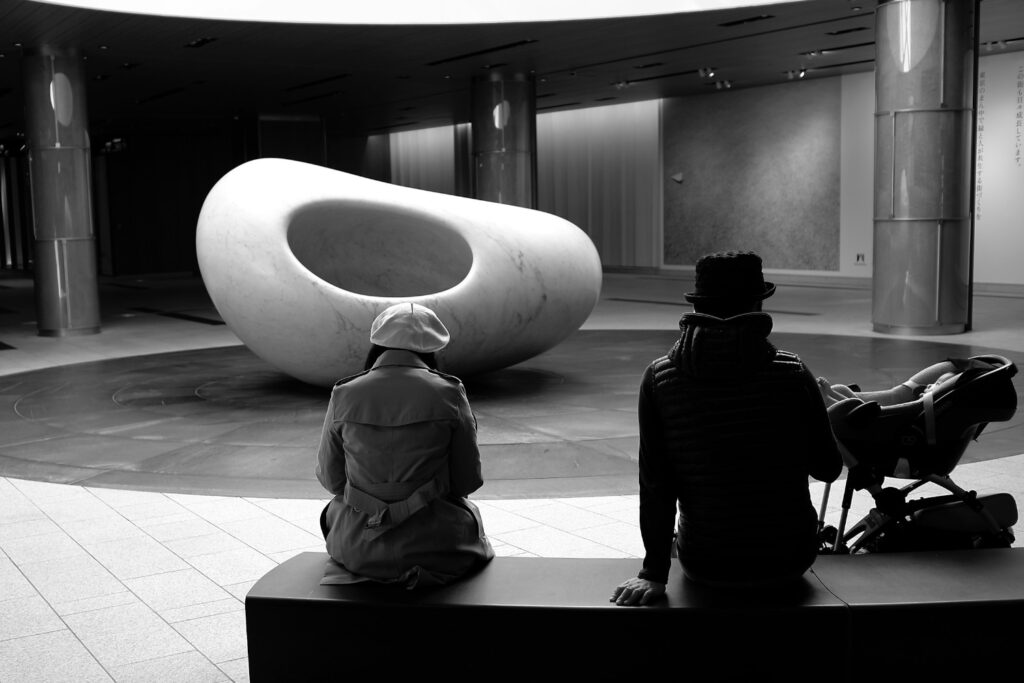
Culture is unusually dense for so small an area, centred on the Roppongi Art Triangle, three major institutions within walking distance of each other. The National Art Center, Tokyo, designed by Kisho Kurokawa, is one of Japan’s largest exhibition spaces and runs rotating shows rather than a permanent collection. The Mori Art Museum sits near the top of Roppongi Hills’ Mori Tower, paired with the Tokyo City View observation deck, and the Suntory Museum of Art at Tokyo Midtown focuses on traditional Japanese art. The digital-art museum teamLab Borderless reopened at Azabudai Hills in 2024, and the quiet Nogi Shrine offers a traditional contrast to the surrounding skyline.
Who Lives in Roppongi?
Roppongi draws a mix of foreign executives and professionals, dual-career couples, people working in finance, tech, and the arts, and international families, alongside long-standing Japanese residents. Because it falls within Minato Ward, home to a large share of Tokyo’s embassies and multinational offices, the area has a steady international population, and many residents work nearby in Akasaka, Toranomon, or the Hills complexes themselves. Minato as a whole has one of the highest shares of foreign residents among Tokyo’s 23 wards.
For families, the practical draw is access rather than abundant schooling inside Roppongi itself. Public schools are run by the Minato City Board of Education, and several international campuses sit a short distance away in Moto-Azabu, Hiroo, and at Azabudai Hills. Nishimachi International School, a K–9 day school in Moto-Azabu, is within walking distance of Azabu-juban and Hiroo stations, and the British School in Tokyo runs its primary campus (ages 3–11) at Azabudai Hills on Roppongi’s northern edge.

How Does Roppongi Compare to Nearby Areas?
Roppongi sits among several well-known central districts, and the differences matter when choosing where to live. The table below compares it with three neighbours.
| Area | Character | Relative price | Best for |
|---|---|---|---|
| Roppongi | International, mixed-use, art and nightlife with quieter residential pockets | High | Professionals and expats who want central access and English-friendly services |
| Azabu (Azabu-juban / Moto-Azabu) | Calmer and more residential, with an old-town shopping street | High | Families who want a quieter, community feel close to the centre |
| Hiroo | Leafy and family-oriented, long popular with diplomats and expats | High | Families wanting greenery and an established international community |
| Akasaka | Business-leaning, lively but less nightlife-driven than Roppongi | High | Professionals who want a central, work-focused base |
For families weighing Roppongi against its quieter neighbours, the choice usually comes down to atmosphere: Roppongi offers the most amenities and the liveliest core, while Azabu and Hiroo trade some of that energy for calm.
Real Estate Overview in Roppongi
Roppongi is one of Tokyo’s most expensive places to live, and prices have risen across central Tokyo in recent years. The figures below are indicative market context, not an offer or a forecast.
Land values. In the Ministry of Land, Infrastructure, Transport and Tourism (MLIT) 2026 published land-price survey (地価公示, kōji chika), residential land in Minato Ward averaged about ¥3.0 million per square metre, up roughly 17% on the previous year. Standard points around Roppongi Station averaged about ¥4.3 million per square metre across residential and commercial sites, with the busiest commercial frontage far higher. These figures are a directional indicator of how the area is valued, not a guide to any individual property.
Sale prices. Based on MLIT transaction records compiled over 2024-2025, established Roppongi condominiums have traded broadly in the range of ¥2.0–2.7 million per square metre, with newer and prime tower stock materially higher. As an indicative guide by unit type. one-bedroom homes condos fall around ¥90–250 million, two-bedrooms around ¥200–700 million, and three-bedroom and larger family homes from roughly ¥350 million to ¥1 billion yen upward, with branded residences such as those at Roppongi Hills and Azabudai Hills reaching well beyond that.
Rents. Roppongi commands some of the highest rents in Tokyo. As an indicative guide for the expatriate market, as of mid-2026. Compact studios and one-bedroom units typically start around ¥150,000–250,000 a month, one-bedroom (1LDK) homes run roughly ¥250,000–450,000, two-bedroom (2LDK) homes around ¥450,000–900,000, and three-bedroom and larger family units from about ¥800,000 into the millions for premium tower apartments.
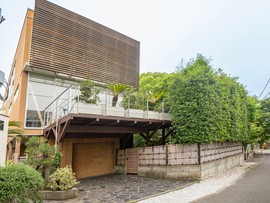
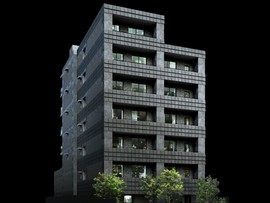
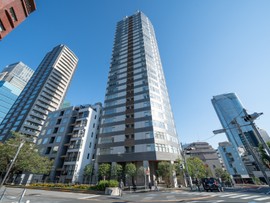
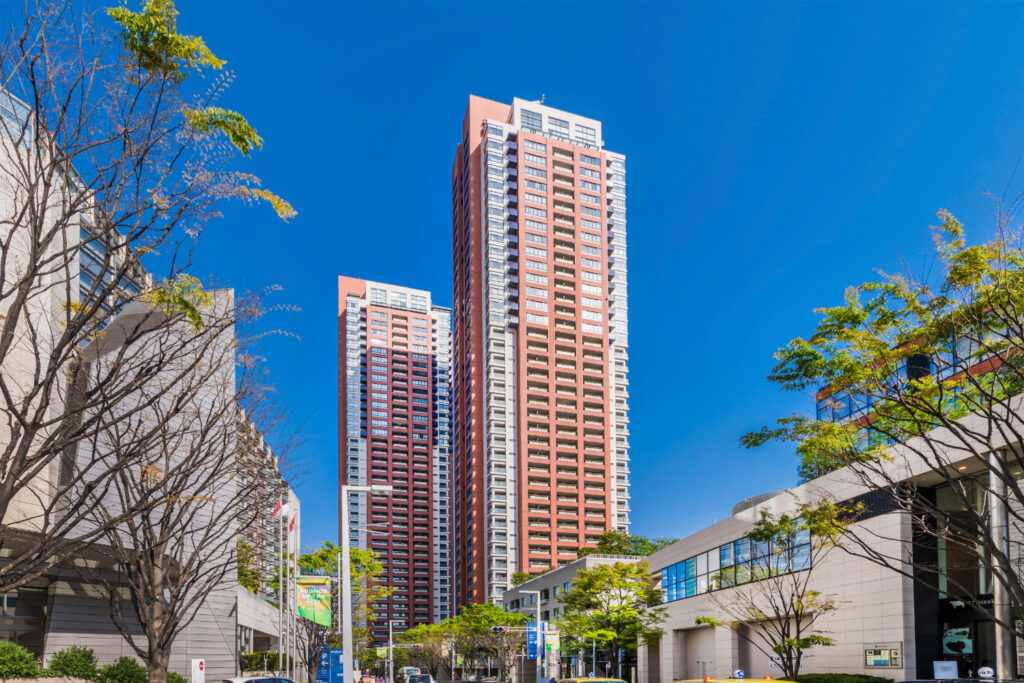
Housing stock. The area’s housing is led by high-rise towers, the residences at Roppongi Hills, Tokyo Midtown, and Azabudai Hills among the best known, alongside established mid-rise condominiums and a smaller number of low-rise homes in the quieter Moto-Azabu and Nishi-Azabu pockets. The market leans towards owner-occupied and high-end rental stock, supported by steady demand from Japanese and international buyers and tenants alike.
For families and professionals moving from overseas, Housing Japan offers local market knowledge and English-language support across buying, selling, and renting in Roppongi and the wider Minato Ward. To discuss the area or current availability, get in touch with our team.
Living in Roppongi: Is It Right for You?
Roppongi suits people who want to be central, well connected, and surrounded by international services, with art, dining, and major retail on the doorstep. The mix of English-friendly amenities, embassies, and nearby international schools makes the move relatively smooth for newcomers to Japan.
It is less suited to those who need a large home on a modest budget, or who want a fully quiet setting with no nightlife nearby, though the calmer streets towards Moto-Azabu and Nishi-Azabu go a long way to providing that. For many residents, the combination of central access, culture, greenery, and English-language convenience is exactly what makes Roppongi one of Tokyo’s most practical international neighbourhoods.
Frequently Asked Questions About Roppongi
Which ward is Roppongi in?
Roppongi is in Minato Ward (港区, Minato-ku), one of the three central wards of Tokyo alongside Chiyoda and Chuo. It sits near the centre of the ward, bordered by Akasaka to the north, Nishi-Azabu and Hiroo to the west, and Azabu-juban and Moto-Azabu to the south. Minato is known for its embassies and international community.
Is Roppongi a good place to live?
Roppongi is one of central Tokyo’s most convenient international districts. It offers two direct subway lines, a high concentration of English-friendly shops and clinics, major museums and retail, and quiet residential pockets a few streets back from the busy core. The main trade-offs are cost and the lively nightlife near Roppongi Crossing.
Is Roppongi safe?
Tokyo is one of the safest big cities in the world, and Roppongi is safe to live in by day and night. The specific risks are concentrated in the late-night nightlife zone around Roppongi Crossing, where embassies and police have warned issues such as aggressive touts. These are avoidable and do not affect everyday residential life.
How much does it cost to rent in Roppongi?
Roppongi has some of Tokyo’s highest rents. As an indicative guide for the expat market, compact one-bedroom units typically start around ¥150,000–250,000 a month, while larger family apartments in luxury towers can run from roughly ¥800,000 into the millions. Rents are highest closest to Roppongi Hills, Tokyo Midtown, and the station.
How long is the commute from Roppongi to Shinjuku and Shibuya?
Shinjuku is about 10 minutes from Roppongi Station on the Toei Oedo Line, with no transfer needed. Shibuya is close but has no single direct subway; it takes roughly 13 minutes with one transfer, or you can take a direct Toei bus. Ginza is about 9 minutes away on the Hibiya Line.
What is the nearest international school to Roppongi?
The British School in Tokyo runs its primary campus (ages 3–11) at Azabudai Hills, on Roppongi’s northern edge. Nishimachi International School, a K–9 day school, is a short distance south in Moto-Azabu, within walking distance of Azabu-juban and Hiroo stations. Several more international schools sit nearby in Hiroo and Azabu.
What is Roppongi known for?
Roppongi is known for art, nightlife, and large mixed-use towers. Landmarks include Roppongi Hills, Tokyo Midtown, and the nearby Azabudai Hills, home to Japan’s tallest building. The Roppongi Art Triangle links the National Art Center, the Mori Art Museum, and the Suntory Museum of Art, and the area has long been Tokyo’s best-known international nightlife district.
What Next?
At Housing Japan, we specialise in buying, selling, and managing residential luxury real estate in central Tokyo. Whether you are a local resident or simply seeking a second home or temporary residence for business trips, we have you covered. Our one-stop service includes expert management services, so you can sit back and relax knowing that everything is taken care of. Whether you are looking for a luxurious living experience or an investment opportunity, we are here to help you every step of the way.
View properties for sale in the Roppongi area here.
Location
Featured Properties in Roppongi