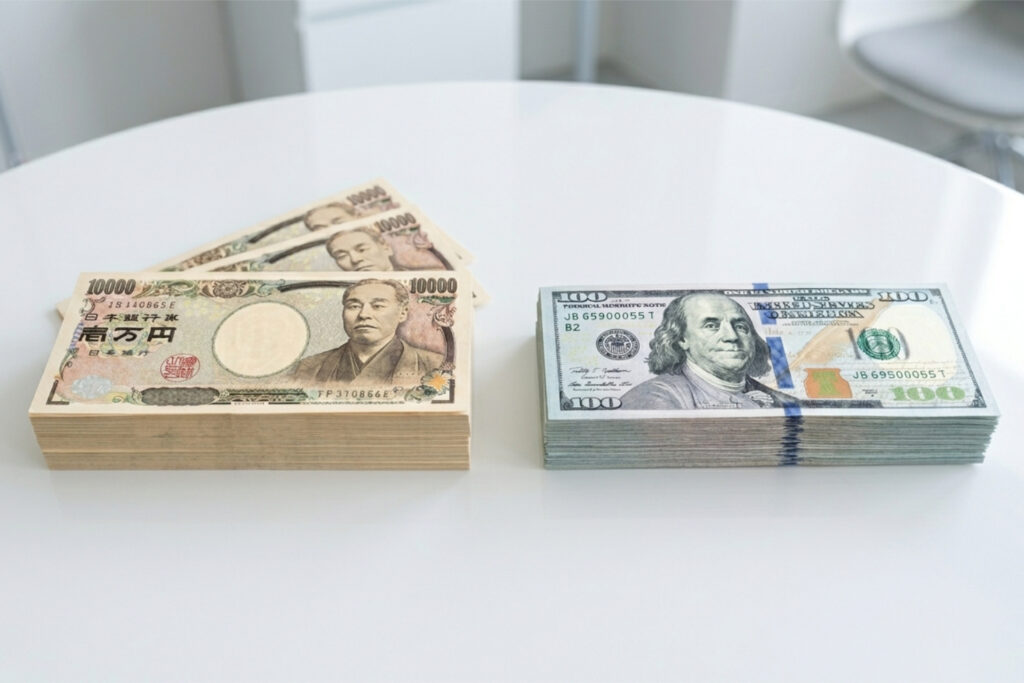
The Japanese yen has spent much of the past several years at historically low levels against the US dollar, the euro, and other major currencies. For foreign investors looking at Tokyo real estate, this matters in a very direct way: when the yen is weak, your home currency buys more of it, and more yen means more property for the same amount of money.
What Does a “Weak Yen” Actually Mean?
Currency exchange rates tell you how much of one currency you need to buy another. When people say the yen is weak, it simply means the yen has lost value compared to other currencies, so you need more yen to equal one dollar or euro than you would have previously.
The numbers make this concrete. The average USD/JPY exchange rate in 2024 was approximately 151 yen to the dollar, peaking at around 161 yen per dollar in July of that year. As of late March 2026, the rate stands at approximately 160 yen per dollar.
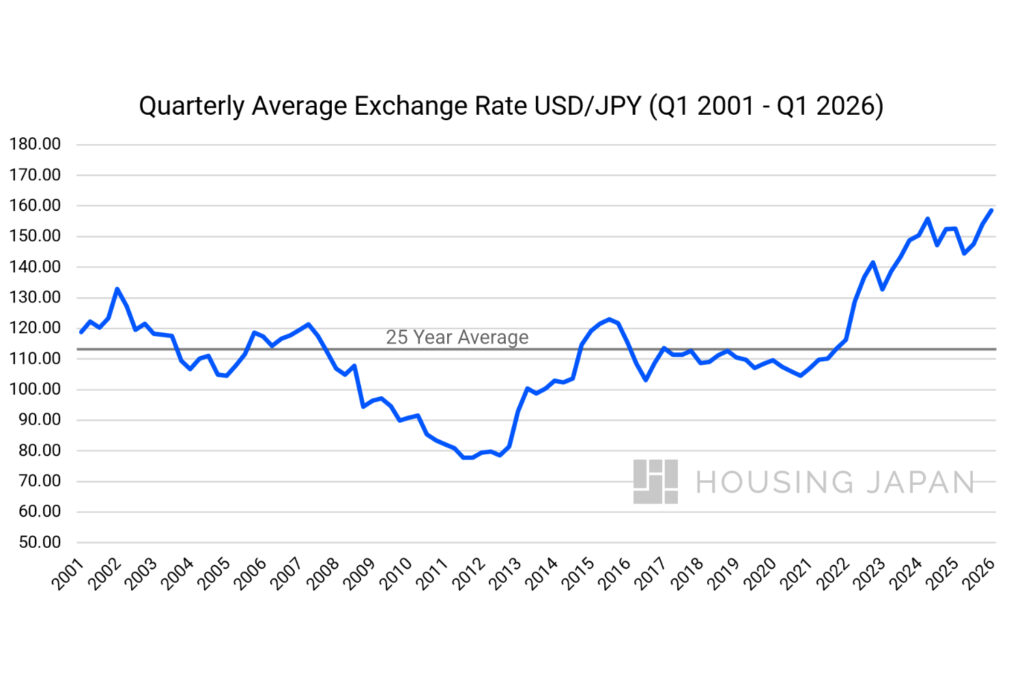
The chart above shows just how dramatic the current situation is in historical context. Over the past 25 years, the average USD/JPY rate has been approximately 113 yen to the dollar, meaning the yen today is trading roughly 40% below its long-run average. At its strongest, between 2011 and 2012, one US dollar bought fewer than 80 yen. The current rate of around 160 represents one of the most significant and sustained periods of yen weakness in modern history.
This matters for a concept economists call mean reversion, the tendency of an asset to drift back toward its long-term average over time. The yen has done this repeatedly across past cycles. While there is no guarantee of when or how far the yen might strengthen, the Bank of Japan’s ongoing shift away from ultra-loose monetary policy is the kind of structural change that has historically been associated with a firming currency. For a foreign buyer purchasing Tokyo property today, a return toward the long-run average would not only preserve but potentially increase the value of that investment when measured in their home currency.
By comparison, in the early 2010s when the yen was near its strongest levels, overseas buyers faced the opposite dynamic, strong yen made Tokyo property expensive in dollar or euro terms. That window has now reversed.
How Has This Affected Foreign Investment in Tokyo?
The numbers tell a clear story. According to Housing Japan research, average land prices across all categories, residential, commercial, and all uses combined, increased for the fourth consecutive year as of January 1, 2025, with the rate of increase expanding from the previous year. In the Tokyo metropolitan area, the average price of pre-owned condominium contracts closed in 2024 was 48.90 million yen, up 6.9% year-on-year.
The broader picture of foreign direct investment into Japan also reflects growing international confidence. The stock of inward FDI in Japan at the end of 2023 increased by 9.3% to 50.5 trillion yen (approximately USD 350.6 billion), equivalent to about 8.5% of Japan’s GDP. Among the sectors driving this growth, real estate featured alongside logistics and healthcare as one of the largest categories by transaction value.
Why Does Tokyo Stand Out for Foreign Buyers?
The currency advantage is one part of the picture. Equally important is what you get once you make the purchase.
Japan is unusual among developed markets in that foreigners can acquire freehold rights, meaning full ownership, to real estate, including the land itself. Foreigners generally have the same rights as Japanese nationals when it comes to buying and owning property. Many countries do not extend this right to foreign buyers, making Japan’s approach notably open.
Rental income is another consideration. Rental yields in central Tokyo typically run between 3% and 5% for prime properties, which can be higher than comparable markets. Tenants in Japan also tend to stay longer than in many other countries, and the rental market is relatively stable, which means owners can be a more predictable income stream.
What About Property Prices?
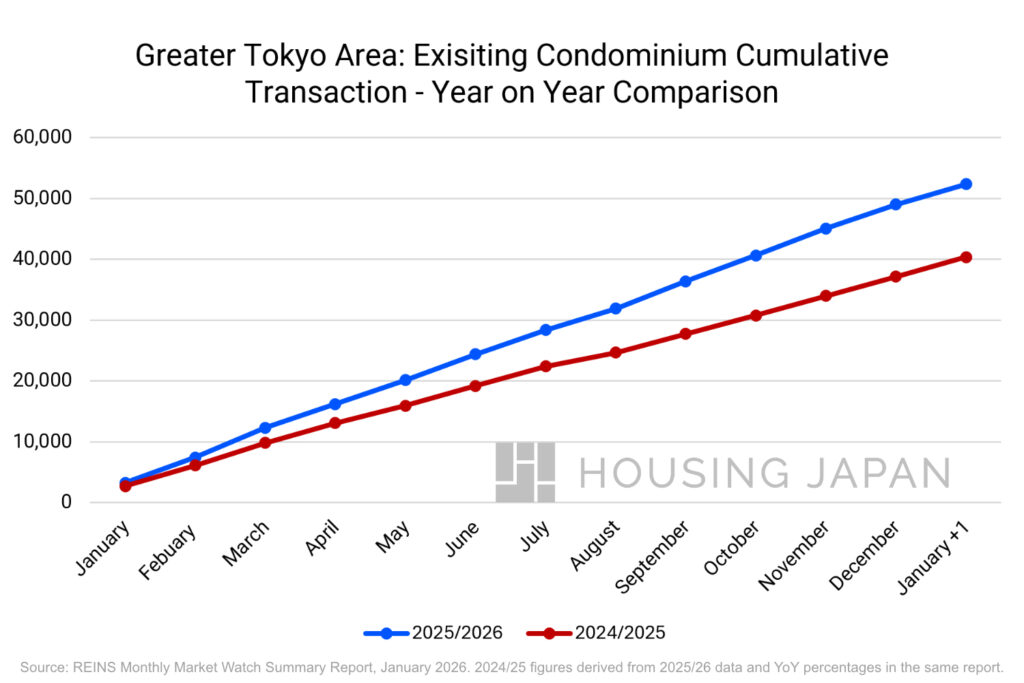
Despite the currency advantage, it is worth understanding that Tokyo property prices have risen significantly in recent years. The number of pre-owned condominium contracts closed in the Tokyo metropolitan area in 2024 was 37,222, up 3.4% year-on-year, reflecting continued and growing demand in the capital’s resale market.
In other words, while the weak yen reduces the dollar or euro cost of buying in Tokyo, the yen price itself has also been climbing. Buyers have benefited from both factors moving in their direction at the same time, a situation that has drawn considerable attention from international investors.
Tokyo’s Reduced Supply
Supply constraints add further pressure. Only 23,000 new condominium units are forecast for the Tokyo metropolitan area in 2026, the lowest level in over 50 years. Developers are finding it increasingly difficult to secure suitable sites in central Tokyo, competing not just with each other but with office, hotel, and mixed-use projects for the same limited land. This has pushed average new condominium prices in the greater Tokyo area to 104.85 million yen as of early 2025, more than 55% higher than the average a decade ago. In Tokyo’s 23 wards specifically, the average new condominium now exceeds 116 million yen.
With fewer new units available, demand has shifted strongly to the resale market. Used condominiums now account for approximately 90% of all condominium transactions in Tokyo, up from around 80% just a few years ago. Prices in that segment are rising too, used apartments in Tokyo’s 23 wards recorded a 28.3% year-over-year price increase, the highest rate since data collection began. For foreign buyers converting dollars or euros into yen, however, the weaker exchange rate can offset a significant portion of these yen-denominated price increases, meaning Tokyo real estate may not feel as expensive as the headline figures suggest.
What Should Investors Keep in Mind?

Currency conditions change. The yen has shown the ability to swing significantly in both directions over short periods. Sustainable returns still depend on rental demand, location quality, and asset fundamentals rather than currency movements alone. The current exchange rate environment is a meaningful entry advantage, but it is not a substitute for careful property selection.
Japan’s interest rate environment is also shifting. The Bank of Japan raised its benchmark policy rate to 0.75% in December 2025, the highest level in 30 years, with the decision unanimously supported by the policy board. Even after this increase, real interest rates in Japan remain very low and monetary policy remains accommodative by global standards. The Bank has signalled that if economic conditions develop as projected, it will continue to raise rates gradually. Rate changes affect borrowing costs and can also influence the yen’s value, so monitoring Bank of Japan policy is relevant for anyone considering a Tokyo property purchase.
Could a Stronger Yen Be on the Horizon?
The Bank of Japan’s gradual move away from decades of ultra-low interest rates is not simply a technical adjustment, it reflects a broader effort to stimulate sustainable economic growth and bring inflation under control at a healthy level. When a central bank raises rates, it typically makes the currency more attractive to international investors seeking higher returns, which increases demand for the yen. If the Bank of Japan continues on its current path of gradual rate rises, the yen could strengthen meaningfully against the dollar and other major currencies over the coming years.
For foreign buyers purchasing Tokyo property today, this is worth keeping in mind, a stronger yen would increase the value of that asset when measured in their home currency, adding a potential upside to an already accessible entry point.
Work With Tokyo’s Experienced Property Specialists
Housing Japan has been helping international buyers navigate the Tokyo property market for over 25 years. With multilingual staff, deep local expertise, and a full range of services covering buying, selling, and property management, Housing Japan is well placed to guide you through every step of the process. Whether you are exploring the market for the first time or ready to move forward on a purchase, contact the Housing Japan team today to find out how we can help you find the right property in Tokyo.
Q&A
Does the weak yen affect only buyers, or does it also affect rental income? It affects both. A weak yen reduces your purchase cost, but rental income received in yen is also worth less in your home currency. Investors with a long-term view typically accept this trade-off, since the entry price advantage and the potential for yen appreciation can both work in their favour over time.
Can foreigners own property in Tokyo outright? Yes. Japan allows foreigners to purchase property and land with full ownership rights, on the same terms as Japanese nationals. There are no restrictions specific to foreign buyers at the national level, though normal due diligence and legal processes apply.
Are there risks to buying Tokyo property because of the yen? Currency risk is real. If the yen strengthens after you purchase, the value of your property measured in your home currency rises. If you sell when the yen is weaker than when you bought, your return will be reduced. Working with a qualified financial and legal adviser familiar with Japan’s market is recommended before making any decision.
Is the Bank of Japan likely to keep raising interest rates? The Bank of Japan has been gradually raising rates from the near-zero levels that persisted for decades, reaching 0.75% in December 2025. The Bank has indicated it will continue adjusting policy if economic conditions develop as projected. Rate changes affect borrowing costs and can influence the yen’s value, so monitoring Bank of Japan announcements is relevant for anyone considering a Tokyo property purchase.
Sources: Ministry of Land, Infrastructure, Transport and Tourism (MLIT) – Land Market Value Publication and Real Estate Transaction Data: mlit.go.jp. Japan External Trade Organization (JETRO) – Invest Japan Report 2024: jetro.go.jp. Bank of Japan – Monetary Policy Decisions 2025: boj.or.jp
Disclaimer
The information contained in this article is provided for general informational purposes only and does not constitute financial, investment, legal, or tax advice. Exchange rate data and market figures are sourced from publicly available information and are subject to change. Past currency movements and property market performance are not indicative of future results. Property investment involves risk, including the potential loss of capital. Readers should conduct their own independent research and seek advice from qualified financial, legal, and real estate professionals before making any investment decisions. Housing Japan does not accept liability for any decisions made on the basis of the information contained in this article.