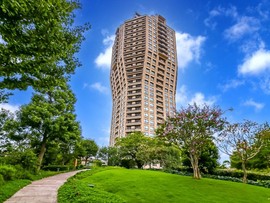
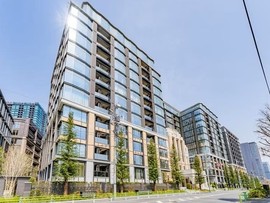
Tsugaike Kogen’s hotels and lodges cluster around the Gondola Eve base station in Otari Village, Nagano, part of Hakuba Valley. Cedars Hotel and Blue Star Hotel, both run by Resort Japan K.K., stand one minute from the lifts: Cedars offers 16 self-contained suites with kitchens, and Blue Star a café, private sauna and rooms from 27 sqm to 42 sqm.

Key Facts
- Location: Tsugaike Kogen, Otari Village, Kitaazumi District, Nagano 399-9422
- Ski area: Tsugaike Mountain Resort (栂池高原スキー場), 10 courses, longest run 5,000m, base 800m, summit 1,704m
- 2026–27 season: 1 December 2026 to 5 May 2027 (planned), with the new six-seat T3 chairlift due in late December 2026
- Snow: 655cm average annual snowfall and a February snow depth of 97cm at the JMA Hakuba station (1991–2020 normals)
- From Tokyo: about 100 minutes by Hokuriku Shinkansen to Nagano, then 1 hour 32 minutes to 1 hour 45 minutes by Alpico express bus
- Resort Japan hotels: Cedars Hotel (16 keys, opened 15 February 2026) and Blue Star Hotel (reopened 2025), both one minute on foot from the gondola, plus Nomad in Hakuba Village
Where is Tsugaike Kogen Ski Resort, and is it part of Hakuba?
Tsugaike Kogen is in Otari Village, at the north-western tip of Nagano Prefecture and the northern neighbour of Hakuba Village, and it is one of the ten ski areas marketed together as Hakuba Valley. In other words, a hotel can carry “Hakuba” in its name and still have an Otari postal address. Otari holds parts of two national parks, Chūbu-Sangaku and Myōkō-Togakushi Renzan, according to Nagano Prefecture’s village profile.
Tsugaike Mountain Resort runs from 800m at its base to 1,704m at the top of the gondola, across ten courses with a longest run of 5,000m. Kane-no-Naru-Oka (鐘の鳴る丘), the beginners’ slope at the bottom, is about 1,200m wide, which explains why so many families and first-timers choose Tsugaike. The steepest marked course, Umanose (馬の背), reaches 32 degrees along a ridge.
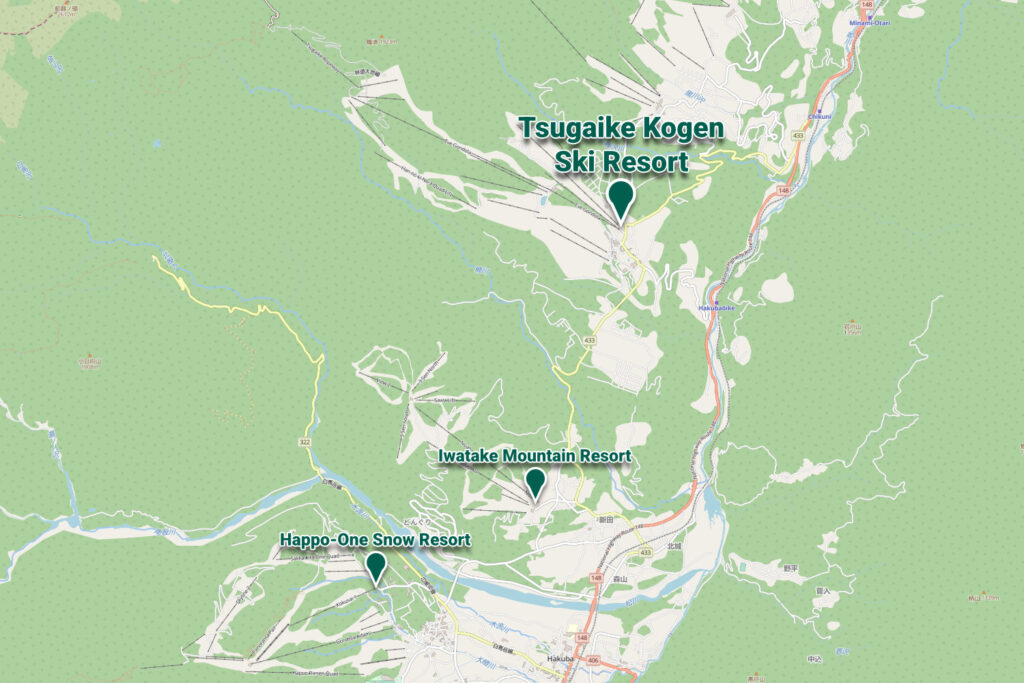
The Gondola Eve base station anchors the village, and the hotels, cafés and restaurants sit within a few minutes’ walk of it. This means the choice between places to stay comes down to the room, the food and the bathing, rather than the distance to the snow. From the Gondola Eve area, Hakuba Norikura Onsen is a 15-minute walk, Hakuba Cortina four minutes by car, Hakuba Iwatake six minutes and Hakuba Happo-One ten, according to Cedars Hotel’s published distances.
Hakuba Valley’s shuttle Line V links Tsugaike with the valley’s other resorts, including Hakuba Iwatake and Happo-One, so a Tsugaike base still gives access to the whole valley. On the 2025–26 timetable, Line V cost ¥800 for adults and ¥400 for children, paid online, and was free for holders of a Hakuba Valley Season Pass or Day Pass. The 2026–27 Hakuba Valley All-Mountain Season Pass, on sale since 14 July 2026, covers ten resorts including Tsugaike, Iwatake and Happo-One.
Which hotels does Resort Japan run in Tsugaike and Hakuba?
Resort Japan K.K., Housing Japan’s sister company, runs three hotels in Hakuba Valley, two of them in Tsugaike Kogen. Cedars Hotel and Blue Star Hotel both stand one minute on foot from the Gondola Eve, across the road from each other. The third, Nomad, sits on the main street of the Echoland area in Hakuba Village. Each suits a different trip: Cedars for self-contained suites with kitchens, Blue Star for a café downstairs and a private sauna, and Nomad for a lively base near Happo-One.
Cedars Hotel
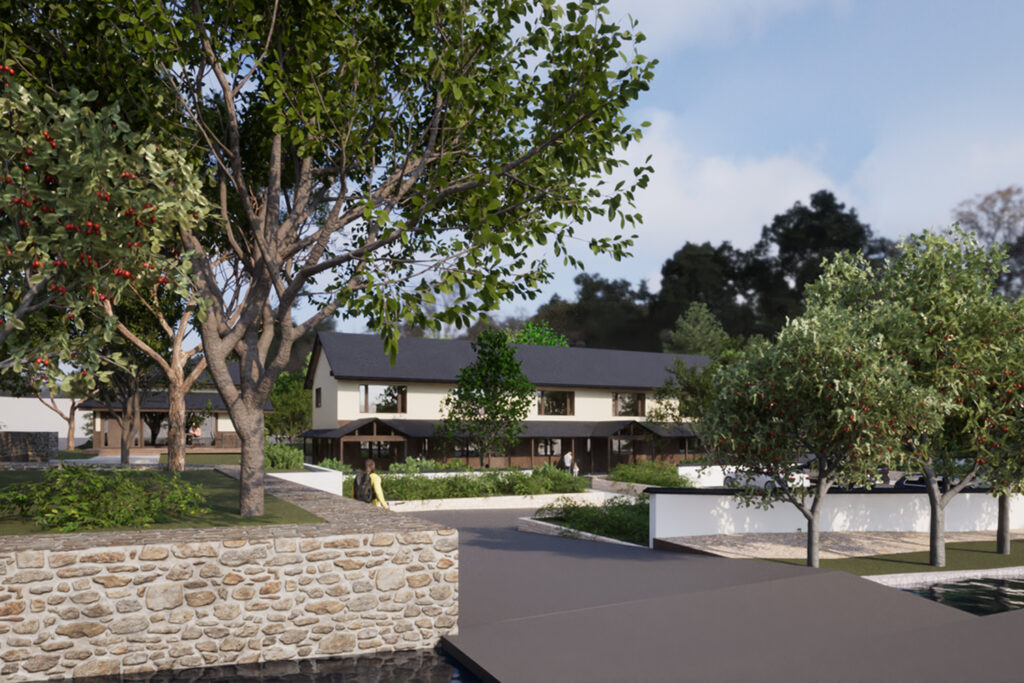
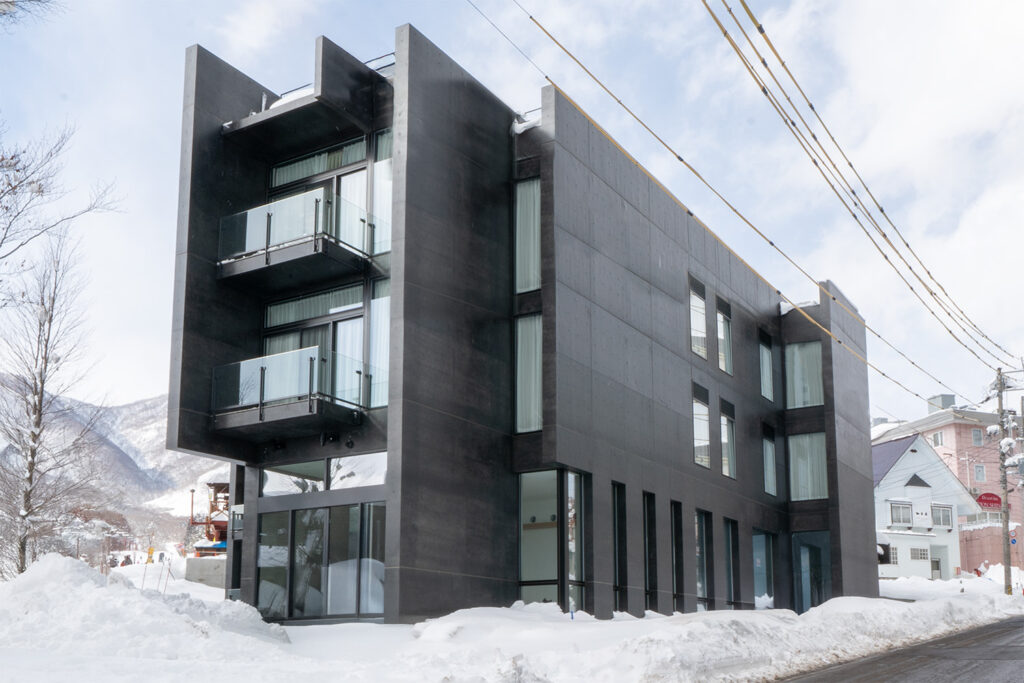
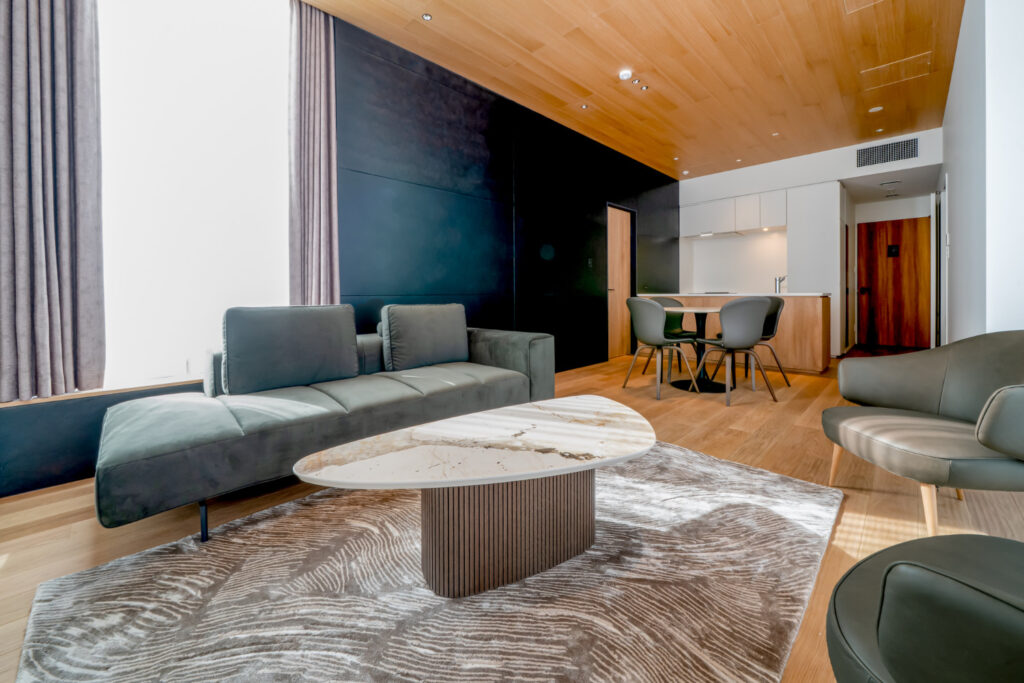
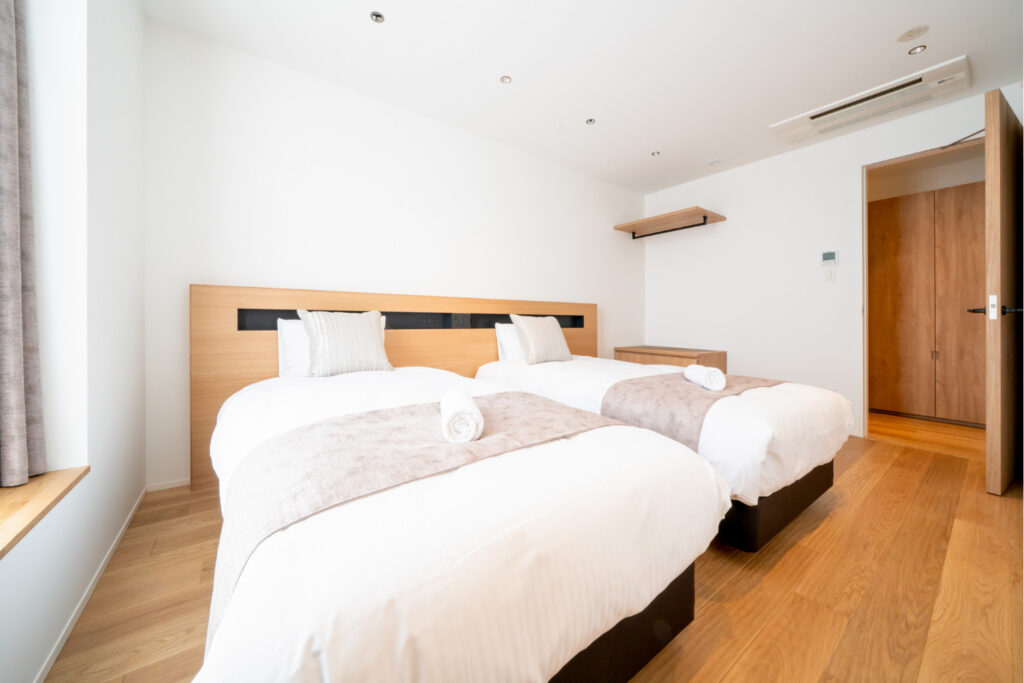
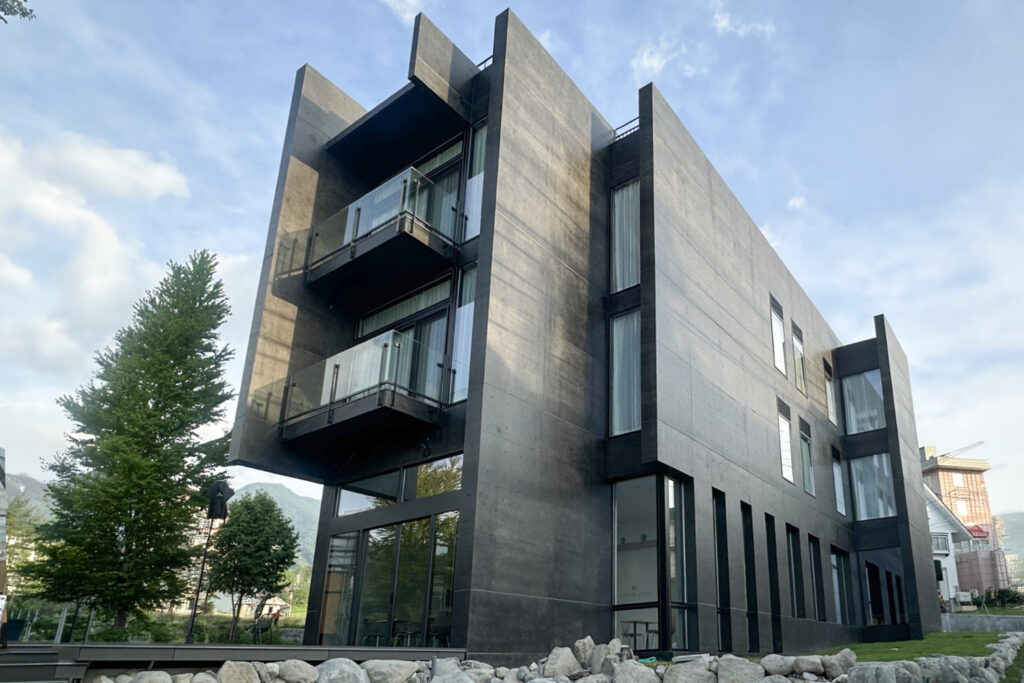
Cedars Hotel opened on 15 February 2026 with 16 keys across 18 rooms, in three self-contained layouts. The Studio sleeps two on twin beds, with a kitchenette and shower room, and a third bed can be made up on request. The One Bedroom sleeps two on single beds, with a full kitchen, a living area and a shower room, and takes up to four with two extra beds. The Two Bedroom sleeps four on single beds across two rooms, adds a deep soaking bathtub, and takes a fifth guest on an extra bed. Extra beds carry an additional charge.
Every room comes with cooking utensils, plates and glasses, a microwave, a refrigerator, a safe and a USB-C power strip, and Resort Japan’s opening announcement lists a washing machine in each. This means a family can stay for two weeks as easily as two nights without eating out every evening. Check-in runs from 15:00 to 22:00 and check-out is by 10:00, according to the hotel’s website as of October 2026.
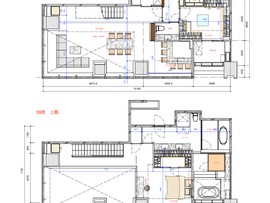
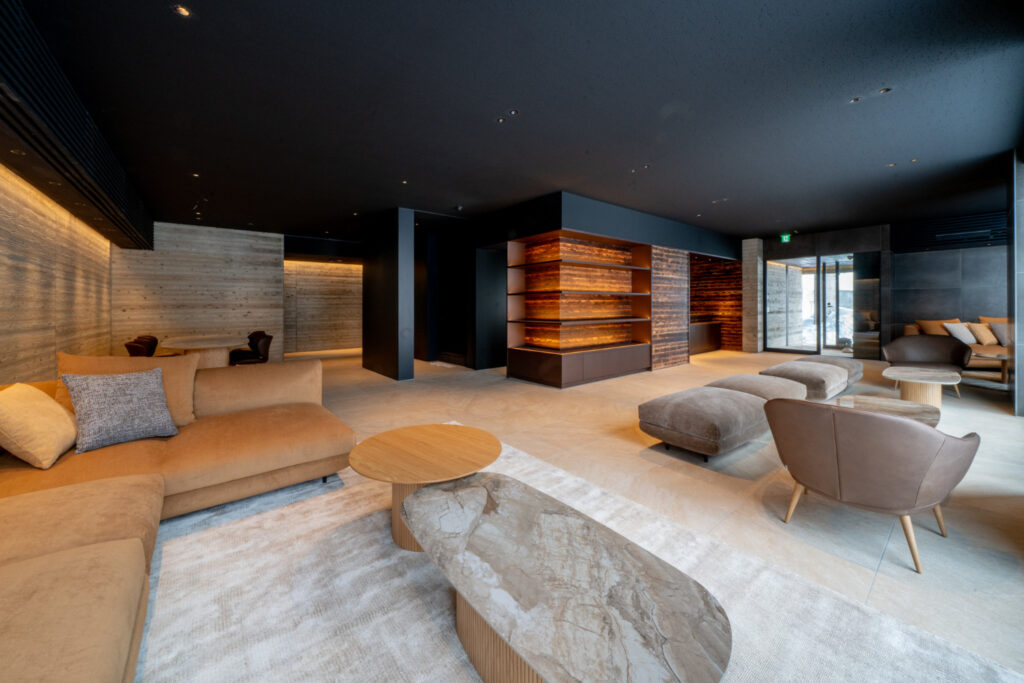
Shinsaku Munemoto of Shinsaku Munemoto & Associates Architects designed the building. He founded his practice in 2006 after a doctorate at Kyoto University and seven years at Nikken Sekkei, and teaches architecture and urban design at Ritsumeikan University. He staggered the rooms in an offset plan so that each faces a slightly different direction and keeps its own view, rather than looking onto a neighbour’s balcony.
Local cedar finished by yakisugi (焼杉), the traditional Japanese method of charring timber to protect it, lines the front desk, bookshelves and lift hall. The concrete walls were cast in cedar-board moulds, so the wood grain is pressed into the surface. An on-site café run with Allpress Espresso, the coffee roaster founded in New Zealand, serves food and coffee in the building.
Blue Star Hotel
Blue Star Hotel occupies a Tsugaike hotel building dating from 1986, renovated and reopened in 2025, at 12840-146 Chikuni-otsu, Otari. The Twin measures 27 sqm and sleeps two on single beds, or three with an extra bed. The Superior measures 33 sqm and sleeps four on two single beds and two futons. The Deluxe measures 42 sqm, sleeps four, or five with an extra bed, and is the only type with a bathroom and bathtub rather than a shower room. Extra beds carry an additional charge.
The Blue Star Café serves British-style breakfasts and lunches, then British classics and Japanese fusion dishes in the evening, with gluten-free options. The hotel’s Japanese-language site says the café is open to everyone, not only hotel guests, and names its Samurai Chicken Parmigiano as the dish to try.
Blue Star’s private bath and sauna pairs a Harvia sauna and cold plunge with a separate hot bath, filled with filtered snowmelt. Sessions cost ¥9,000 for 45 minutes, run from 13:00 to 21:00 with last entry at 20:00, and must be booked at least two hours ahead. Hotel guests receive 30% off, according to the hotel’s sauna page as of October 2026. For people who would rather not share a public bathhouse after skiing, this is the main reason to choose Blue Star.
Blue Star sits close to a ski hire shop and three minutes on foot from the bus terminal with direct services from Nagano and Hakuba stations, according to Resort Japan and the hotel. For anyone arriving by bus without their own skis, that takes most of the effort out of the first afternoon. Cedars guests can cross the road to use the Blue Star Café and book the private sauna, so a stay at either hotel gives access to the kitchen-equipped suites on one side and the café and sauna on the other.


What other places to stay are in Tsugaike Kogen?
The Tsugaike Kogen Tourism Association lists more than 60 places to stay, from resort hotels to owner-run pensions and lodges. Hotel Eve Plaza handles half-board, Lodge Freerun suits groups on a budget, and Pension Kobekko is chosen for its kitchen.
Hotel Eve Plaza
Hotel Eve Plaza stands at 599 Tsugaike Kogen, Otari, about two minutes on foot from the Gondola Eve and 150m from the slope. It lists non-smoking room types, each for up to four guests. Twin Classic is the Western-style room in the main building, with its own bath and toilet. Japanese Comfort is a tatami room with a private toilet but no bath, Japanese Classic is a tatami room without a private bathroom, and Tatami Retreat is an eight-mat room in the annexe.
Guests without their own bathroom use the hotel’s large shared bath, which draws groundwater from the Northern Alps and heats it on site. The hotel is not a natural hot spring. Eve Plaza sells room-only and half-board plans, with dinner and breakfast included, which suits families who would rather not plan an evening meal each day.
Lodge Freerun
Lodge Freerun is a six-room lodge at 12840-1 Chikuni-otsu, Otari, next to the Tsugaike ski area, with three tatami rooms for one to four people and three loft maisonettes for four to eight. Guests share two shower units, toilets and the living area, and there is one private bath. There is a resturant, and the bar serves Shinshu sake, craft beer and food made with local vegetables from 18:00 to 23:00, according to the lodge’s website as of October 2026.
Freerun keeps a climbing wall and a large manga collection. Check-in runs from 15:00 to 23:00, check-out is at 10:00, and early check-in from 07:30 can be arranged in advance when a room is free.
Freerun publishes two price tiers, one for overseas guests and one for people living in Japan. The lodge explains that inbound demand has pushed up living costs and room prices in Hakuba, and that the lower resident rate keeps the area affordable for Japanese travellers.
Pension Kobekko
Pension Kobekko (ペンション神戸っ子) is a family-run pension at 807-16 Chikuni-otsu, Otari, where the owner-chef trained in hotels and cooks Chinese course dinners with Shinshu (Nagano) produce. The standard course includes Hakuba pork mapo tofu, Shinano-apple yurinchi (a Chinese-style fried chicken), spring rolls, steamed fried rice with Otari pickles and a medicinal ginger soup. The upgraded course adds Shinano yukimasu trout stir-fried with salt and Shinano roast beef. Breakfast is Chinese rice congee with soup and nine side dishes rather than a buffet.
Kobekko’s restaurant also takes diners who are not staying. Overnight guests take priority, so day-visitor bookings may be refused over long weekends, New Year and the summer peak. The pension keeps private baths of different styles and an equipped music studio. Check-in is from 15:00 and check-out by 10:00, and the pension says that booking a room by telephone gives the lowest price.
Which Tsugaike stay suits which trip?
Cedars Hotel suits families and longer stays that want a kitchen, while Blue Star suits couples and small groups that want a café downstairs and a private sauna. The table below sets out the room, bathing and food arrangements published by each property as of October 2026.
| Property | Room types | Sleeps up to | Bathing | Food |
|---|---|---|---|---|
| Cedars Hotel | Studio, One Bedroom, Two Bedroom | 5 (Two Bedroom) | Shower room in every room; deep soaking bathtub in Two Bedroom | Kitchen or kitchenette in every room; Allpress café on site; Blue Star Café across the road |
| Blue Star Hotel | Twin 27 sqm, Superior 33 sqm, Deluxe 42 sqm | 5 (Deluxe) | Shower room in Twin and Superior; bathtub in Deluxe; private sauna and bath to book | Café and bar restaurant, open to non-guests |
| Hotel Eve Plaza | Western twin; three tatami room types | 4 per room | Private bath in Twin Classic only; large shared bath | Room-only or half-board plans |
| Lodge Freerun | 3 tatami rooms, 3 loft maisonettes | 8 (loft) | Two shared shower units; one private bath | Dinner ¥3,500, breakfast ¥1,300; bar |
| Pension Kobekko | Pension rooms | Ask the pension | Private baths to reserve | Chinese course dinners and congee breakfast; open to non-guests from ¥1,500 |
How do you get to Tsugaike Kogen from Tokyo?
The usual route is the Hokuriku Shinkansen from Tokyo Station to Nagano, about 100 minutes, then an Alpico express bus from Nagano Station East Exit to the Tsugaike Kogen stop. On Alpico’s April to November 2026 timetable, four daily departures stop at Tsugaike, taking between 1 hour 32 minutes and 1 hour 45 minutes. Alpico publishes a separate winter timetable, so check it before booking a December or January arrival. Allowing for the change at Nagano, the whole trip from Tokyo Station takes at least three and a half hours.
For a trip with no change of train, the JR limited express Azusa 5 runs direct from Shinjuku to Hakuba, leaving Shinjuku at 08:00 and reaching Hakuba Station at 11:40 on the timetable from October 2026. From Hakuba Station, the Alpico Nagano–Hakuba express bus continues to the Tsugaike Kogen stop in 30 minutes, and on the April to November 2026 timetable the 12:02 departure arrives at 12:32. That puts Shinjuku to Tsugaike at about four and a half hours, with skis and luggage staying on one train for most of the way. The return service, Azusa 38, leaves Hakuba at 13:43 and reaches Shinjuku at 17:26. There is also the local Ski shuttle bus that passes the station too.
Otari Village’s tourism office lists a second rail route that avoids the bus. The Hokuriku Shinkansen reaches Itoigawa in Niigata in about 130 minutes, and the JR Ōito Line runs south to Minami-Otari Station in about 60 minutes. A village bus then links Minami-Otari with Tsugaike Kogen, on timetables that change between summer (April to November) and winter (December to March).
Alpico also runs an overnight coach from Busta Shinjuku that stops at Tsugaike Kogen. On the April to 4 December 2026 timetable, service 5551 leaves Shinjuku at 23:05 and reaches Tsugaike at 06:04 on selected dates, with seats reserved in advance and a ¥2,000 overnight surcharge. Alpico’s Osaka and Kyoto overnight route, a winter service, also lists Tsugaike Kogen as a stop, taking about 8 hours 50 minutes from Osaka to Hakuba. Neither route’s 2026–27 winter timetable was published as of October 2026.
By car, Tsugaike is about 4 hours 30 minutes from Tokyo, according to Tsugaike Gondola Lift Co.’s 2026–27 season information. Drivers reach Tsugaike in about 1 hour 30 minutes from Nagano IC on the Jōshin-etsu Expressway, Azumino IC on the Nagano Expressway or Itoigawa IC on the Hokuriku Expressway, according to Tsugaike Gondola Lift Co. The resort lists parking for 1,500 cars. Winter tyres or chains are needed from December onwards, as roads into the valley carry heavy snow.

When is the snow deepest, and when does the 2026–27 season run?
The Japan Meteorological Agency’s Hakuba station records its deepest snow in February, with a normal depth of 97cm, and an average of 655cm of snowfall a year (1991–2020 normals). That station sits on the valley floor, while Tsugaike’s slopes run from 800m to 1,704m, so the snowpack on the mountain differs from the valley reading.
Tsugaike Mountain Resort plans to open for the 2026–27 season on 1 December 2026 and close on 5 May 2027, subject to snow and weather, according to an October 2026 announcement from operator Tsugaike Gondola Lift Co. The operator is adding 18 snowmaking machines, including seven DemacLenko Titan 5.0 units, which takes its total to 92. The new machines cover the link from the Hannoki (ハンの木) slope to the T3 lift and the paths around the Snow Plaza.
The T3, a six-seat LEITNER-POMA chairlift, replaces the Hannoki No. 3 quad, which has run for about 35 years, and is due to open in late December 2026. The operator says the ride falls from 7 minutes 6 seconds to 5 minutes 12 seconds, and that T3 is the longest lift route at the resort. For guests at Cedars and Blue Star, this means faster laps on Hannoki, one of Tsugaike’s main courses.

Is Tsugaike worth visiting outside the ski season?
Tsugaike Nature Park (栂池自然園), a high-altitude marshland at about 1,900m, opens each summer and is reached by the same gondola and ropeway that skiers use in winter. In 2026 the gondola and ropeway resumed on 6 June for the green season. Boardwalks cross the wetland, with mizubāshō (水芭蕉), the white skunk cabbage, and marsh marigolds in spring, and autumn colour later in the year.
Blue Star describes Tsugaike as a base for trekking from early summer to autumn, and for mountain biking, paddleboarding and canyoning in summer. Otari also sits on the Salt Road (塩の道, Shio no Michi), the old trading route of about 120km that carried salt from Itoigawa on the Sea of Japan to Matsumoto. The village marks it each year in early May with the Salt Road Festival, a walk along the Chikuni course of about 9km, according to a Nagano Prefecture newsletter.
The self-contained rooms at Cedars and the larger rooms at Blue Star work for a week of walking as well as a ski week, and both hotels stay open in the green season.

How do you book Cedars, Blue Star?
Each of Resort Japan’s three hotels takes bookings direct through its own website: Cedars Hotel for the self-contained suites at the Gondola Eve, Blue Star Hotel for the café, sauna and family rooms across the road. These hotels are listed on Resort Japan’s website, with contact details for the team in Hakuba Village. For the 2026–27 winter, the lifts are planned to run from 1 December 2026, and the new T3 chairlift from late December.
Resort Japan is the sister company of Housing Japan, which has helped international clients buy, rent and manage homes in central Tokyo since 2000. If a winter in Hakuba is part of a longer stay in Japan, start with our Tokyo area guides, send our bilingual team a message through the contact form below, or sign up to the newsletter for new property listings.
Q&A
Is Tsugaike Kogen in Hakuba or Otari?
Tsugaike Kogen is in Otari Village, Kitaazumi District, Nagano, the northern neighbour of Hakuba Village. It is marketed as one of the ten ski areas of Hakuba Valley, which is why hotels there use “Hakuba” in their names while their postal addresses read Otari. The area’s postcode is 399-9422.
Which hotels in Tsugaike are a minute from the gondola?
Cedars Hotel and Blue Star Hotel, both run by Resort Japan K.K., Housing Japan’s sister company, are each one minute on foot from the Gondola Eve at Tsugaike Mountain Resort. Cedars offers ski-in, ski-out access with no shuttle needed. Cedars has 16 self-contained suites with kitchens, while Blue Star has three room types from 27 sqm to 42 sqm and a café and bar restaurant. Guests who want both a kitchen and a sauna can stay at Cedars and book Blue Star’s private sauna separately.
How long does it take to get to Tsugaike from Tokyo?
Allow at least three and a half hours from Tokyo Station. The Hokuriku Shinkansen reaches Nagano in about 100 minutes, and the Alpico express bus from Nagano Station East Exit takes 1 hour 32 minutes to 1 hour 45 minutes on the April to November 2026 timetable. A winter timetable applies from December. The JR limited express Azusa 5 also runs direct from Shinjuku to Hakuba in 3 hours 40 minutes, leaving at 08:00, and the express bus from Hakuba Station reaches Tsugaike in 30 minutes. Another alternative is the Shinkansen to Itoigawa, about 130 minutes, then the JR Ōito Line to Minami-Otari, about 60 minutes, and a village bus up to Tsugaike Kogen. By car, the operator puts Tokyo to Tsugaike at about 4 hours 30 minutes, with the last stretch about 1 hour 30 minutes from the Nagano, Azumino or Itoigawa interchanges.
When does Tsugaike open for the 2026–27 ski season?
Tsugaike Mountain Resort plans to open on 1 December 2026 and close on 5 May 2027, subject to snow and weather. The new T3 six-seat chairlift on the Hannoki slope is due to start in late December 2026, and 18 new snowmaking machines bring the resort’s total to 92.
Can you use the Blue Star sauna and café without staying there?
Blue Star’s café is open to everyone, not only hotel guests, according to the hotel’s Japanese-language site. The private sauna and bath costs ¥9,000 for 45 minutes, runs from 13:00 to 21:00 with last entry at 20:00, and needs booking at least two hours ahead. Hotel guests receive 30% off. The session covers a Harvia sauna, a cold plunge and a separate hot bath filled with filtered snowmelt, reserved for your group alone. Blue Star recommends up to four people per session.
Is there a shuttle bus from Tsugaike to other Hakuba resorts?
Hakuba Valley’s shuttle Line V connects Tsugaike with the other Hakuba Valley resorts, including Hakuba Iwatake and Happo-One. On the 2025–26 timetable, adults paid ¥800 and children ¥400, online only, while Hakuba Valley Season Pass and Day Pass holders rode free. Buses can fill up, especially the last service of the afternoon.
Where can you eat in Tsugaike without a meal plan?
Blue Star’s café and bar restaurant is open to everyone for breakfast, lunch and dinner, and Cedars has an Allpress Espresso café on site. Cedars guests can also cook in their own kitchens. There is a selection of cafes, restaurants and bars in Hakuba, it is best to book in advance.
Which Resort Japan hotel should you choose in Hakuba?
Choose Cedars Hotel for self-contained suites with kitchens one minute from the Tsugaike gondola, Blue Star Hotel for a café, private sauna and rooms from 27 sqm to 42 sqm across the road, and Nomad Hakuba for a lively Echoland base near Happo-One with a bar and wood-fired bath. All three are run by Resort Japan K.K.
For a family ski week, the choice between Cedars and Blue Star comes down to cooking in your own kitchen or eating at a café downstairs, and because the two stand opposite each other, guests at either can use Blue Star’s café and sauna. Nomad suits travellers who want restaurants and bars on foot and plan to reach Tsugaike, Happo-One or Hakuba 47 by shuttle.
Sources
Tsugaike Gondola Lift Co., 2026–27 winter season announcement (season dates, snowmaking, T3 lift), October 2026
Japan Meteorological Agency, 1991–2020 normals, Hakuba station
Otari Village official tourism site (小谷村観光公式サイト), access routes
Alpico Kotsu, Nagano–Hakuba express bus, April–November 2026 timetable
Hakuba Valley, shuttle bus routes and fares, 2025–26 season
Hotel and lodge details are taken from each property’s own website, linked in the text, and from Resort Japan’s February 2026 opening announcement for Cedars, as of 22 October 2026. Seasonal dates, prices and timetables are set by each operator and change between seasons.