Japan’s relationship with time goes deeper than most countries. The traditional Japanese calendar divides the year into 24 seasonal phases called sekki, each one marking a subtle shift in nature. This attention to passing moments carries through to the way Japan makes watches. From launching the world’s first quartz wristwatch in 1969 to developing hybrid movements that blur the line between mechanical and electronic watchmaking, Japanese watchmakers have consistently changed what people expect from a timepiece.
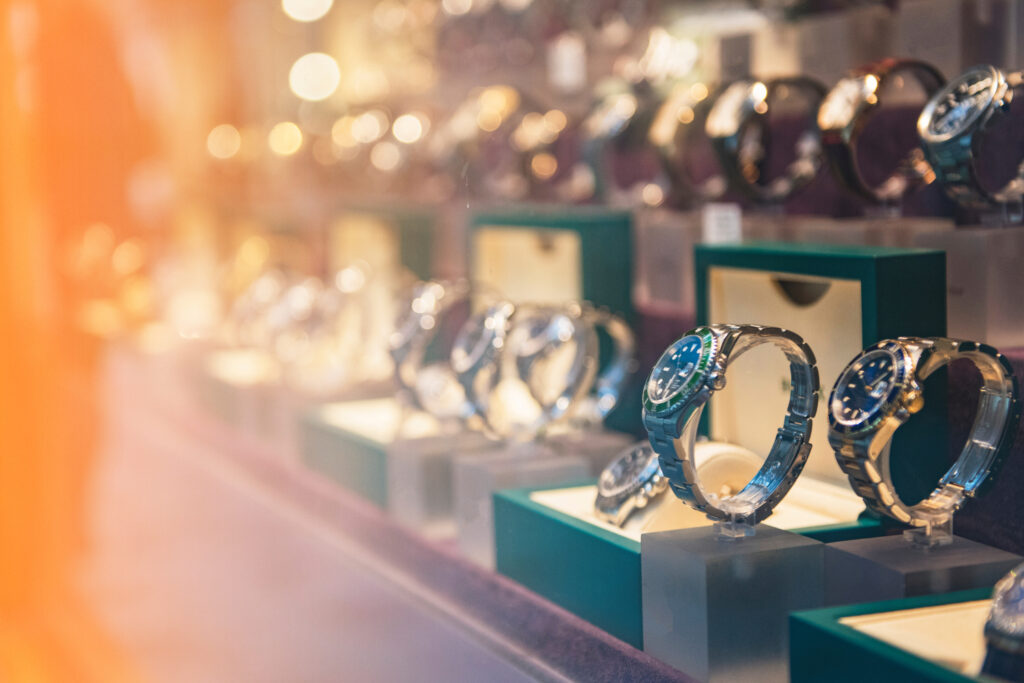
Japan is also one of the strongest markets in the world for Swiss watches. Brands like Rolex, Omega, Patek Philippe, and Franck Muller have large and loyal followings here. Japanese buyers are known for valuing craftsmanship, condition, and authenticity, which has made the country a trusted destination for luxury timepieces from both domestic and international makers.
At the same time, Japan produces its own world-class watches. Grand Seiko rivals top Swiss brands in accuracy and finishing, while Credorm, a lesser-known luxury brand, also from parent company Seiko, creates hand-finished pieces that are almost exclusively available in Japan. Tokyo’s Ginza district brings it all together, with flagship boutiques from Grand Seiko, Rolex, Omega, and Franck Muller all within walking distance of each other.
This guide covers what makes Japanese watches special, the key models and movements worth knowing about, and where to shop for luxury watches in Tokyo.
What Makes Grand Seiko Special?
Grand Seiko – SBGR 305 by danceoflight is licensed under CC BY-SA 2.0. Source: https://www.flickr.com/photos/danceoflight/54460481200/. This work has been modified from the original.
Grand Seiko was founded in 1960 with a straightforward goal: make the most precise and legible watch possible. For decades it operated as a line within Seiko, but in 2017 it became a standalone brand with its own identity, logo, and global distribution. Everything about a Grand Seiko is made in Japan, from the movement to the case, dial, and bracelet.
The brand follows a set of design principles called the Grammar of Design, established in 1967. These nine rules govern how every Grand Seiko looks. They include flat surfaces that play with light, sharp ridgelines between polished and brushed areas, and a commitment to legibility from any angle. The result is a watch that looks simple at first glance but reveals layers of detail up close.
What is Zaratsu Polishing
One of the techniques that sets Grand Seiko apart is Zaratsu polishing. This is a hand-finishing method that creates distortion-free mirror surfaces on watch cases. It takes a craftsman several years to learn, and it is particularly difficult to apply to titanium, which is harder than steel. When you tilt a Grand Seiko case under light, you can see the difference immediately – the reflections are perfectly flat and undistorted, which gives the watch a sense of depth.
Grand Seiko watches are made at two studios in Japan. The Shizukuishi Watch Studio in Iwate Prefecture produces mechanical movements. The Shinshu Watch Studio in Nagano Prefecture handles Spring Drive and quartz calibers. Both studios are in mountainous rural areas, and the landscapes around them directly inspire the dial designs. Snow-covered peaks, birch forests, frozen lakes, and cherry blossoms all find their way onto the dials through textured surfaces and carefully considered colour.
The Grand Seiko Snowflake
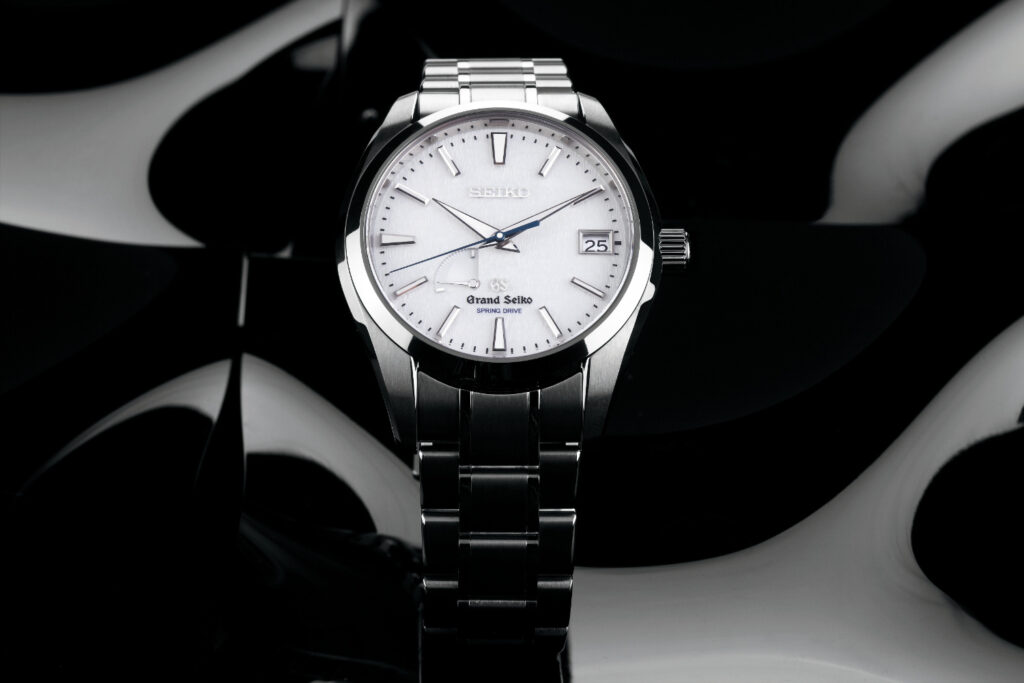
Grand Seiko SBGA011 by Faustine seiko is licensed under CC BY-SA 3.0. Source: https://commons.wikimedia.org/wiki/File:Grand_Seiko_SBGA011.jpg. This work has been modified from the original.
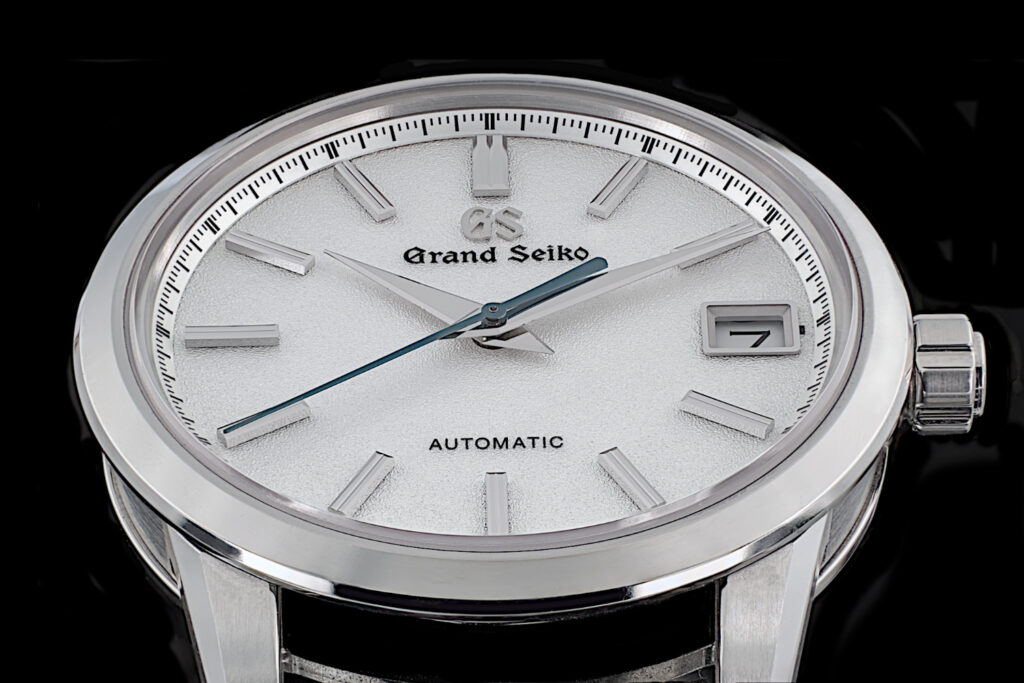
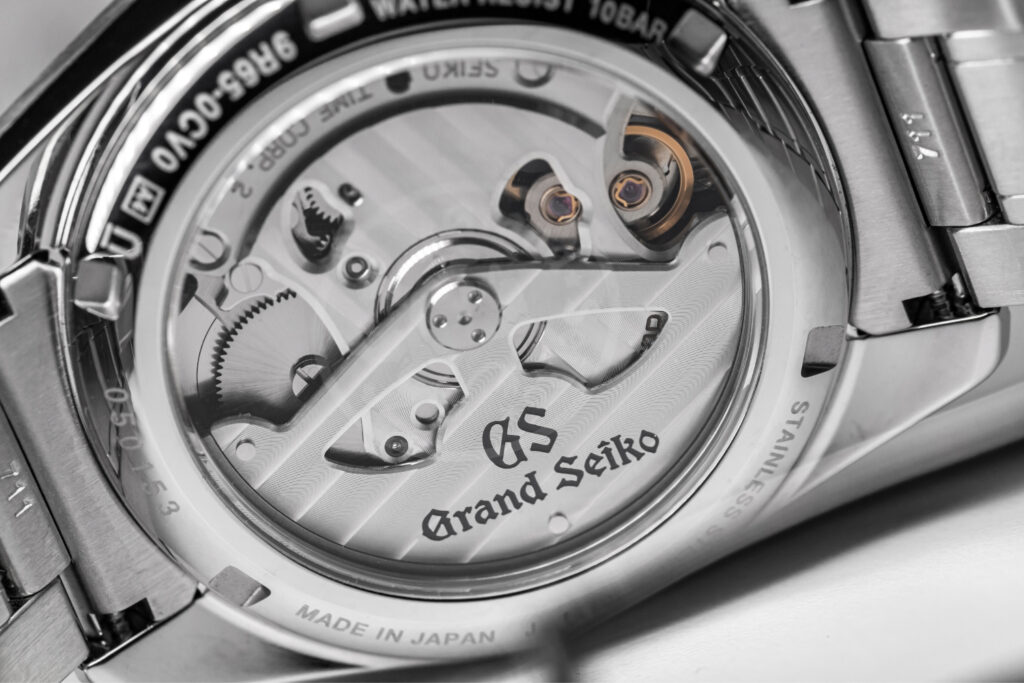
The Grand Seiko Snowflake, originally SBGA011 (2005 Japan/2010 International) and now reference SBGA211 (Current from 2017), is one of Grand Seiko’s most recognised watches. The original version launched in Japan in 2005 and the current model has been available worldwide since 2010. The dial is not painted white, it uses a silver-plating process that creates a textured surface inspired by windswept snow on the Hotaka mountain range near the Shinshu Watch Studio in Nagano Prefecture. Inside is the Spring Drive Caliber 9R65, accurate to ±1 second per day, with a seconds hand that glides in a smooth continuous motion rather than ticking. The case and bracelet are high-intensity titanium with Zaratsu polishing, and the entire watch weighs just 100 grams.
The Grand Seiko Shunbun: Japan’s Cherry Blossom Watch
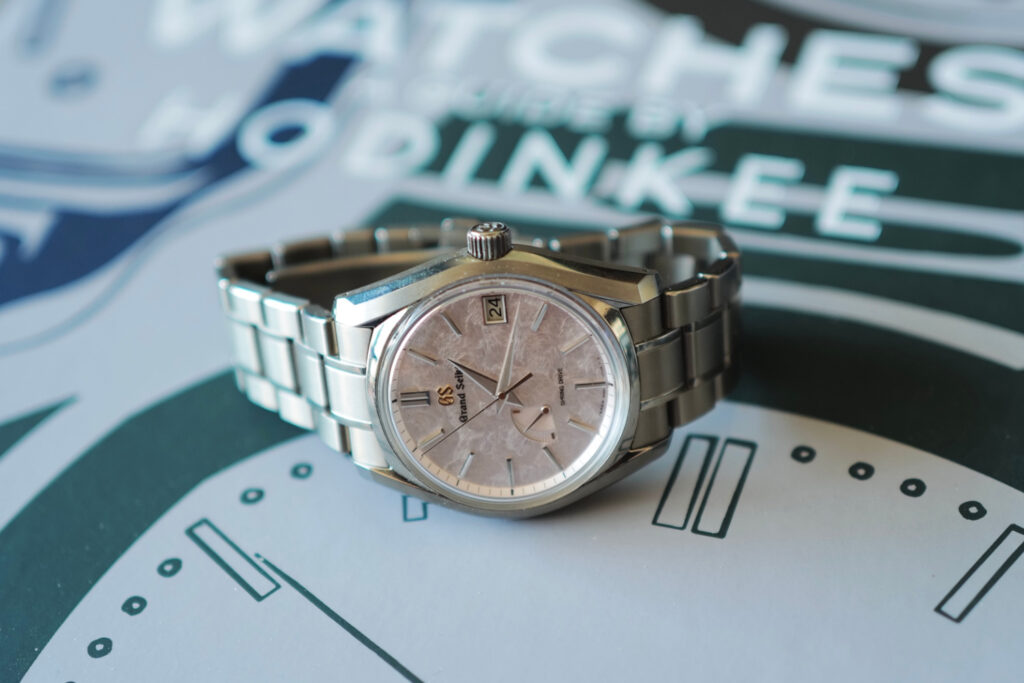
Grand Seiko SBGA413 by Ken Collins is licensed under CC BY-ND 2.0. Source: https://www.flickr.com/photos/24300714@N04/52239337029/
The Grand Seiko Shunbun, reference SBGA413, is part of Grand Seiko’s Four Seasons collection. The name refers to the spring equinox, the fourth of the 24 sekki in the traditional Japanese seasonal calendar. The soft pink textured dial is inspired by hana-ikada, the sight of cherry blossom petals floating on the surface of a river. Under direct light the dial can appear almost silver, but in softer conditions the pink tones emerge. Cherry blossoms hold deep meaning in Japanese culture as a symbol of fleeting beauty, and this idea sits at the heart of Grand Seiko’s design philosophy. Like the Snowflake, the Shunbun uses the Spring Drive 9R65 caliber in a high-intensity titanium case with Zaratsu polishing.
What Is Credor? Japan’s Hidden Luxury Watch Brand
While Grand Seiko has gained worldwide recognition over the past decade, there is another luxury brand within the Seiko family that remains largely unknown outside Japan. Credor was launched in 1974, and its name comes from the French “Crête d’Or,” meaning “golden peak.”
Where Grand Seiko focuses on precision and everyday wearability, Credor is about elegance, artistry, and ultra-thin movements. Credor watches use traditional Japanese craft techniques including maki-e lacquer, mother-of-pearl inlays, and hand-painted porcelain dials. The most complex Credor movements are built at Seiko’s Micro Artist Studio in Shiojiri, where a small team of craftsmen work on each piece by hand.
One of the most talked-about Credor watches is the Eichi II, a hand-wound Spring Drive with a white porcelain dial and hand-painted indices. The movement finishing was developed in consultation with Swiss master watchmaker Philippe Dufour. It is widely regarded as one of the finest three-hand watches ever made. Credor also produced Seiko’s first tourbillon, the Fugaku Tourbillon, inspired by Hokusai’s Great Wave woodblock print and limited to just eight pieces worldwide.
Credor watches are sold almost exclusively in Japan, which makes them a genuine insider’s brand. Visiting Tokyo is one of the few ways to see the full range in person. For collectors who appreciate craftsmanship over brand recognition, Credor offers something truly distinct.
How Accurate Are Japanese Watch Movements?
Japan’s impact on watch movement technology is hard to overstate. On Christmas Day 1969, Seiko launched the Quartz Astron 35SQ in Tokyo, the world’s first quartz wristwatch. It was accurate to ±5 seconds per month, which was roughly 100 times more precise than the mechanical watches of the era. It cost 450,000 yen, about the same price as a Toyota Corolla at the time. The Quartz Astron is now recognised by the IEEE as a milestone in electrical engineering and is on permanent display at the Smithsonian Institution in Washington, D.C.
That invention changed watchmaking forever and forced the entire Swiss watch industry to adapt. Today, Japanese watchmakers produce three main types of movements, each with different strengths.
Mechanical Watch Movements
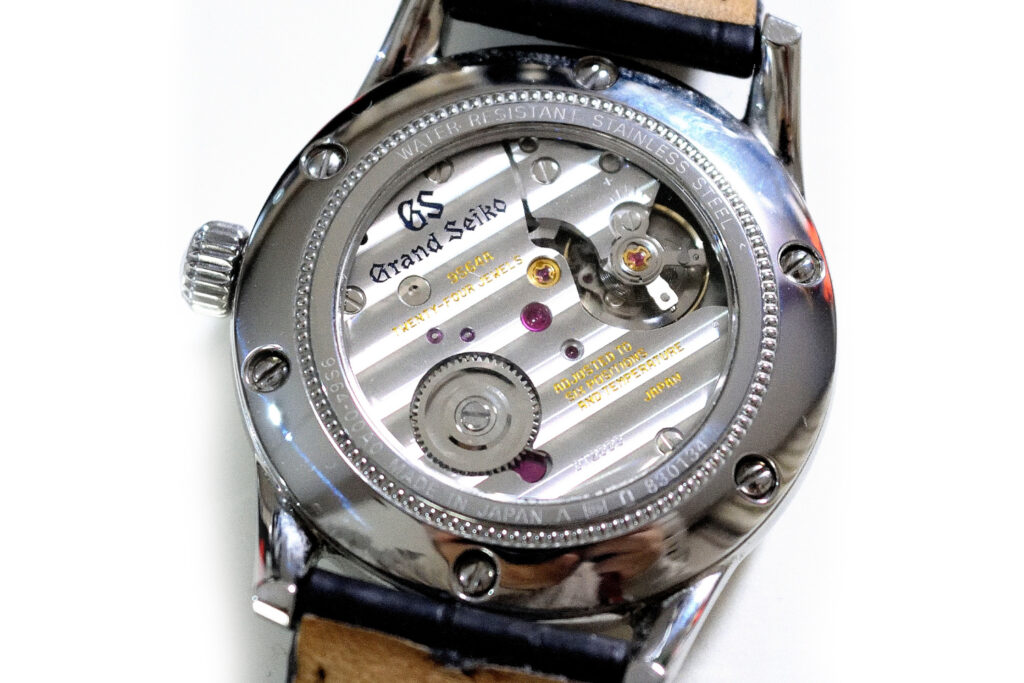
Grand Seiko Caliber 9S64 Hand-wound by STSPP2 is licensed under CC BY-SA 4.0. Source: https://commons.wikimedia.org/wiki/File:Grand_Seiko_Caliber_9S64_Hand-wound.jpg. This work has been modified from the original.
Mechanical movements use a wound mainspring and a series of gears and springs to keep time. These need to be hand wound. Grand Seiko’s Hi-Beat 36000 calibers beat at 36,000 vibrations per hour, which produces a very smooth seconds hand motion. These movements are adjusted in six positions and across temperature variations before leaving the factory.
Quartz watch movements
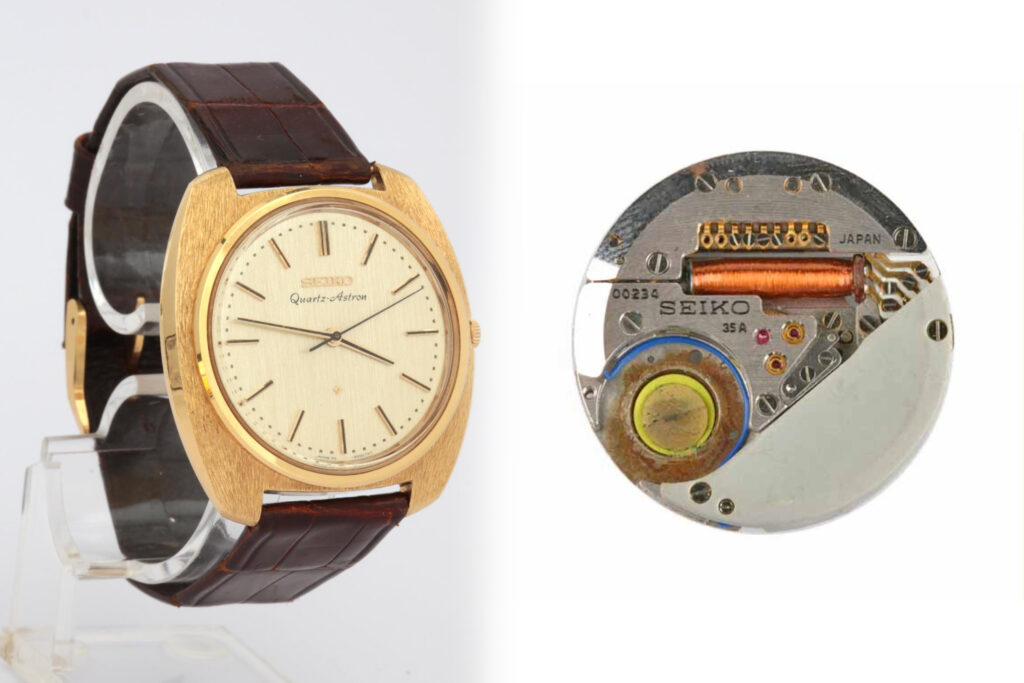
Seiko Astron by Deutsches-uhrenmuseum, CC BY-SA 4.0. Source: https://en.wikipedia.org/wiki/File:Seiko_Astron.jpg. Seiko 35A by Onnahfarg, CC BY 3.0 DE. Source: https://en.wikipedia.org/wiki/File:Seiko_35A.jpg. Combined and modified from the originals. This work is licensed under CC BY-SA 4.0.
Quartz movements use a battery and a vibrating quartz crystal for timekeeping. Grand Seiko’s 9F quartz calibers are accurate to ±10 seconds per year. Citizen’s Caliber 0100 pushes this further, achieving ±1 second per year, making it one of the most accurate wristwatch movements in the world. Seiko made the worlds first Quartz watch movements with the Seiko 35A which features in the Seiko Astron.
Spring Drive Watch Movements
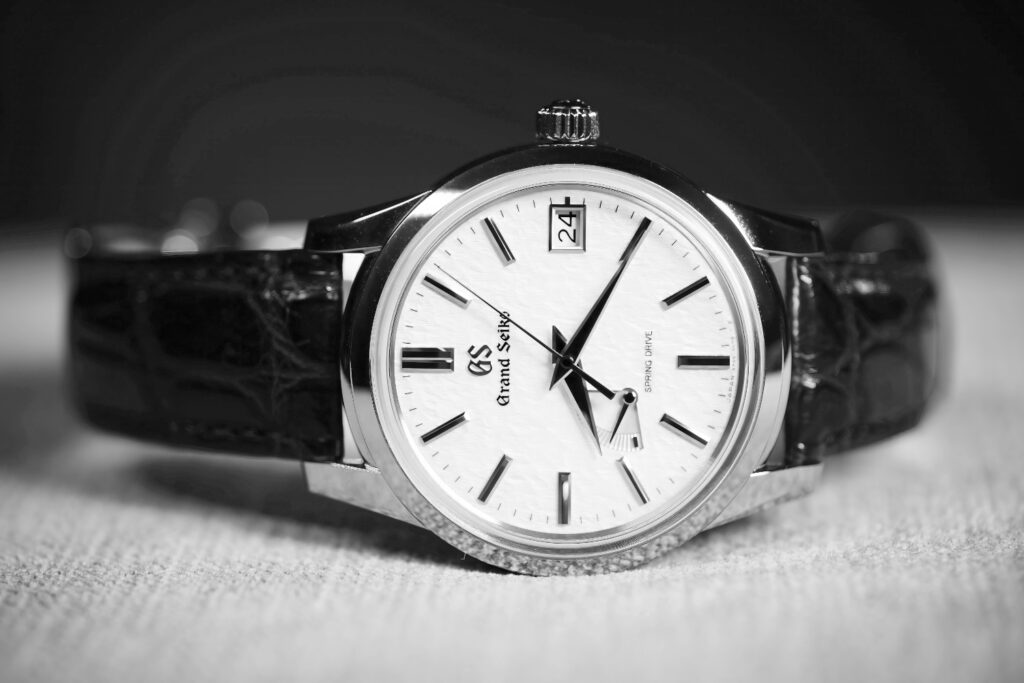
Spring Drive is a hybrid technology invented by Seiko. It uses a mainspring for power, like a mechanical watch, but regulates time using a quartz oscillator and an electromagnetic brake. In other words, it combines the character of a traditional watch with quartz-level accuracy. The seconds hand moves in a completely smooth, continuous glide, no ticking, no stepping. It took over 20 years and more than 600 prototypes to develop, and it was first released commercially in 1999. Standard Spring Drive movements are accurate to ±1 second per day. In 2025, Grand Seiko introduced the Spring Drive Ultra-Fine Accuracy caliber, which achieves ±20 seconds per year.
Japanese movements are not limited to high-end watches. Miyota, a subsidiary of Citizen, supplies affordable automatic movements to hundreds of watch brands worldwide. This means that many watches from international brands, even those not labelled as Japanese, run on Japan-made movements.
well-known non-Japanese brands using Japanese movements:
- Breitling – Uses the Seiko VK64 meca-quartz in the Endurance Pro chronograph.
- Christopher Ward – Uses Miyota 9015 in several of their automatic lines, notably the C60 Trident
- Tissot – Has used Seiko/TMI movements in some quartz models historically.
- Baltic – The French microbrand uses Seiko NH70 in models like the AQUASCAPHE.
- Nordgreen – The Danish watch brand uses Miyota movements across their automatic range.
Japanese Watch Movement Accuracy at a Glance
| Movement Type | Example | Accuracy | Power Source |
| Mechanical Hi-Beat | Grand Seiko 9S85 | ±5 sec/day | Mainspring |
| Quartz | Grand Seiko 9F | ±10 sec/year | Battery |
| Spring Drive | Grand Seiko 9R65 | ±1 sec/day | Mainspring + quartz regulation |
| Spring Drive UFA | Grand Seiko UFA (2025) | ±20 sec/year | Mainspring + quartz regulation |
| Eco-Drive Quartz | Citizen 0100 | ±1 sec/year | Light (solar) |
Sources: Grand Seiko official specifications; Citizen official specifications; IEEE Milestone records.
The Luxury Watch Scene in Japan
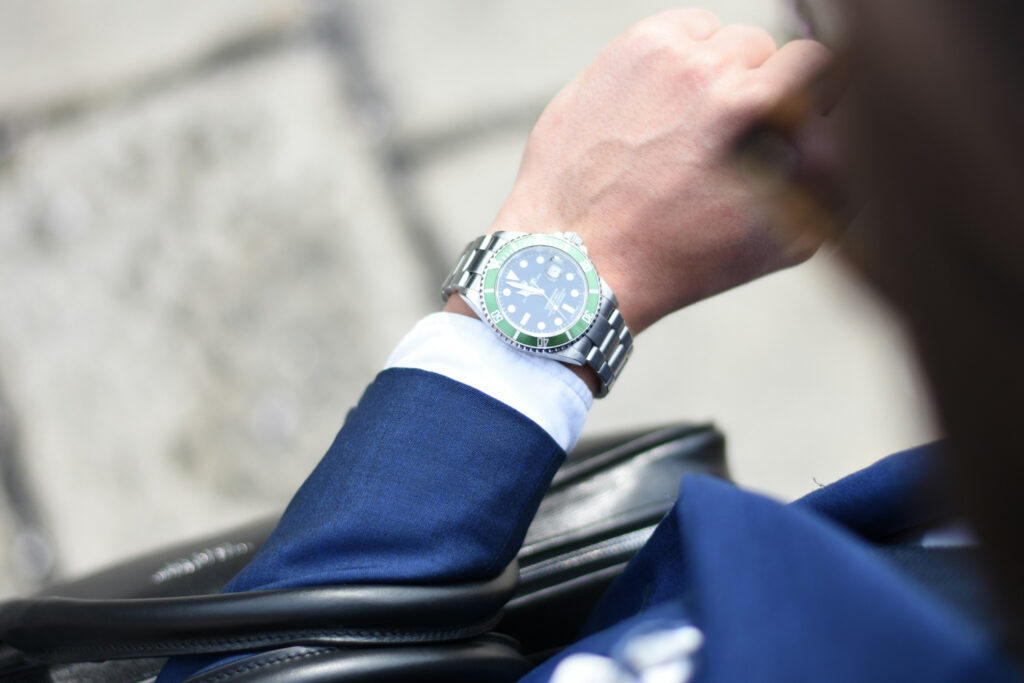
Japan’s entire watch market was valued at approximately USD 4.83 billion in 2024 according to Renub Research, with strong demand in the luxury segment driven by collectors, affluent buyers, and international visitors. Tokyo’s Ginza district has become one of the most important luxury watch retail destinations in Asia, with major brands concentrated in a compact area.
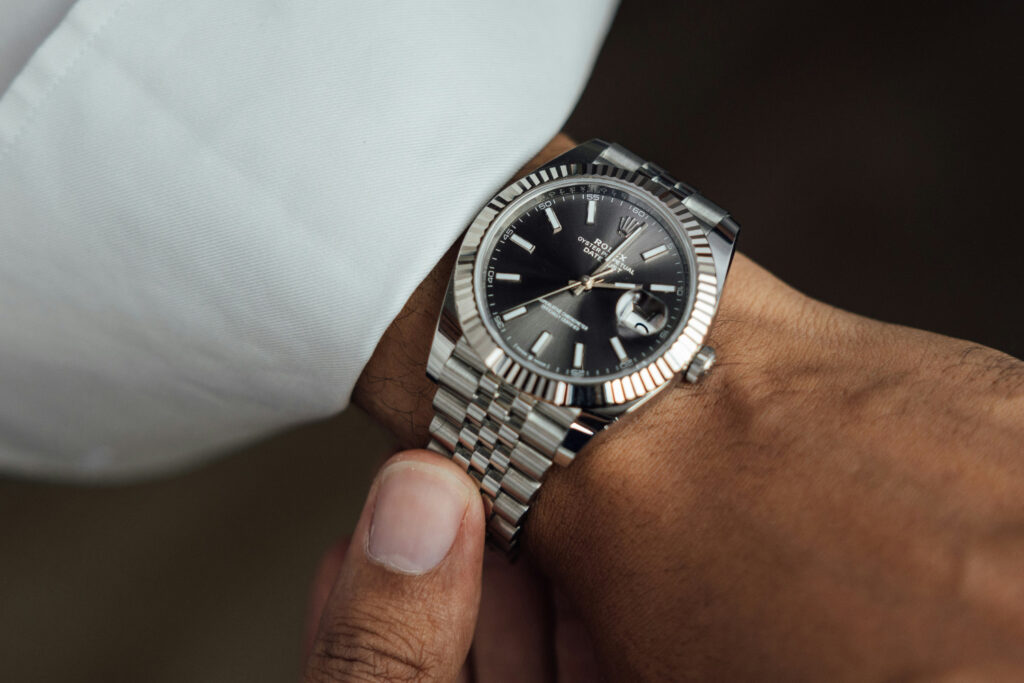
Rolex has established a significant presence in Ginza with the Rolex Tower on Chuo-Dori Avenue also know as the Rolex Boutique Lexia Ginza Main Store. This four-storey flagship was designed by Gwenael Nicolas of Curiosity, a Tokyo-based design studio. The building’s facade features the brand’s signature fluted bezel pattern in metalwork, with Kyoto-crafted metal mesh embedded in the glass panels. Inside, it includes a movement gallery, visible service area, private sales rooms, and a library with commissioned works by Japanese artists. Multiple Rolex Boutique Lexia stores also operate throughout Ginza.
interested in architecture and Design, Check out one of our architecture articles -> Here
Omega has several boutiques in the Ginza area, including locations in the Nicolas G. Hayek Center on Ginza Namiki-dori (the Swatch Group Japan headquarters), inside Ginza Mitsukoshi department store, and on Namiki Street. Omega has a strong following in Japan as a practical and trusted brand, well suited to both formal and casual wear.
Franck Muller, the Swiss watchmaker known as the “Master of Complications,” has also made Japan one of its key markets. The Franck Muller Watchland Tokyo boutique is located at 5-11-14 Ginza and is directly managed, offering the widest selection of current and limited models in Japan. Beyond watches, the brand has expanded into lifestyle through Franck Muller Future Form, a line of luxury tableware and furnishings crafted by Japanese artisans. This crossover between high-end watchmaking and design is also visible in property, with Franck Muller Future Form furnishings appearing in luxury residential projects in Tokyo.
Other international brands with flagship or boutique locations in Ginza include Patek Philippe, Audemars Piguet, and Cartier. Japanese brands Citizen and Casio also have deep roots in Tokyo, with Casio’s G-Shock line maintaining a dedicated following.
For those interested in how luxury watchmaking and Tokyo property intersect, Housing Japan has an exclusive off-market listing in this space. Contact our team to find out more.
Where Can You Buy Luxury Watches in Tokyo?
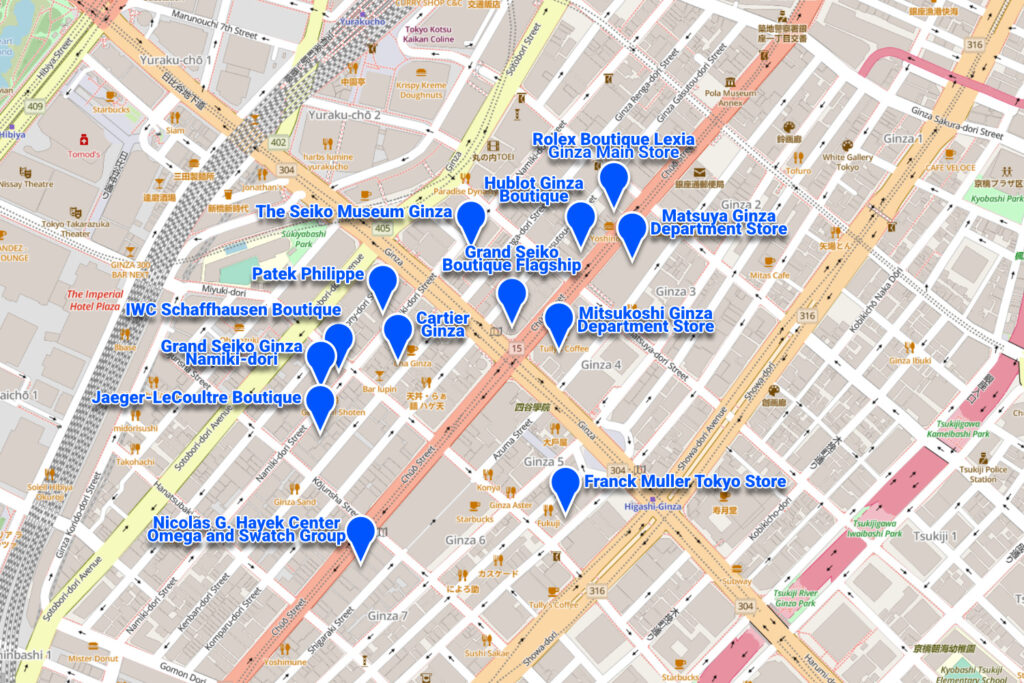
Ginza is the centre of luxury watch retail in Tokyo. The major brand boutiques, department store watch salons, and dedicated watch retailers are all within a short walk of each other, making it easy to compare and try on watches in a single visit.
Grand Seiko Flagship Boutique Ginza
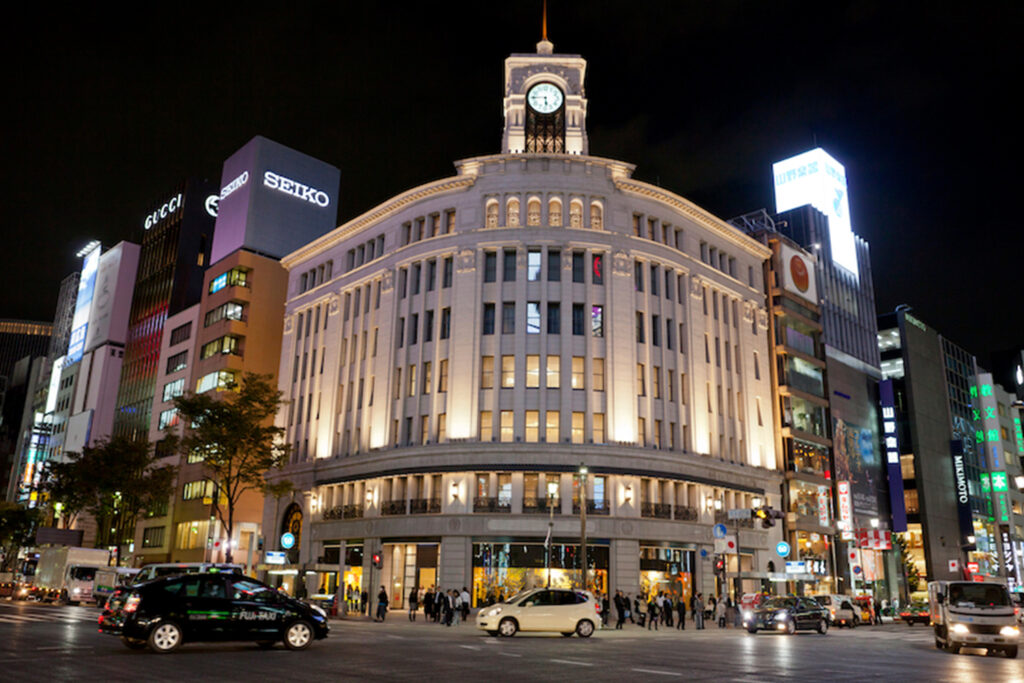
The Grand Seiko Flagship Boutique Ginza sits on the first floor of the Wako building at the famous Ginza 4-chome intersection. It is the global flagship for the brand, offering one of the world’s largest selections of current and limited edition models. The first floor features a circular showcase, while the second floor is a private lounge with archival displays and high-end pieces. Bespoke orders for 18k gold and platinum models are available exclusively at this location. A second flagship, the Grand Seiko Flagship Boutique Ginza Namiki Street, opened in June 2023. Built around the brand philosophy “THE NATURE OF TIME,” it features traditional kumiko woodwork, pale wood showcases, and a dedicated after-sales service counter.
Google Maps Link: https://maps.app.goo.gl/9yVFL4PhXXDA6b196
Rolex Boutique Lexia Ginza Main Store
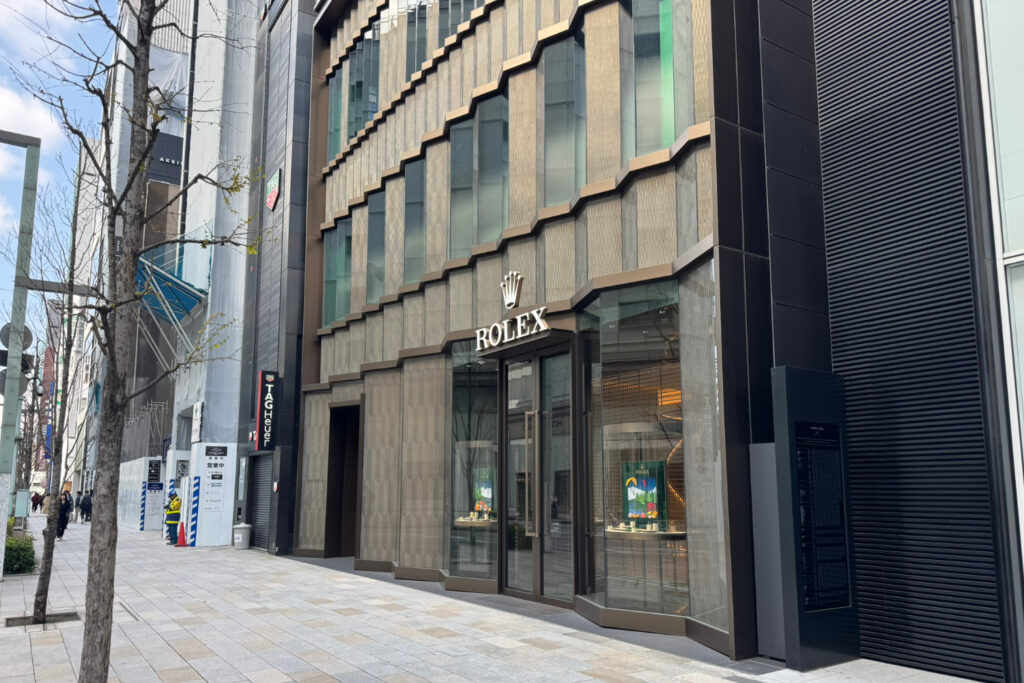
The Rolex Boutique Lexia Ginza Main Store, also known as the Rolex Tower Ginza, on Chuo-Dori Avenue is worth visiting even if you are not buying. The ground floor includes a visible service area where trained Rolex technicians work, and the upper floors feature private salons, a green stone and lacquer bar, and a curated library. Multiple Rolex Boutique Lexia locations operate throughout Ginza as well.
Google Maps Link: https://maps.app.goo.gl/dZYB2S3m7qRmWhNMA
Omega’s boutique in the Nicolas G. Hayek Center
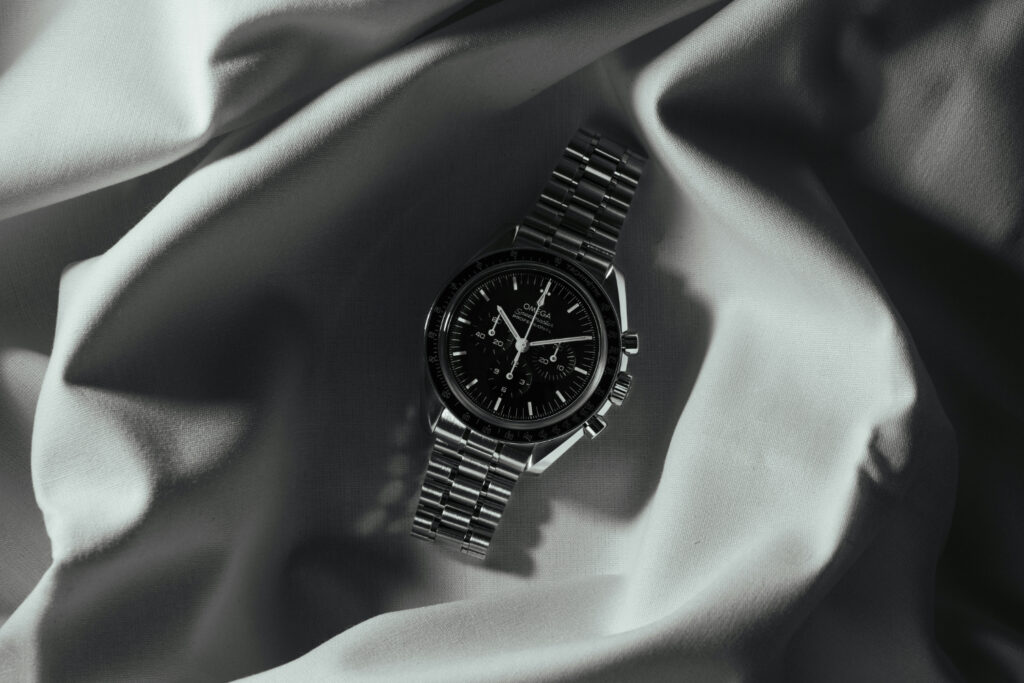
Omega’s boutique in the Nicolas G. Hayek Center on Ginza Namiki-dori offers the full collection in an elegant setting. Additional Omega locations can be found inside Ginza Mitsukoshi and at Tokyu Plaza Ginza.
Google Maps Link: https://maps.app.goo.gl/2rzEWs5eXQ7nxGRo9
The Franck Muller Watchland Tokyo boutique
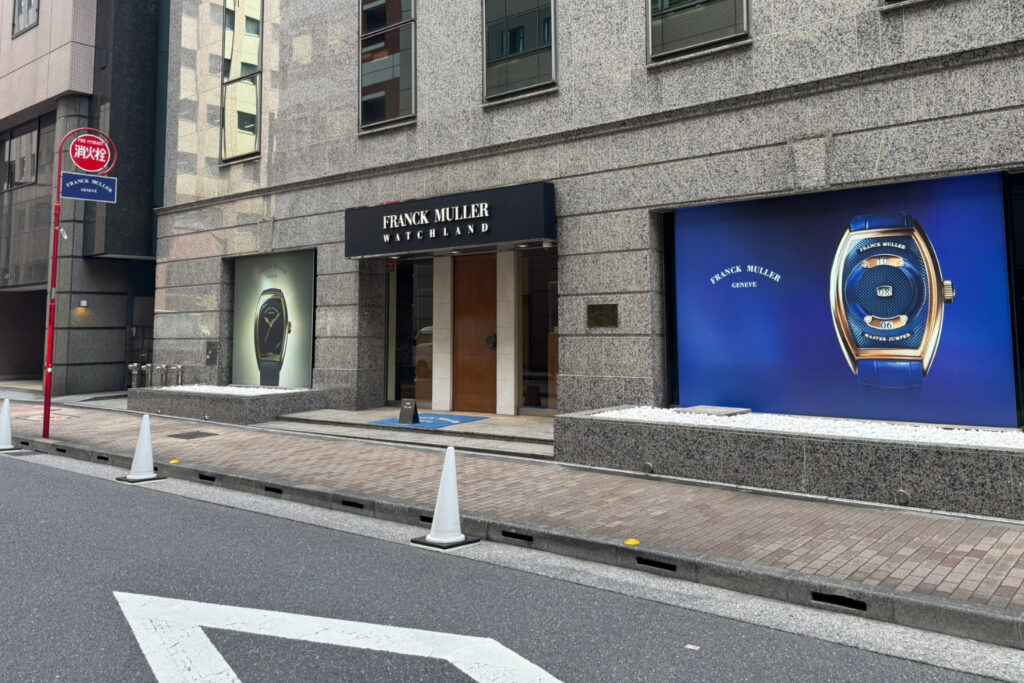
The Franck Muller Watchland Tokyo boutique at 5-11-14 Ginza is directly managed and carries the widest range of Franck Muller watches in Japan, including limited edition and boutique-exclusive models. The store also stocks products from other Watchland Group brands. Purchases come with both international and Japan-valid guarantees, and tax-free shopping is available for international visitors. Beyond its watch boutiques, Franck Muller has expanded into lifestyle in Japan through Franck Muller Future Form, a line of luxury tableware and furnishings, and even Franck Muller Pâtisserie. Items from the Future Form range can be found on display In the Franck Muller Watchland Tokyo boutique and across select Franck Muller retail locations in Tokyo.
Google Maps Link: https://maps.app.goo.gl/ohP7thPoAJn326kx5
The Seiko Museum Ginza
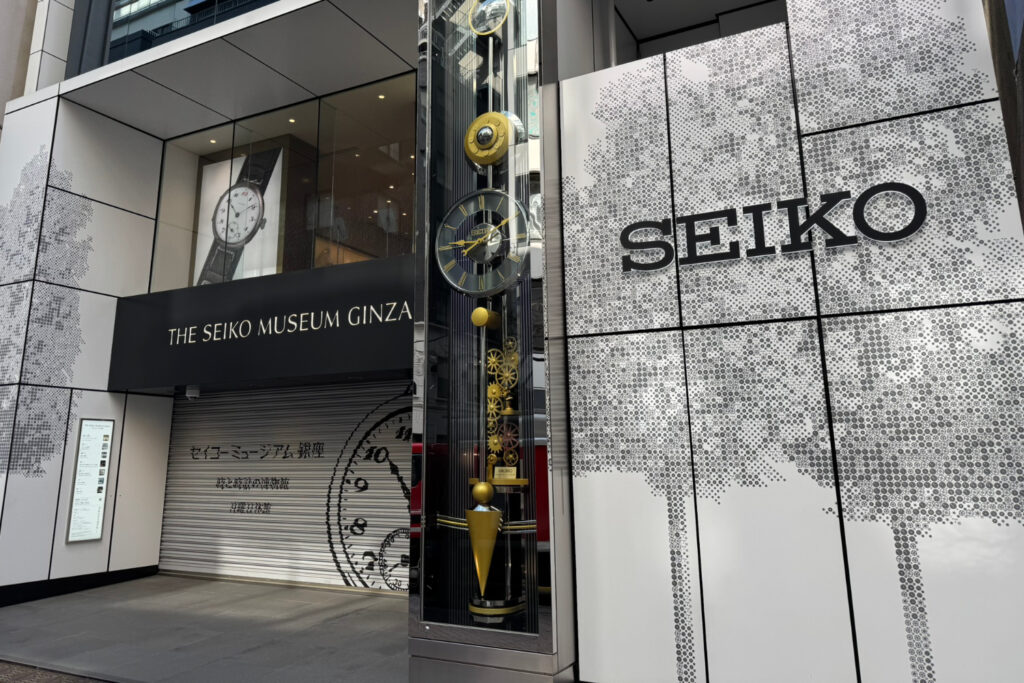
The Seiko Museum Ginza is a free museum covering the history of timekeeping in Japan. Spread across six floors, it includes everything from traditional Japanese clocks to the original 1969 Quartz Astron. The top floor is a dedicated Grand Seiko museum. Reservations are required and can be made online. It is located on Namiki Street, within walking distance of all the Ginza boutiques. Nearby, Seiko Dream Square offers hands-on exhibits about the Wako clock tower’s mechanics and a retail space for Seiko’s popular watch brands.
Google Maps Link: https://maps.app.goo.gl/Uq538hTmkHWRW39M8
Department store
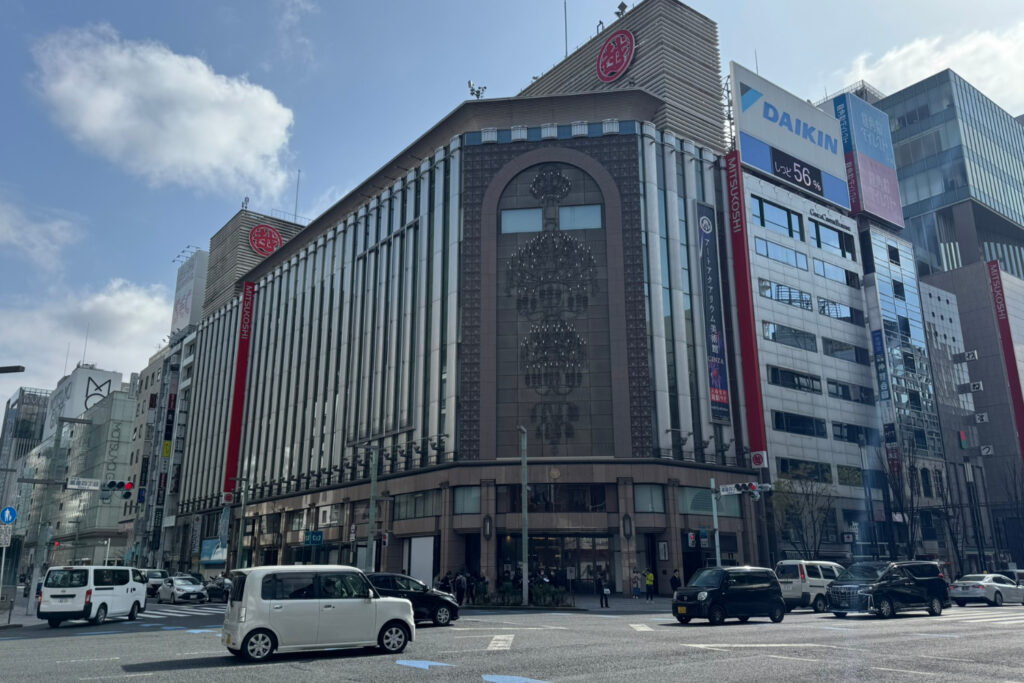
Department store watch salons are another option. Matsuya Ginza, Ginza Mitsukoshi, and Isetan Shinjuku all carry multiple luxury watch brands under one roof. Staff are knowledgeable, and many of these stores offer tax-free shopping for international visitors holding a valid passport.
Other Tokyo Luxury Watch Stores:
- Jaeger-LeCoultre Boutique Ginza Namiki – Location
- Grand Seiko Ginza Namiki-dori Flagship Boutique – Location
- IWC Schaffhausen Boutique – Ginza – Location
- Cartier Ginza Namiki – Location
- Patek Philippe Ginza – Location
- Hublot Ginza Boutique Ginza – Location
- TAG HEUER Tokyo Ginza Himiko Boutique – Location
- BLANCPAIN Boutique Ginza – Location
What Next?
Whether you’re embarking on your journey to Japan or settling into the vibrant heart of Tokyo, Housing Japan is your ultimate destination. With 25 years of experince we specialise in buying, selling, and managing residential luxury real estate in central Tokyo. Whether you are a local resident, simply seeking a second home or looking to invest in the heart of Tokyo we have you covered. Our one-stop service includes expert management services, so you can sit back and relax knowing that everything is taken care of. Whether you are looking for a luxurious living experience or an investment opportunity, we are here to help you every step of the way.
Q&A: Luxury Watches in Japan
Is it cheaper to buy a Grand Seiko in Japan?
Grand Seiko offers Japan-exclusive models and Ginza-exclusive limited editions that are not available elsewhere. International visitors can also claim tax-free savings on purchases. Whether the overall price is lower depends on the specific model, exchange rates, and availability in your home country, but the selection in Japan is significantly wider than anywhere else.
What is a Spring Drive movement?
Spring Drive is a hybrid watch movement developed by Seiko. It uses a wound mainspring for power, like a traditional mechanical watch, but regulates timekeeping through a quartz oscillator and an electromagnetic brake. This means it has the accuracy of a quartz watch (around ±1 second per day) while being powered entirely by mechanical energy. The seconds hand moves in a perfectly smooth, continuous glide rather than ticking.
Where is the Grand Seiko Flagship Boutique in Tokyo?
The main Grand Seiko Flagship Boutique is on the first floor of the Wako building at the Ginza 4-chome intersection. It is about one minute on foot from Ginza Station (Tokyo Metro Ginza, Marunouchi, and Hibiya lines), Exit B1. A second flagship boutique is located on nearby Namiki Street.
What is the difference between Grand Seiko and Credor?
Both brands come from the Seiko family. Grand Seiko focuses on precision, legibility, and everyday wearability. Credor focuses on artistic craftsmanship, ultra-thin movements, and precious materials like gold, platinum, and hand-painted porcelain. Credor is primarily available in Japan, while Grand Seiko has a growing global retail presence.
Can tourists buy Rolex in Japan?
Yes, tourists can purchase Rolex watches through official retailers such as the Rolex Boutique Lexia locations in Ginza. Availability depends on the specific model. Tax-free purchases are possible for international visitors with a valid passport.
What is the Seiko Museum?
The Seiko Museum Ginza is a free museum on Namiki Street in Ginza covering the history of timekeeping in Japan. It has six floors of exhibits, including the original 1969 Quartz Astron and a dedicated Grand Seiko floor. Reservations are required and can be made through the museum’s official website.