Japan’s average annual salary is ¥4.78 million (~$30,250 USD), a record in the National Tax Agency’s latest survey. Tokyo pays the most: its ¥1,226 hourly minimum wage is set to rise to about ¥1,280 in October 2026, and real wages have now risen for six consecutive months to June 2026.
Key Facts on Average Salary in Japan at a glance
| Metric | Figure | Source |
|---|---|---|
| National average annual salary | ¥4.78 million | NTA (National Tax Agency), Sept 2025 |
| Tokyo average annual salary | ¥6.2–6.9 million | MHLW (Ministry of Health & Welfare) Basic Survey |
| Tokyo minimum wage | ¥1,226/hr (→ ~¥1,280 Oct 2026) | MHLW |
| 2026 Shunto | 5.01% | Rengo, July 2026 |
| Real wage growth (June 2026) | +1.6% y/y | MHLW Monthly Labour Surv |
Japan’s salary landscape has shifted in a way it hasn’t in three decades. Wage growth has now topped 5% in three consecutive Shunto spring wage negotiations (2024, 2025 and 2026), and the National Tax Agency’s most recent survey shows the national average annual salary climbed to a new all-time high. For international professionals, foreign investors, and anyone considering a move to Tokyo, understanding these numbers matters for career planning, household budgets, and decisions about Tokyo’s luxury real estate market.
This guide covers the new official data, how Japan’s salary structure works, regional differences, what high earners take home, and how strong incomes connect to Tokyo’s property market.
What is the average salary in Japan in 2026?
The average annual salary in Japan was ¥4.78 million (~$30,250 USD) – (exchange rate as of early August 2026) according to the most recent National Tax Agency Private-Sector Salary Survey, published in September 2025. This was an increase of 3.9% year on year and the fourth consecutive annual rise. It is the highest figure recorded since the survey began in 1949, beating the previous peak of ¥4.67 million set in 1997.
The same survey breaks the figure down further:
- Men: ¥5.87 million (+3.2%)
- Women: ¥3.33 million (+5.5%)
- Regular employees: ¥5.45 million
- Non-regular employees (including part-time): ¥2.06 million
A note on data timing: The National Tax Agency releases its annual Private-Sector Salary Survey each September, covering the previous calendar year. The figures cited above are the most recent official annual benchmark available. For more current wage trends, the Ministry of Health, Labour and Welfare’s Monthly Labour Survey (covered later in this article) provides month-by-month data.
How does Japan’s salary structure work?

Japan’s pay system combines a monthly base salary with, usually, two large bonuses paid each year, most of the time in summer and winter. These bonuses can add the equivalent of two to four months of base pay annually, which means total compensation is often well above what monthly figures suggest. TThe average summer 2025 bonus across Japan was ¥426,337, up 2.9% year on year, according to the Ministry of Health, Labour and Welfare. At large companies the figures run far higher: Keidanren’s first tally of summer 2026 bonuses put the average at ¥1,008,706, the first time it has passed ¥1 million since comparable records began in 1981.
Traditionally, Japanese companies have used age and tenure to set salaries, with workers earning more as they stay longer. This model is changing. Many large firms now use merit-based systems, with performance reviews driving raises rather than time served. Starting salaries for new graduates have also risen sharply: trading house Marubeni, for example, raised its 2026 starting monthly salary for graduates to ¥330,000.
If you are looking for work or thinking about changing jobs in Japan, Hello Work is the country’s official employment service, with branches that specialise in supporting foreign workers.
How much do workers earn in Tokyo compared to the rest of Japan?
Tokyo workers earn more than those in any other prefecture. The capital is home to the headquarters of most large Japanese corporations, the country’s financial sector, and the largest concentration of professional services jobs. This drives wages well above the national average.
The Ministry of Health, Labour and Welfare’s most recent Basic Survey on Wage Structure shows clear regional differences. Tokyo leads, followed by Kanagawa (where Yokohama is the main hub) and Osaka. Rural prefectures in Tōhoku, Shikoku, and Kyūshū tend to sit 10–20% below the national average.
Average annual salary by region
| Region | Average Annual Salary | Notes |
|---|---|---|
| Tokyo | ¥6.2–6.9 million ($39,200–$43,700) | Highest in Japan; driven by finance, tech, and professional services |
| Kanagawa (Yokohama) | ¥5.8–6.4 million ($36,700–$40,500) | Close second; major manufacturing and corporate base |
| Osaka | ¥4.8–5.2 million ($30,400–$32,900) | Western Japan’s commercial centre |
| Aichi (Nagoya) | ¥4.7–5.0 million ($29,700–$31,600) | Automotive and manufacturing hub |
| Fukuoka | ¥4.2–4.5 million ($26,600–$28,500) | Lower wages, lower living costs |
| Japan National Average | ¥4.78 million ($30,250) | Across all 47 prefectures |
Exchange rate: approximately ¥158 = $1 USD as of early August 2026.
Tokyo’s salary advantage comes with a corresponding cost-of-living premium, especially for housing. Cities like Fukuoka, Sapporo, and Hiroshima offer rents and daily expenses that can be 30–40% lower than in central Tokyo, which means a smaller pay packet can sometimes deliver more disposable income outside the capital.
For property investors, Tokyo’s higher wages support stronger rental demand at higher price points. This is one reason the capital has become a focus for both domestic and international real estate investment.
Which industries pay the highest salaries in Japan?

According to the most recent National Tax Agency survey, the highest-paying industries by average annual salary are:
- Electricity, gas, heat supply and water: ¥8.32 million (+7.4%)
- Finance and insurance: ¥7.02 million (+7.7%)
- Information and communications: ¥6.60 million
The lowest-paying sector is accommodation and food services at ¥2.79 million.
Within technology and finance, salaries vary widely by company and seniority. Senior software engineers at major tech firms can earn ¥10–15 million annually, while investment banking professionals in Tokyo’s financial district often earn ¥8–25 million depending on rank. Doctors top Japan’s occupational salary rankings, with an average annual income of around ¥10.6 million according to recruitment data from Doda.
You can compare salaries across companies using Glassdoor for large multinational companies or local platforms like Doda (JP only).
What is Japan’s minimum wage in 2026?
Japan’s minimum wage is set at the prefectural level, with rates revised each autumn. Tokyo’s current rate is ¥1,226 per hour, effective 3 October 2025. On 28 July 2026 the Central Minimum Wage Council issued its guideline for the fiscal 2026 revision: a rise of ¥54 for the six Rank A prefectures, which include Tokyo, and ¥56 for Rank B and C. If every prefecture follows the guideline, the national weighted average moves from ¥1,121 to ¥1,176, an increase of ¥55 or 4.9%. That is a smaller rise than the ¥66 (6.3%) recorded for fiscal 2025.
Key figures:
- Tokyo: ¥1,226 per hour now, rising to about ¥1,280 from October 2026 if the guideline is applied
- National weighted average: ¥1,121 now, ¥1,176 under the guideline
- Kanagawa: ¥1,225 per hour
- Lowest: Kōchi, Miyazaki, and Okinawa at ¥1,023 per hour
All 47 prefectures now have minimum wages above ¥1,000 per hour, a first when it happened in 2025. The government’s ¥1,500 target now carries a longer deadline. The Japan Growth Strategy, drafted on 30 June 2026, keeps the ambition of reaching a national average of ¥1,500 per hour during the 2020s but adds a commitment to achieve it as early as possible and no later than the first half of the 2030s.
Are wages actually rising in Japan?
Yes, and at a pace not seen for over thirty years. The Shunto spring wage negotiations, where major companies and labour unions settle annual pay rises, have now delivered increases above 5% in three consecutive years, the first such run since the early 1990s.
- 2024 Shunto: 5.10% average wage increase (highest since 1991)
- 2025 Shunto: 5.25% final (Rengo)
- 2026 Shunto: 5.01% final, with small and medium-sized firms at 4.69% (Rengo, 3 July 2026)
Several factors are driving these rises: persistent labour shortages in healthcare, IT, construction, and logistics; sustained inflation putting pressure on real wages; and government policy actively encouraging large corporations to raise pay.
How are wages tracking in 2026?
While the National Tax Agency’s annual survey gives the most reliable benchmark, it is published with a one-year lag. For more current trends, the Ministry of Health, Labour and Welfare’s Monthly Labour Survey provides month-by-month data.
Real wages have now been rising for six months straight.
Real wages returned to positive territory in January 2026 for the first time in 13 months, and have stayed there since. In the June 2026 preliminary figures, published on 5 August, total cash earnings rose 3.4% year on year to ¥531,677, the 54th consecutive monthly increase, while real wages rose 1.6%. Consumer prices rose 1.9% over the same period, so pay is now growing faster than the cost of living.
For international professionals planning a move to Tokyo, or investors evaluating rental demand in central wards, this matters because household purchasing power is recovering after several years of erosion. Whether the trend holds will depend on inflation, the 2027 Shunto round, and the Bank of Japan’s policy path. The Bank raised its policy rate to 1.0% in June 2026, the highest level since 1995.
How much do part-time workers earn in Japan?
Part-time work plays a major role in Japan’s labour market, particularly for students, parents returning to work, and people who want flexible schedules.
The average part-time hourly wage in Japan now sits at approximately ¥1,300–¥1,370, with the highest rates in Tokyo and other large cities, according to the most recent MHLW data. Information services and professional consulting roles pay around ¥1,374 per hour, while hospitality and food service positions average closer to ¥1,050.
In Tokyo, employers typically pay around ¥150–¥180 above the legal minimum wage for entry-level part-time positions, reflecting the competitive labour market. Foreign residents can work part-time once they have work permission (officially called Permission to Engage in Activity Other Than That Permitted, or 資格外活動許可). Student visa holders can work up to 28 hours per week during term time.
For property investors, part-time wage levels matter when assessing rental demand near universities, transport hubs, and commercial districts, where part-time workers form a significant share of the local rental market.
What do executives and high earners take home in Tokyo?

Tokyo offers some of Asia’s most competitive senior compensation. The picture has shifted notably in the last few years, as Japanese firms have moved toward performance-based pay and added long-term equity incentives.
Typical annual compensation ranges in Tokyo (most recent available data):
- Manager-level positions: ¥10–11.5 million ($63,300–$72,800)
- CEO base salary (average): ¥12 million ($75,900); median total compensation including incentives reached ¥271 million ($1.71 million) in recent surveys
- Investment banking: ¥8–25 million depending on rank
- Management consulting (top firms): ¥14 million and above, with senior partners well above this
- Senior software engineers (major tech firms): ¥10–15 million; principal engineers can reach ¥20 million or more in total compensation
International companies operating in Japan often add housing allowances, international school fee coverage, and tax equalisation to their packages. For senior expatriate executives, this can substantially increase the value of total compensation compared with the headline base salary.
These numbers are gross. Japan’s progressive tax system and social insurance contributions mean take-home pay is typically 70–75% of gross for most workers, dropping toward 65% for very high earners. A professional earning ¥15 million gross can expect roughly ¥10.5–11.5 million in net income after tax and social charges.
How does Tokyo’s cost of living compare to other global cities?
Tokyo’s salary figures often look modest in dollar terms compared to other major financial centres, but the city’s cost of living offsets much of that gap. Following several years of yen depreciation, Tokyo now sits well below other major global capitals on most cost-of-living measures.
The cost of living in New York is around ~80% higher than in Tokyo excluding rent, and ~150% higher once rent is included. London comes in roughly ~50% more expensive overall. To match the standard of living a ¥750,000 monthly budget provides in Tokyo, a household would need around ¥1.47 million in London and around ¥1.88 million in New York.
Housing is the single biggest difference. A central three-bedroom rental in Tokyo runs around ¥390,000 ($2,470 USD) per month, well below equivalent properties in London, New York, or Paris. Public transport, healthcare, and dining out also tend to come in lower than in comparable Western cities. Utility costs and mobile phone plans are roughly in line with global averages.
For households earning Tokyo salaries, this gap matters. A ¥10 million annual income in Tokyo delivers more disposable income than the same nominal figure would in New York or London, and a meaningful share of that surplus often goes toward property purchase or savings.
How much do foreign workers earn in Japan?
Foreign workers in Japan, on average, earn less than Japanese workers, though the picture varies sharply by industry and seniority.
According to the Ministry of Health, Labour and Welfare’s most recent Basic Survey on Wage Structure, the average monthly salary for foreign workers in Japan was approximately ¥274,900 (~$1,740 USD), with average annual bonuses of around ¥229,900 (~$1,455 USD). The gap with the national average reflects two main factors: foreign workers tend to be younger than the Japanese workforce average, and they have shorter average tenure with their employers. Japan’s pay system rewards both age and tenure, so this drags down the foreign-worker average.
The mix of jobs that foreign workers commonly hold also plays a role. English teaching is one of the most common entry routes into Japan for native English speakers, and it sits well below the national average pay band. With teaching jobs forming a significant share of the foreign worker population, this concentration in lower-paid sectors helps explain why the foreign worker average sits where it does.
Skilled foreign professionals in specialised fields tell a different story. IT engineers, finance specialists, and senior executives at multinational companies in Tokyo often earn ¥6-12 million or more, with senior roles in investment banking and consulting reaching well above this. Multinational firms following global pay scales typically pay foreign and Japanese employees on the same basis.
Japan’s prefectural minimum wages apply equally to Japanese and foreign workers. There is no legal pay differential by nationality.
How much do English teachers get paid in Japan?

The average English teacher salary in Japan is estimated at around ¥280,000 per month (~$1,775 USD), which works out to roughly ¥3.4 million per year (~$21,500 USD). This sits well below Japan’s national average annual salary of ¥4.78 million but pay varies significantly depending on the type of teaching role.
The most common entry route is the JET Programme (Japan Exchange and Teaching Programme), an official Japanese government scheme that places foreign nationals as Assistant Language Teachers in public schools. JET pay is set by the government and increases each year of the contract. As of April 2025, first-year participants earn ¥4.02 million annually (~$25,400 USD, around ¥335,000 per month), rising to ¥4.32 million (~$27,300 USD) in years four and five. JET also covers airfare, provides full benefits, and arranges the work visa.
Outside of JET, most English teaching jobs fall into a handful of categories. Eikaiwa, which are private English conversation schools serving children, students, and adults, typically pay around ¥250,000 to ¥280,000 per month. Assistant Language Teacher roles arranged through dispatch companies, rather than JET, often pay slightly less, in the ¥230,000 to ¥270,000 range. International schools sit at the top end, paying experienced licensed teachers anywhere from ¥400,000 to ¥600,000 per month, but these positions are far fewer and require teaching credentials. University faculty positions pay similar levels but are highly competitive and usually require a master’s degree or PhD. Private tutoring outside of these structures can supplement income, with hourly rates of ¥2,000 to ¥5,000 common for teachers who already hold a valid work visa.
For most foreign professionals on a typical teaching salary, central Tokyo is affordable for rentals in residential wards but generally out of reach for property purchase. International school teachers and senior university faculty sit in a different bracket, with salaries that can support property ownership in Tokyo’s mid-tier price ranges.
How do high salaries connect to Tokyo’s real estate market?
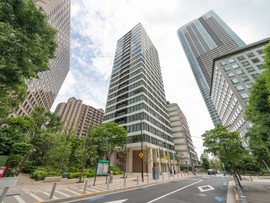
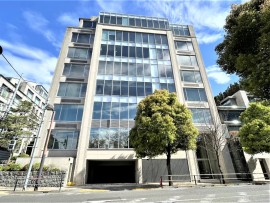
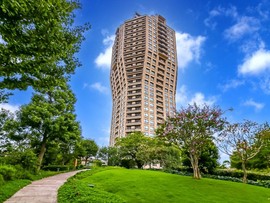
Strong incomes in Tokyo support a property market that has seen a long run of price growth, though the pace eased during 2026. The combination of a weaker yen, a stable legal framework for foreign ownership, and limited new supply has drawn foreign buyers, who Housing Japan Research estimates account for 15–20% of luxury condominium purchases in central Tokyo.
Existing condominiums sold in Tokyo’s 23 wards averaged ¥1.38 million per square metre in the first quarter of 2026, up 12.1% year on year and the 53rd consecutive quarterly rise, according to REINS, the property information network designated by the Ministry of Land, Infrastructure, Transport and Tourism. The average transaction was ¥79.41 million for a unit of around 58 square metres. Prices in central wards like Minato and Shibuya run well above the 23-ward average. Properties in established luxury districts such as Roppongi, Azabu, Daikanyama, and Omotesando continue to attract steady buyer demand. For up-to-date market data, see our Tokyo Condo Prices and Sales article.
Japanese banks have also broadened their mortgage lending. More are now willing to lend on income-based assessments rather than purely on collateral, which has opened the market to foreign professionals with strong income streams. Borrowing costs have risen, however. The Bank of Japan lifted its policy rate to 1.0% in June 2026, and the Japan Housing Finance Agency’s Flat 35 fixed rate stood at 3.290% in August 2026. Most banks are raising variable-rate benchmarks from autumn 2026.
Where do high earners typically buy in Tokyo?

International professionals and senior Japanese executives tend to concentrate in a small number of central wards. Minato Ward leads, particularly the neighbourhoods of Roppongi, Azabu, Hiroo, and Akasaka, all of which sit close to embassies, international schools, and the city’s main business districts. Shibuya Ward (especially Daikanyama, Omotesando, and Hiroo on the boundary with Minato) and Chiyoda Ward (close to government and finance) are the other main centres.
For high-income professionals making their first Tokyo property purchase, working with an agency experienced in international clients makes the process significantly smoother. Housing Japan has over 25 years of experience in central Tokyo’s luxury market and provides full English-language support across acquisition, financing coordination, and property management.
What’s next for Japan’s salaries?
The trajectory points upward, but with some important caveats. Several forces are pushing wages higher:
- Demographics: Japan’s shrinking working-age population is creating real labour shortages across healthcare, construction, logistics, and technology.
- Government policy: The ¥1,500 minimum wage target, now committed to no later than the first half of the 2030s, and ongoing pressure on large corporations to deliver above-inflation pay rises.
- Foreign talent competition: Government plans to admit 820,000 skilled foreign workers over five years are creating upward pressure on technical and professional salaries.
- Technology and AI: Premium pay for skills in AI, cybersecurity, and cloud computing as Japanese firms accelerate digital transformation.
The main risks to wage growth are the structural gap between large corporations and small and medium enterprises, and inflation that continues to erode real purchasing power. The 2026 Shunto delivered 5.01% overall but only 4.69% at small and medium-sized firms, and the gap with large employers is widening. Attention now turns to the 2027 round.
Conclusion: What this means for professionals and investors
Japan’s salary environment looks very different from the picture even three years ago. The ¥4.78 million national average is a record. Tokyo continues to lead the country, real wages have risen for six consecutive months to June 2026, and minimum wages have lifted at a pace not seen since the system was put in place. For high earners, especially international professionals working in finance, technology, or senior management roles, Tokyo offers competitive compensation alongside a property market with a long-established legal framework for foreign ownership.
Whether you’re considering a career move to Japan, evaluating compensation packages, or thinking about how a strong income translates into property ownership in central Tokyo, understanding these new figures is a useful starting point.
Housing Japan specialises in investment and luxury residential real estate in central Tokyo, with services covering acquisition, sales, and long-term rentals, and full property management. Our multilingual team works with international professionals, executives, and investors based in Japan and abroad.
Ready to explore Tokyo property options? Contact Housing Japan for a consultation with our team.
Q&A: Salaries and Real Estate in Japan
What is the average salary in Japan in 2026?
The average annual salary in Japan was ¥4.78 million (~$30,250 USD) according to the National Tax Agency’s most recent Private-Sector Salary Survey. This was a 3.9% year-on-year increase and the highest figure recorded since the survey began in 1949. Median annual salary is around ¥3.8 million. The NTA releases its annual survey each September with prior-year data, and nominal wages have continued to rise through 2025 and into early 2026.
What is the average salary in Tokyo?
Tokyo workers earn the highest average salary in Japan. Average annual income in Tokyo runs roughly ¥6.2–6.9 million (~$39,200–~$43,700 USD) depending on the data source and worker category, well above the national average of ¥4.78 million. Tokyo’s higher salaries reflect the concentration of major corporations, financial services, and professional firms based there.
How much is the minimum wage in Tokyo in 2026?
Tokyo’s minimum wage is ¥1,226 per hour, effective 3 October 2025, the highest of any prefecture. Under the guideline the Central Minimum Wage Council issued on 28 July 2026, Tokyo would rise by ¥54 to about ¥1,280 from October 2026, and the national weighted average would move from ¥1,121 to ¥1,176. Each prefecture confirms its own final rate in the autumn.
Are salaries actually increasing in Japan?
Yes. Japan’s 2024 Shunto delivered an average pay rise of 5.10%, the highest since 1991, followed by 5.25% in 2025 and 5.01% in 2026, according to Rengo’s final tallies. That is three consecutive years above 5%, the first such run since the early 1990s. Small and medium-sized firms settled at 4.69% in 2026.
Are real wages rising in Japan?
Yes. Real wages have risen year on year for six consecutive months to June 2026. In the June figures, published on 5 August 2026, total cash earnings rose 3.4% to ¥531,677 while real wages rose 1.6%, against consumer price growth of 1.9%. After several years in which inflation ate into purchasing power, gains from successive Shunto rounds are now filtering through to household take-home pay.
Which industries pay the highest salaries in Japan?
Based on the most recent National Tax Agency survey, the highest-paying industries are electricity, gas and water supply (¥8.32 million annual average), finance and insurance (¥7.02 million), and information and communications (¥6.60 million). The lowest is accommodation and food services at ¥2.79 million.
How much do executives earn in Tokyo?
Manager-level positions in Tokyo typically earn ¥10–11.5 million annually. Average CEO base salary in Japan is around ¥12 million, with median total compensation, including bonuses and long-term incentives, reaching ¥271 million in recent surveys. Investment bankers and senior consultants in Tokyo can earn ¥14 million and well above.
What is the average part-time hourly wage in Japan?
Part-time workers in Japan earn an average of approximately ¥1,300–¥1,370 per hour, with the highest rates in Tokyo and other major cities. Tokyo’s minimum wage of ¥1,226 sets the legal floor, and most employers pay above this for entry-level part-time roles.
How much do foreign workers earn in Japan?
The average monthly salary for foreign workers in Japan was approximately ¥274,900 (~$1,740 USD), with average annual bonuses of around ¥229,900 (~$1,455 USD), according to the most recent MHLW data. This is below the national average, mainly because foreign workers tend to be younger and have shorter average tenure. Skilled foreign professionals in IT, finance, and consulting often earn ¥6–12 million or more in Tokyo.
How much do English teachers get paid in Japan?
The average English teacher salary in Japan is estimated at around ¥280,000 per month (~$1,775 USD), or roughly ¥3.4 million per year (~$21,500 USD). The JET Programme, an official Japanese government scheme, pays first-year Assistant Language Teachers ¥4.02 million annually (~$25,400 USD, about ¥335,000 per month), rising to ¥4.32 million (~$27,300 USD) by years four and five. Eikaiwa and dispatch ALT roles typically pay ¥230,000–¥280,000 per month, while international schools and university faculty roles pay ¥400,000–¥600,000.
Can foreigners work part-time in Japan?
Yes. Foreign residents can work part-time once they receive Permission to Engage in Activity Other Than That Permitted (資格外活動許可) from immigration. Student visa holders can work up to 28 hours per week during term time. Holders of other visas should check the specific work limits attached to their status.
What is the average Tokyo condominium price?
Existing condominiums sold in Tokyo’s 23 wards averaged ¥79.41 million in the first quarter of 2026, or ¥1.38 million per square metre, according to REINS. The average unit was around 58 square metres. Per-square-metre prices rose 12.1% year on year, a 53rd consecutive quarterly increase. Prices in central luxury wards such as Minato and Shibuya run well above this, particularly in established neighbourhoods like Roppongi, Azabu, Daikanyama, and Omotesando.
Is Tokyo cheaper to live in than New York or London?
Yes. The cost of living in New York is around ~80% higher than in Tokyo excluding rent, and ~150% higher once rent is factored in. London is around ~50% more expensive overall. Tokyo housing in particular runs significantly below equivalent properties in major Western capitals. Yen depreciation in recent years has widened this gap further for international households earning in dollars, pounds, or euros.
What is a good salary in Tokyo?
A salary of ¥6–10 million per year (~$38,000–~$63,300 USD) is generally considered a comfortable middle-to-upper income in Tokyo, supporting a central-area apartment and a reasonable lifestyle. ¥15 million (~$94,900 USD) and above places a household in Tokyo’s high-income tier, with capacity for international school fees and luxury property purchases.
All USD conversions are as of early August 2026 and are subject to change
Considering Tokyo for Your Next Property Purchase?
Housing Japan is an investment and luxury real estate broker in central Tokyo with 25 years of experience. Our multilingual team offers end-to-end service for international clients, covering purchase, sale, rental, and full property management. We work with buyers based anywhere in the world who want a partner on the ground in Tokyo.
Sources:
- National Tax Agency – Private-Sector Salary Survey
- Ministry of Health, Labour and Welfare – Basic Survey on Wage Structure
- MHLW – Monthly Labour Survey
- REINS (East Japan Real Estate Information Network) – Market Watch
- Japanese Trade Union Confederation (Rengo)
Written by the Housing Japan Editorial Team, Tokyo real estate specialists with over 25 years of experience in Japan’s property market.