Daikanyama
Daikanyama Area Guide: Living in Daikanyama, Tokyo
Daikanyama is an upscale, low-rise residential district in Shibuya Ward, central Tokyo, known for its boutiques, cafés and quiet tree-lined streets, the neighbourhood often called the “Brooklyn of Tokyo.” It suits younger professionals, creatives and couples who want style and walkability one stop from Shibuya. The area centres on Daikanyama Station on the Tokyu Toyoko Line.
Daikanyama at a Glance
| Ward | Mostly Shibuya Ward (渋谷区, Shibuya-ku); the area straddles the Shibuya–Meguro boundary, with pockets such as Aobadai in Meguro Ward |
|---|---|
| Nearest station & lines | Daikanyama Station (Tokyu Toyoko Line); Naka-Meguro and Ebisu are each a short walk or one stop away for extra lines |
| Time to key hubs | About 2 minutes to Shibuya (one stop, direct), about 2 minutes to Naka-Meguro, roughly 30 minutes to Yokohama; Ebisu is about a 10-minute walk |
| Typical resident profile | Younger professionals, creatives, dual-career couples and design-minded families, alongside established Japanese households and a steady international presence |
| Defining features | Daikanyama T-Site, Hillside Terrace, the Kyu Asakura House, Kyu-Yamate-dori boutiques, Saigoyama Park and Log Road Daikanyama |
| Nearest international schools | No major campus in Daikanyama itself; established schools such as the International School of the Sacred Heart (Hiroo) and Nishimachi International School (Moto-Azabu) are a short ride away |
| Approx. price/rent indicator | Among central Tokyo’s most expensive residential areas. Residential land in the Daikanyama area ran roughly ¥1.5–2.9 million per square metre across MLIT 2025 land-price points; expat-market rents start in the hundreds of thousands of yen a month and rise into the millions for the best low-rise homes |
What Is Daikanyama Known For?
Daikanyama is best known for one thing: living well, quietly, in the middle of Tokyo. The district is a low-rise enclave of boutiques, cafés and leafy backstreets that sits just one stop from Shibuya yet feels a world away from it. Its nickname, the “Brooklyn of Tokyo,” captures the mix of independent shops, design-led architecture and an unhurried, village-like pace.
The area carries a creative, fashion-forward reputation built over decades. The select shops along Kyu-Yamate-dori, the architecture of Hillside Terrace, and the 2011 arrival of Daikanyama T-Site turned “living in Daikanyama” into shorthand for a certain kind of stylish, low-key city life. For residents, though, the daily appeal is simpler: calm streets, good coffee, and almost everything within a short walk.
Where Is Daikanyama Located in Tokyo?
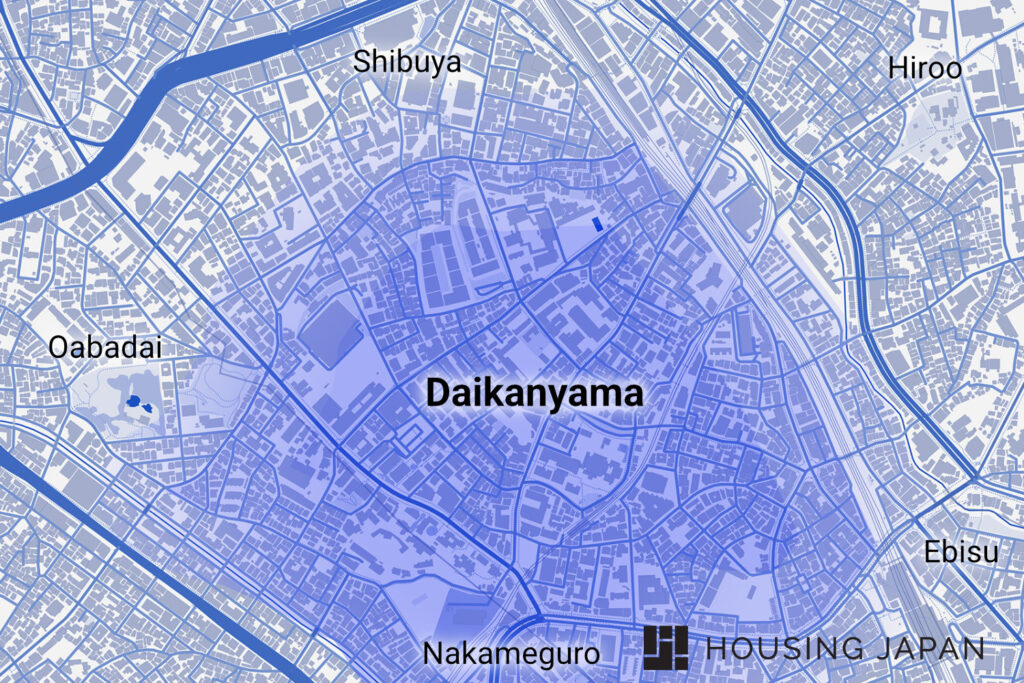
Daikanyama sits in the southeast of Shibuya Ward (渋谷区, Shibuya-ku), one of Tokyo’s central wards, on a low hill between the Shibuya and Meguro river valleys. The core neighbourhood, Daikanyamachō and neighbouring Sarugakuchō and Ebisu-nishi, lies just south of Shibuya and a short walk north of Naka-Meguro and Ebisu.
One quirk of geography shapes daily life here. Although the Daikanyama name belongs to Shibuya Ward, the district straddles the Shibuya–Meguro boundary: Saigoyama Park and the leafy Aobadai pocket sit just over the line in Meguro Ward, with the Meguro Ward office close by to the south. In other words, you may live at a Shibuya address but walk to a park, or browse shops, on the Meguro side. That blend of two upscale wards is part of what gives the area its relaxed residential character.
Being part of Shibuya Ward matters in practice. Shibuya is one of the central wards with the highest shares of foreign residents, and the ward’s Board of Education runs the local public elementary and junior high schools that serve Daikanyama. The ward also anchors the area within easy reach of Shibuya, Ebisu, Meguro and Aoyama, neighbouring districts each covered in their own guides.
A Brief History of the Area
Daikanyama began as forested hillside on the western edge of old Edo, dotted with samurai and aristocratic estates. The name comes from daikan, the local magistrate or intendant of the Edo period, paired with yama (hill). On the high ground that became Hillside Terrace, a small shrine still sits on a Kofun-era burial mound, the “Sarugaku-zuka”, which gave neighbouring Sarugakuchō its name and points to settlement here long before Edo.
The area’s modern character was set by two families and one architect. The Asakura family, prominent local landowners whose head served in the Tokyo prefectural and Shibuya city assemblies, built the Kyu Asakura House in 1919; the well-preserved Taishō-era residence is now a designated Important Cultural Property. From 1969, the Asakuras commissioned architect Fumihiko Maki, later a Pritzker Prize laureate, to develop their land along Kyu-Yamate-dori as Hillside Terrace, an admired, human-scale complex of homes, shops and offices built in phases into the 1990s. That low-rise, design-led model shaped everything around it.
The fashion and culture layer followed. Pioneering select shops arrived from the 1970s, and through the 1980s and 1990s “shopping in Daikanyama” became a symbol of stylish urban life. The 2000 Daikanyama Address redevelopment added the area’s main residential tower and a cluster of shops at the station, and the 2011 opening of Daikanyama T-Site, anchored by Tsutaya Books, cemented the district’s cultural pull. When the Tokyu Toyoko Line went underground in 2013, the old surface tracks were reborn in 2015 as Log Road Daikanyama, a 220-metre greenway of cafés and craft beer.
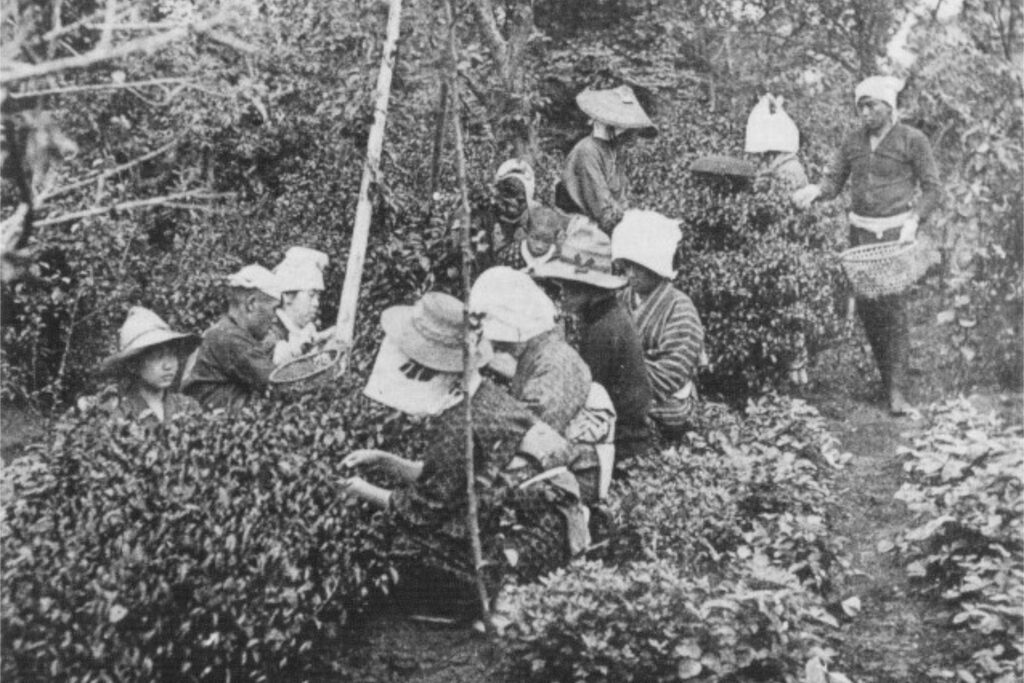
Sarugakucho tea plantation (tea garden at Iwaya Matsuhei’s residence, Sarugakuchō, late Meiji era), Cropped from original, photographer unknown, via Wikimedia Commons. Public domain.
What Is Daily Life in Daikanyama Like?
Daily life in Daikanyama is calmer than its fashionable reputation suggests. The blocks around the station have cafés, bakeries and boutiques, but a few streets back the district turns quiet and residential, with low-rise apartments and houses set among trees. As in much of central Tokyo, homes tend to be compact for the price, but almost everything you need is within walking distance.
For groceries, the practical hub is the Peacock Store at Daikanyama, the area’s main full-size supermarket, alongside the shops and Dean & Deluca inside the station-side Daikanyama Address complex. The selection in the immediate neighbourhood is boutique rather than big-box, so residents who want a wider range often pop one stop to Naka-Meguro or a short walk to Ebisu. The trade-off is the same one the area has always offered: less scale, more character, all on foot.
Healthcare is well covered for a small district. Daikanyama and neighbouring Ebisu have a good spread of clinics, and several treat international patients with English-speaking staff. Larger English-friendly hospitals sit a short ride away, including the Japanese Red Cross Medical Center in nearby Hiroo. For fitness, the area has private gyms and studios, and the slopes of Saigoyama Park and the paths along the Meguro River are popular with runners.
Transport and Connectivity: How Well Connected Is Daikanyama?
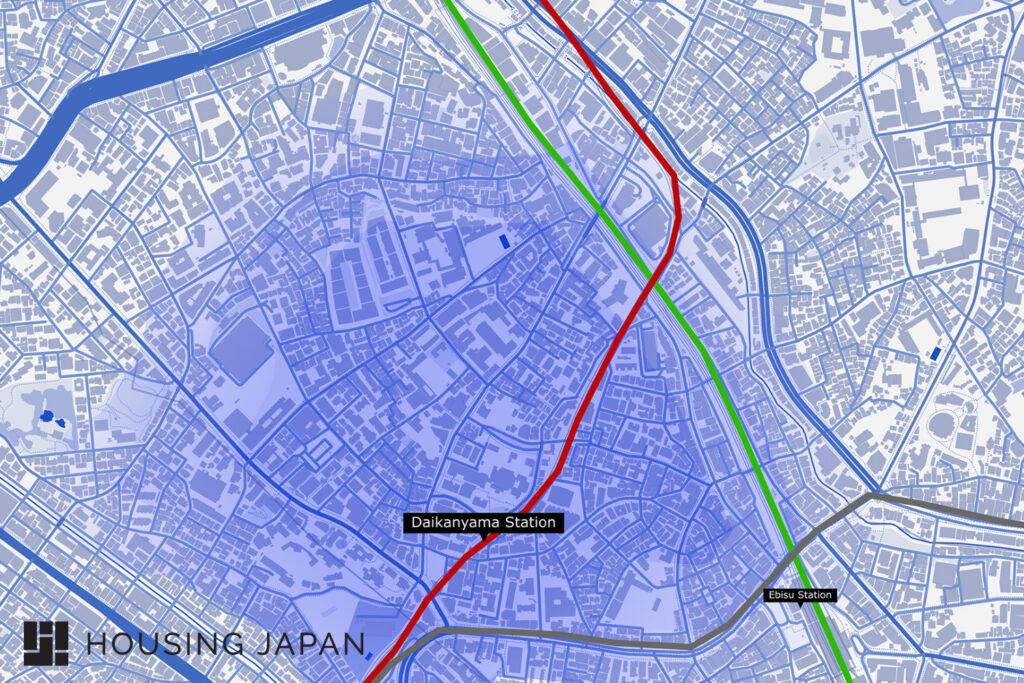
Daikanyama runs on a single line, but that line reaches much of Tokyo. Daikanyama Station is served only by the Tokyu Toyoko Line, which is the last stop before Shibuya in one direction and continues through Naka-Meguro toward Yokohama in the other. At Shibuya the same trains run through onto the Tokyo Metro Fukutoshin Line, giving direct access to Shinjuku-sanchome and Ikebukuro without changing trains.
The main thing to know is that only local trains stop at Daikanyama, so longer trips usually mean changing to an express at Naka-Meguro or Shibuya. Many residents east of the station simply walk the roughly 10 or so minutes to Ebisu for the JR Yamanote and Saikyo lines and the Hibiya Line.
| Destination | Time | Route |
|---|---|---|
| Shibuya | ~2 min | Tokyu Toyoko Line, direct (1 stop) |
| Naka-Meguro | ~2 min | Tokyu Toyoko Line, direct (1 stop) |
| Ebisu | ~10 min | on foot |
| Shinjuku-sanchome | ~10 min | Toyoko / Fukutoshin through-service, direct |
| Ikebukuro | ~20 min | Toyoko / Fukutoshin through-service, direct |
| Yokohama | ~30 min | Toyoko Line, change to an express at Naka-Meguro or Shibuya |
| Tokyo Station | ~25 min | via Shibuya or Ebisu, transfer to JR |
| Haneda Airport | ~40 min | train, with transfer |
Dining, Shopping, and Local Amenities
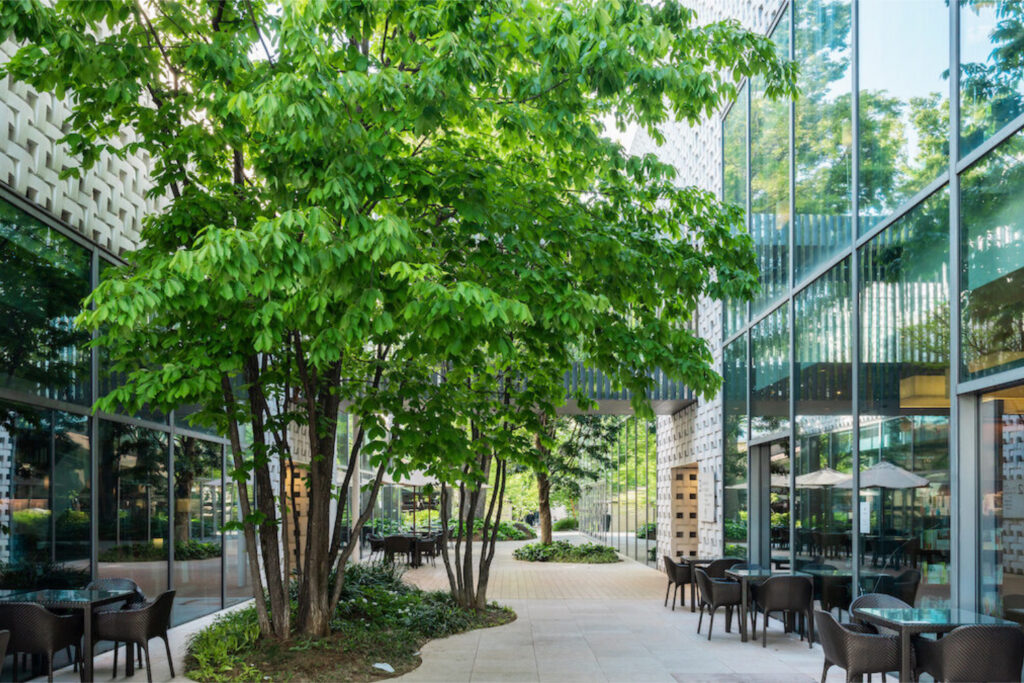
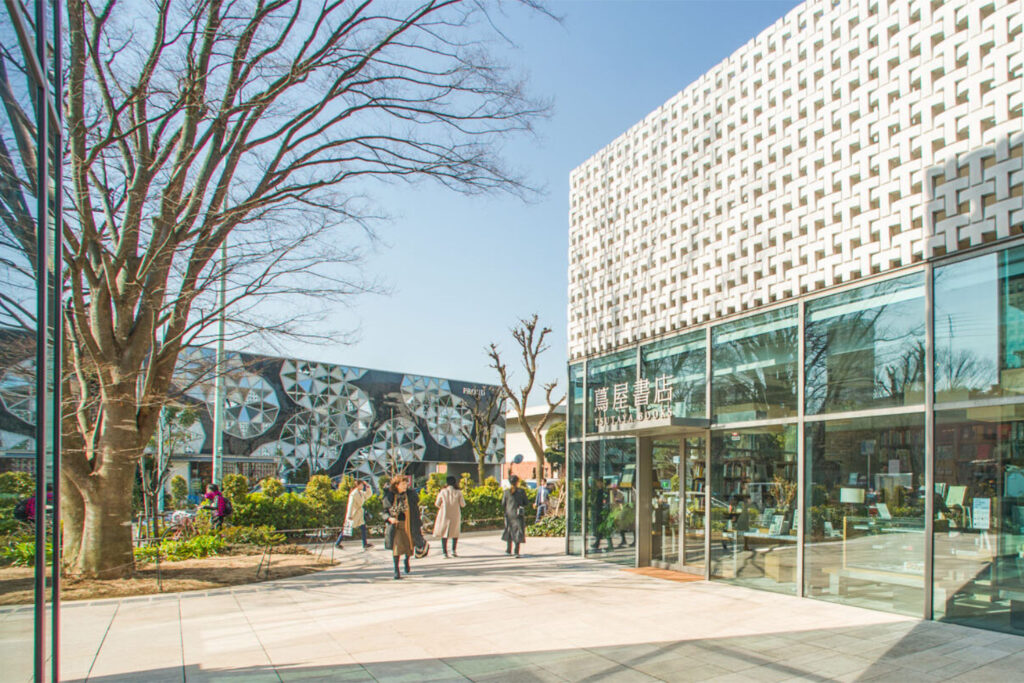
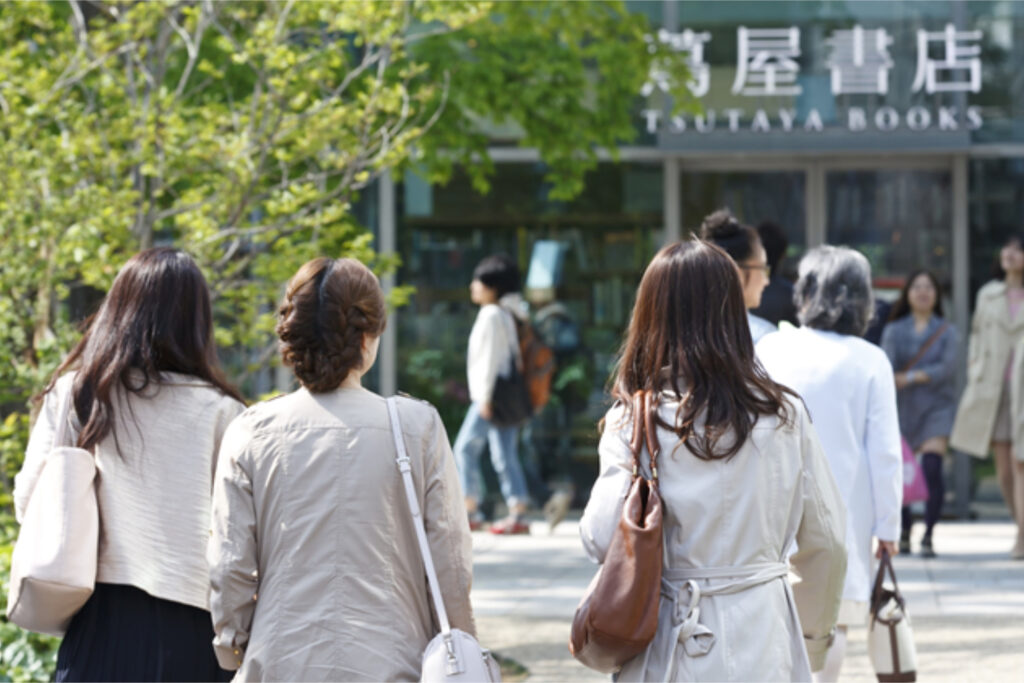
Daikanyama’s shopping is small-scale and curated rather than mall-driven, which is the point. The spine is Kyu-Yamate-dori, lined with select shops, designer boutiques and homeware stores, with Hillside Terrace and Daikanyama T-Site as the two anchors. T-Site’s white-lattice buildings hold a flagship Tsutaya Books, cafés and lifestyle shops and have become the area’s best-known meeting place; for everyday shopping and a few larger stores, residents drop down to Nakameguro, Ebisu or Omotesando.
Dining ranges from neighbourhood bakeries and coffee shops to long-standing bistros and acclaimed restaurants, with a strong café and brunch culture that suits the area’s relaxed pace. Ivy Place at T-Site is a fixture for weekend brunch, the bistros and trattorias around Hillside Terrace have served regulars for decades, and Log Road adds craft beer and casual dining on the former rail line. It is also a notably pet-friendly district, with dog-welcoming cafés and terraces a common sight.
Parks, Culture, and Recreation
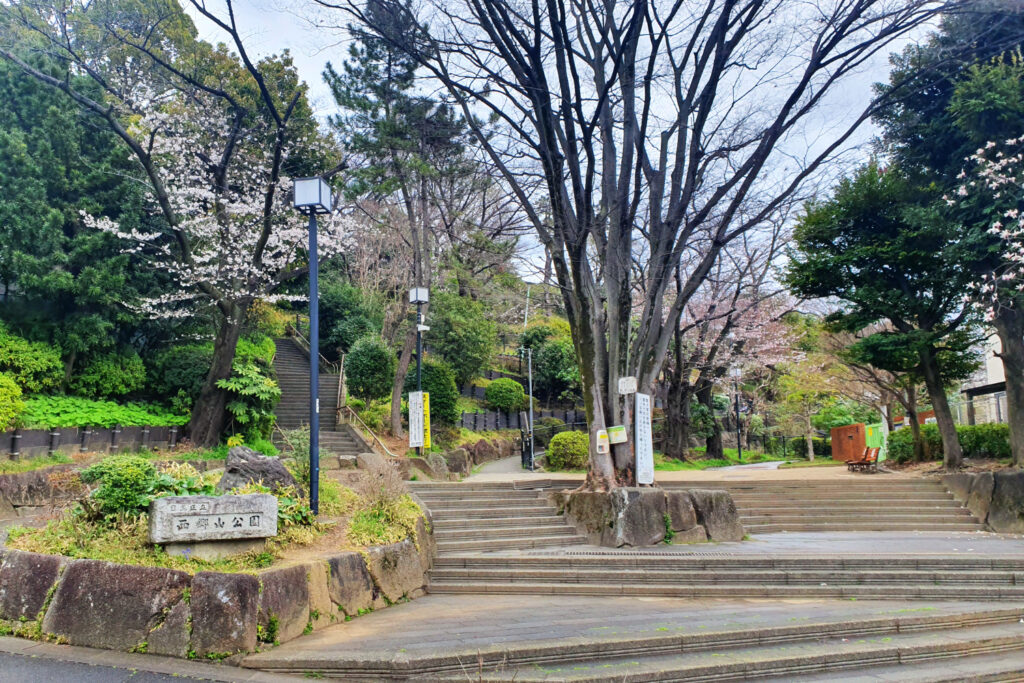
For green space, Saigoyama Park is the district’s open heart. Set on a hillside in the Aobadai pocket on the Meguro side, a short walk from the station, it was once the villa grounds of Saigo Tsugumichi and offers lawns, cherry blossoms in spring and a hilltop view toward Shibuya, and Mount Fuji on clear days. The adjoining Sugekari Park continues the greenery down the slope toward the Meguro River, whose cherry-lined banks are a short walk away.
Culture in Daikanyama is woven into the streetscape rather than housed in big institutions. The architecture itself is the main draw, Maki’s Hillside Terrace and the Kyu Asakura House bookend the area’s design story, alongside small galleries, the curated shelves of Tsutaya Books, and a handful of embassies that add an international texture, including Denmark’s (designed by Maki as part of Hillside Terrace) and Malaysia’s near Saigoyama Park. For larger museums and galleries, Ebisu’s Yebisu Garden Place and the Aoyama–Omotesando cluster are minutes away.
Saigoyama Park
Who Lives in Daikanyama?
Daikanyama draws a younger, design-minded crowd: professionals in fashion, media, tech and the creative industries, dual-career couples and stylish families, living alongside established Japanese households. Because it sits in Shibuya Ward and neighbours Ebisu and Nakameguro, it attracts people who want a central, walkable base with a calmer feel than Central Shibuya itself, a frequent pick on “best neighbourhoods in Tokyo for young professionals” lists, and a steady draw for international residents who value its low-key, English-friendly daily life.
For families, the practical draw is lifestyle and access rather than schools inside the district. Public elementary and junior high schools are run by the Shibuya City Board of Education, while major international campuses sit a short ride away, the International School of the Sacred Heart in Hiroo and Nishimachi International School in Moto-Azabu among them, reachable via Ebisu and the Hibiya Line. Other residential pockets such as Aobadai and Nanpeidai can also suit families who want space and calm within walking distance of the shops.
How Does Daikanyama Compare to Nearby Areas?
Daikanyama sits among several well-known central districts, and the differences are real enough to matter when choosing where to live. The table below compares it with three neighbours.
| Area | Character | Relative price | Best for |
|---|---|---|---|
| Daikanyama | Boutique, low-rise and leafy; calm and walkable | High | Younger professionals, creatives and couples who want style without the crowds |
| Ebisu | Livelier and dining-rich, with a major transport hub | High, can be lower than Daikanyama | Those who want nightlife and multiple train lines on the doorstep |
| Meguro | Riverside and relaxed, stylish cafés and galleries | High | Professionals and couples who want the Meguro River lifestyle and good connections |
| Aoyama | Design-led and refined, fashion flagships and quiet streets | High | Design-conscious professionals who want a prestige address |
Real Estate Overview in Daikanyama
Daikanyama is one of Tokyo’s most expensive residential markets, and the housing stock reflects its low-rise character. The area is dominated by stylish low- and mid-rise apartments and designer units, with a small, tightly held supply of super luxury residences and a limited number of houses in the quieter pockets. The market leans toward established, owner-occupied homes rather than new towers, which keeps turnover low and supply tight.
On price, the clearest public benchmark is government land data. Residential land at the Daikanyama-area standard points ran broadly ¥1.5–2.9 million per square metre in MLIT’s 2025 land-price publication (地価公示), with the Ebisu-nishi point, within Daikanyama’s high-end residential zone, assessed as the highest residential land value in Shibuya Ward. As indicative market context, prime Daikanyama apartments commonly trade in the millions of yen per square metre, and the limited stock of luxury low-rise homes commands a premium for the address.
On the rental side, where many international residents start, expat-market apartments are priced accordingly: compact 1LDK units indicatively from the hundreds of thousands of yen a month, with larger low-rise family residences ranging well into the millions. Compared with neighbouring Ebisu and Nakameguro, Daikanyama tends to sit at or near the top for both rent and sale prices, reflecting its scarcity of low-rise stock and its design-led reputation.
The quieter residential pockets each have their own feel: Sarugakuchō and Daikanyamachō for the boutique core, Ebisu-nishi for the high-ground apartments closest to the station, and Aobadai and Nanpeidai for leafier, more spacious homes. If you are weighing apartments or luxury homes in this part of Tokyo, Housing Japan has more than 25 years in the Tokyo real estate market and can provide local market context and English-language support – get in touch with our team bellow.
Living in Daikanyama: Is It Right for You?
Daikanyama works best for people who value calm, style and walkability over scale and buzz. The combination of independent shops, good cafés, green space at Saigoyama Park and a two-minute hop to Shibuya is hard to match elsewhere in central Tokyo, and it makes the area an easy, English-friendly base for newcomers to Japan.
It is less suited to those who need a large home on a modest budget, or families who want full international schooling inside the immediate neighbourhood rather than a short ride away. For many professionals, couples and design-minded families, though, the trade-offs are exactly the point: a central address with a quiet, low-rise, residential feel that few other Tokyo neighbourhoods can offer.
Frequently Asked Questions About Daikanyama
Which ward is Daikanyama in?
Daikanyama is mostly in Shibuya Ward (渋谷区, Shibuya-ku), one of Tokyo’s central wards, with its core in Daikanyamachō and Sarugakuchō. The district straddles the Shibuya–Meguro boundary, so some adjacent pockets, including Aobadai and Saigoyama Park, sit just over the line in Meguro Ward.
Is Daikanyama a good place to live?
Daikanyama is one of central Tokyo’s most desirable residential districts. It offers quiet, tree-lined streets, boutiques and cafés, green space at Saigoyama Park, and a two-minute ride to Shibuya, all with an easy, English-friendly feel. The main trade-off is cost, as homes here are expensive.
How do you get from Daikanyama to Shibuya?
Shibuya is about two minutes from Daikanyama Station on the Tokyu Toyoko Line, one stop with no transfer. It is also walkable in roughly 15 to 20 minutes, which suits residents who prefer to avoid the train for short trips.
Is Daikanyama expensive?
Yes. Daikanyama is among Tokyo’s priciest neighbourhoods, sitting at or near the top of Shibuya Ward for both rents and sale prices. Its scarcity of low-rise homes and design-led reputation keep demand high and supply tight, so both apartments and houses command a premium.
What is Daikanyama known for?
Daikanyama is known for its boutiques, cafés and low-rise, leafy streets, the look that earned it the nickname the “Brooklyn of Tokyo.” Local landmarks include Daikanyama T-Site and its Tsutaya Books, Fumihiko Maki’s Hillside Terrace, the historic Kyu Asakura House and Saigoyama Park.
What is the difference between Daikanyama and Nakameguro?
Both are stylish, low-rise neighbourhoods one stop apart on the Tokyu Toyoko Line. Daikanyama is more boutique and hillside, built around select shops and design, while Nakameguro is centred on the cherry-lined Meguro River, with a denser run of riverside cafés, bars and galleries and a slightly livelier evening scene.
Is Daikanyama good for families?
Daikanyama suits families who want a calm, walkable, design-minded base in central Tokyo. The draw is lifestyle and access rather than schools inside the district: public schools are run by the Shibuya City Board of Education, while major international schools in Hiroo and Moto-Azabu are a short ride away.
What Next?
At Housing Japan, we specialise in buying, selling and managing residential luxury real estate in central Tokyo. Whether you are looking to rent, buy or simply understand the Daikanyama market, our team can offer local expertise and English-language support at every step. You can view properties for sale in the Daikanyama area or browse Tokyo long-term rentals.
Location
Featured Properties in Daikanyama