Finding the right international school for your child in Japan involves weighing several factors, from curriculum and location to nearby amenities and transport links. With dozens of options across the Tokyo area, the search can feel overwhelming.
This guide covers international schools in Tokyo, along with options outside the city and a summer school program for families exploring what international education in Japan looks like. We’ve included details on tuition costs, neighborhood lifestyle, and property types to help families plan their move.
Table of Contents:
International Schools in Tokyo
International Schools Outside of Tokyo
International Schools with Other Languages of Instruction
Average price’s for International schools in Tokyo
Neighborhood Lifestyle
Property Types Near Schools
Finding a Family Home Near International Schools in Tokyo
Q&As
International Schools in Tokyo
The British School in Tokyo (BST)
- Curriculum: National Curriculum for England, IGCSE, IBDP
- Age Range: 3-18
- Gender: Co-educational
- Location: Situated across two campuses – the primary school in Azubadai Hills, Minato-Ku, with a new campus opened in 2023 and the secondary school in Sangenjaya, two stops from Shibuya.
- Website: https://www.bst.ac.jp

Originally opened in 1989, The British School Tokyo (BST) holds a respected status in Japan’s international education landscape. It is recognized for its commitment to delivering a high-quality British-style education and fostering a diverse and inclusive learning community. Graduates from BST often go on to attend prestigious universities around the world, making it one of the top choices for families seeking a high-quality international education in Tokyo.

American School in Japan (ASIJ)
- American School in Japan (ASIJ)
- Curriculum: American curriculum, American High School Diploma, AP
- Age Range: 6-18
- Gender: Co-educational
- Location: Located in Chofu, a suburban area west of central Tokyo, about 25 minutes by train from Shinjuku.
- Website: https://www.asij.ac.jp
Founded in 1902, ASIJ is located in Chofu, outside central Tokyo. Their campus boasts a state-of-the-art facility, including a 570-seat theatre and a Japanese culture center. While half of the students are American or dual nationality, all elementary students study Japanese. Three-quarters of graduates pursue further education in America, with the remainder heading to Asia, Canada, UK, Europe, or staying in Japan.
Seisen International School
- Curriculum: Montessori, PYP, MYP, IB Diploma
- Age Range: 3-18
- Gender: Co-educational kindergarten, girls only from grade 1
- Location: Situated in Setagaya-ku, in a quiet residential area of western Tokyo.
- Website: https://www.seisen.com
Founded in 1962, Seisen International School offers a comprehensive curriculum for students from kindergarten to high school. It is a Catholic girls-only school that introduces Japanese language and culture into its curriculum. Students come from various regions, with around half going on to universities in America.

International School of the Sacred Heart
- Curriculum: IPC, adapted middle school curriculum, AP, US High School Diploma
- Age Range: 3-5 (Co-educational), 6-18 (girls only)
- Location: Located in Hiroo, central Tokyo, in one of the city’s most desirable expat neighborhoods.
- Website: https://www.issh.ac.jp
Located in downtown Tokyo, this Catholic all-girls school, founded in 1908, is part of the Network of Sacred Heart Schools. As one of the oldest international schools in Japan, ISSH has earned a distinguished reputation for its commitment to providing an excellent education to students from diverse cultural backgrounds, from kindergarten to high school.
Malvern College Tokyo
- Curriculum: International Baccalaureate (IB) (Candidate School)
- Age Range: 4–18 (Currently open to lower sixth (Year 12) for Academic Year 2025–26; expanding annually to include Upper Sixth (Year 13) for Academic Year 2027-28)
- Gender: Co-educational
- Location: Located in Kodaira City, a 40-minute commute from central Tokyo, in a prestigious academic hub home to over 50 educational institutions.
- Website: https://www.malverncollegetokyo.jp
Malvern College Tokyo is proud to be the first all-through British-branded school in Tokyo offering the International Baccalaureate (IB) curriculum. Currently, MCT is a candidate school for the IB Primary Years Programme (PYP) and Middle Years Programme (MYP), with plans to introduce the Diploma Programme (DP) as the school expands. As part of the prestigious Malvern College family, they bring a legacy of British educational excellence combined with a forward-looking, international perspective. They currently welcome pupils aged 4 to 15, while the school is growing each year, with plans to accommodate pupils up to 18 years old in AY 2027-28.

Nishimachi International School
- Curriculum: Adapted curriculum
- Age Range: 5-15
- Gender: Co-educational
- Location: Nestled in the heart of central Tokyo in Moto-Azabu, Minato-Ku, walking distance from Hiroo and Azabu-Juban stations.
- Website: https://www.nishimachi.ac.jp
Established 60 years ago, Nishimachi is known for its commitment to bilingualism, incorporating both English and Japanese into its curriculum from day one. The school’s dedication to fostering global citizenship, critical thinking, and creativity is highly regarded in Japan’s educational landscape. Most graduates go on to attend either the American School in Japan or the Yokohama International School.
St. Mary’s International School
- Curriculum: Adapted American curriculum, American High School Diploma, IB Diploma
- Age Range: 4-18
- Gender: Boys
- Location: Based in Setagaya-ku, specifically in the Foi-Tama area of Tokyo.
- Website: https://www.smis.ac.jp

Founded in 1954, St. Mary’s International School is an all-boys K-12 institution in central Tokyo, offering a holistic education that includes the IB Diploma Program. As a Catholic school open to all faiths, St. Mary’s fosters global awareness within a diverse student body representing nearly 50 countries. Known for its strong academics, arts, athletics, and extracurricular programs, the school provides students with opportunities to explore their passions and excel beyond the classroom. Accredited by CIS and WASC, St. Mary’s operates as a not-for-profit, reinvesting in its students through exceptional faculty, modern facilities, and extensive resources.

Tokyo International School (TIS)
- Curriculum: PYP, MYP
- Age Range: 4-14
- Gender: Co-educational
- Location: Currently in Minami-Azabu, moving to a new campus at Takanawa Gateway City for the 2026/27 academic year.
- Website: https://tokyois.com
Founded in 1997, TIS offers a comprehensive education from preschool to high school. The school is known as an Apple Distinguished School, dedicated faculty, modern facilities, and a commitment to 21st-century skills are among its hallmarks and providing iPads or Macbooks to all students. They are expanding to a new campus at Takanawa Gateway City in 2026.
K. International School Tokyo (KIST)
- Curriculum: PYP, KIST Lower Secondary Programme, IGCSE, IB DIploma
- Age Range: 3-18
- Gender: Co-educational
- Location: Situated in Kiyosumi-Shirakawa area of Koto-ku, eastern Tokyo.
- Website: https://www.kist.ed.jp
Founded in 1997, K International School Tokyo offers a comprehensive educational program from preschool to high school. KIST holds a respected status within Japan’s international education landscape and is known for preparing students for academic success in both national and international academic and professional spheres. It follows the International Baccalaureate program with impressive IB Diploma results. It is accredited by the Council of International Schools (CIS).

Canadian International School Tokyo (CIST)
- Curriculum: PYP, adapted Canadian curriculum, Canadian High School Diploma, AP
- Age Range: 3-18
- Gender: Co-educational
- Location: Located in Shinagawa-ku, close to the business district of central Tokyo.
- Website: https://www.cisjapan.net
Founded in 2007, CIST provides comprehensive educational programs from kindergarten to high school. Primarily serving Canadian teachers and Japanese students, along with students from 25 other nationalities. Graduates from CIST often pursue higher education at esteemed universities in Canada and the US. It is a preferred choice for families seeking a Canadian-style education in Tokyo.
Columbia International School
- Curriculum: Ontario curriculum, Ontario High School Diploma (OSSD)
- Age Range: 6-18
- Gender: Co-educational
- Location: Based in Tokorozawa, Saitama Prefecture, north of central Tokyo.
- Website: https://columbia-ca.co.jp/en/
Located in Saitama, Columbia International School offers a rigorous academic program with a diploma accepted by top global schools. The school creates a learning environment where in small classes each individual student is actively engaged in their learning process.
Tokyo International Schools Outside of Tokyo
Hakuba International School
- Curriculum: EAL, IB Diploma
- Age Range: 12-18
- Gender: Co-educational
- Location: Located in Hakuba village, Nagano Prefecture, in the Japanese Alps.
- Website: https://www.hakuba-is.jp

Located in the heart of Nagano prefecture’s Hakuba village, Hakuba International School (HIS) is a pioneering environmentally focused international boarding school nestled in the Japanese Alps. The school’s unique setting provides an exceptional backdrop for its innovative educational approach that combines academic excellence with environmental stewardship and community engagement. Through a curriculum that uniquely integrates Outdoor Education, Project Based Learning, and Social Emotional Learning, students are empowered to build an inclusive and sustainable future.

The campus serves as a living laboratory where students directly engage with sustainable practices and community-building initiatives, guided by core values including sustainability, respect, integrity, and community. Throughout the academic year, HIS offers popular spring and summer school programs that allow prospective students to experience their distinctive blend of academic rigor and environmental consciousness. HIS also hosts a great summer school program each year which are especially popular.
One World International School Japan (OWIS)
- Curriculum: IB PYP candidate school (Osaka) / Not decided(Tsukuba)
- Age Range: 3-18
- Gender: Co-educational
- Location: OWIS has two campuses in Ikuno-ku, Osaka and Tsukuba City, Ibaraki Prefecture
- Website: https://owis.org/jp/osaka/ (Osaka) / https://owis.org/jp/tsukuba/ (Tsukuba)

OWIS Osaka is an international school in the heart of Osaka. The school provides a diverse and inclusive environment where students from various backgrounds thrive academically and personally. With a focus on critical thinking, global citizenship, and personal growth, OWIS Osaka prepares students to excel in a connected world. The school features modern facilities, dedicated teachers, and a supportive community, ensuring students are equipped to succeed and make a positive impact.
Rugby School Japan
- Curriculum: Adapted National Curriculum for England, IGCSE, A level
- Age Range: 11-18
- Gender: Co-educational
- Location: Located in Kashiwanoha, Chiba Prefecture, approximately 30 minutes from central Tokyo.
- Website: https://rugbyschooljapan.com
Located in Kashiwanoha in Chiba Prefecture, about 30 mins outside of central Tokyo, Rugby School Japan is a day and boarding offshoot of the British boarding school.
At RSJ, both parents and students have the flexibility to select a boarding arrangement that best suits their preferences. Full-time boarders, who reside in the new RSJ purpose-built boarding Houses, will receive care and participate in extra activities throughout the entire week. They will also have access to the school’s new facilities during evenings and weekends throughout the term.
For weekly boarders, they will spend the night at RSJ in a boarding House from Monday to Friday, which is a 5-day boarding option, and return home on Sunday nights. RSJ expects this choice to be particularly popular among busy families in Tokyo and throughout Japan.
Harrow International School Appi
- Curriculum: Adapted National Curriculum for England, IGCSE, A level
- Age Range: 11-18
- Gender: Co-educational
- Location: Situated in Appi Kogen, Iwate Prefecture, a mountainous region in northern Japan.
- Website: https://www.harrowappi.jp
Located in Iwate Prefecture amidst mountains and nature, Harrow International School Appi encourages high-achieving students in both academics and outdoor activities. Harrow International School Appi replicates the full boarding experience of Harrow School in the UK – all students will be boarders.
The school is complemented by convenient access to a range of outdoor activities like skiing, snowboarding, tennis, golf, mountaineering, and mountain biking right at your doorstep. With a 100% boarding environment and the refreshing mountain air, this school offers a truly unique Japanese experience.
Tokyo International Schools with Other Languages of Instruction
For families seeking education in languages other than English, Japan has some renowned international schools.

Deutsche Schule Tokyo Yokohama (DSTY)
- Curriculum: German curricula, High school diploma Abitur, Fachoberschulreife, Realschulabschluss, Hauptschulabschluss
- Age Range: 3-18
- Gender: Co-educational
- Location: Located in Yokohama, specifically in the Nakaku area.
- Website: https://tokyo.globalindianschool.org
Deutsche Schule Tokyo Yokohama (DYST) is a German international school located in Yokohama, Japan. The school was founded in 1904 and is the oldest German school in East Asia. DYST offers education from kindergarten to high school and follows the German curriculum. The school is recognized for its commitment to providing a German-language education to both German-speaking and international students.
Lycée Français International de Tokyo
- Curriculum: French National Curriculum, Bac, Brevet, OIB
- Age Range: 3-18
- Gender: Co-ed
- Location: Situated in Takinogawa, Kita-ku, in northern Tokyo.
- Website: https://www.lfitokyo.org
The International French High School in Tokyo is known as “LFI Tokyo” belongs to a network of establishments operated by the Agence pour l’enseignement français à l’étranger (AEFE), part of the Ministry for Foreign and European Affairs. Since 1 January 2006, the LFI Tokyo has enjoyed accreditation as a licensed local private school (Tokyo kokusai furansu gakuen).
Tokyo Chinese School
- Curriculum: Chinese educational system
- Age Range: 7-18
- Gender: Co-educational
- Location: Based in Suginami-ku, western Tokyo.
- Website: https://www.tokyocs.ed.jp
Originally established in 1929 as an elementary school for overseas Chinese, its operation now follows the education system of the Republic of China (Taiwan). The Ministry of Education, Culture, Sports, Science and Technology (MEXT) accredits the school.
Understanding International School Costs in Tokyo
Annual tuition at Tokyo’s international schools ranges from approximately ¥2,300,000 to over ¥3,533,000 depending on the institution and grade level. Costs generally increase as students progress through school, with high school typically being the most expensive.
First-year enrollment brings additional one-time fees ranging from ¥800,000 to over ¥2,075,000. These cover registration, building development, and educational resources.
Families should also budget for optional services not included in tuition, such as school bus transportation (typically ¥300,000–¥400,000 annually), lunch programs, uniforms, extracurricular activities, and school trips.
Some corporate employers participate in the Corporate Contribution Program (CCP), which offers tax advantages when covering school fees for expat employees. Families relocating with corporate support should inquire about this program with their employer.

Estimated Annual Tuition Ranges at Tokyo International Schools (2025-2026)
| School Level | Annual Tuition Range |
|---|---|
| Kindergarten / Early Years | ¥2,300,000 – ¥3,380,000 |
| Elementary School | ¥2,450,000 – ¥3,380,000 |
| Middle School | ¥2,470,000 – ¥3,425,000 |
| High School | ¥2,470,000 – ¥3,533,000 |
One-Time Entry Fees range from ¥800,000 to ¥2,075,000 depending on the school.
Note: Annual totals include tuition plus mandatory annual fees such as building maintenance and facility fees. One-time entry fees include registration, development, and building fees paid upon enrollment. Additional costs for school bus services, lunch programs, uniforms, and extracurricular activities are not included. Fees vary by institution and are subject to change. Contact schools directly for current fee schedules.
Neighborhood Lifestyle

Minato-ku (Hiroo, Azabu, Roppongi areas) Several prominent schools are located here, including Nishimachi International School and Tokyo International School. Minato City has the a high concentration of facilities and services for foreigners and expats in all of Tokyo. Families find convenience through international supermarkets like National Azabu and Nissin World Delicatessen, English-speaking medical clinics, and diverse dining options. Parks such as Arisugawa-no-miya Memorial Park and Shiba Park offer green spaces for weekend activities. Luxurious housing in Minato City mostly consists of condominiums and single-family houses designed with European and American style layouts intended for foreign executives and diplomats.
Setagaya-ku (Sangenjaya, Yoga, Futako-Tamagawa areas) Home to schools like The British School in Tokyo (Showa Campus), St. Mary’s International School, and Seisen International School. This ward offers a more suburban atmosphere with larger properties and family-friendly parks. The neighborhood is replete with parks, such as Kinuta Park, which is known for its lush greenery and sports facilities. Families appreciate the quieter streets and community-focused environment while maintaining convenient train access to central Tokyo.
Shibuya-ku (Hiroo, Yoyogi areas) International School of the Sacred Heart is located here, and the broader area provides access to Yoyogi Park, one of Tokyo’s largest green spaces. Several international schools operate school bus routes through the area, making the school commute straightforward for expat children. The neighborhood balances urban convenience with residential calm.
Western Tokyo (Chofu) The American School in Japan’s main campus is located here, approximately 25 minutes from Shinjuku by train. Chofu and Mitaka provide family-friendly suburban environments with direct train connections to central Tokyo. Families choosing this area benefit from more spacious housing options at more reasonable prices.
Property Types Near International Schools in Tokyo
Central Tokyo (Minato-ku, Shibuya-ku) Modern condominiums with security features, concierge services, and building amenities such as fitness centers, lounges, and guest rooms are common. Many luxury developments include features tailored for international families, such as larger Western-style layouts and proximity to international supermarkets and medical facilities.
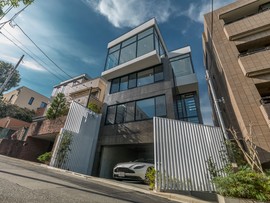
Suburban Areas (Setagaya, Meguro) Families often find more spacious options including larger apartments and detached houses with gardens. These areas have a more suburban feel and maintain convenient train access to school locations and business districts. Housing here often includes features like parking spaces, which are important for families considering car ownership for weekend activities.
Near School Bus Routes Many families prioritize locations along established school bus routes rather than walking distance to schools. This expands housing options significantly while keeping morning commutes predictable. Recommended areas of residence include Yoyogi, Shibuya, Daikanyama, Hiroo, Azabu-Juban, and Motoazabu, all of which have neighborhoods within walking distance to school bus stops.
Finding a Family Home Near International Schools in Tokyo
Choosing the right home is just as important as choosing the right school. Housing Japan can help expat families find properties with convenient access to Tokyo’s international schools. Whether you need a home within walking distance or along an established school bus route, our bilingual team understands the unique needs of international families relocating to Tokyo.
Q&As
How much does international school education cost in Japan?
Annual tuition at Tokyo’s international schools ranges from ¥2,300,000 to over ¥3,500,000 depending on the school and grade level. First-year enrollment adds one-time fees of ¥800,000 to ¥2,000,000 for registration and building development. Families should also budget for optional costs including school bus services, lunch programs, uniforms, and extracurricular activities. Some schools offer sibling discounts and financial aid programs.
What is the admission process for international schools in Japan?
Most schools have rolling admissions, though early application is recommended as popular grade levels often have waiting lists. The process typically includes application forms, previous school records, assessment tests, and family interviews. Application fees range from ¥20,000 to ¥50,000. Families should begin researching schools at least 12 months before their intended start date.
Which Tokyo neighborhoods have the most international schools?
Minato-ku, Shibuya-ku, and Setagaya-ku have the highest concentration of international schools. Many families choose to live along school bus routes rather than within walking distance, which expands housing options while maintaining convenient commutes.
What transportation options are available for Tokyo international school students?
Most schools offer bus services covering major residential areas throughout Tokyo, with annual fees typically ranging from ¥200,000 to ¥400,000. Some families choose properties within walking distance, while others prioritize locations near bus stops. Public transportation is also an option for older students.
Can my child start at an international school in Japan mid-year?
Yes, most schools accept students throughout the academic year depending on availability, with tuition prorated based on enrollment date. However, certain grade levels may have limited spaces, so early communication with admissions offices is recommended.