To verify a Tokyo real estate agency is legitimate, check that it displays a Japanese real estate license number (国土交通大臣 or 都道府県知事), publishes a real Japanese office address, lists a representative director, and appears on the MLIT TAKKEN database at etsuran2.mlit.go.jp/TAKKEN/ (JP only). Any agency missing these is operating outside Japanese law.

Buying or renting property in Tokyo is one of the larger financial decisions most people will make, and it relies almost entirely on trusting the agency in the middle. Japan has a well-developed legal framework designed to weed out unlicensed operators, but it only works if buyers and sellers know where to look. This guide walks through the checks anyone can do, in a few minutes to confirm that a Tokyo real estate company is actually licensed, actually operating from a real office, and actually accountable under Japanese law.
We have written this in plain language for people who may not read Japanese. Every check below links back to an official government source so you can repeat it yourself.
Quick Online Checks to Verify a Tokyo Real Estate Agency
Before going further, run through this short checklist on the agency’s website. A legitimate Tokyo brokerage will show all of the following:
- License number is visible on the website. Look for a number in the format 国土交通大臣(X)第○○○○○号 or 東京都知事(X)第○○○○○号, usually in the footer or on the “About” or “Company” page. English pages may have the translated version, such “Minister of Land, Infrastructure, Transport and Tourism (X) No. ○○○○○” or “Governor of Tokyo (X) No. ○○○○○”.
- Registered address is in Japan. The published head office address should be a Japanese address, not an overseas LLC, a mail-forwarding service abroad or a shared office space. Usually in the footer or on the “About” or “Company” page.
- Address looks like a real commercial office on Google Maps. Paste the address into Google Maps and check Street View. It should show a commercial building or office building and not a residential house, a vacant lot, or a mailbox provider. If the address resolves to a co-working space or serviced office building, that is not automatically a problem, but check that the agency occupies a dedicated private room within it rather than a hot-desk or shared address.
- Representative director’s name is listed. Japanese companies publicly disclose their 代表取締役 (representative director) on the company page. A legitimate brokerage does not hide this. Usually found on the “About” or “Company” page.
- License number verifies on the MLIT database. Enter the company name or license number at etsuran2.mlit.go.jp/TAKKEN/ – the record should match the website exactly; this is a trickier check as the website is in Japanese only.
If an agency fails any of these, stop and investigate before sharing personal details or money.
Why this matters
Real estate brokerage in Japan is a licensed profession. The law that governs it, the Building Lots and Buildings Transaction Business Act (宅地建物取引業法, often shortened to the Takken Law), was written to protect buyers, sellers, and tenants from unqualified operators. Running a brokerage without a license is not a grey area: it is a criminal offence. Article 79 of the Takken Law sets a penalty of up to three years’ imprisonment or a fine of up to three million yen, or both, for anyone who conducts real estate brokerage without the required license. The Japanese statute uses the term 拘禁刑 (kōkin-kei), the unified confinement sentence introduced under the June 2025 penal code reform that replaced the previous 懲役 and 禁錮 categories.
Most Tokyo agencies are legitimate. But Japan’s growing popularity with overseas buyers has also attracted a small number of operators who advertise as Tokyo brokerages while having no license, no real office, and no legal standing to handle the transaction. The checks below are how you tell the difference.
What counts as “Real Estate Brokerage” under Japanese Law
This is worth understanding before the checks, because it explains why the license matters so much.
Article 2 of the Takken Law defines the regulated activity, 宅地建物取引業 (real estate transaction business), as any of the following carried out as a business:
- Selling or buying property yourself (売買)
- Exchanging property (交換)
- Acting as an agent (代理) for someone in a sale, purchase, exchange, or lease
- Acting as an intermediary (媒介) for someone in a sale, purchase, exchange, or lease
The licensing requirement attaches to two things together: the property must be Japanese real estate, and the operator must be carrying out one of the activities above as a business. Where both are present, a Takken license is required regardless of where the company is incorporated or where its staff are based. To hold the license, an operator must establish an office in Japan and place full-time licensed specialists at it, which is why a foreign-registered company with no Japanese office cannot legally broker Japanese property.
The key point is that intermediary activity, 媒介, covers any business that introduces buyers to sellers, arranges viewings, coordinates terms, and helps move a transaction toward closing in exchange for compensation. The law was written before the internet and deliberately applies to anyone performing the economic function of a broker, regardless of what the company calls itself. Some operators market themselves as a “platform,” “listing platform,” or “marketplace” to suggest they sit outside the licensing regime. They do not. The Takken Law defines brokerage by function, not branding. A representative contacting buyers to arrange viewings and walk them through next steps is performing brokerage activity under Article 2 and needs a license to do so legally.
Operators based outside Japan sometimes argue that their online presence places them outside Japanese licensing rules. The Ministry of Land, Infrastructure, Transport and Tourism (MLIT), the ministry that issues and enforces these licenses, takes the opposite view: if the service has the economic function of a broker for Japanese property, the Takken Law applies.
The seven checks to see if a Tokyo Real Estate Agency Is legitimate
1. Find the licence number
Every licensed agency in Japan is assigned a license number (免許番号) in a standard format. It looks like this:
国土交通大臣(X)第○○○○○号 (Minister of Land, Infrastructure, Transport and Tourism license, for agencies with offices in two or more prefectures)
東京都知事(X)第○○○○○号 (Tokyo Governor license, for agencies with offices only in Tokyo)
English translated pages may look like: “Minister of Land, Infrastructure, Transport and Tourism (X) No. ○○○○○” or “Governor of Tokyo (X) No. ○○○○○“.
The number in parentheses is the renewal count. Licenses must be renewed every five years, so a “(1)” means the agency is in its first five-year term, a “(3)” means it has been renewed twice and has been operating for roughly 10 to 15 years, and so on. The number is not a reliability score, an agency that restructures or switches from a prefectural license to a national license will reset to “(1)”, but its absence is a major red flag.
A legitimate Tokyo brokerage will display this number prominently on its website, usually in the footer, “About” or “Company” page and is required to display it on a physical sign (業者票, or gyōsha-hyō) at its office. If you cannot find a license number on the website at all, stop there.
2. Verify the licence with MLIT directly
Displaying a license number is easy. Having one is harder. MLIT runs a free public search system, the Construction and Real Estate Business Information Search System (建設業者・宅建業者等企業情報検索システム) at etsuran2.mlit.go.jp/TAKKEN/ (JP only), that lets anyone look up a licensed agency and confirm its details.
You can search by company name or license number. The result will show the company’s registered head office address, branch offices, representative director’s name, capital, license issue date, license expiry date, industry association memberships, and the number of full-time licensed specialists (専任の宅地建物取引士) working there. This data comes directly from the license-issuing authority and is updated periodically.
If a company’s website shows a license number that returns no results on this system, or returns a different company’s name or address, something is wrong. This is a particularly useful check
3. Check the disciplinary record
MLIT also runs a separate Negative Information Search Site (ネガティブ情報等検索サイト) at mlit.go.jp/nega-inf/ (JP Only), which records administrative actions taken against licensed brokerages. The site publishes the past five years of formal actions, license revocations (免許取消), business suspension orders (業務停止), and instruction orders (指示), along with the name of the company, the license number, the date, and a description of the violation.
An action in the disciplinary record does not automatically mean an agency is unsafe today, but an unexplained or recent one is worth asking about. The combination of “no disciplinary record” and “registered, active license” is the baseline you are looking for.
4. Verify the corporate registration at the Legal Affairs Bureau
Separately from the real estate licence, every Japanese company must be registered at the Legal Affairs Bureau (法務局), the government body that maintains the national corporate registry. The certified extract of this registration is called a 登記事項証明書 (tōki jikō shōmeisho, roughly “certificate of registered matters”) and it lists the company’s full legal name, head office address, date of incorporation, directors, and paid-in capital.
You can request this certificate for any Japanese company through the Legal Affairs Bureau’s online system, houmukyoku.moj.go.jp, for a small fee.
Two things to check:
The address on the Legal Affairs Bureau registration should match the address the company publishes on its website and on its MLIT license record. If the real estate license is held by one company and the website is run by a different company with a different address, ask why.
If the company claims to be a Japanese brokerage but you cannot find any corporate registration at the Legal Affairs Bureau at all, it is not a Japanese company in the legal sense. An LLC registered in a US state, for example, does not have a Japanese corporate registration unless it has separately registered a branch office or established a Japanese subsidiary at the Legal Affairs Bureau. Without one of those, it cannot hold a Japanese real estate brokerage license. Even with a registered branch, it must still meet all the standard requirements, a real Japanese office, full-time licensed specialists, and a guarantee deposit or association membership.
5. Confirm the office is a real office
Under the Takken Law, a licensed brokerage must operate from a genuine office, not a mailing address. MLIT guidelines require that the office be a permanent, independent space with a dedicated entrance, suitable for receiving customers, and large enough to display the required signage and documents. Virtual offices and mail-forwarding services are not accepted. Co-working spaces, hot-desking arrangements, and shared offices where multiple unrelated companies use the same room are also rejected. Serviced or rental offices can qualify, but only where the brokerage occupies a fully enclosed, lockable private room used exclusively by that company, with 24-hour access and the right kind of lease contract. Tokyo’s review standards have tightened in recent years.
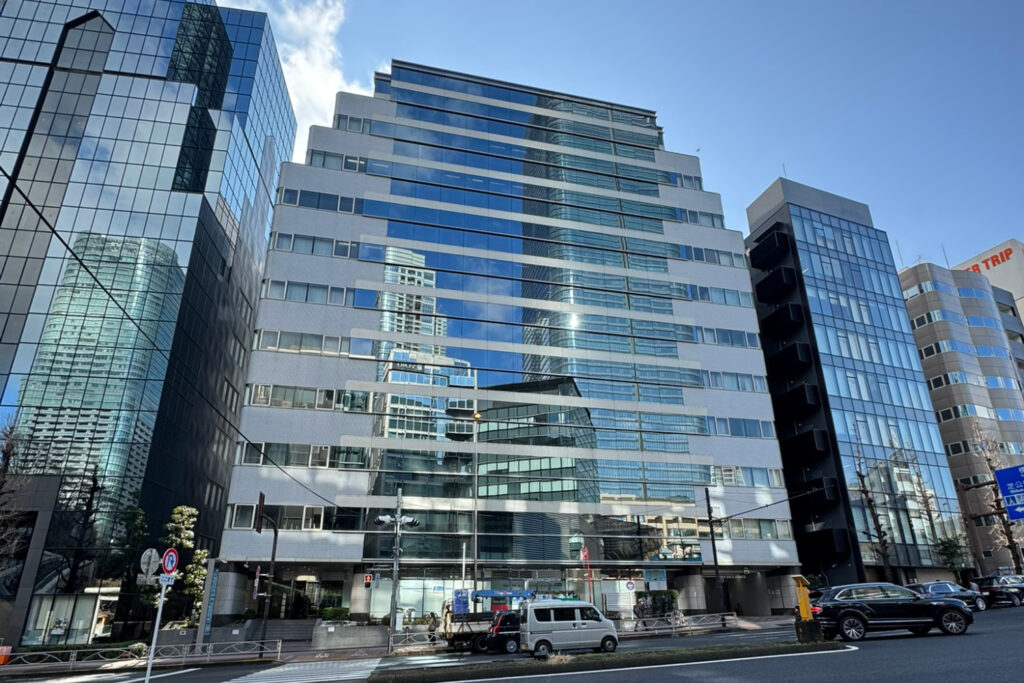
This matters to buyers because it means the published address should show a real office if you visit or look it up. Two quick checks:
Open Google Maps and look up the street address published on the agency’s website. You are looking for a commercial or office building consistent with a real estate office, with signage or a listing matching the company name. If Street View shows a residential house, a vacant lot, a post-office box provider, or a building where no real estate firm is listed in the directory, that is a red flag worth investigating.
A co-working or serviced office building is not automatically disqualifying, but in that case, confirm the agency rents a dedicated private room there rather than a hot-desk or virtual address. It is worth noting that Japanese real-estate agents may be off the ground floor in multi-story office building so check the address to see what floor registered on.
Compare the address on the website, the address on the MLIT license record, and the address on the Legal Affairs Bureau corporate registration. All three should match. A mismatch is not necessarily fraud, companies do move offices, but it is worth a direct question.
The address question also applies to companies whose corporate address is not in Japan at all. Some countries allow a company to register with a commercial agent’s address rather than a real operating location. If the agency’s parent company is registered at such an address, and if the “office” in Japan cannot be independently verified, you are not dealing with a regulated Japanese brokerage.
6. Check the guarantee deposit or association membership
Every licensed brokerage in Japan must either deposit a guarantee (営業保証金) with the Legal Affairs Bureau, 10 million yen for the head office plus 5 million yen for each branch, or join an approved industry guarantee association (保証協会) and pay a smaller contribution (600,000 yen for the head office, 300,000 yen per branch). This money exists specifically to compensate clients if the brokerage causes them a loss in a transaction.
Two guarantee associations are approved under Article 64-2 of the Takken Law. The larger is the Real Estate Transaction Guarantee Association (全国宅地建物取引業保証協会), known as the Hato mark (ハトマーク) after its dove logo and affiliated with the All Japan Real Estate Federation (“Zentaku”); roughly 80% of licensed brokerages are members. The other is the Real Estate Guarantee Association (不動産保証協会), known as the Usagi mark (ウサギマーク) after its rabbit logo and affiliated with the All Japan Real Estate Association (“Zennichi”). A brokerage can belong to one or the other, not both. Membership is listed on the MLIT search record from check 2 above.
A legitimate Tokyo brokerage will have one or the other. Neither is a marketing claim, both are tied to money actually deposited with a government body.
7. Ask who your takkenshi is, and when they got involved
Under Article 31-3 of the Takken Law and Article 15-5-3 of its Enforcement Regulations, every licensed brokerage must place full-time 宅地建物取引士 (takkenshi, or licensed specialists) at each office, in a ratio of at least one for every five employees engaged in real estate transaction work. An office with eleven brokerage staff therefore needs at least three full-time takkenshi, not one. The takkenshi is the qualified individual who delivers the 重要事項説明 (jūyō jikō setsumei, or “important matters explanation”) before contract signing, and who signs and stamps key transaction documents. The role exists to protect the client: a qualified, accountable person is supposed to be substantively involved in the deal.
A related concern is 名義貸し (meigigashi), or “license lending”, registering a takkenshi on paper to satisfy the one-per-five requirement without that person actually working at the office full-time. Meigigashi is prohibited under Article 13 of the Takken Law and is grounds for license revocation and criminal penalties. MLIT guidance defines 専任 (full-time) as ordinarily requiring the takkenshi to be regularly stationed at the office during normal business hours and exclusively engaged in real estate transaction work; remote arrangements and concurrent employment elsewhere are generally incompatible with the requirement. Meigigashi is not always visible from the outside, but client questions early in the process are one of the few ways it surfaces.
Two questions worth asking early:
Who is the takkenshi assigned to my transaction, and at what point will they be involved? A legitimate brokerage can name them and explain their role from the start, not only at signing.
Are the people I am dealing with, the ones arranging viewings and discussing terms, themselves licensed, or working under direct supervision of a licensed specialist? If neither is true, the agency may be operating outside the law’s intent.
Beyond the license: why experience still matters
The seven checks above confirm an agency is legally allowed to broker Japanese real estate. They do not tell you whether it is good at it. For overseas buyers, this second question matters almost as much as the first.
What the licence checks do not test for is the kind of experience that matters most to cross-border buyers. The common difficulties are procedural rather than legal: handling remittances from foreign accounts, structuring ownership for non-residents, coordinating tax filings, working with buyers who cannot read Japanese contracts, and managing the property after closing. An agency that has done this many times tends to anticipate these issues. One doing it for the first time may not.
The date of incorporation on the Legal Affairs Bureau registration, covered in check 4, is the most reliable measure of how long a company has actually been operating. It is worth checking alongside the licence details.
A few practical questions worth asking once the licence is confirmed:
- How many transactions has the agency completed with overseas buyers?
- Do they regularly work with non-Japanese-speaking clients, and is the important matters explanation available with English support?
- Do they offer property management after purchase?
- How long has the company itself been operating?
None of this replaces the licensing checks, but once those are confirmed, experience is usually what separates a smooth transaction from a difficult one.
Key Facts at a Glance
| What to check | Where to check | What a legitimate agency has |
|---|---|---|
| Licence number | Agency website and physical office sign | A visible 免許番号 in the format 国土交通大臣(X)第○○○○○号 or 東京都知事(X)第○○○○○号 |
| Active licensee | etsuran2.mlit.go.jp/TAKKEN/ (JP only) | A matching record with current dates, correct company name, and correct address |
| Disciplinary record | mlit.go.jp/nega-inf/ (JP only) | No recent revocation or business suspension |
| Corporate registration | houmukyoku.moj.go.jp (JP only) | A Japanese 登記事項証明書 with a matching head office address |
| Physical office | Google Maps / Street View | A commercial office at the published address, consistent with the license record |
| Client protection | MLIT search record | Either a deposited 営業保証金 or membership in a 保証協会 |
Warning signs worth pausing on when seeing if a Tokyo Real Estate Agency Is Legitimate
A short list of things that, on their own, do not prove anything but that justify slowing down and asking questions:
- No license number anywhere on the website. A licensed Japanese brokerage publishes this number; not publishing it is unusual.
- A license number that does not appear in the MLIT database, or that appears but belongs to a different company. This is a significant red flag.
- An “office” address that resolves on Street View to a residential house, a mailbox service, a vacant lot or co-working space. Real brokerages operate from real offices because the law requires it.
- A parent company incorporated in an overseas jurisdiction known for allowing registration at a commercial agent’s address, where no physical operating location is ever disclosed. This is a common pattern in shell companies and makes legal recourse very difficult in practice if something goes wrong.
- A website or representative that describes the business as a “platform,” “marketplace,” or “introduction service” for Tokyo property, but where staff actually arrange viewings, negotiate terms, and walk you toward signing. That is brokerage activity under Article 2, and it needs a license regardless of what the service is called.
- Pressure to wire funds, earnest money, reservation deposits, due diligence fees, to an overseas account before you have verified the company in any Japanese public database. Legitimate Tokyo brokerages receive payments in Japan, through Japanese bank accounts, tied to a written jūyō jikō setsumei (important matters explanation) delivered by a licensed specialist.
What legitimate Japan Agencies Do

A straightforward way to sense-check any agency is to notice what the legitimate ones are required to do.
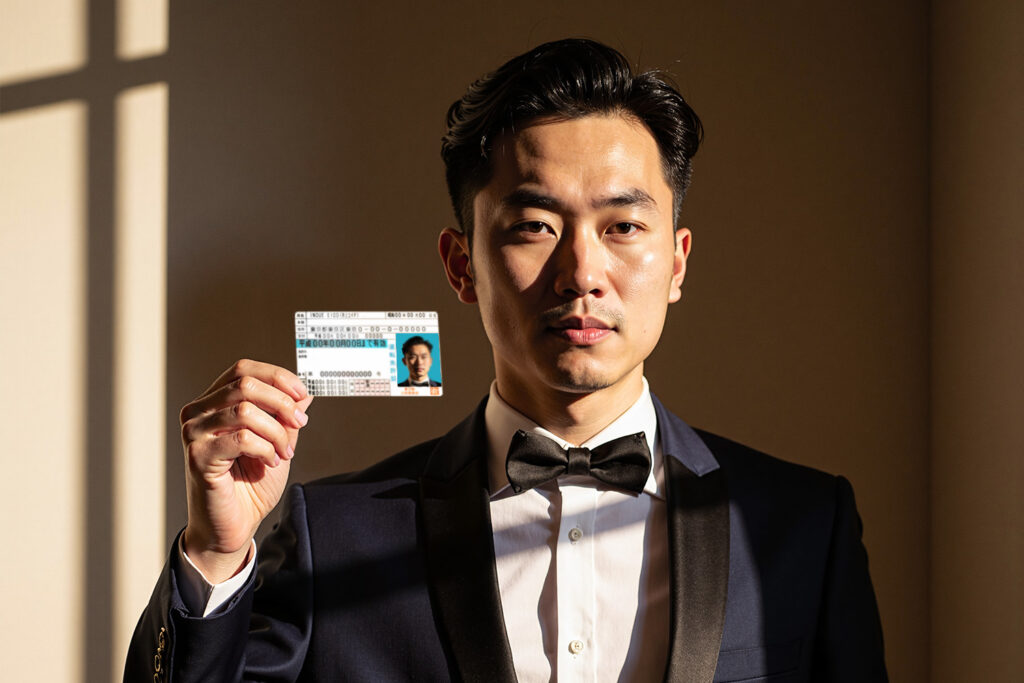
They issue a written “important matters explanation” (重要事項説明) before contract signing, delivered in person or through approved video conferencing by a person holding a 宅地建物取引士 qualification, and accompanied by that person’s ID card. This is a legal requirement under the Takken Law, not a courtesy.
They display a physical sign (業者票) in the office showing the license number, license validity period, company name, representative’s name, the number of full-time licensed specialists at that office, and the main office address.
They follow the capped commission structure set by MLIT. For sales brokerage of properties over eight million yen, the maximum commission is 3% of the sale price plus 60,000 yen, plus consumption tax. (A separate cap of 330,000 yen including tax applies to each side of sales of eight million yen or less, following a July 2024 MLIT revision aimed at low-value property and vacant homes a.) An agency charging substantially more, or demanding upfront fees unrelated to the commission, is operating outside the rules.
They will, if asked, cite their license number and invite you to verify it. They know the system is public and they expect serious clients to use it.
What Next?

Whether you’re beginning your search for a home in Tokyo or looking to invest in Japanese real estate, Housing Japan is your trusted destination. With over 25 years of experience we specialize in buying, selling, and managing residential luxury real estate in central Tokyo. Our license details, registered office, and professional affiliations are published openly, as they should be for any legitimate Tokyo brokerage. Whether you are a local resident or an overseas buyer exploring the Tokyo market, we’re happy to walk you through any of the checks above in person and answer questions about how the Japanese transaction process works.
Q&A
How do I check if a Tokyo real estate agent is licensed?
Look for a license number on the website, a Japanese head office address, a real commercial office on Google Maps, a Japanese phone number, and a named representative director. Then if still unsure verify the license at the MLIT Construction and Real Estate Business Information Search System (etsuran2.mlit.go.jp/TAKKEN/). A legitimate agency will appear with a current license and details that match its website.
What does a Japanese real estate license number look like?
One of two formats. A Tokyo-only firm has a governor’s licence: 東京都知事(X)第○○○○○号. A firm with offices in two or more prefectures has a minister’s licence: 国土交通大臣(X)第○○○○○号. The number in parentheses is the renewal count; licenses renew every five years. English translations are also acceptable.
Can a foreign company operate as a real estate brokerage in Tokyo?
Only through a Japanese branch or subsidiary that holds a Takken license and operates from a real Japanese office that is within the same business group. A foreign-registered LLC with no Japanese registration cannot legally broker Japanese real estate. Doing so is a criminal offence under Article 79 of the Takken Law, carrying up to three years’ imprisonment or a fine of up to three million yen.
Is a website calling itself a “platform” exempt from the Japanese real estate license requirement?
No. The Takken Law defines brokerage by activity, not branding. If staff arrange viewings, communicate between buyer and seller, and coordinate transactions, that is intermediary (媒介) activity under Article 2 and requires a licence.
What is the difference between a 宅地建物取引士 and a 宅建業者?
A 宅建業者 is the licensed business. A 宅地建物取引士 is the qualified individual who delivers the important matters explanation and signs key documents. Licensed brokerages need one for every five staff per office.
Sources
- 宅地建物取引業法 (Building Lots and Buildings Transaction Business Act), e-Gov Laws Database: laws.e-gov.go.jp/law/327AC1000000176 (JP Only)
- MLIT Construction and Real Estate Business Information Search System: etsuran2.mlit.go.jp/TAKKEN/ (JP Only)
- MLIT Negative Information Search Site: mlit.go.jp/nega-inf/ (JP Only)
- Legal Affairs Bureau (法務局) online certificate request: houmukyoku.moj.go.jp (JP Only)
- MLIT real estate business regulations: mlit.go.jp/totikensangyo/const/index.html (JP Only)
- Real Estate Transaction Guarantee Association / Hato mark (全国宅地建物取引業保証協会): zentaku.or.jp (JP Only)
- Real Estate Guarantee Association / Usagi mark (不動産保証協会): zennichi.or.jp (JP Only)