Investment Property Loans in Japan for Foreigners
Foreigners can borrow to buy investment property in Japan, but lenders treat an investment loan differently from a loan for a home you live in, looking as closely at the building and its location as at you. Foreign residents can borrow from Japanese banks, while investors living overseas usually borrow through a bank in the country where they live, or buy in cash. If you are buying a home to live in, see our guide to mortgages for foreigners in Japan.

Investment loans for foreigners in Japan at a glance
| Lender and loan | Who can apply | Property and area | Loan-to-value | Term |
|---|---|---|---|---|
| SMBC Trust Bank (PRESTIA), residential building investment loan | Japanese nationals, and foreign nationals living in Japan who can read the Japanese loan documents; PRESTIA Gold Premium customers or equivalent | Residential buildings of 5 or more units in Tokyo’s 23 wards; loans from ¥70 million | Up to 80% of the bank’s valuation | 1 to 30 years, within the building’s statutory useful life, repaid before age 80 |
| ORIX Bank, real estate investment loan | eople living in Japan, aged 20 to 59 at application, with pre-tax income of ¥5 million or more and at least 3 years with the same employer (3 years of business for the self-employed) | Rental apartments, buildings and houses, and condominiums of 40㎡ or more, in Greater Tokyo, the Kinki region, Nagoya and Fukuoka; ¥20 million to ¥200 million | Within the bank’s valuation | 1 to 35 years, depending on age, structure and building age, repaid before age 85 |
| UOB Singapore, International Property Loan | Singaporeans, Singapore permanent residents and foreigners aged 21 to 65, with a UOB Singapore account | Freehold residential investment property in Tokyo, Osaka, Kyoto, Yokohama and Fukuoka | Up to 70% of the price or valuation, whichever is lower | Up to 35 years, ending by age 75 |
| OCBC Singapore, Overseas Property Loan | Singaporeans, Singapore permanent residents and foreigners working and living in Singapore, aged 21 and over | Investment property in Tokyo; loans from ¥25 million or S$200,000 | Up to 70% in yen, 60% in Singapore dollars | Not published |
| Shinsei Investment & Finance, mortgage loan for overseas investors | Hong Kong residents holding a Hong Kong SAR or Japanese passport, aged 20 to 70, with over 2 years’ employment and income above ¥8 million | New or second-hand condominiums in Tokyo’s 23 wards, central Osaka and Nagoya; ¥10 million to ¥500 million | Up to 70% of the lender’s valuation | 1 to 20 years, repaid by age 75 |
These terms come from each lender’s own published conditions: SMBC Trust Bank’s product description dated 15 June 2026, ORIX Bank’s product description dated 1 November 2026, Shinsei Investment & Finance’s conditions as of 1 October 2025, and the UOB and OCBC product pages checked in November 2026. Lenders change their terms, so confirm the details with the lender before you apply.
Who can get an investment loan in Japan?
Watch: how foreign residents can get a real estate investment loan in Japan (5 minutes).
There is no single national rule on who can borrow, so each lender’s conditions decide it. SMBC Trust Bank lends to foreign nationals living in Japan without asking for permanent residency, as long as they can read its Japanese loan documents, although its building loan is aimed at PRESTIA Gold Premium customers. The bank also offers a smaller investment loan of ¥5 million to ¥100 million for up to 30 years, with eligibility set out in its product description. ORIX Bank lends to people living in Japan with pre-tax income of ¥5 million or more and at least 3 years with the same employer; its product description doesn’t set out nationality rules, so foreign residents should check with the bank. Shinsei Investment & Finance asks for over 2 years in work and annual income above ¥8 million. Every application still goes through the lender’s own screening, so meeting the published conditions does not guarantee a loan.
How do investment loans differ from home loans?
Lenders assess an investment loan on the property as well as the borrower, and usually charge more than for a loan on a home you live in. Many offer both variable and fixed rates; SMBC Trust Bank’s investment loan has a variable rate that resets yearly and fixed periods of 3, 5, 7 or 10 years. Investment loans also come with tighter limits than home loans on location, building type and loan term.
How much will a bank lend for an investment property?
The lenders that publish a figure lend 60% to 80% of the value, so plan to put in 20% to 40% of the price yourself, plus costs. Most work from their own valuation rather than the purchase price, and if their valuation comes in lower, you cover the difference. Your age limits the term, because the loan must be repaid by 75, 80 or 85 depending on the lender. Some lenders also limit it to the building’s remaining statutory useful life.
Which properties and areas do lenders accept?
Every lender above covers Tokyo, and some add Osaka, Kyoto, Yokohama, Nagoya, Fukuoka or the wider Kinki region, so check that a property’s address qualifies before you make an offer. Building age matters because lenders such as SMBC Trust Bank keep the term within the building’s statutory useful life (法定耐用年数). That is 47 years for a reinforced concrete residential building and 22 years for a wooden one, so the older the building, the shorter the loan and the higher the monthly repayment. ORIX Bank also adjusts the term for a building’s structure and age. The property types they finance differ as well. UOB finances freehold apartments and condominiums, and Shinsei Investment & Finance finances new and second-hand condominiums. ORIX Bank finances condominiums of 40㎡ or more as well as apartment buildings and houses, and SMBC Trust Bank’s building loan covers residential buildings of 5 or more units.
Can non-residents get an investment loan in Japan?
Investors living overseas rarely qualify with Japanese banks, so most borrow through a specialist lender, a bank in their home market, or pay cash.
Specialist cross-border lenders based in Japan are one route. Yen Loans, a Tokyo-registered money lender (Governor of Tokyo (1) No. 31998), lends to non-resident foreign buyers and to foreign residents who can’t get bank finance in Japan. Eligibility depends on holding a passport from an eligible country, or permanent residency for some other nationalities, and it needs no Japanese income, visa or bank account. It lends ¥15 million to ¥525 million for up to 35 years on reinforced concrete apartments built in 1990 or later. The property can be in Greater Tokyo, Osaka, Kyoto, Hyogo, Nagoya, Fukuoka or Sapporo. Loan-to-value is up to 65% of an independent valuation, falling to 50% for short-term rentals, second homes and loans over ¥250 million. Its variable rate is 1-month TIBOR plus 3.50%, which it published as 4.90% on 1 October 2026, and all loans are full recourse.
Banks in your home market are the other route. Investors based in Singapore can apply to UOB or OCBC, which prices its yen loan at its 3-month yen cost of funds plus 3.50%. Hong Kong residents can apply to Shinsei Investment & Finance. Our sales team also works with ORIX Asia, CTBC and Sumitomo Mitsui Trust for overseas buyers, and saw variable rates of 3.1% to 4.7% from overseas lenders in August 2026.
After buying, non-residents file a FEFTA report; see can foreigners buy property in Japan for the rules.
What does borrowing cost on top of the interest?
Arrangement fees vary between lenders. SMBC Trust Bank charges either 2.2% of the loan or a flat ¥22,000, depending on the rate plan, ORIX Bank up to 2.2%, and Shinsei Investment & Finance 1.5%. You also pay to register the mortgage, plus stamp duty, and many lenders include group credit life insurance (団信), which repays the loan if the borrower dies. For the full list of purchase costs and paperwork, see how to buy an investment property in Tokyo.
Estimate your repayments
Our Japan mortgage calculator works for investment loans too. Enter the rate your lender quotes, which will usually be higher than a home-loan rate.
Talk to our investment sales team
Housing Japan is a licensed Tokyo brokerage that has helped international buyers invest in Japanese property for over 26 years. Our multilingual investment sales team specialises in central Tokyo and can introduce you to lenders that suit your residence status and the property you have in mind. Contact our investment sales team, or read our Japanese real estate investment guide for an overview of the market.
Related Resources


Properties for Sale
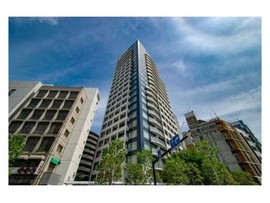
City Tower Yotsuya
Funamachi, Shinjuku, Tokyo
3
1
83.25 m²
Rent (Estimate): JPY 410,000 / month
Yield (Estimate): 3.17%
JPY 155,000,000
Shoto National Court
Kamiyamacho, Shibuya, Tokyo
4
1
134.96 m²
Rent (Estimate): N/A
Yield (Estimate): N/A
JPY 180,000,000
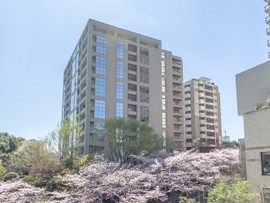
The Westminster Roppongi
Roppongi, Minato, Tokyo
1
1
86.71 m²
Rent (Estimate): N/A
Yield (Estimate): N/A
JPY 435,000,000
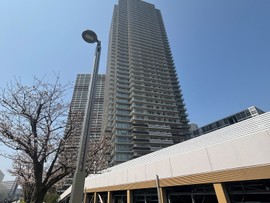
W Comfort Towers West
Shinonome, Koto, Tokyo
3
1
109.12 m²
Rent (Estimate): N/A
Yield (Estimate): N/A
JPY 158,000,000
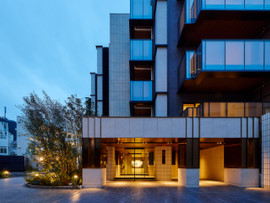
INNOVACIA Ebisu
Mita, Meguro, Tokyo
3
1
74.21 m²
Rent (Estimate): N/A
Yield (Estimate): N/A
JPY 238,800,000
INNOVACIA Ebisu
Mita, Meguro, Tokyo
3
1
74.21 m²
Rent (Estimate): N/A
Yield (Estimate): N/A
JPY 228,800,000