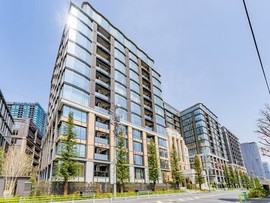
Tokyo’s architecture blends contemporary minimalism, neo-futurist mixed-use towers, refined modernism, and newer sustainable timber construction. Its building types range from high-rise tower mansions and mid-rise condominiums to large luxury residences, compact detached houses and narrow micro-homes. Strict earthquake codes and limited land shape almost every design choice across the city.
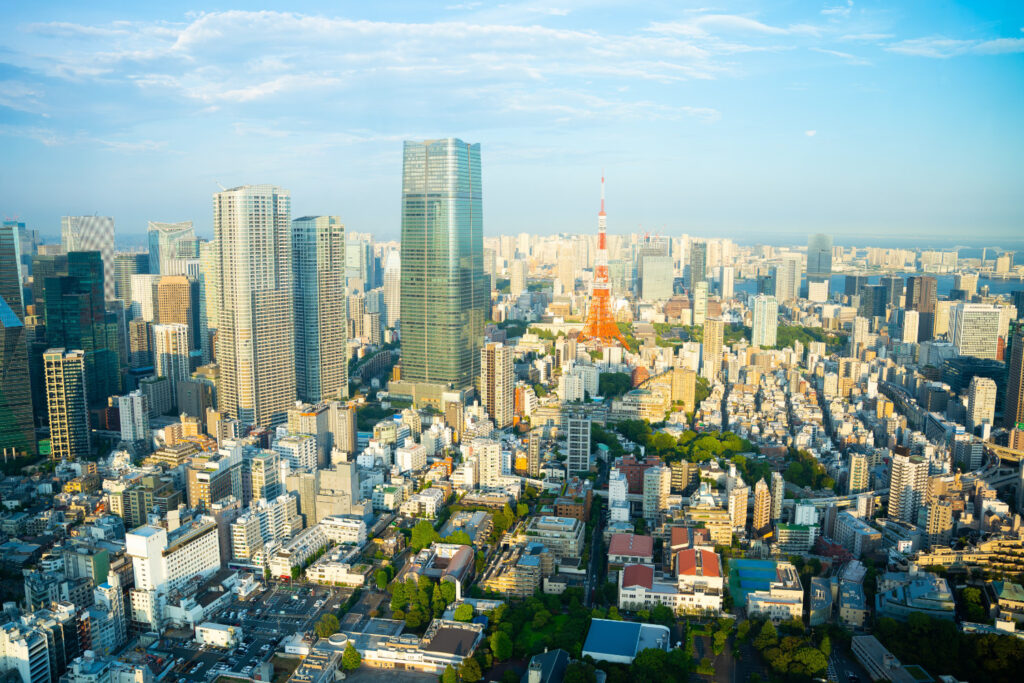
Key Facts: Tokyo Architecture at a Glance
- Defining contemporary styles: contemporary minimalism, neo-futurism, sustainable timber design, and modernism.
- Signature design traits: simplicity, natural light, lightness of materials, a close link between inside and outside, and fine attention to detail.
- Leading architects linked to Tokyo: Tadao Ando, Kengo Kuma, Kazuyo Sejima (SANAA), Sou Fujimoto, and Shigeru Ban.
- Architectural standing: Japan has produced nine Pritzker Prize laureates, more than any other country, most recently Riken Yamamoto in 2024.
- Most influential post-war movement: Metabolism, led by Kenzō Tange and Kisho Kurokawa in the 1960s.
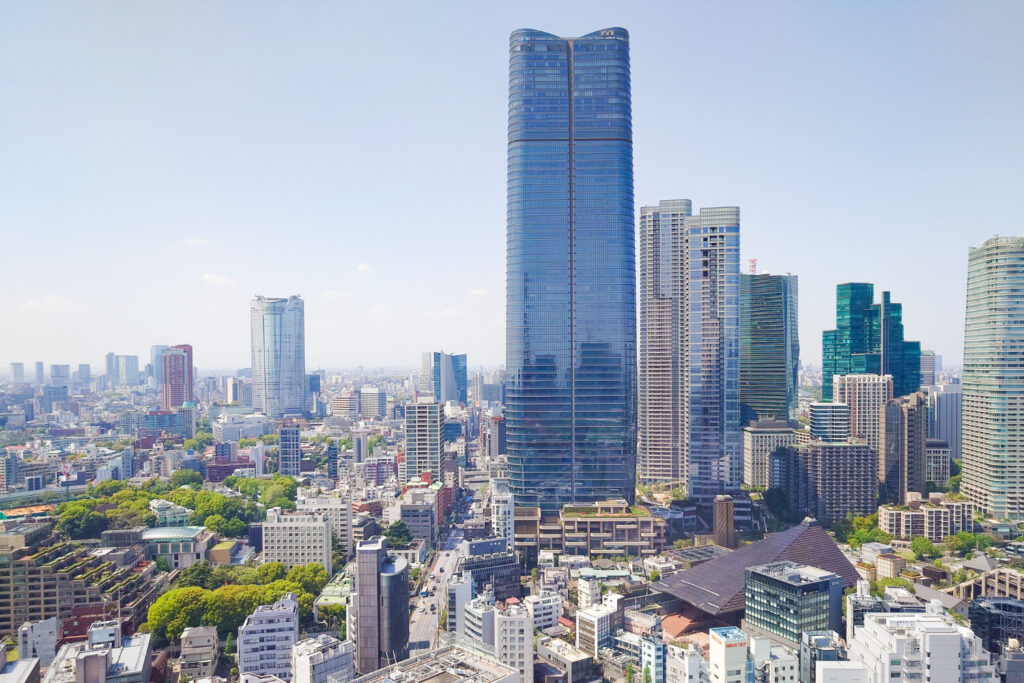
- Landmark of neo-futurism: Azabudai Hills Mori JP Tower – 325.2 metres, opened 2023, developed by Mori Building and designed by Pelli Clarke & Partners. It is Japan’s tallest building.
- Tallest timber building in Japan: Port Plus, Yokohama – 11 storeys, 44 metres, completed 2023 by Obayashi Corporation.
- On the horizon: the W350 project, a 350-metre tower roughly 90% timber, targeted for around 2041 by Sumitomo Forestry and Nikken Sekkei.
- Tallest structure in Tokyo: Tokyo Skytree – 634 metres, completed 2012; its form draws on a pagoda and a samurai sword.
- Shaped by earthquakes: modern towers use base isolation and damping systems, and homes are rated under Seismic Grades 1 to 3, where Grade 3 is 1.5 times the legal minimum.
What Architectural Styles Define Tokyo Today?
Tokyo’s recent buildings are mostly modern and contemporary. Contemporary Japanese architecture is known for being simple, with a calm atmosphere, a focus on lightness of materials, and close attention to detail. Four broad styles stand out across the city.
Contemporary Minimalism
Contemporary minimalism is the look most people picture when they imagine modern Tokyo. It favours clean lines, open interiors, natural light, and a restrained palette of concrete, glass, timber, and white surfaces. The aim is calm and clarity rather than decoration.
This style has deep local roots. It draws on traditional Japanese ideas such as empty space, simple natural materials, and a close link between a building and its light. Modern homes translate these ideas into open-plan rooms, large windows, built-in storage, and double-height voids that let daylight move through the space across the day.
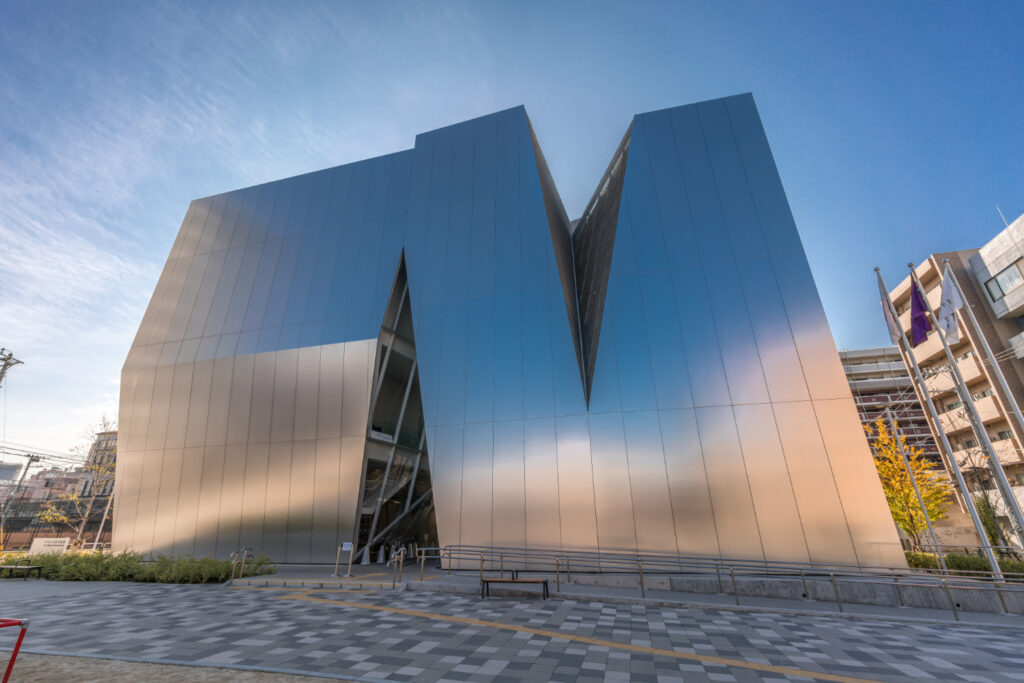
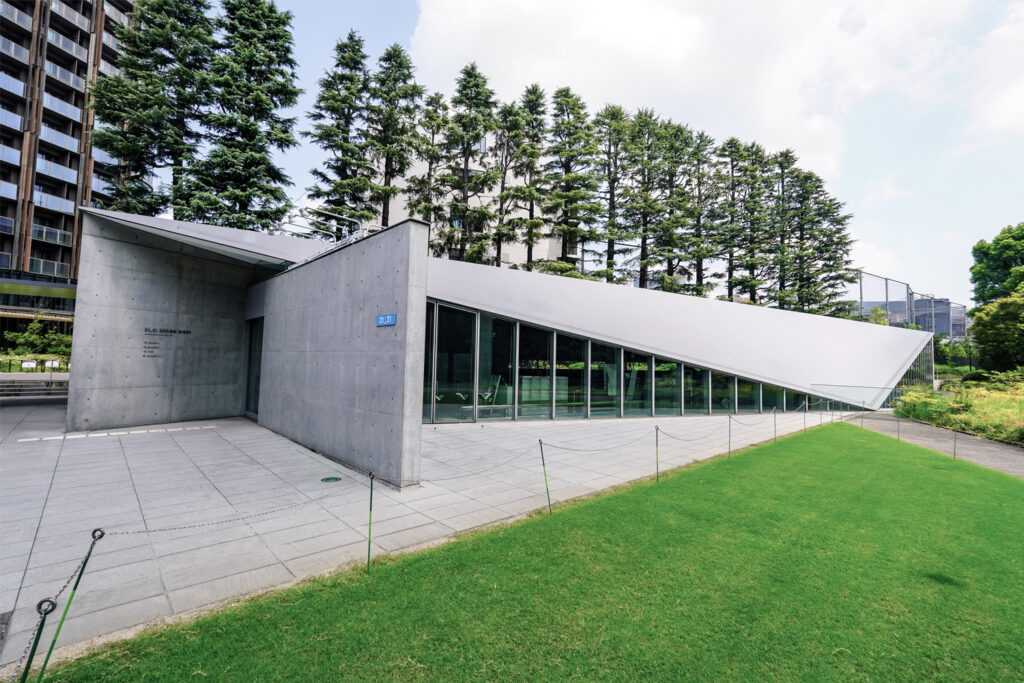
The architect Tadao Ando is closely tied to this look through his smooth, exposed-concrete walls and careful framing of daylight. In Tokyo, his Omotesando Hills complex shows the style at city scale. The studio SANAA, co-founded by Kazuyo Sejima, pushes minimalism further with light, almost weightless buildings wrapped in glass. Its translucent House of Dior in Omotesando is a well-known example.
Neo-Futurism and Mixed-Use Towers
Neo-futurism describes Tokyo’s large mixed-use complexes. These combine homes, offices, shops, hotels, and green space in a single development, usually built around one or more tall towers. The forms are bold and forward-looking, and the idea is a “compact city” where people can live, work, and relax in one place.
The clearest recent example is Azabudai Hills in Minato. The complex is built in a modern neo-futurist style, and its 64-storey Mori JP Tower stands 325.2 metres tall. It opened in November 2023 and is Japan’s tallest building, taking the title from Osaka’s Abeno Harukas. It was developed by Mori Building and designed by the firm Pelli Clarke & Partners.
Greenery and sustainability are central to this style. Azabudai Hills is wrapped in planting, public art, and shared gardens. Its architects report that the development earned LEED Platinum certification for Neighborhood Development, the first in Tokyo to do so, and that its towers use seismic technology informed by data from the 2011 Great East Japan Earthquake.
This model has developed over two decades in Tokyo. Roppongi Hills opened in 2003 and Tokyo Midtown was completed in 2007. The nearby Toranomon Hills district has continued to add towers, with its station tower completed as recently as 2023.

Sustainable and Timber Design
Sustainable and timber design is the fastest-growing trend in Tokyo. It covers buildings that lower their environmental impact through engineered timber, better insulation, energy-saving systems, and green features such as planted roofs and walls. Engineered timber means wood that is layered and bonded into strong, fire-resistant beams and panels.
The driver is Japan’s target to reach carbon neutrality by 2050. Buildings account for roughly 30% of Japan’s energy use, so designers are turning to materials that store carbon and produce fewer emissions than concrete and steel. Planting is often built into the design as well, bringing nature back into dense city blocks.
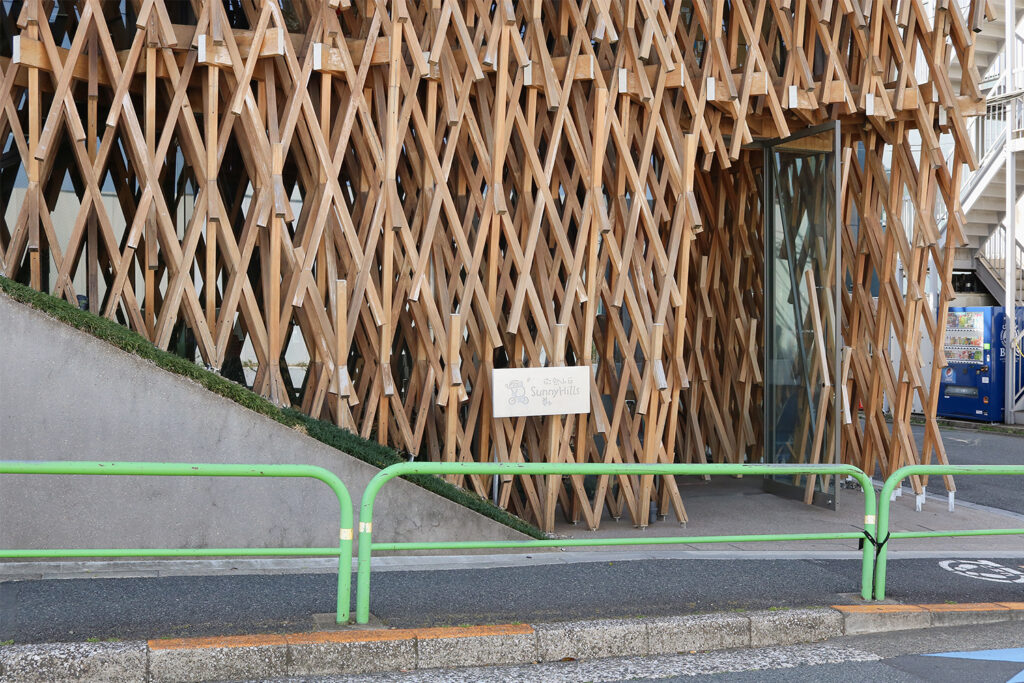
The architect Kengo Kuma is the figure most linked to this approach. His SunnyHills shop in Minami-Aoyama uses an intricate wooden lattice that recalls traditional Japanese basketry and lets in soft natural light.
Modernism
Modernism continues in many of Tokyo’s private homes. It keeps the post-war focus on function and honest materials, but at a smaller, domestic scale. When a house uses raw or board-marked concrete for texture and a sculptural feel, people sometimes call it “soft brutalism”.
This means exposed concrete without the heavy, fortress-like mass of true Brutalism. Homeowners choose it for its durability, fire resistance, seismic strength, and quiet, pared-back look. Because the word “Brutalism” carries negative associations, these homes are usually described as modernist instead. Tadao Ando’s concrete houses set the template that many smaller studios still follow.
These contemporary homes are distinct from the historical Brutalist and Metabolist movements of the post-war decades. You can read about those roots, and their surviving Tokyo landmarks, in our guide to Brutalist architecture and Metabolism in Japan.
What Types of Residential Buildings Will You Find in Tokyo?
Tokyo’s housing falls into a few clear types, and knowing them makes property searches much easier. The table below summarises the main categories.
| Building type | Japanese term | Typical scale | Known for |
|---|---|---|---|
| Tower mansion | タワーマンション | 20+ storeys / 60 m or taller | Shared facilities, security, wide city views |
| Mid- and low-rise condominium | マンション | 3–15 storeys | The most common urban home; concrete construction |
| Detached house | 一戸建て | 1–3 storeys | Often architect-designed; smaller houses are usually timber-framed while luxury villas tend to be reinforced concrete |
| Micro / narrow house | 狭小住宅 | 2–4 storeys on tiny plots | Inventive use of very small lots |
| Mixed-use complex | 複合施設 | Varies, often very tall | Homes, offices, shops, and gardens combined |
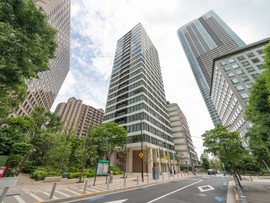
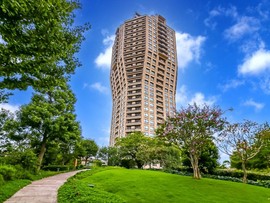
A tower mansion is a high-rise residential building. There is no official legal definition, but the term generally means a building of more than 20 floors or above 60 metres. The first tower mansion in Japan was built in 1971. These buildings usually include features such as concierge desks, lounges, fitness rooms, and entry by key card, along with modern earthquake-resistant construction. They are popular with both Japanese and foreign buyers for their central locations and shared facilities.
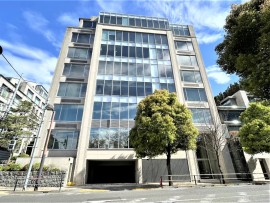
The mid- and low-rise condominium, also called a manshon, is the everyday home of central Tokyo. These concrete buildings typically run from three to fifteen storeys. Family units commonly sit in the range of about 60 to 90 square metres, though sizes vary widely by area and age of building.
Detached houses are more common in the outer wards and suburbs, where plots are larger and land costs less. Most are timber-framed, and many are designed individually rather than built to a standard plan. This is part of why Tokyo has so much unusual residential architecture. There are also a few select areas such as Shoto, Hiroo and Azabu with larger, exclusive luxury villas that tend to be more architecturally expressive and built in reinforced concrete.
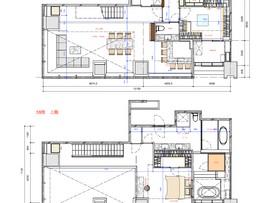
Micro-homes, or kyosho jutaku, are a distinctly Tokyo answer to scarce, expensive land. They became popular in the 1990s, when high prices and recession pushed young Tokyo residents to rethink the suburbs. A micro-home might occupy a plot of only around 30 square metres. Architects use split levels, top-floor living rooms, and large windows to make these narrow houses feel open. Studios such as Sou Fujimoto Architects and Atelier Bow-Wow are well known for this kind of compact, experimental design.
Why Is Tokyo Turning to Timber?
After decades dominated by steel and concrete, Japan is returning to wood through engineered, or “mass,” timber. This material is strong, treated to resist fire, and produces far less carbon than concrete. Yokohama’s Port Plus, completed in 2023 by Obayashi Corporation, is Japan’s tallest all-timber building at 44 metres over 11 storeys; it is built to withstand the strongest level on Japan’s seismic scale, and its construction produced roughly a quarter of the carbon of an equivalent reinforced-concrete building.
View the Port Plus project on Obayashi’s site
The ambition is growing quickly. Mitsui Fudosan and Takenaka have planned a 17-storey, 70-metre timber office building in Tokyo’s Nihonbashi district, while Sumitomo Forestry is developing the W350 project, a 350-metre tower roughly 90% timber, targeted for around 2041. A 2025 update to the rules also made this easier, relaxing fire-safety requirements so that approved large timber buildings can leave their wooden frames exposed.
Timber also carries cultural weight in Japan, where wood was the default building material for centuries before steel and concrete displaced it. That lineage is part of why Japanese architects have found international audiences for timber work, and why developers are increasingly comfortable putting it back into large commercial projects.
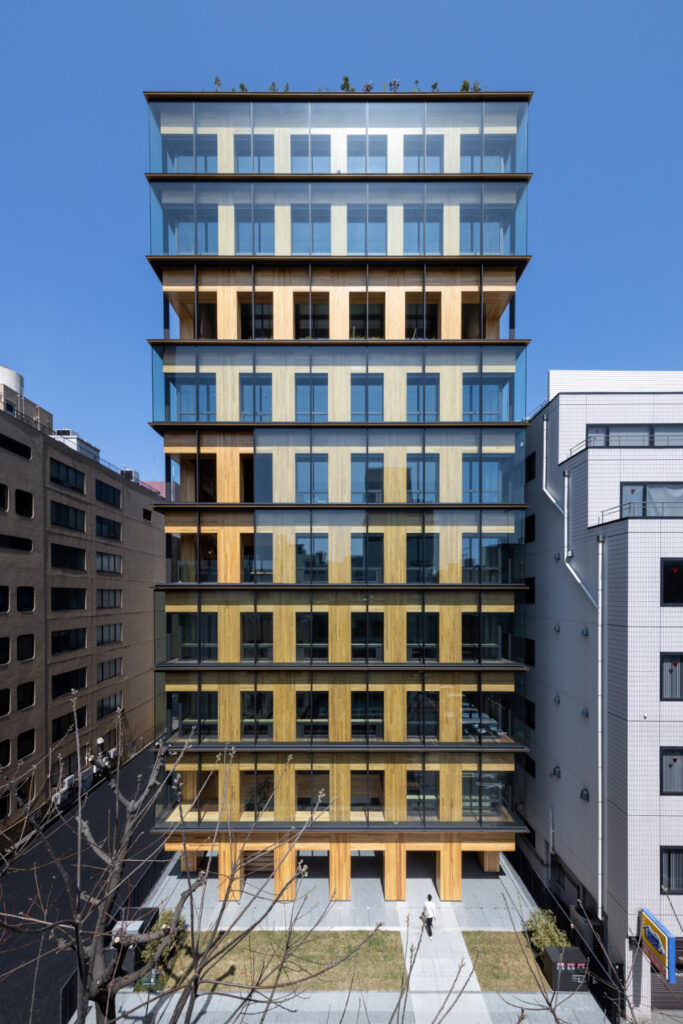
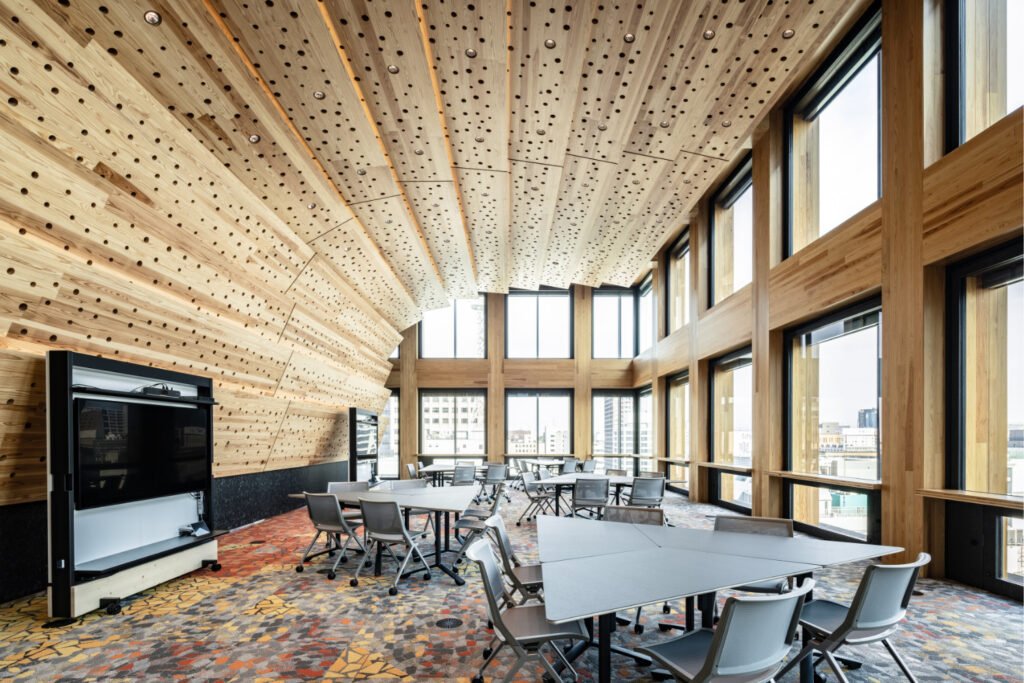
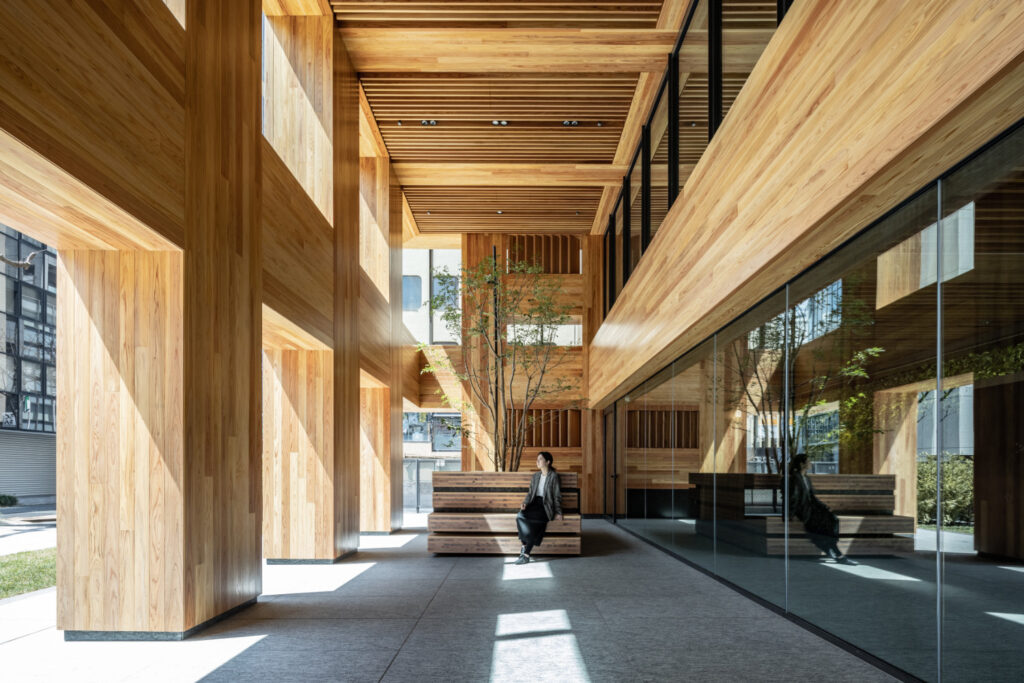
Port Plus by Obayashi Corporation – Bentendori, Naka Ward, Yokohama
courtesy of Obayashi Corporation
Photos: Sode Naomichi
How Do Earthquakes Shape Tokyo’s Architecture?
Earthquake safety influences almost every building in Tokyo, and it explains many design choices. New towers use base isolation, which sits a building on flexible bearings, and damping systems that absorb sway. Seismic-resistant building methods advanced rapidly in Japan from the mid-1980s onward.
The legal framework matters for buyers. Japan’s Housing Quality Assurance Act introduced Seismic Grades 1 to 3, with Grade 3 offering 1.5 times the resistance of the legal minimum, and the national housing earthquake-resistance rate reached roughly 90% in 2023, up from 79% in 2008, according to MLIT. The most recent change, in April 2025, tightened energy-efficiency rules and extended the building-confirmation review period. For a fuller explanation, see our guide to Japan’s earthquake-resistant buildings.
How Did Tokyo’s Architecture Reach This Point?
Tokyo’s modern look has deep roots. For centuries, wood was the preferred material for Japanese homes, valued because it copes well with humidity, earthquakes, and typhoons. Western styles arrived during the Meiji era, when foreign architects such as Britain’s Josiah Conder trained the first generation of Japanese architects, including Tatsuno Kingo, who designed Tokyo Station. After the war, reconstruction relied on fast, economical reinforced-concrete modernism.
The most influential post-war movement was Metabolism, a Japanese idea that buildings could grow and change like living organisms. It was led by Kenzō Tange and younger architects including Kisho Kurokawa. Tange’s Yoyogi National Gymnasium, built for the 1964 Olympics, and Kurokawa’s Nakagin Capsule Tower of 1972, demolished in 2022, remain its best-known works. These ideas still echo in today’s modular and adaptable designs.
Who Are the Architects Shaping Tokyo Today?
Japanese architects are held in high regard worldwide. Japan has produced nine winners of the Pritzker Prize, often called architecture’s highest honour, more than any other country, most recently Riken Yamamoto in 2024. Its laureates run from Kenzō Tange in 1987 to Yamamoto today. Their work shares recurring qualities: a play of light and shadow, carefully composed spaces, soft transitions between inside and outside, and close attention to materials and detail. All of these are visible in Tokyo’s streets.
Tadao Ando, who won the Pritzker in 1995, is known for poured concrete and the play of light; his 21_21 Design Sight gallery sits in Tokyo Midtown. Kazuyo Sejima, through the studio SANAA, won in 2010 and is known for light and transparency, seen in her Sumida Hokusai Museum. Toyo Ito, the 2013 laureate, designs fluid, structurally inventive buildings such as the Tama Art University Library in western Tokyo. Shigeru Ban, who won in 2014, is known for inventive materials, including paper tubes, and for disaster-relief shelters; his Nicolas G. Hayek Center stands in Ginza. The most recent laureate, Riken Yamamoto, is based in nearby Yokohama and is known for designs that encourage community.
Some of Tokyo’s most prominent architects work outside this list. Kengo Kuma is known for natural materials and timber, and designed the Japan National Stadium for the 2020 Olympic Games. Sou Fujimoto is known for experimental homes, including House NA in Tokyo, a glass house arranged like a stack of staggered platforms. The pioneer of modern Japanese architecture, Kenzō Tange, still shapes the city through landmarks such as the Yoyogi National Gymnasium.
The same thinking reaches private homes. The architect Riccardo Tossani, for example, designs contemporary luxury houses in Tokyo as well as resort properties. You can explore more profiles and styles in our full architecture section.

Frequently Asked Questions
What is the most common type of home in central Tokyo?
In central Tokyo, the apartment, known locally as a manshon, is the most common home. These are steel-and-concrete buildings ranging from three storeys to high-rise towers. Detached houses are more common in the outer wards and suburbs, where land is more affordable and plots are larger.
What is a tower mansion in Japan?
A tower mansion (タワーマンション) is a high-rise residential building, generally 20 storeys or 60 metres tall and above. There is no legal definition of the term. These buildings usually offer shared facilities such as concierge desks, lounges, and fitness rooms, along with modern earthquake-resistant construction and wide city views.
Are modern Tokyo buildings safe in an earthquake?
Modern Tokyo buildings are designed to strict seismic standards under Japan’s Building Standards Act. New towers use technologies such as base isolation and damping systems to absorb movement. According to MLIT, around 90% of Japan’s homes met current earthquake-resistance standards by 2023, up from 79% in 2008.
Why are some Tokyo houses so narrow and small?
Land in central Tokyo is scarce and expensive, so plots are often very small. From the 1990s, architects began designing kyosho jutaku, or micro-homes, on lots sometimes around 30 square metres or less. These narrow houses use clever layouts, split levels, and natural light to feel surprisingly open.
What is the tallest building in Tokyo?
The tallest building in Tokyo is the Azabudai Hills Mori JP Tower, which reaches 325.2 metres and opened in November 2023. Developed by Mori Building, it holds offices, homes, and shops. Tokyo Skytree is taller at 634 metres, but it is a broadcasting tower rather than an occupied building.
Is wood used in modern Tokyo buildings?
Yes. Alongside steel and concrete, Japan is returning to wood through mass timber construction. Engineered timber is strong, fire-resistant, and lower in carbon. Yokohama’s 11-storey Port Plus, completed by Obayashi Corporation in 2023, is Japan’s tallest all-timber building, and developers are planning taller timber towers in central Tokyo.
What Next?
If you would like to own a home with distinctive Tokyo architecture, Housing Japan can help. With over 25 years of experience we specialise in buying, selling, and managing luxury residential real estate across central Tokyo, from contemporary tower mansions to architect-designed houses. Whether you are relocating, looking for a second home, or planning a longer stay, our team can guide you through every step. Contact Housing Japan to start your search.