Japan became the world’s second-largest export market for Swiss watches in 2025, taking CHF 1.85 billion of shipments. Swiss brands hold the top of the market because imported watches make up 87 per cent of Japanese watch sales by value, against 64 per cent by volume. Tokyo buyers concentrate their spending on fewer, costlier pieces.
Key facts
- Swiss watch exports to Japan, 2025: CHF 1.8509 billion, down 5.8 per cent on 2024 (Federation of the Swiss Watch Industry)
- Japan’s rank among Swiss export markets: 2nd, behind the United States, ahead of China and Hong Kong (FH, full-year 2025)
- Japan’s watch market, 2025: ¥1,291.9 billion estimated retail value, of which imports were 87 per cent (Japan Clock & Watch Association)
- Average price of a Swiss wristwatch entering Japan, January–June 2026: about ¥750,000, up 11 per cent year on year (Ministry of Finance trade statistics)
- Import tariffs on watches were abolished in 1983; the commodity tax on watches was abolished in 1989 (Japan Clock & Watch Association)
- Japan’s tax-free shopping system switches to a refund method on 1 November 2026
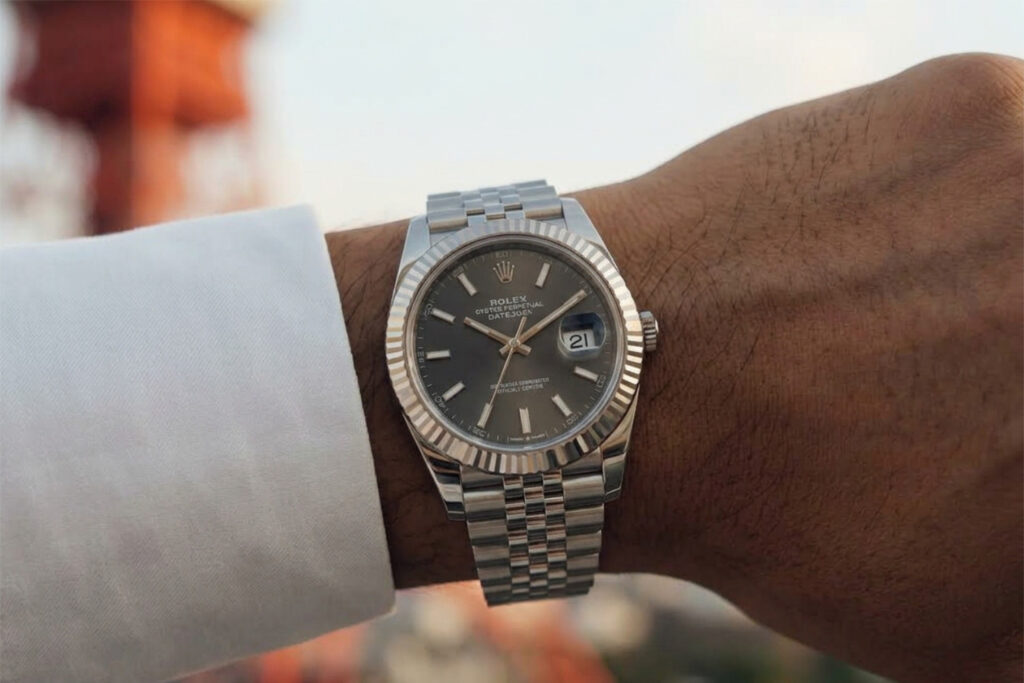
Walk through Marunouchi at lunchtime and count the wrists. You will see Rolex Datejusts, Omega Seamasters, Cartier Tanks and a good number of TAG Heuers. You will see Grand Seiko too, and plenty of Casio. But at the expensive end of the market, Swiss brands are doing most of the work.
The trade data says the same thing, and the reasons behind it come down to tax law as well as taste.
How big is Japan’s Swiss watch market?
Japan is the second-largest destination for Swiss watches in the world. The Federation of the Swiss Watch Industry recorded CHF 1.8509 billion of watch exports to Japan across 2025, a fall of 5.8 per cent on the previous year. Even so, Japan moved up the rankings, because China fell further and faster.
Japan was fourth in 2023, third in 2024, and second in 2025. The United States remains well ahead with around 17 per cent of Swiss watch exports. Japan, China and Hong Kong now sit close together at roughly 7 per cent each.
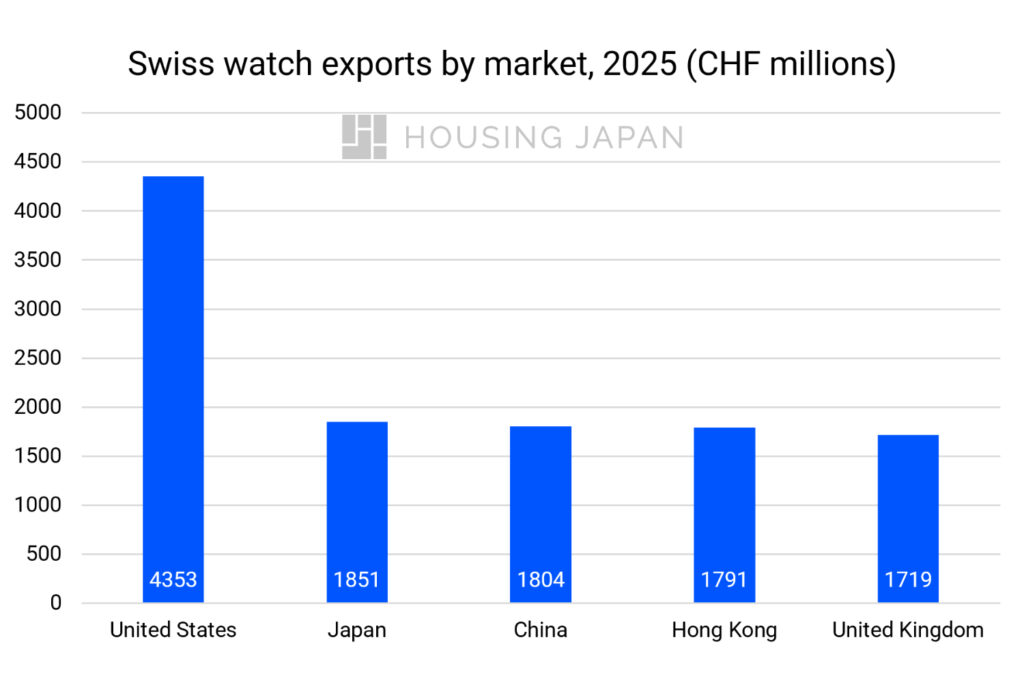
Source: Federation of the Swiss Watch Industry (FH), world distribution of Swiss watch exports, January–December 2025, published January 2026. Shares of total calculated from FH figures.
Disclaimer: FH statistics record export prices as declared by Swiss exporting firms, not retail sales to end consumers, so the figures understate what buyers in each market actually spend. They are consolidated across all Swiss watchmaking companies and cannot be read as the performance of any individual brand or group. Figures for watches only, excluding movements and clocks. Data supplied by the Federal Office for Customs and Border Security may be revised after first publication.
Japan’s own exports grew just 1.5 per cent between 2023 and 2025, while China fell 34.8 per cent and Hong Kong 24.0 per cent. Japan rose through the rankings by holding its ground rather than by growing.
| Swiss watch exports to Japan | 2024 | 2025 |
|---|---|---|
| Value | CHF 1.9652 billion | CHF 1.8509 billion |
| Change on prior year | +7.8% | −5.8% |
| Wristwatches shipped | 626,300 | 506,333 |
| Share of all Swiss exports | 7.6% | approx. 7% |
| Rank among export markets | 3rd | 2nd |
Source: Federation of the Swiss Watch Industry, annual statistics, January 2026.
Value fell by 5.8 per cent while the number of watches fell by 19.2 per cent. Japan bought far fewer Swiss watches in 2025, spent almost as much money, and paid considerably more per watch.
That trend carried into 2026 and reversed direction on volume. Ministry of Finance trade statistics for January to June 2026 show 330,126 Swiss wristwatches imported into Japan, up 8 per cent, worth roughly ¥250 billion, up 21 per cent. Mechanical watches accounted for 176,935 of those units and about ¥210 billion of the value. The average declared import price across all Swiss wristwatches was around ¥750,000, up 11 per cent on the same period in 2025. For mechanical watches alone it was about ¥1.17 million.
Swatch Group, which owns Omega, Longines, Tissot and Breguet, reported Japanese sales up 20 per cent at constant exchange rates in the first half of 2026.
Do Japanese buyers choose Swiss watches over Japanese ones?
Japanese brands sell in very large numbers at accessible prices, while imported brands take almost all of the money spent above that level.
The Japan Clock & Watch Association puts the Japanese watch market at ¥1,291.9 billion of retail value in 2025, across 17.7 million watches. Imported watches accounted for ¥1,119.6 billion of that, or 87 per cent, leaving domestic makers with 13 per cent of the money.
An average watch sold in Japan costs about ¥73,000 on those figures, while a Swiss wristwatch crossed the border at roughly ten times that in the first half of 2026, before the retailer added anything. One number is retail and the other a customs declaration, so they are not directly comparable, though the direction is clear.
The association’s split is between domestic-maker product and imported product, which is a customs distinction rather than a brand one, and it publishes no breakdown by brand nationality. Seiko, Citizen and Casio all manufacture outside Japan, so imported does not mean Swiss. The figures support a narrower point, which is that Swiss brands hold the expensive end of the Japanese market.
How did Japan become a Swiss watch market?
Japan spent the post-war decades keeping foreign watches out. Regular imports of foreign watches were only permitted in 1952. Watches were liberalised for import in 1961. A commodity tax, the 物品税 (buppinzei), sat on top, charged at 50 per cent before being cut to 40 per cent in 1962.
Import tariffs on watches were abolished in 1983. The commodity tax was abolished in 1989 and replaced with a flat consumption tax. The Japan Clock & Watch Association’s own industry chronology records what happened next: parallel imports increased in 1989, and in 1990 imports of high-priced Swiss watches surged as a direct result of the tax change.
A luxury watch that had carried punitive tax suddenly did not, in a country at the peak of its asset boom, at the exact moment Swiss brands were repositioning mechanical watches as heirlooms rather than instruments. The timing could hardly have been better for Switzerland. A generation of Japanese buyers formed their idea of what an expensive watch looks like during those years, and it looked Swiss.
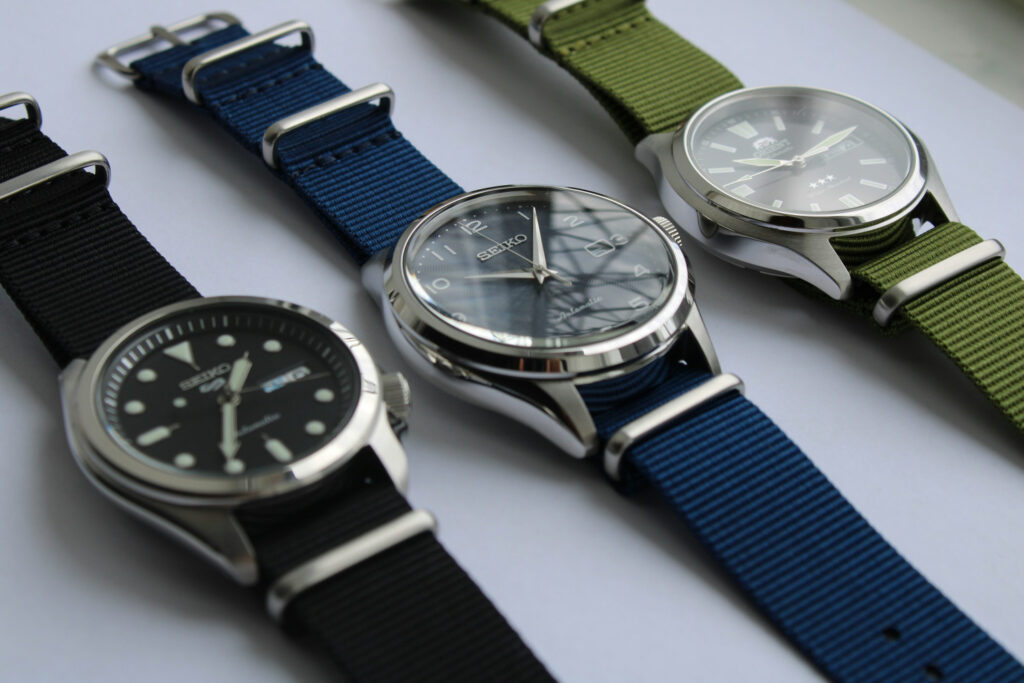
Seiko launched the world’s first quartz wristwatch in Tokyo in 1969, and by 1979 Japan was the largest watch producer on earth by volume. Japanese industry won the accuracy argument so completely that it pushed Switzerland out of competing on accuracy altogether. Switzerland moved upmarket and stayed there. Japan’s own makers largely did not follow until much later. Grand Seiko was sold only in Japan until 2010 and did not become a standalone brand until 2017. For roughly three decades, a Japanese buyer walking into a boutique for a serious watch had mostly Swiss choices in front of them.
Which Swiss brands are most visible in Tokyo?
Rolex opened its Lexia Ginza flagship on Chuo-dori in April 2024 and a further boutique in Omotesando that November, and Rolex Boutique Lexia now runs several locations across Ginza alone.
Omega has depth rather than a single landmark, with boutiques in the Nicolas G. Hayek Center on Ginza Namiki-dori, inside Ginza Mitsukoshi and at Tokyu Plaza Ginza. It sits comfortably in Japanese business dress, which is a large part of its appeal here.
Cartier occupies an unusual position, read as jewellery and watch at once, and Richemont reported that Cartier and Van Cleef & Arpels drove its Japanese growth in the year to March 2026 while its specialist watch brands in Japan fell back. TAG Heuer covers the entry point into Swiss ownership for many buyers, often a first serious watch. Patek Philippe and Audemars Piguet operate at the top of the market.
Franck Muller can be seen as the outlier where Japan has been one of its most important markets for years. Its Watchland Tokyo boutique at 5-11-14 Ginza is directly managed, and the brand has extended into Japanese-made tableware and furnishings under Franck Muller Future Form.
What is a parallel import, and should you buy one?
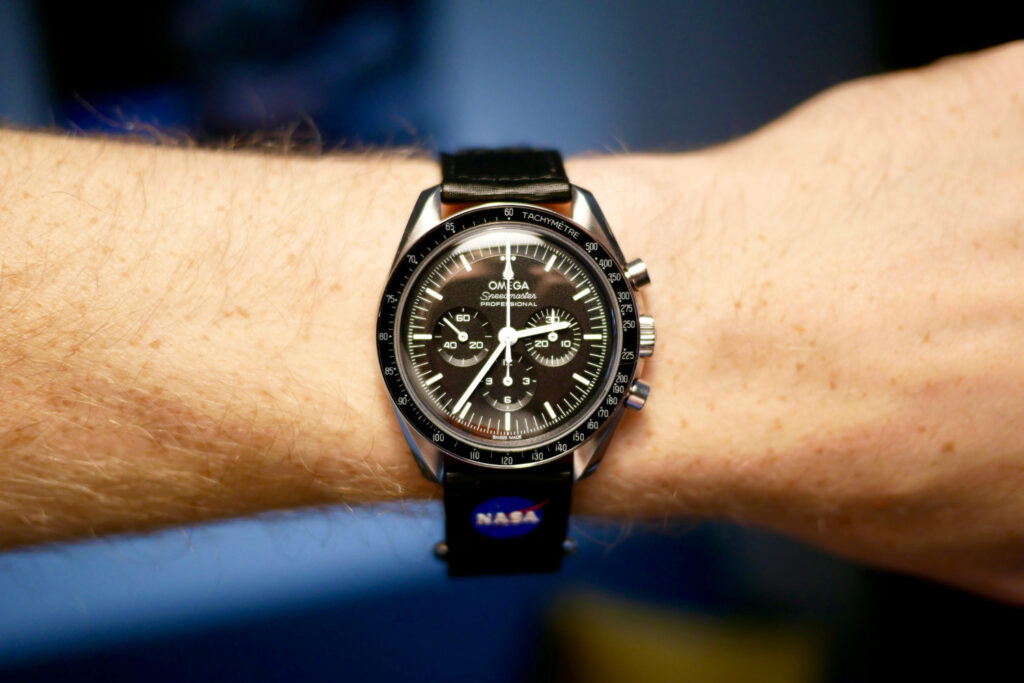
Japan has a retail channel that can catch foreign buyers out. Alongside authorised dealers, there is a large and entirely legal 並行輸入 (heikō yunyū) trade, meaning parallel imports: genuine watches bought abroad through unofficial channels and sold in Japan, usually below the authorised price.
This market grew directly out of the 1989 tax reform and has never gone away. Shops in Nakano Broadway and some non official/affiliated stores around Ginza carry substantial parallel and second-hand stock, and prices can sit well under boutique level for the same reference.
You give up service rather than authenticity and a parallel-import watch may carry the shop’s own guarantee rather than the manufacturer’s international warranty, which can matters for a mechanical watch that will need servicing every five to ten years. If you plan to keep the watch, ask which guarantee you are getting and who honours it before you pay. Authorised boutiques also hold the allocation on the models that are hardest to get, which is why waiting lists exist at all.
Where do you buy Swiss watches in Tokyo?
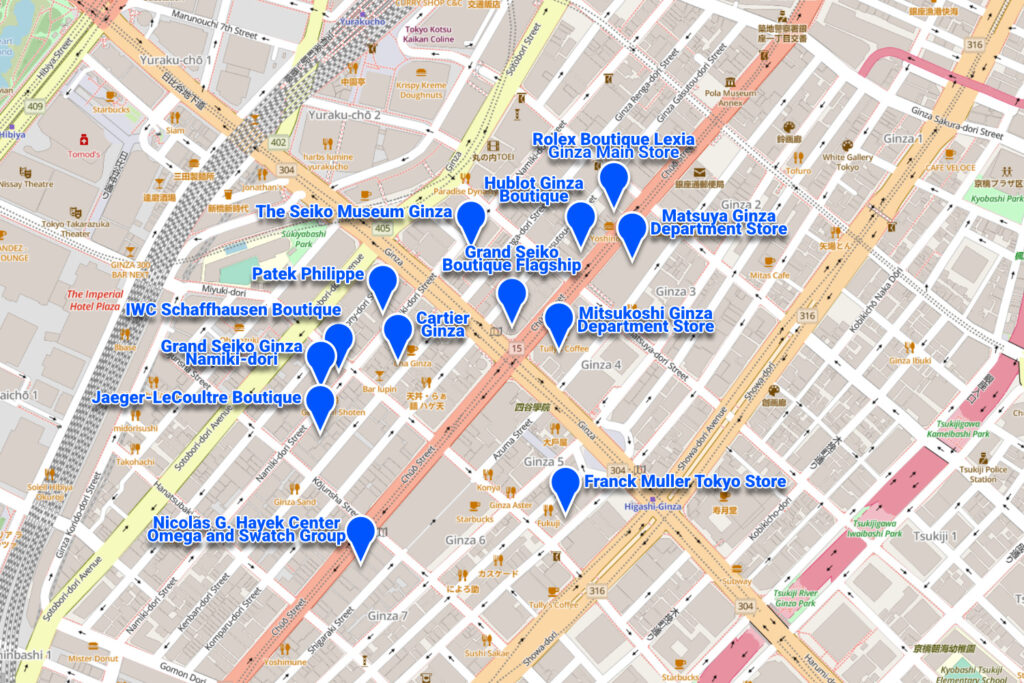
Ginza remains the centre, and the boutiques are close enough together to compare several brands in an afternoon. Nihonbashi and Shinjuku’s department store watch salons carry multiple brands under one roof. Omotesando has grown as a second cluster. Nakano Broadway is where the vintage and parallel trade concentrates.
Our guide to luxury watches in Japan covers the individual Ginza boutiques, the Seiko Museum Ginza and the Japanese side of the story in more detail.
How will the November 2026 tax-free change affect buying a watch in Japan?
From 1 November 2026 Japan replaces its point-of-sale tax exemption with a refund method. Instead of showing a passport and paying the tax-free price at the counter, non-resident buyers pay the full price including 10 per cent consumption tax, then claim the refund at the airport after customs confirms the goods are leaving Japan.
There is no transition period, the ¥5,000 minimum purchase stays, the distinction between consumables and general goods is removed, and refunds must be claimed within 90 days of purchase. For a ¥2 million watch the sum involved is around ¥180,000. Allow extra time at departure and keep every receipt.
Residents of Japan pay consumption tax either way, which is one reason the domestic and visitor markets behave differently.
What does the watch trade tell you about Tokyo property?
Luxury retail and land values can move together with Ginza being a clear example of this. In the Ministry of Land, Infrastructure, Transport and Tourism’s land price publication of 17 March 2026, the site of the Yamano Music Ginza main store at Ginza 4-5-6 was assessed at ¥67.1 million per square metre, up 10.9 per cent, and held the highest published land value in Japan for the twentieth consecutive year. Commercial land across Tokyo rose 12.2 per cent, and across the 23 wards 13.8 per cent.
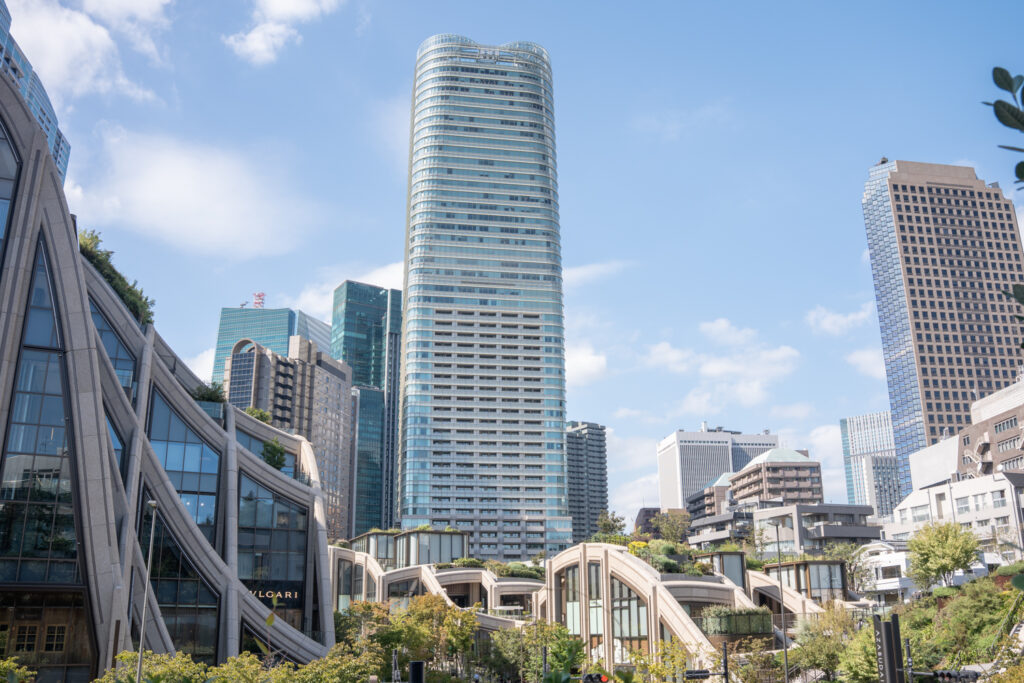
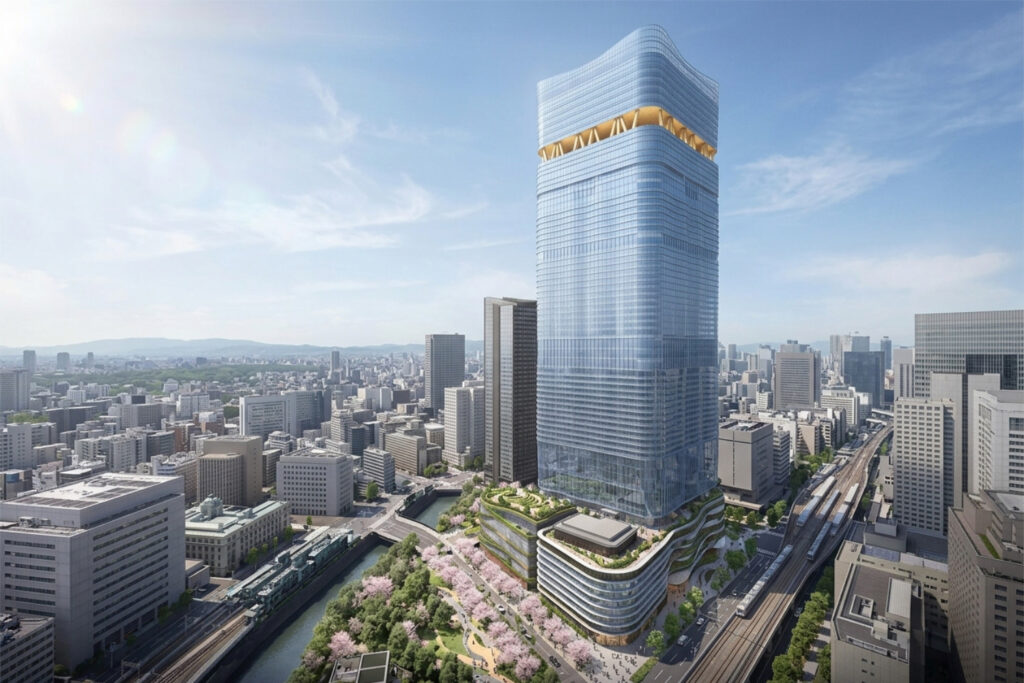
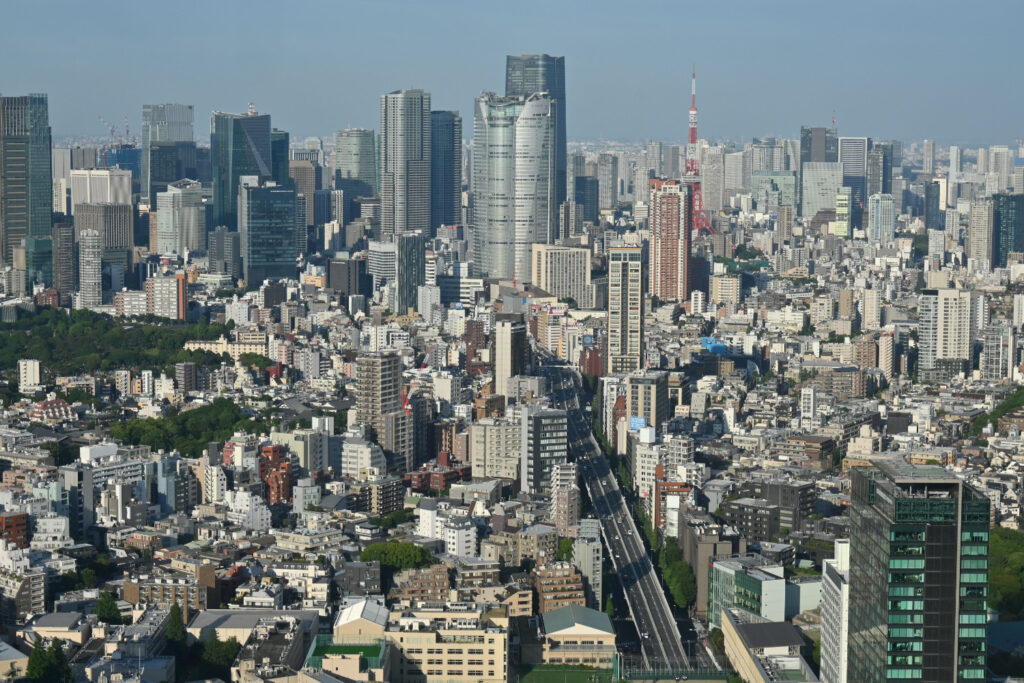
The two markets are connected with brands committing to flagship space where they expect long-term spending density, and those commitments anchor a district for decades. The same logic can shapes residential demand in central Tokyo. Buyers who want to be ten minutes from Ginza, Nihonbashi and Marunouchi concentrate in Chuo-ku and the northern edge of Minato-ku, and the supply of large freehold homes in that ring has never been generous.
Housing Japan has worked in central Tokyo residential property since 2000 as a licensed brokerage, Tokyo Governor Licence No. (3) 98912. If you are weighing where to buy, sell, rent or need comprehensive property management in the wards around Ginza and Azabudai, or anywhere in Tokyo, contact our team below or sign up for our weekly listings email for off-market properties in central Tokyo, some of which are only available with Housing Japan.
Q&A: Swiss watches in Japan
Is Japan really the second-biggest market for Swiss watches?
Yes, as of the full-year 2025 figures. The Federation of the Swiss Watch Industry recorded CHF 1.8509 billion of Swiss watch exports to Japan in 2025, placing Japan second behind the United States and ahead of China and Hong Kong. Japan ranked fourth in 2023 and third in 2024.
Swiss exports to Japan fell 5.8 per cent that year. It moved up because China and Hong Kong fell considerably further, not because Japanese demand surged.
Are Swiss watches cheaper in Japan?
Authorised retail prices are set by the brands and adjusted for exchange rates, so boutique prices are broadly aligned internationally. Savings come from the parallel-import and second-hand trade, and from the consumption tax refund available to visitors.
From 1 November 2026 that refund is claimed at the airport rather than deducted at the till, so factor the full price into your budget at the point of purchase.
Why do Japanese people buy Swiss watches instead of Grand Seiko?
Japanese people buy both, and the market splits by price rather than loyalty. The Japan Clock & Watch Association’s 2025 estimate puts imported watches at 87 per cent of the Japanese market by value but 64 per cent by volume, which means domestic brands sell in large numbers at accessible prices while imports take the expensive end.
Grand Seiko was a Japan-only line until 2010 and only became a separate brand in 2017, so for decades Swiss makers had the luxury tier largely to themselves.
What is a parallel import watch in Japan?
A 並行輸入 (parallel import) watch is a genuine timepiece brought into Japan outside the manufacturer’s official distribution and sold by an independent retailer, usually below the authorised price. The practice is legal and has been widespread since Japan abolished its commodity tax on watches in 1989.
The difference shows up after the sale, when guarantees may come from the shop rather than the manufacturer, which matters over a mechanical watch’s servicing life.
Where is the main watch district in Tokyo?
Ginza, and specifically the streets around the 4-chome crossing. Rolex, Omega, Cartier, Patek Philippe, Franck Muller and Grand Seiko all operate boutiques within a short walk of it, alongside the multi-brand watch salons in Ginza Mitsukoshi and Matsuya Ginza.
Omotesando has developed as a second cluster, and Nakano Broadway remains the centre of the vintage and parallel-import trade.
Sources:
Federation of the Swiss Watch Industry – Swiss watch exports in 2025
Federation of the Swiss Watch Industry, Japan office – Japan export and import statistics
Japan Clock & Watch Association – Japanese watch market size (estimate) and industry chronology
Ministry of Land, Infrastructure, Transport and Tourism – Land Price Publication 2026
Swatch Group – Half-Year Report 2026