Updated 9 September 2026 with PISA 2025 results.
Japan ranked first among all 38 Organisation for Economic Co-operation and Development (OECD) countries in science, mathematics and reading in the PISA 2025 results, published on 8 September 2026. It is the first time Japan has topped all three subjects since PISA began in 2000. Across all 91 participants, Japan placed fifth, fifth and fourth.
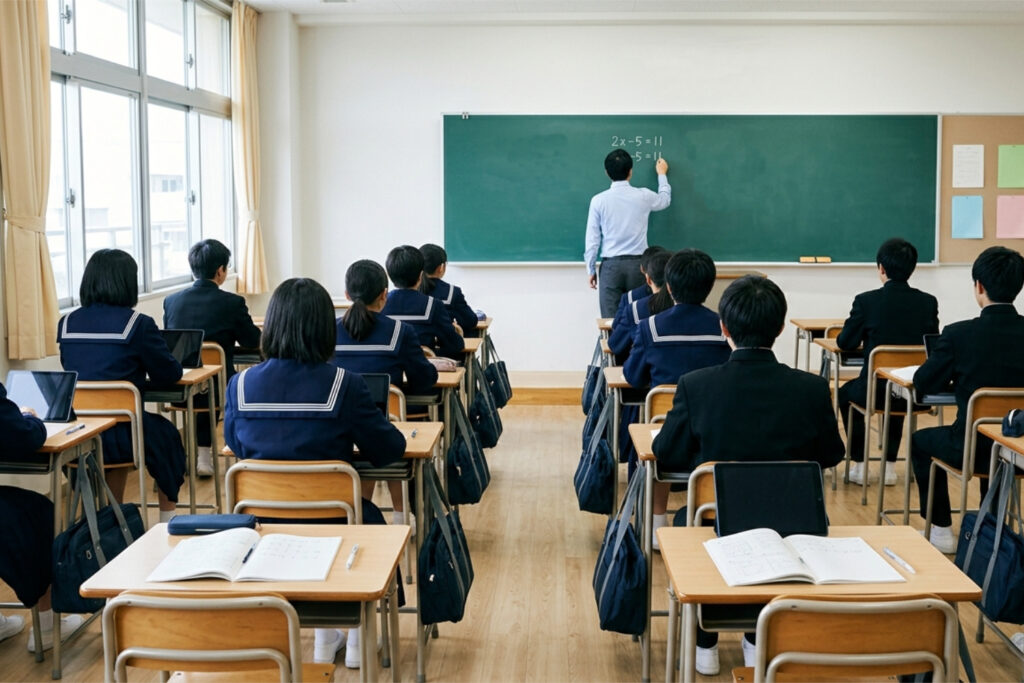
Japan’s schools rarely make international headlines, but the country’s results in global assessments tell a consistent story. In the PISA 2025 results published in September 2026, Japan placed first among OECD member countries in all three core subjects for the first time in the survey’s history. This isn’t an accident. It reflects decades of steady investment in teacher training, a standardised national curriculum, and a schooling structure that treats consistency as a core value rather than an afterthought. For families and workers considering a move to Tokyo, understanding how this system works also helps explain the reliability of Japan’s broader institutions.
Key Facts
- PISA 2025 scores: science 538, mathematics 525, reading 503, against OECD averages of 482, 463 and 461
- Japan ranked 1st among the 38 OECD countries in all three subjects, the first time since PISA began in 2000
- Compulsory education runs nine years: six years of elementary school and three years of junior high school, covering ages 6 to 15
- The school year runs from 1 April to 31 March, and a child’s grade is set by their birth date between 2 April and 1 April
- Adults in Japan averaged 289 points in literacy in the OECD’s 2023 Survey of Adult Skills, against an OECD average of 260
- 66% of Japanese adults aged 25 to 34 held a tertiary qualification in 2024, against an OECD average of 48%
- The University of Tokyo placed 26th in the Times Higher Education World University Rankings 2026
- Japan’s scores fell in all three subjects against 2022, but by less than the OECD average, which reached its lowest level on record
- MEXT (Ministry of Education, Culture, Sports, Science and Technology) sets the national curriculum; the National Institute for Educational Policy Research (NIER) administers PISA in Japan
What Are the Grade Levels in the Japanese School System?
Japan uses a 6-3-3-4 structure: six years of elementary school, three years of junior high school, three years of high school, and four years of university. The first nine years are compulsory. The school year runs from 1 April to 31 March, so a Japanese school year straddles two calendar years by Western reckoning.
| Stage | Japanese grade | Age during the year | England | United States |
|---|---|---|---|---|
| Elementary (小学校) | 1st year | 6–7 | Year 2 | Grade 1 |
| Elementary | 2nd year | 7–8 | Year 3 | Grade 2 |
| Elementary | 3rd year | 8–9 | Year 4 | Grade 3 |
| Elementary | 4th year | 9–10 | Year 5 | Grade 4 |
| Elementary | 5th year | 10–11 | Year 6 | Grade 5 |
| Elementary | 6th year | 11–12 | Year 7 | Grade 6 |
| Junior high (中学校) | 1st year | 12–13 | Year 8 | Grade 7 |
| Junior high | 2nd year | 13–14 | Year 9 | Grade 8 |
| Junior high | 3rd year | 14–15 | Year 10 | Grade 9 |
| High school (高等学校) | 1st year | 15–16 | Year 11 | Grade 10 |
| High school | 2nd year | 16–17 | Year 12 | Grade 11 |
| High school | 3rd year | 17–18 | Year 13 | Grade 12 |
The equivalents above are approximate. Because Japan’s year starts in April and most Western systems start in August or September, a child moving between systems may be placed a year either side depending on their birthday and the receiving school’s policy.
How Old Is a First-Year Student in Japan?
A first-year elementary school student in Japan is 6 years old at entry and turns 7 during the year. A first-year junior high school student is 12, a first-year high school student is 15, and a first-year university student is usually 18.
Article 17 of the School Education Act requires a child to start elementary school at the beginning of the first school year following their sixth birthday. Combined with the April start date, this produces a fixed cohort: children born between 2 April and 1 April of the following year enter school together. A child born on 1 April is the youngest in their year, not the oldest.
Japan also applies an age-grade principle. Children are neither accelerated nor held back on academic grounds, and a child who misses a long stretch through illness normally returns to the grade matching their age. This is worth knowing for families arriving mid-year, because placement follows age rather than prior attainment.
How Does Japan Rank in the OECD PISA Assessment?
Japan placed first among the 38 OECD member countries in science, mathematics and reading in the OECD’s PISA 2025 survey, and fifth, fifth and fourth respectively among all 91 participating countries and economies. It is the first time Japan has led the OECD in all three subjects.
PISA, short for the Programme for International Student Assessment, has been run by the OECD roughly every three years since 2000, moving to a four-year cycle after 2025. It tests 15-year-old students across member and partner countries in three core areas: reading, mathematics, and science. The goal isn’t to test memorised facts, but to see how well students can apply what they’ve learned to real-world problems. Each cycle takes one subject as its main focus. In 2025 that was science, which the OECD renamed “science competency” to reflect a broader scope covering how students explain phenomena, interpret evidence critically, and use scientific information to make decisions.
The 2022 cycle carried extra weight because it was the first full assessment conducted after pandemic-related school closures disrupted education systems worldwide. Across the OECD, average mathematics performance fell by a record 15 points between 2018 and 2022, and reading fell 10 points. Japan moved the other way. Its reading score rose from 504 to 516 and its science score from 529 to 547, both statistically significant increases. Mathematics rose from 527 to 536. The Ministry of Education, Culture, Sports, Science and Technology (MEXT, 文部科学省) publishes a detailed analysis of the results, while the National Institute for Educational Policy Research administers the survey in Japan.
| Subject | Japan’s mean score | Change vs 2022 | OECD average | Rank among 38 OECD countries | Rank among all 91 participants |
|---|---|---|---|---|---|
| Mathematics | 536 | −9 | 472 | 1st | 5th |
| Reading | 516 | −11 | 476 | 2nd | 3rd |
| Science | 547 | −13 | 485 | 1st | 2nd |
More than 760,000 students took part worldwide, the largest PISA cycle to date, representing around 33 million 15-year-olds. In Japan the assessment is taken by first-year high school students. The four Chinese jurisdictions of Beijing, Shanghai, Jiangsu and Zhejiang led science and mathematics, while Singapore led reading.
Why Did Japan Rise to First in the OECD If Its Scores Fell?
Japan reached first place among OECD countries in 2025 because its scores declined more slowly than everyone else’s, not because they improved. Japan lost between 9 and 13 points across the three subjects, while the OECD average fell to its lowest level since PISA began.
The distinction matters when reading the headline. Across OECD countries, reading fell 28 points and mathematics 22 points between 2015 and 2025. Japan’s declines were roughly half that in reading and mathematics, and smaller still in science. The result is a widening lead: Japan now scores 56 points above the OECD average in science, 62 above in mathematics and 42 above in reading.
MEXT has also pointed to a change beneath the headline. The share of students in Japan falling below Level 2, the OECD’s baseline of proficiency, rose in all three subjects: to 18.6% in reading, up 4.8 percentage points on 2022, 16.1% in mathematics, up 4.1 points, and 11.3% in science competency, up 3.3 points. The share of high performers did not change significantly, so the movement is concentrated at the lower end. Ministry officials have said the causes are not yet clear, while pointing to declining reading and study time and rising time spent on smartphones, social media and games as possible factors. At the top end, 22% of students in Japan reached Level 5 or 6 in mathematics, against an OECD average of 8%.
One area where Japan performed strongly outside the test scores was students’ sense of belonging at school. On average across OECD countries, 76% of students said they felt they belonged. Japan recorded the second-highest share of any participant, behind Spain at 90%.
Japan’s national curriculum standards also played a supporting role. Because MEXT sets consistent pacing and content expectations for schools across the country, even a temporary shift to remote or hybrid learning didn’t create the same fragmentation seen in more decentralised systems, where curriculum decisions can vary widely between regions or even individual schools. Teachers were able to adapt to remote formats without abandoning the broader structure they were already working within. Consistent year-on-year curriculum pacing, set centrally rather than negotiated locally, meant students returning to classrooms faced fewer gaps to close compared to peers in less standardised systems.
What Makes Japan’s Compulsory Education System Structurally Strong?
Japan’s compulsory education system, comprising six years of elementary school and three years of junior high school, is built on a nationally standardised curriculum set by MEXT, rigorous teacher certification requirements, and near-universal literacy outcomes.
Compulsory education, known as gimu kyōiku (義務教育) in Japanese, spans ages 6 to 15. It covers elementary school and lower-secondary school, known in English as junior high school. What sets this system apart isn’t just its length, but how uniformly it’s applied. The national curriculum is standardised by MEXT, which means a student in a rural prefecture and a student in central Tokyo are working from largely the same academic framework, at the same pace, with the same expectations.
Japan is frequently described as having one of the highest literacy rates in the world, although the government does not publish a headline literacy figure. The clearest comparable measure comes from the OECD’s Survey of Adult Skills, published in December 2024, which tested adults aged 16 to 65. Adults in Japan averaged 289 points in literacy and 291 in numeracy, against OECD averages of 260 and 263. Only 10% of adults in Japan scored at Level 1 or below in literacy, compared with 26% across the OECD, while 23% reached the top two levels against an OECD average of 12%.
Beyond the curriculum itself, Japan’s classroom culture reinforces consistency. Homeroom systems, where students stay with the same group of classmates and teacher for extended periods, emphasise discipline and collective responsibility. Students often take part in cleaning their own classrooms and eating lunch together at their desks, small routines that reinforce shared expectations across schools nationwide, rather than leaving classroom culture to vary school by school.
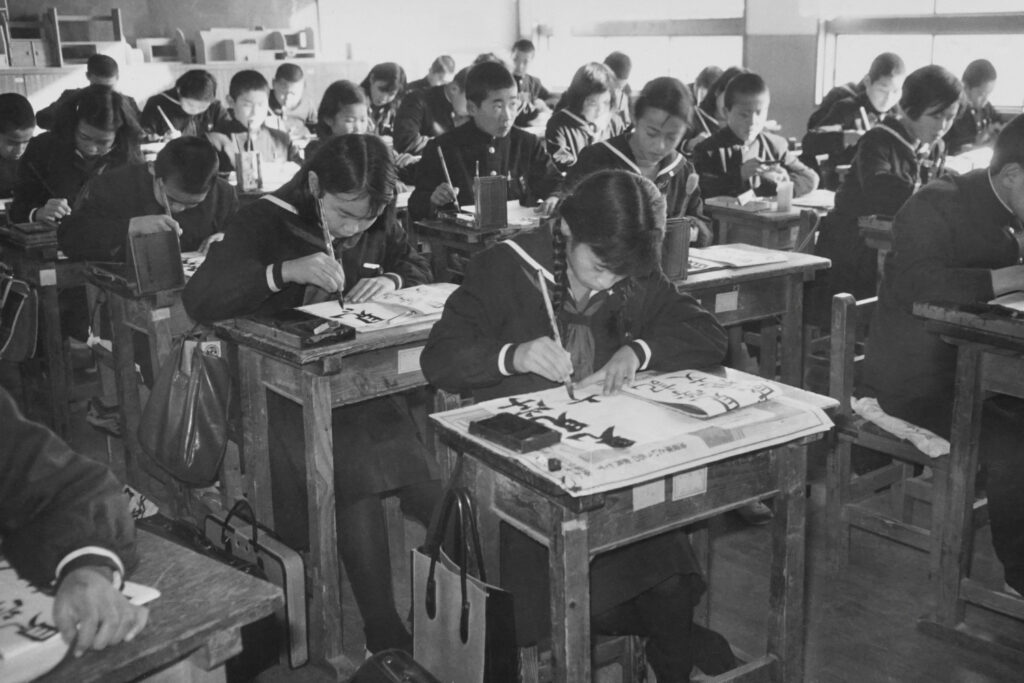
The Role of Teacher Training and Certification
Teachers in Japan don’t simply graduate from university and walk into a classroom. They must complete accredited university-level training programs and then pass prefectural certification exams before they’re allowed to teach. This certification isn’t a one-time hurdle either. Continuous in-service training is standard throughout a teacher’s career, with structured mentorship for early-career teachers built into the system.
This layered approach to teacher preparation is often cited as a structural contributor to consistent classroom quality nationwide. Because certification standards are set at the prefectural level within a national framework, the variation in teacher qualification between schools stays relatively narrow compared to systems where certification requirements differ more sharply by state or district.
How Does Japan’s University System Support Its Global Education Standing?
Japan’s leading universities, including the University of Tokyo, Keio University, and Waseda University, provide a strong pipeline from compulsory education into higher education and research, reinforcing the country’s reputation for academic rigour beyond secondary school.
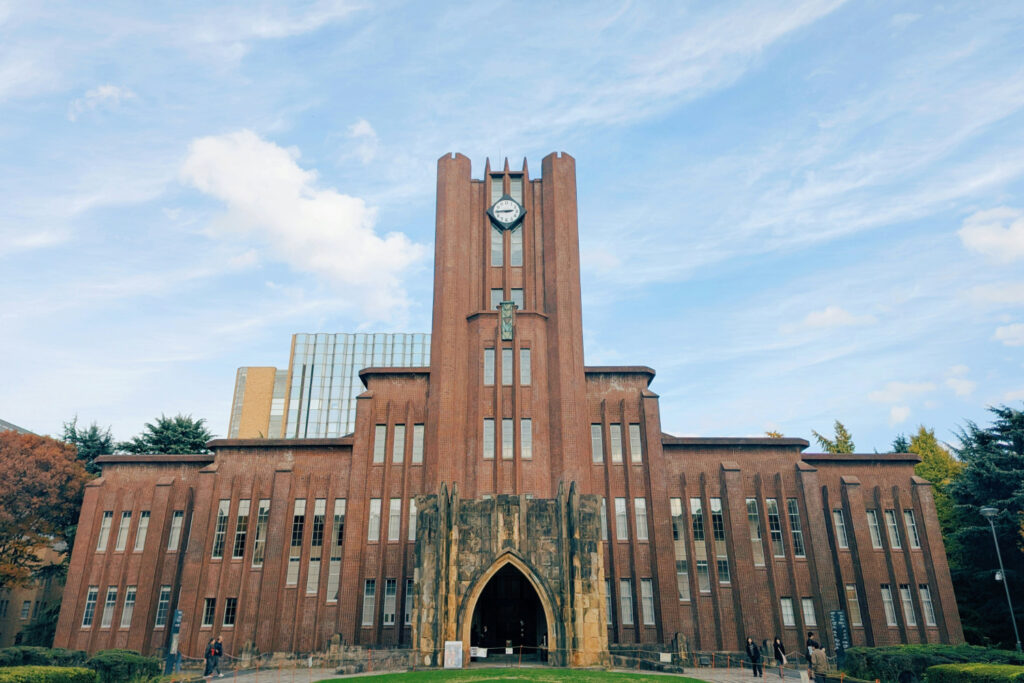
The University of Tokyo, founded in 1877, is Japan’s oldest national university and its strongest performer in global league tables. It placed 26th in the Times Higher Education World University Rankings 2026 and 36th in the QS World University Rankings 2026. Kyoto University followed at 61st in the THE table, with Tōhoku University at 103rd and the University of Osaka at 151st. Sixteen Japanese institutions appeared in the THE top 1,000.
Keio University and Waseda University, both based in Tokyo, are among Japan’s most prominent private research universities, with histories dating back to the 19th century. These schools have long fed graduates directly into Japan’s corporate, government, and research sectors, creating a continuous line between what students learn in compulsory education and the skills they bring into the workforce years later.
Tokyo’s concentration of these institutions in one city makes it a hub for both domestic and international academic talent. Students from across Japan, and increasingly from abroad, gravitate toward the city not just for its universities individually, but for the density of academic and research opportunities clustered within a relatively small geographic area.
How Does Japan’s Education System Contribute to Economic Stability and Workforce Quality?
A consistently high-performing education system contributes to a skilled, literate, and adaptable national workforce, which is a recognised factor in Japan’s long-term economic stability and institutional reliability.
The OECD’s Education at a Glance 2025 found that 66% of Japanese adults aged 25 to 34 held a tertiary qualification in 2024, up from 62% in 2019 and well above the OECD average of 48%. That places Japan among the five OECD countries with the highest share of degree-holding young adults. Across the wider 25 to 64 age group the figure is 57%, against an OECD average of 42%.
A well-educated population supports productivity and adaptability across Japan’s service, technology, and manufacturing sectors. When workers share a common baseline of literacy, numeracy, and problem-solving skills, businesses and institutions can operate with fewer gaps in training and communication. This matters as much in a Tokyo financial office as it does on a factory floor in a smaller prefecture.
Because Japan’s education outcomes are relatively consistent across regions, the country avoids some of the sharper workforce skill disparities seen in more fragmented education systems, where quality can vary widely between wealthy and less well-resourced areas. Strong foundational literacy and numeracy also underpin Japan’s highly developed administrative, financial, and technical institutions, from local government offices to national banking systems.
This connection between education and economic life is best understood in terms of workforce quality and institutional predictability, rather than as a direct financial indicator. A well-trained, literate population supports the kind of steady, functioning institutions that make daily life and long-term planning in Japan more predictable, whether that’s navigating a bank, a hospital, or a local government office.
How Does the Japanese Education System Compare to International Schools in Tokyo?
Japan’s public education system offers structured, standardised instruction primarily in Japanese, while Tokyo’s international schools provide English or bilingual curricula, such as the IB, designed for expat and relocating families seeking continuity with education systems abroad.
Public schools in Japan follow the MEXT national curriculum, taught primarily in Japanese, with a strong emphasis on standardised outcomes across the country. For Japanese families, or those planning a long-term stay, this offers a well-understood path from elementary school through university.
International schools in Tokyo take a different approach. They typically offer English-medium instruction and globally recognised curricula, such as the International Baccalaureate, British, or American systems. As of 31 March 2026, MEXT’s IB Education Promotion Consortium counted 265 authorised and candidate IB programmes across Japan, comprising 90 Primary Years, 47 Middle Years, 79 Diploma and 1 Career-related authorised programmes, plus candidates. Because schools are counted once per programme, a school running three programmes appears three times. These schools are generally clustered in areas popular with expat families, offering a familiar academic structure for children who may move again in a few years or plan to attend university outside Japan.
Families relocating to Tokyo often weigh several factors when choosing between these two paths: language of instruction, whether they expect their child to pursue university in Japan or overseas, and how long they expect to stay in the country. Neither option is inherently better suited to every family; the right choice depends on these individual circumstances. For a closer look at specific institutions, fees, and admissions processes, families can refer to Housing Japan’s guide to choosing international schools in Japan for 2026.
Frequently Asked Questions
What is Japan’s PISA ranking in 2025?
Japan ranked 1st among the 38 OECD member countries in science (538 points), mathematics (525 points) and reading (503 points) in the PISA 2025 results published on 8 September 2026. It is the first time Japan has topped all three. Across all 91 participating countries and economies Japan placed 5th, 5th and 4th respectively.
Japan’s scores fell in all three subjects compared with 2022, but by less than the OECD average, which reached its lowest recorded level. The next cycle, PISA 2029, will focus on reading.
Why is Japan’s education system considered one of the best in the world?
Japan’s education system is considered among the world’s strongest due to its standardised national curriculum, rigorous teacher training and certification, near-universal literacy, and consistently high performance in international assessments like PISA. These structural elements are overseen nationally by MEXT, ensuring consistency across public schools regardless of region.
What are the top universities in Japan?
Japan’s most prominent universities include the University of Tokyo, Keio University, and Waseda University, all based in Tokyo and recognised for research output, academic rigour, and strong graduate outcomes. These institutions form a key part of the pipeline connecting Japan’s compulsory education system to its skilled national workforce.
Is education compulsory in Japan, and until what age?
Compulsory education in Japan covers elementary school and junior high school, spanning roughly ages 6 to 15, and is standardised nationally under MEXT’s curriculum guidelines. High school, while not compulsory, has very high enrolment rates across the country.
How do international schools in Tokyo compare to Japanese public schools?
International schools in Tokyo offer English-medium instruction and globally recognised curricula like the IB, geared toward expat families, while Japanese public schools follow a standardised national curriculum taught in Japanese. For a detailed comparison of specific Tokyo international schools, families can refer to Housing Japan’s guide on choosing international schools in Japan for 2026.
What grade levels does the Japanese school system have?
Japan uses a 6-3-3-4 system: six years of elementary school, three years of junior high school, three years of high school and four years of university. The first nine years, covering ages 6 to 15, are compulsory. The school year runs from 1 April to 31 March.
Japanese elementary school covers grades 1 to 6, junior high covers what most Western systems call grades 7 to 9, and high school covers grades 10 to 12. High school is not compulsory but enrolment is close to universal. In Tokyo, 98.45% of public junior high school leavers went on to high school in the 2025 academic year.
How old is a first-year student in Japan?
A first-year elementary student is 6 at entry and turns 7 during the year. First-year junior high students are 12, first-year high school students are 15, and first-year university students are usually 18. Children born between 2 April and 1 April form a single school cohort.
The cut-off comes from Article 17 of the School Education Act, which requires enrolment from the start of the first school year after a child’s sixth birthday. Because the school year begins on 1 April, a child born on 1 April is the youngest in their year group rather than the oldest.
When does the school year start in Japan?
The Japanese school year begins on 1 April and ends on 31 March. Most schools run three terms, with a summer break of roughly six weeks from late July, a short winter break around the New Year, and a spring break in late March.
This differs from the September start used across most of Europe and North America, and it is one of the practical reasons families relocating to Tokyo weigh international schools, which generally follow an August or September calendar.
Does Japan’s strong education system affect its economy?
Japan’s consistently high education outcomes support a skilled, adaptable workforce, which is widely viewed as a contributing factor to the country’s long-term economic stability and institutional reliability. This connection is generally discussed in terms of workforce quality and productivity rather than as a direct financial metric.
What Next?
Schools shape where families live, and Tokyo is no exception. Whether you are already settled in the city or still planning the move, the right neighbourhood usually comes down to the school run, the commute and the space you need.
Already living in Tokyo
Public school allocation generally follows your registered address, so moving within the city can change which elementary and junior high schools your children attend. A few wards also operate a limited school choice system. Our team can walk you through how specific addresses relate to local schools and to the international schools serving central Tokyo.
Planning a move to Tokyo
Timing matters here. The school year starts on 1 April, and public enrolment and international school admissions run to separate calendars. We help arriving families match housing to those deadlines, and our staff work in English, Japanese and other languages.
Buying or holding Tokyo residential property
Housing Japan has brokered residential property in central Tokyo since 2000 under Tokyo Governor Licence No. (3) 98912. We advise owners and buyers on acquisition and sale, and our group companies handle leasing and property management for clients based outside Japan.
Talk to our team about your search below, or browse current listings in central Tokyo.