Akasaka appeals to foreign residents because it puts embassies, government offices and English-speaking healthcare within walking distance of quiet residential streets. Minato-ku hosts 81 embassies, more than any other Japanese municipality. Six subway lines serve the district, and the international schools of Azabudai and Roppongi are a short journey away.
Key facts about Akasaka
| Item | Detail |
|---|---|
| Location | Minato-ku, Tokyo; west of Nagatachō and Kasumigaseki, north of Roppongi |
| Administrative area | Akasaka District (赤坂地区), one of Minato-ku’s five district office areas, covering Akasaka, Moto-Akasaka, Kita-Aoyama and Minami-Aoyama |
| Population | 38,281, of whom 3,270 are foreign residents (Minato City, 1 September 2026) |
| Embassies in Minato-ku | 81 of Japan’s 157 (Minato City, 1 September 2024) |
| Subway lines | Chiyoda, Ginza, Marunouchi, Namboku, Yūrakuchō, Hanzōmon |
| Land value benchmark | Standard site 港-4, Akasaka 1-14-11: ¥7,110,000 per sqm, up 20.5% year on year (MLIT, 1 January 2026) |
| Under construction | Akasaka 2 & 6-chōme District Development, two towers due for completion in 2028 |
Where is Akasaka and what kind of district is it?
Akasaka is a mixed residential and commercial district in the north of Minato-ku. It sits west of the government quarter at Nagatachō and Kasumigaseki, north of Roppongi and east of Aoyama. In administrative terms, Minato-ku groups Akasaka, Moto-Akasaka and the two Aoyama neighbourhoods into a single Akasaka District, served by its own district office.
The district reads differently depending on which street you are on. Along Akasaka-dōri and around the Sacas complex you get broadcast studios, offices and a dense run of restaurants and bars. Turn uphill and the character changes within a block or two, into narrow streets of low-rise apartment buildings, older houses and small shrines. This is the part that most surprises people who only know Akasaka by reputation as a nightlife area.
Minato City recorded 38,281 people living in the Akasaka District as of 1 September 2026, of whom 3,270 were foreign residents, about 8.5% of the total. Those households are drawn by proximity rather than by any single feature: to embassies, to work in the government and business quarters next door, and to services that operate in English as a matter of routine.

Why do foreign residents choose Akasaka?
Diplomatic and corporate geography accounts for most of it. Minato-ku hosts 81 of the 157 embassies in Japan, the most of any municipality in the country, according to Minato City figures dated 1 September 2024. The Embassy of the United States sits at Akasaka 1-10-5, next to Tameike-Sannō Station, and the Embassy of Canada is at Akasaka 7-3-38, opposite the Akasaka Palace grounds. Several more are within a few minutes’ walk in Nagatachō and Toranomon.
Diplomatic staff and their families have lived here for decades, and the local service economy has adapted to them. Restaurants keep English menus as a matter of course. Bank branches, clinics and the district office handles non-Japanese customers routinely.
English-language healthcare
Sanno Hospital at Akasaka 8-10-16 is the main option for many foreign families in the area. Founded in 1937 and now operated by the Junwakai medical foundation within the International University of Health and Welfare group, it has 78 beds and more than 500 staff. The hospital states that a number of its doctors speak English or another second language, and that Japanese-English interpreters are based on site. The Tokyo Metropolitan Government lists it among the hospitals equipped to receive foreign patients. The nearest stations are Aoyama-itchōme and Nogizaka, both about four minutes on foot.
The same group opened the Akasaka Sannō Medical Center near Akasaka-mitsuke Station in August 2020, adding health screening, internal medicine, paediatrics and orthopaedics, plus a sick-child daycare room.
How well connected is Akasaka?
Six Tokyo Metro lines serve stations inside Akasaka and adjoining Nagatachō. Two further lines, the Toei Ōedo and the Hibiya, are reachable on foot at Aoyama-itchōme and Roppongi. Minato-ku as a whole has 33 stations across 17 lines.
| Station | Lines | Notes |
|---|---|---|
| Akasaka | Chiyoda | Directly beneath Akasaka Sacas |
| Akasaka-mitsuke | Marunouchi, Ginza | Interchange with Nagatachō |
| Tameike-Sannō | Ginza, Namboku | Interchange with Kokkai-gijidōmae |
| Kokkai-gijidōmae | Marunouchi, Chiyoda | Direct basement access to Akasaka Green Cross |
| Nagatachō | Yūrakuchō, Hanzōmon, Namboku | Three-line interchange |
| Nogizaka | Chiyoda | Nearest station to Sanno Hospital |
The Chiyoda Line from Akasaka Station reaches Omotesandō, Meiji-jingūmae and Ōtemachi without a change. The Ginza Line from Tameike-Sannō runs to Ginza, Nihonbashi and Asakusa. The Namboku Line connects to Meguro and, via through-service, to the Tōkyū Meguro Line towards Yokohama.
What does property cost in Akasaka?
The clearest public benchmark is the Ministry of Land, Infrastructure, Transport and Tourism’s annual land price publication, 地価公示 (chika kōji), which values a fixed set of standard sites each 1 January.
In the survey published in March 2026, the standard site numbered Minato-4 (港-4, the Ministry’s reference code for the site) at Akasaka 1-14-11 was valued at ¥7,110,000 per square metre, a rise of 20.5% on the previous year. That is the highest valuation of any residential standard site in Japan, a position it has held for nine consecutive years since 2018. A second Akasaka site, Minato-1 at Akasaka 6-19-23, was valued at ¥4,080,000 per square metre, up 20.4%.
Both sites appeared in the national top ten for residential land price growth in 2026: Minato-4 in seventh place and Minato-1 in eighth. Residential land across Tokyo’s 23 wards rose 9.0% over the same year, and across Tokyo as a whole 6.5%.
A standard site value is a valuation of land only, at one specific address, produced for tax and transaction reference. It is not the price of any apartment, and it is not a valuation of Akasaka as a whole. Published land values also record what has already happened; they say nothing about what happens next.
For current asking prices on specific buildings, see our Akasaka listings or contact us directly. Where a property is not publicly marketed, details are available on request.
What is being built in Akasaka?
Two projects have changed the district since 2024.
Akasaka Green Cross completed on 1 May 2024 at Akasaka 2-4-6, on the site of the 1973 Kokusai Akasaka Building. Developed by Sekisui House and Nippon Life and designed by Nikken Sekkei, it runs to 28 storeys above ground and three below, with roughly 73,453 sqm of floor area. It connects directly underground to Tameike-Sannō and Kokkai-gijidōmae stations, and its lower floors hold shops and restaurants opening onto Sotobori-dōri.
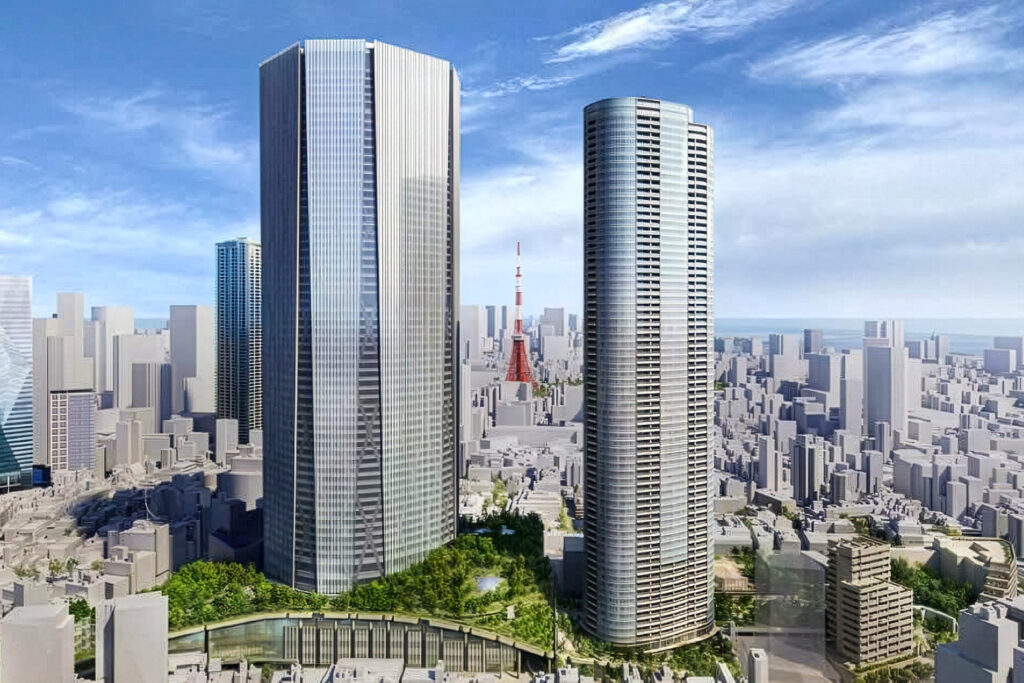
The Akasaka 2 & 6-chōme District Development is the larger of the two. Mitsubishi Estate and TBS Holdings held the groundbreaking ceremony on 13 March 2024, having received national strategic special zone approval in November 2021 and Ministry of Land, Infrastructure, Transport and Tourism certification as an urban renewal project on 9 February 2024. The east block will rise 40 storeys to 205.8 metres, with offices above and shops and an incubation facility for entertainment start-ups at street level. The west block will reach 18 storeys and 99.87 metres, holding a theatre and hall of about 11,000 sqm below a hotel, Canopy by Hilton Tokyo Akasaka. Both towers are scheduled for completion at the end of March 2028, with landscaping finished by the following October.
The part that will matter most to residents is at ground level. The scheme creates roughly 4,900 sqm of plaza and station-front space between basement level two and the street, with step-free routes through new station exits, and a bus stop for airport limousine and sightseeing services. Mitsubishi Estate has also said the development will include temporary shelter for around 650 people unable to return home after a disaster.
What are the landmarks around Akasaka?
Akasaka Palace (Geihinkan)
The State Guest House at Moto-Akasaka 2-1-1 was completed in 1909 as the Tōgū Gosho, the residence of the Crown Prince who later became Emperor Taishō. Designed by Katayama Tōkuma in a neo-Baroque style, it was converted into Japan’s state guest house and reopened in that role in 1974. In December 2009 it became the first building constructed in the Meiji period or later to be designated a National Treasure. Since the 2016 financial year the Cabinet Office has opened it to the public year-round, subject to official events.

Akasaka Hikawa Shrine
Akasaka Hikawa Shrine at Akasaka 6-10-12 is about eight minutes’ walk from Akasaka Station. The present shrine buildings were commissioned by the eighth Tokugawa shōgun, Yoshimune, and the deity was moved to the site in April 1730. Those buildings survived both earthquake and wartime damage and were designated a Tokyo Metropolitan Tangible Cultural Property in 1976. It is one of the Tokyo Ten Shrines.

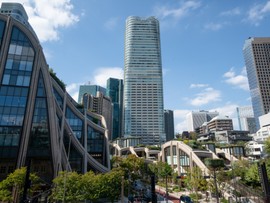
Akasaka Sacas
Akasaka Sacas opened in March 2008 on the site of TBS’s former headquarters, developed by TBS Holdings with Mitsui Fudosan. It holds the TBS broadcasting centre, the Akasaka Biz Tower offices and shops, an events plaza, and the TBS Akasaka ACT Theater. That theatre seats 1,324 and has staged Harry Potter and the Cursed Child as its resident production since June 2022. The adjoining Akasaka BLITZ closed as a live music venue in September 2020 and reopened in October 2022 as a TBS television studio with audience capacity.
Tokyo Midtown
Tokyo Midtown occupies Akasaka 9-7-1, on the former Defence Agency site, and opened on 30 March 2007 under Mitsui Fudosan. Midtown Tower rises 54 storeys to 248.1 metres and holds The Ritz-Carlton, Tokyo across floors 45 to 53. Together with the adjacent Hinokichō Park, the site has around four hectares of green space, a high proportion for a development of its size. The Suntory Museum of Art and the Tokyo Midtown Medical Center are both on site.

Ark Hills
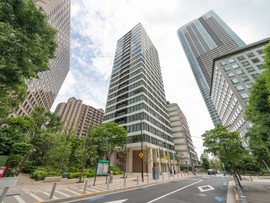
Ark Hills straddles Akasaka 1-chōme and Roppongi 1-chōme across 5.6 hectares. Developed by Mori Building and completed in 1986, it was the first large-scale private mixed-use redevelopment in Japan and set the template for the later Hills projects. It contains the Ark Mori Building, Suntory Hall, the ANA InterContinental Tokyo and the Ark Towers rental residences. Suntory Hall was Tokyo’s first purpose-built concert hall; Herbert von Karajan advised on its acoustic design, and the fountain plaza was named Ark Karajan Place in 1998 to mark the 90th anniversary of his birth. The ANA InterContinental Tokyo, which has 844 rooms, completed a 15-month refurbishment in February 2025.

Is Akasaka a good area for families?
The main considerations are schools, green space and medical care.
Akasaka has several English-medium early years schools, including EtonHouse International School Tokyo at Akasaka 9-2-16, beside Tokyo Midtown, and Akasaka International School at Akasaka 6-6-3, five minutes on foot from Akasaka Station. Both take children from around 15 months. EtonHouse also runs an elementary programme at the same Akasaka address, currently open for Grades 1 to 3 and expanding to Grade 5 by the 2028–29 school year. Beyond that, most international-school options are outside Akasaka itself, though none is far. The British School in Tokyo opened its Azabudai Hills primary campus at Azabudai 1-3-3 on 28 August 2023, taking pupils from Nursery to Year 6, with secondary years at the Shōwa campus in Setagaya. The American School in Japan runs its Early Learning Center at Roppongi 6-16-5, with the main campus in Chōfu. Nishimachi International School, a K–9 school founded in 1949, is at Moto-Azabu 2-14-7. Each is within roughly fifteen minutes of Akasaka by subway or on foot.
For public schooling, Moto-Akasaka is zoned to Akasaka Elementary School and Akasaka Junior High School under the Minato City Board of Education.
Green space is better than the district’s nightlife reputation suggests. Hinokichō Park, next to Tokyo Midtown, was laid out on part of the former Chōshū domain estate and is the largest park in the immediate area. Ark Hills has around 150 cherry trees along its perimeter and four gardens, and Mori Building reports its planted area has roughly doubled since the site opened, to 2.16 hectares.

How does Akasaka compare with Azabu and Aoyama?
The three are often grouped together, and they overlap, but they are not interchangeable.
Azabu, particularly Moto-Azabu, Minami-Azabu and Azabudai, has the highest concentration of foreign residents in Minato-ku at 12.8% as of September 2026, and the closest cluster of international schools. Aoyama runs towards retail and design, with Omotesandō at one end and the Aoyama Cemetery green corridor through the middle. Akasaka sits between the two, with the strongest transport interchange of the three and the closest access to the government quarter.
For a household where one adult works in Kasumigaseki, Toranomon or Nagatachō, Akasaka usually wins on commute. For a household organised around a specific international school, Azabu often wins on the school run. Neither is a general rule, and both areas are small enough that a single address can change the calculation.
Buying or renting in Akasaka
If you are buying in Japan for the first time, read our guide to buying a house in Japan as an expat before anything else. It covers the loan requirements that apply to non-permanent residents, the jūyō jikō setsumei (重要事項説明), the mandatory explanation of key property details that a licensed agent must deliver before contract, and the acquisition costs that sit on top of the purchase price.
Two Akasaka-specific points are worth raising early. First, much of the residential stock uphill from Akasaka-dōri is older and low-rise, which means you will encounter buildings constructed before the 1981 revision to the earthquake resistance standards. Confirm the construction date and the standard applied before you go far. Second, some of the buildings foreign buyers ask about most in Akasaka rarely reach the open market, so the publicly listed inventory is not a complete picture of what is available.
Housing Japan has worked with foreign buyers, sellers and tenants in central Tokyo since 2000. We are a licensed brokerage under the Tokyo Governor’s licence, Tokyo Governor License (3) No. 98912, with licensed real estate transaction specialists (宅地建物取引士, takken shi) in-house, and we handle purchase, sale, leasing and ongoing property management across Minato-ku. Twenty-five years in the central areas of Tokyo means we know which Akasaka buildings turn over, which rarely do, and who to ask.
Tell us what you are looking for in Akasaka, whether that is a building you have already found or a brief you would like help shaping, and we will come back to you with what is available now, including properties not listed publicly. Get in touch below.
Not ready to move yet? Sign up for our weekly listings email and we will send new and exclusive off market Akasaka properties as they come to us.
Questions about living in Akasaka
Is Akasaka a residential area or a business district?
Both, within a few hundred metres of each other. The streets around Akasaka Station and Akasaka Sacas are commercial, with broadcast studios, offices and restaurants. The blocks uphill towards Hikawa Shrine and Akasaka 6-chōme are residential, mostly low-rise apartment buildings and older houses on narrow streets.
How expensive is land in Akasaka?
The standard site numbered Minato-4, at Akasaka 1-14-11, was valued at ¥7,110,000 per square metre on 1 January 2026, up 20.5% year on year. That is the highest residential standard site valuation in Japan and has been since 2018. Land values are not apartment prices, but they indicate the ground the buildings sit on is among the most highly valued in the country.
Is Akasaka a good area for families with children?
It works well for families who want short commutes and English-speaking medical care nearby. EtonHouse International School Tokyo runs preschool and Grades 1 to 3 at Akasaka 9-2-16, expanding to Grade 5 by 2028–29. For later years, families travel to Azabudai, Roppongi or Moto-Azabu, all within about fifteen minutes. Hinokichō Park and the Ark Hills gardens provide the closest green space.
What is being built in Akasaka right now?
The Akasaka 2 & 6-chōme District Development, by Mitsubishi Estate and TBS Holdings. Two towers of 40 and 18 storeys are due for completion at the end of March 2028, bringing offices, a theatre and hall, and a Canopy by Hilton hotel, along with about 4,900 sqm of new plaza and station-front space connected directly to Akasaka Station.
Which subway lines serve Akasaka?
Six Tokyo Metro lines run through stations in Akasaka and adjoining Nagatachō: Chiyoda, Ginza, Marunouchi, Namboku, Yūrakuchō and Hanzōmon. The Toei Ōedo Line at Aoyama-itchōme and the Hibiya Line at Roppongi are both within walking distance.
Where can I find English-speaking medical care in Akasaka?
Sanno Hospital at Akasaka 8-10-16 keeps Japanese-English interpreters on site, and the Tokyo Metropolitan Government lists it among hospitals equipped to receive foreign patients.The Akasaka Sannō Medical Center near Akasaka-mitsuke Station, opened in August 2020, handles health screening and outpatient care.
Why is Akasaka popular with foreign residents?
Proximity, mainly. Minato-ku hosts 81 of Japan’s 157 embassies, more than any other municipality, and several sit in Akasaka itself, including the embassies of the United States and Canada. Six subway lines reach the government and business quarters next door, and Sanno Hospital provides English-language care within the district.
About the authors

Maximilian Jacob is Research and Content Lead at Housing Japan K.K., a licensed real estate brokerage in Tokyo (Tokyo Governor (3) No. 98912) that has advised international buyers, sellers and tenants in central Tokyo since 2000. He researches the Tokyo prime residential market using primary Japanese sources, including Ministry of Land, Infrastructure, Transport and Tourism (MLIT) transaction and land price data, National Tax Agency (NTA) roadside land valuations, Bank of Japan policy statements and e-Stat national statistics. His work focuses on foreign buyer procedure, property taxation, non-resident financing, and the Minato, Shibuya and Chiyoda luxury markets.
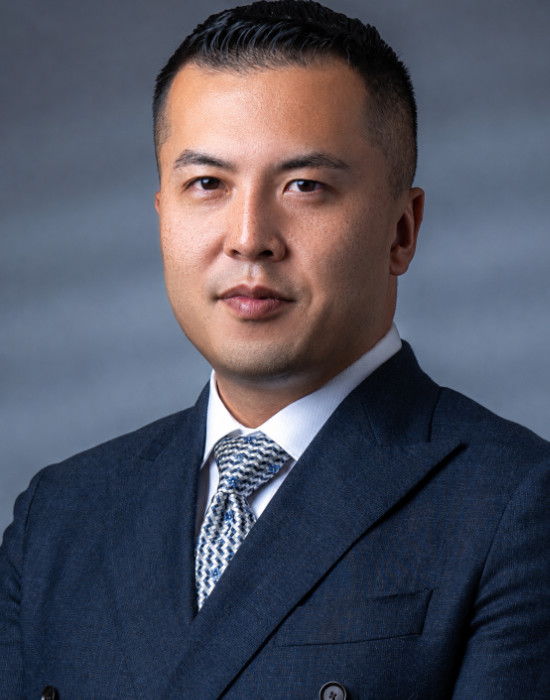
Yudai Yamaguchi is Head of Sales and Head of Property Management at Housing Japan K.K. He has more than a decade of real estate experience across Japan and the United States, spanning development, sales operations, investment, acquisitions, leasing, construction and property management. He previously held management roles at the Open House Group in both countries, including General Manager of its Atlanta office, where he oversaw local real estate operations. He holds a bachelor’s degree in Liberal Arts from Waseda University and studied International Relations at the University of Washington.
Sources
Ministry of Land, Infrastructure, Transport and Tourism, 令和8年地価公示の概要, March 2026
Minato City, 人口・世帯数(住民基本台帳に基づく)2026年, 1 September 2026
Minato City, 港区REVIEW‐数字で見る「港区」
Mitsubishi Estate, 赤坂二・六丁目地区開発計画 新築工事着手/民間都市再生事業計画に認定, 13 March 2024
Sanno Hospital, 外国人受診者の方へ