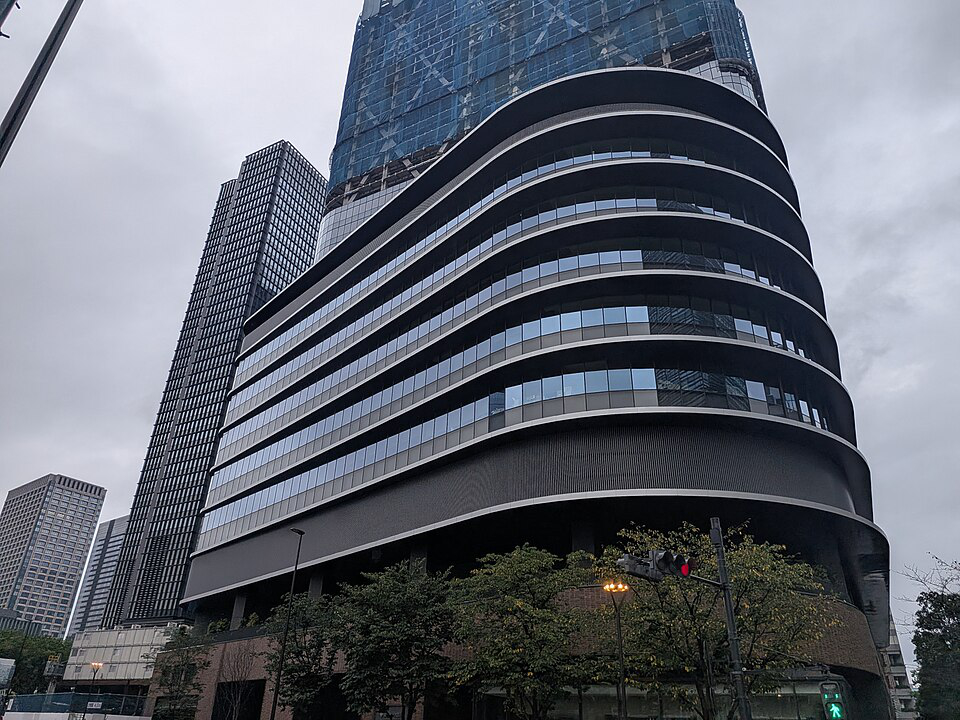
Torch Tower is a 385-metre supertall skyscraper under construction at Tokyo Torch in Tokiwabashi, next to Tokyo Station. Developed by Mitsubishi Estate and built by Shimizu Corporation, it is set to become Japan’s tallest building upon its March 2028 completion, surpassing Azabudai Hills Mori JP Tower by roughly 60 metres.
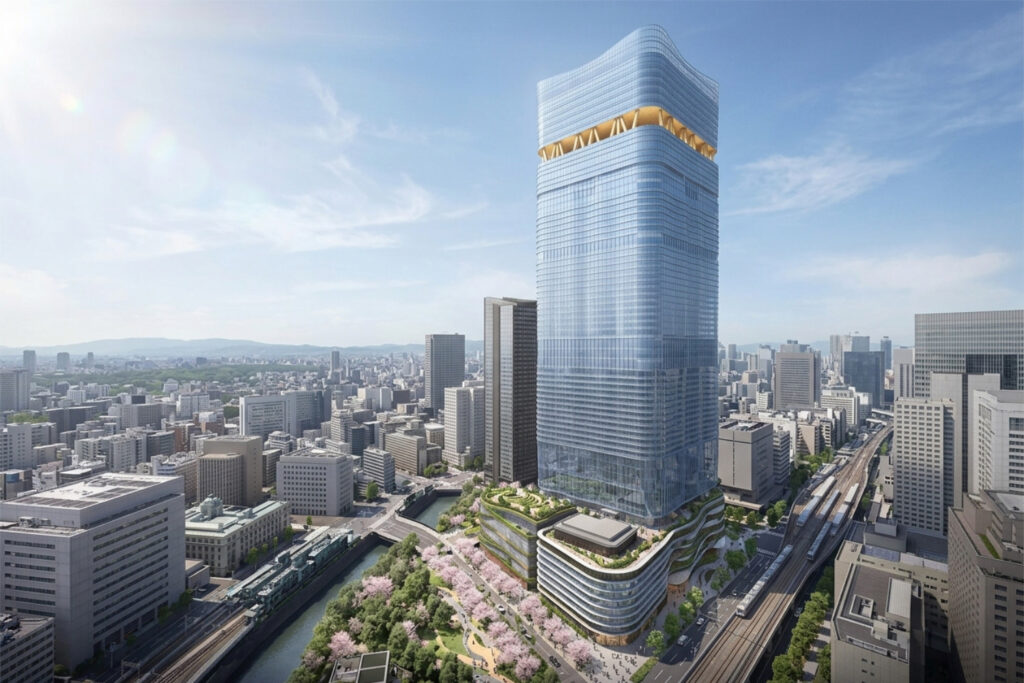
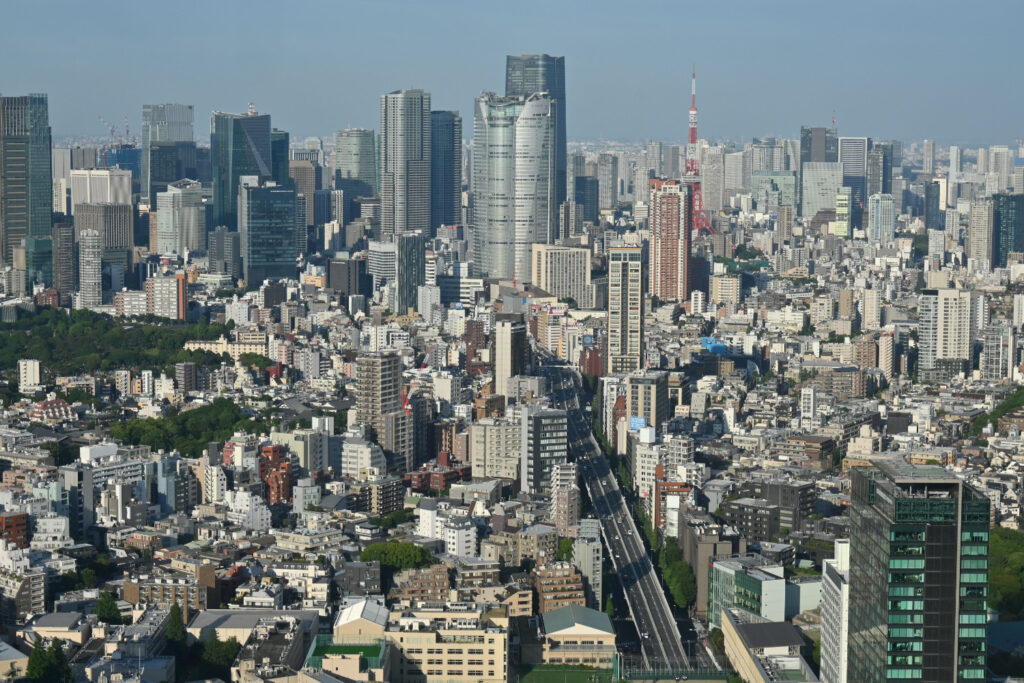
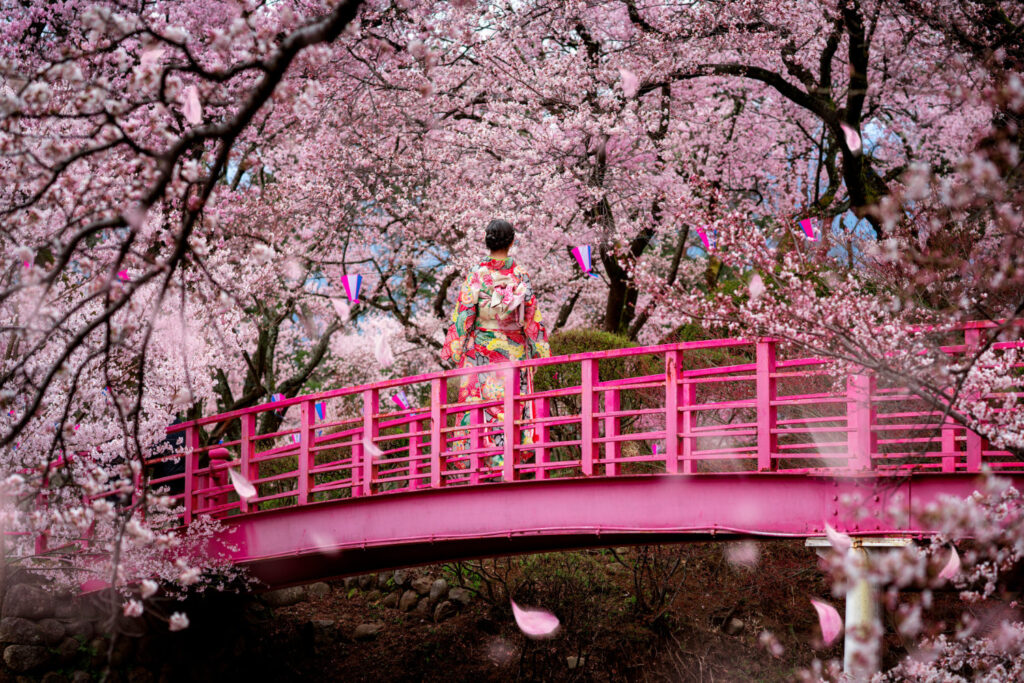
AI-generated conceptual illustration by Housing Japan. This is an artistic impression, not an official render, and does not depict Torch Tower’s final design. Torch Tower will reach 385 metres at Tokyo Torch in Tokiwabashi, next to Tokyo Station, with completion targeted for March 2028. Official renders are published by Mitsubishi Estate at tokyotorch.mec.co.jp.
What is Torch Tower and where is it located?
Torch Tower is the main tower of the Tokyo Torch redevelopment in Tokiwabashi, directly next to Tokyo Station’s Nihombashi exit. It stands alongside Tokiwabashi Tower, a companion building finished in 2021, and together the two form a large office, retail, hospitality, and residential district in the middle of central Tokyo.
The site puts Torch Tower within a short walk of Otemachi, Nihombashi, and Marunouchi, three neighbourhoods long known for corporate headquarters, financial institutions, and high-end shopping. Tokyo Station itself is one of the busiest transit hubs in the country, connecting shinkansen bullet trains, JR lines, and multiple subway lines under one roof. Building a supertall tower directly beside it gives Torch Tower transit access that few other Tokyo developments can match.
Mitsubishi Estate, the developer behind Torch Tower, has managed a large share of the Otemachi and Marunouchi area for decades, steadily replacing older office buildings with modern towers. Tokyo Torch continues that pattern but at a larger scale, pairing Tokiwabashi Tower’s completed office and retail space with Torch Tower’s mix of offices, a hotel, rental homes, and public viewing space. Once finished, the project will change the skyline on the western side of Tokyo Station.
Official renders of Torch Tower are available from Mitsubishi Estate; the illustration above is a Housing Japan impression.
How tall will Torch Tower be, and how does it compare to Azabudai Hills?
Torch Tower will reach an architectural height of 385 metres and a roof height of 366 metres, which will make it Japan’s tallest building once complete. It will surpass the current record-holder, Azabudai Hills Mori JP Tower, by approximately 60 metres.
The difference between architectural height and roof height comes down to what gets measured. Roof height refers to the actual structural roof of the building, while architectural height includes permanent design features on top, such as spires or decorative crowns, that extend above the roofline. Both figures for Torch Tower come from Mitsubishi Estate’s Tokyo Torch project materials.
For comparison, Azabudai Hills Aman residences sit inside the Mori JP Tower, which reaches 325.2 metres and became Japan’s tallest building when it opened in 2023. Torch Tower’s 385-metre figure would put it roughly 60 metres above that mark, a gap big enough to see in the skyline rather than a technical footnote.
The timing matters as much as the height. Azabudai Hills opened in 2023, and Torch Tower is targeted for 2028, meaning central Tokyo will have seen two supertall completions within about five years. Developers are still finding reasons to build at the top of the market here even as Japan’s population contracts nationally, which says more about how concentrated demand has become for prime central Tokyo office, hotel, and residential space than about the country as a whole.
What will be inside Torch Tower?
Torch Tower will combine office space on floors 7 through 52, a luxury hotel on floors 53 to 58, luxury rental residences on floors 59 and 60, an observation deck on the top floor near 349 metres, and a 2,000-seat event hall on floors 3 to 6. Retail will connect directly with the adjacent Tokiwabashi Tower.
The office floors, running from level 7 to 52, add a large amount of Grade-A office space to an already tight submarket around Tokyo Station. Above the offices, the hotel occupies floors 53 through 58, with the rental residences on floors 59 and 60 and the observatory above them. Few Tokyo hotels operate at that height, so it will be one of the highest places to stay in the city when it opens.
Higher still, the observation deck sits around 349 metres above ground and is projected to draw 3 to 4 million visitors a year once it opens, according to figures reported by The Yomiuri Shimbun from a 2025 Mitsubishi Estate site tour. Tokyo Station has long been a transit destination without a dedicated observation point of this scale, and the deck is meant to change that.
The event hall holds up to 2,000 people, enough for conferences, exhibitions, and the other gatherings usually grouped under the term MICE (meetings, incentives, conferences, and exhibitions). With the retail podium that has operated at Tokiwabashi Tower since 2021, the two buildings are designed to work as a connected district rather than as separate offices. The same mix shows up in Tokyo luxury rental market trends, where mixed-use towers increasingly combine housing with hotels, retail, and office space under one plan.
Why is the residential component rental-only?
The luxury residences inside Torch Tower are rental units, not condominiums offered for sale. Mitsubishi Estate has said the tower will hold roughly 50 rental homes on its upper floors, described as the first rental residences in the Otemachi, Marunouchi and Yurakucho area, and there is no path for individual buyers to purchase units directly within the tower.
That puts the residences among Tokyo’s higher-priced rentals, aimed at high-income executives and expatriates who prefer leasing to ownership. It also sets Torch Tower apart from many other Tokyo supertall projects, which typically include condominium floors available for purchase alongside office and hotel space. Anyone who wants to own property connected to the Tokyo Torch development will need to look outside the tower, since its homes are structured as long-term rental assets.
Interested in owning a home in the districts around Tokyo Station, from Otemachi and Marunouchi to Nihombashi? Housing Japan’s bilingual team can walk you through what is available on the market today. Contact us to start the conversation.
Who is building Torch Tower and what is the construction timeline?
Torch Tower is developed by Mitsubishi Estate, designed by Mitsubishi Jisho Sekkei with Sou Fujimoto Architects and Yuko Nagayama & Associates responsible for the crown, and built by Shimizu Corporation. Construction began in September 2023 with completion targeted for March 2028.
Mitsubishi Jisho Sekkei leads the overall design, while Sou Fujimoto Architects and Yuko Nagayama & Associates focus specifically on the tower’s crown, the uppermost section of the building. Shimizu Corporation, one of Japan’s major general contractors and a long-standing builder of large Tokyo high-rises, is the main contractor.
The construction timeline runs from groundbreaking in September 2023 to a targeted completion in March 2028, a build period of roughly four and a half years. Mitsubishi Estate has put the estimated construction cost at about ¥500 billion (roughly US$4.7 billion when the figure was announced in 2020), for a project that combines offices, a hotel, homes, an observation deck, and an event hall in one tower.
That scale also shows up in the building’s total floor area, estimated at approximately 553,000 square metres according to Mitsubishi Estate’s project overview. That is about 1.8 times the most commonly cited floor area of the Burj Khalifa in Dubai (309,473 square metres), currently the world’s tallest building. Torch Tower will not match the Burj Khalifa’s height, but that comparison shows how much usable space fits into its 62 floors above ground and 4 below.
Can investors buy property in Torch Tower?
No. The residential units in Torch Tower are luxury rentals only, with no condominiums offered for sale to individual buyers. Investors seeking direct exposure to the Tokyo Torch effect should instead look at surrounding condominium markets.
With no purchase option inside the tower, buyers are left looking at what happens around it. The addition of a luxury hotel, an observation deck, a large event hall, and expanded retail may add to the everyday appeal of neighbourhoods close to the site, including the Otemachi and Nihombashi luxury condominium market and nearby Kanda. No available data confirms whether that will translate into stronger rents or resale prices for existing buildings in these areas, so treat it as something to watch rather than a prediction.
Housing Japan’s own research into the streets around Azabudai Hills, which opened in November 2023, found that several luxury towers within walking distance saw their estimated values rise roughly two to three times between 2016 and 2025, with the strongest movement in the buildings sitting closest to the finished complex. Much of that shift began after the redevelopment was announced in 2017, well before the towers opened. This is one historical case rather than a rule, and it does not predict how prices or rents near Torch Tower will move. It does show that a large mixed-use development coincided with measurable change in a nearby residential market. Our full breakdown, including named buildings and year-by-year figures, is in Azabudai Hills Effect on Real Estate and Four Areas to Watch.
Torch Tower still has several years to run. Topping out, the fit-out of the Dorchester Collection hotel, the start of residential leasing, and the opening in 2028 will each say something concrete about the project, and each is worth waiting for rather than assuming in advance.
If you are considering property in the districts around Tokyo Station, it helps to speak with people who follow these markets closely. Housing Japan has worked in central Tokyo for over 25 years. Contact us to discuss the areas near Tokyo Torch and the wider Otemachi and Nihombashi market.
How does Torch Tower fit into Tokyo’s broader supertall skyline shift?
Torch Tower and Azabudai Hills Mori JP Tower mark two supertall completions in central Tokyo within a few years of each other, a pace not previously seen in the city. Both point to continued developer confidence in central Tokyo’s commercial and luxury real estate despite Japan’s demographic contraction.
Azabudai Hills opened in 2023, and Torch Tower is targeted for March 2028, putting roughly five years between two buildings that both claimed, or will claim, the title of Japan’s tallest building. That timeline stands out because supertall completions of this size have historically been spaced further apart in Tokyo. Seeing two arrive in close succession suggests developers are still willing to commit large amounts of capital to central Tokyo projects.
Both towers also follow a similar formula: offices, a hotel, homes, retail, and public observation space combined inside one structure, sometimes described as a “vertical city” approach. Instead of single-purpose towers, developers are betting on buildings that keep people on site for work, travel, and daily errands.
For Housing Japan’s readers, none of this guarantees a rise in nearby property values. It does mean that high-end development keeps concentrating in a small number of central Tokyo districts, and those districts tend to stay in front of luxury residential demand. What that means for specific buildings and streets should become clearer as Torch Tower nears completion.
Frequently Asked Questions
When will Torch Tower be completed?
Torch Tower’s construction began in September 2023, with completion targeted for March 2028. At that point it is set to become Japan’s tallest building, surpassing Azabudai Hills Mori JP Tower. That is roughly four and a half years of construction, with several milestones expected before opening.
How tall is Torch Tower compared to Azabudai Hills?
Torch Tower’s architectural height is 385 metres, about 60 metres taller than Azabudai Hills Mori JP Tower’s 325.2 metres. Its roof height is 366 metres. Upon completion, Torch Tower will take over as Japan’s tallest building, a title Azabudai Hills Mori JP Tower has held since 2023.
Can you buy an apartment in Torch Tower?
No. The luxury residences in Torch Tower are rental-only units, roughly 50 homes on the tower’s upper floors, with no condominiums offered for individual sale. Many other Tokyo supertall towers include for-sale condominium floors. In Torch Tower, the only way in as a resident is a lease.
What will be on the observation deck of Torch Tower?
Torch Tower’s observation deck sits around 349 metres above ground and is projected to attract 3 to 4 million visitors per year once open. The deck is expected to become a new public draw for the Tokiwabashi and Tokyo Station area, which has historically lacked a major tourism or observation attraction.
Where exactly is Torch Tower located?
Torch Tower is located in the Tokiwabashi district of Tokyo, directly adjacent to Tokyo Station, as part of the larger Tokyo Torch redevelopment alongside the already-completed Tokiwabashi Tower. The site places it within walking distance of Otemachi, Nihombashi, and Marunouchi,three of central Tokyo’s main business and luxury residential districts.
Will Torch Tower affect nearby condominium values?
There is no confirmed data yet on resale or rental impact, but the addition of a luxury hotel, observation deck, and retail hub may increase the lifestyle appeal of nearby districts like Otemachi, Nihombashi, and Kanda over time.
Housing Japan will continue tracking this as Torch Tower nears completion in 2028, since large-scale mixed-use developments have historically preceded shifts in surrounding residential demand in Tokyo.
Why Housing Japan?
Thinking about a home or an investment in central Tokyo? Housing Japan buys, sells, and manages luxury residential property across the city’s central wards. Our bilingual team works with international buyers who want more detail than a news story provides. Contact us to talk through your plans.
Sources:
Mitsubishi Estate — “TOKYO TORCH: Construction Begins on ‘Torch Tower'” press release, 27 September 2023
TOKYO TORCH project website, Mitsubishi Estate:
Mitsubishi Jisho Design – Torch Tower project page
Mitsubishi Estate – Torch Tower rental residences announcement, 13 January 2022 (≈50 rental homes; first rental residences in the Otemachi/Marunouchi/Yurakucho area)
Mitsubishi Estate & Tokyo Century – joint acquisition of Torch Tower hotel and hall, 16 March 2021 (¥56 billion)
The Yomiuri Shimbun / The Japan News – Torch Tower construction site opened to press, 17 June 2025 (3–4 million annual visitor projection)