Japan’s kimono and textile craft, rooted in weaving centres such as Kyoto’s Tango, Yamagata’s Yonezawa and Fukuoka’s Kurume, still shapes how the country designs and makes clothes. That heritage now sits beside a fast-changing Tokyo: office dress rules that allow shorts from April 2026, and a street style scene the V&A has exhibited.
Key Facts
| Item | Figure | Year |
|---|---|---|
| Textile manufacturing shipments | About ¥3.7 trillion, or 1.1% of Japan’s total manufacturing shipments | 2021 |
| Imported share of clothing sold in Japan | 98.5% by volume | 2022 |
| Garments supplied to the domestic market | 3.73 billion, up from about 2 billion in 1990 | 2022 |
| Domestic clothing retail market | ¥8.7 trillion, down from a peak of ¥15.3 trillion | 2022 |
| Average price of one garment | ¥3,211, down from ¥6,192 in 1990 | 2024 |
| Clothing exports: Japan v China | US$706 million v US$176,575 million | 2021 |
| Discarded clothing reused or recycled | About 42% | 2025 |
| Government target | Cut household clothing waste 25% against FY2020 | By FY2030 |
| Tokyo traditional crafts | 42 designated by the metropolitan government, 22 of them nationally | Current |
| Shorts permitted at Tokyo metropolitan offices | From 3 April 2026 | 2026 |
Japan’s relationship with clothing runs on two tracks at once. One track moves slowly: hand-dyed silk, generations-old weaving techniques, garments built to be worn for decades. The other moves fast: Harajuku’s shifting street looks, Cool Biz office wear, and a clothing market now supplied almost entirely by imports. Understanding how these two tracks connect tells you something real about how Tokyo lives, dresses, and values craft. For anyone spending serious time in the city, that context is worth having.
What makes traditional Japanese kimono and textile craftsmanship a foundation for modern luxury fashion?
Kimono-making and Japan’s regional textile traditions rely on techniques, hand-dyeing, silk weaving, obi construction, refined over centuries in specific production regions. These methods have directly informed the construction, draping, and textile innovation used by contemporary Japanese and international luxury designers.
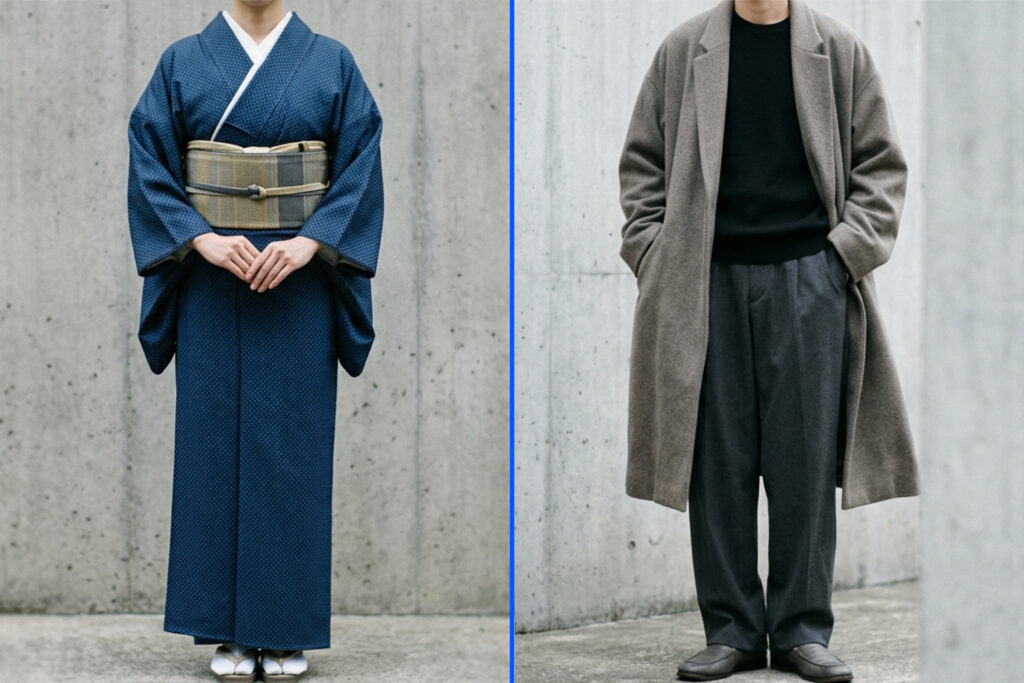
A kimono is often described to outsiders as a simple wrapped robe, but that undersells the craft behind it. The garment itself is cut from a single bolt of fabric with almost no waste, then wrapped and secured rather than tailored to fit a specific body shape. The obi, the wide sash that holds it closed, is frequently woven as its own standalone textile, thick, structured, and sometimes more valuable than the kimono it accompanies. The yukata, an unlined cotton version, functions as the kimono’s casual cousin, worn in summer and at festivals rather than for formal occasions. The distinction matters: one is ceremonial silk craftsmanship, the other is everyday cotton comfort.
Commissioning a bespoke kimono is a slow process, closer in spirit to Savile Row tailoring or haute couture fittings than to buying off a rack. A client works with an artisan over multiple sessions, selecting fabric, dye pattern, and proportion, with the final garment made to that person’s measurements alone. This made-to-measure approach, paired with hand-dyeing techniques passed down within families and workshops, is part of why kimono craftsmanship is treated as a serious artisan trade rather than a costume tradition.
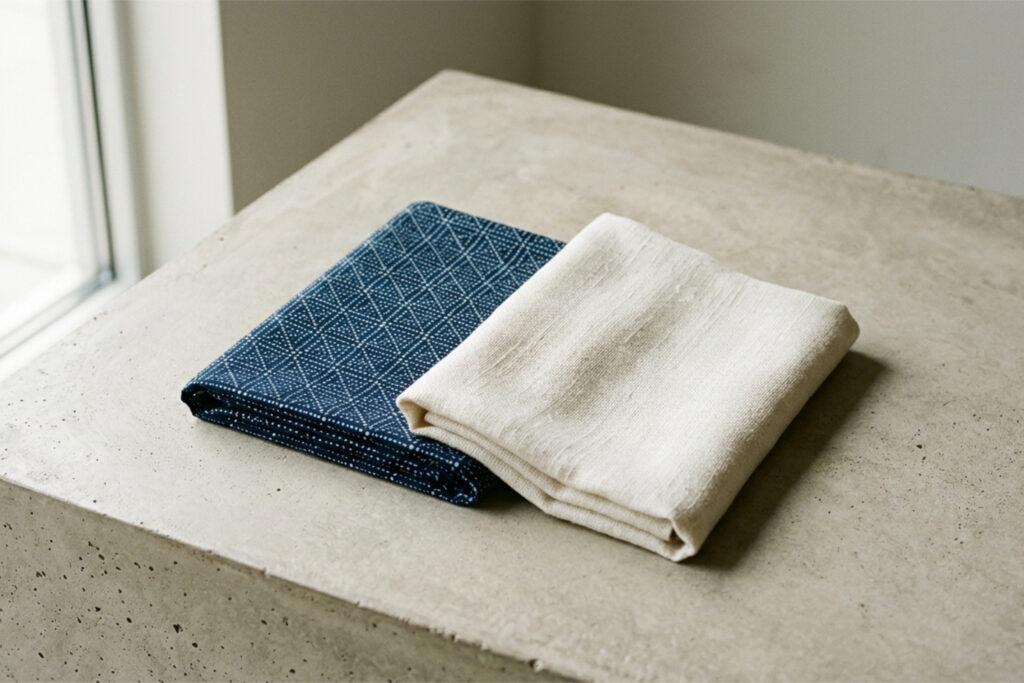
That fabric-first philosophy, building a garment around the textile itself and favouring wrapping over cutting, runs through modern Japanese design. The Victoria and Albert Museum made the case directly in Kimono: Kyoto to Catwalk, which opened in London in February 2020 and closed its international tour at V&A Dundee in 2024. Curator Anna Jackson placed rare seventeenth and eighteenth century kimono alongside work by Issey Miyake, Yohji Yamamoto and Rei Kawakubo, and traced the same influence through Yves Saint Laurent, John Galliano and Alexander McQueen. The exhibition argued that kimono have always been dynamic fashion garments rather than fixed costume, and that their influence shows up in construction and silhouette rather than direct copying.
This heritage also shows up in trade data. The Ministry of Economy, Trade and Industry (METI, 経済産業省) puts textile manufacturing shipments at about ¥3.7 trillion in 2021, which is 1.1% of Japan’s total manufacturing shipments across roughly 13,000 establishments. Yet Japan exported only US$706 million of finished clothing in 2021, against US$176,575 million for China. Fabric, non-woven materials, yarn and carbon fibre together made up most of Japan’s US$9.5 billion textile export total. In other words, Japan sells the cloth rather than the garment. That materials-first position mirrors the fabric-first thinking behind the kimono itself.
That craft base is under pressure. Japan’s clothing retail market peaked at ¥15.3 trillion in 1991 and stood at ¥8.7 trillion in 2022, while the number of garments supplied rose from about 2 billion in 1990 to 3.73 billion in 2022. More clothes, less money. The Ministry of the Environment puts the average price of a single garment at ¥3,211 in 2024, down from ¥6,192 in 1990. METI reports that ageing owners and staff shortages now threaten business continuity among small textile firms, and that because Japanese textile production is split into separate specialist stages, one closure can break a whole region’s supply chain.
Which regions still produce Japan’s finest traditional textiles?
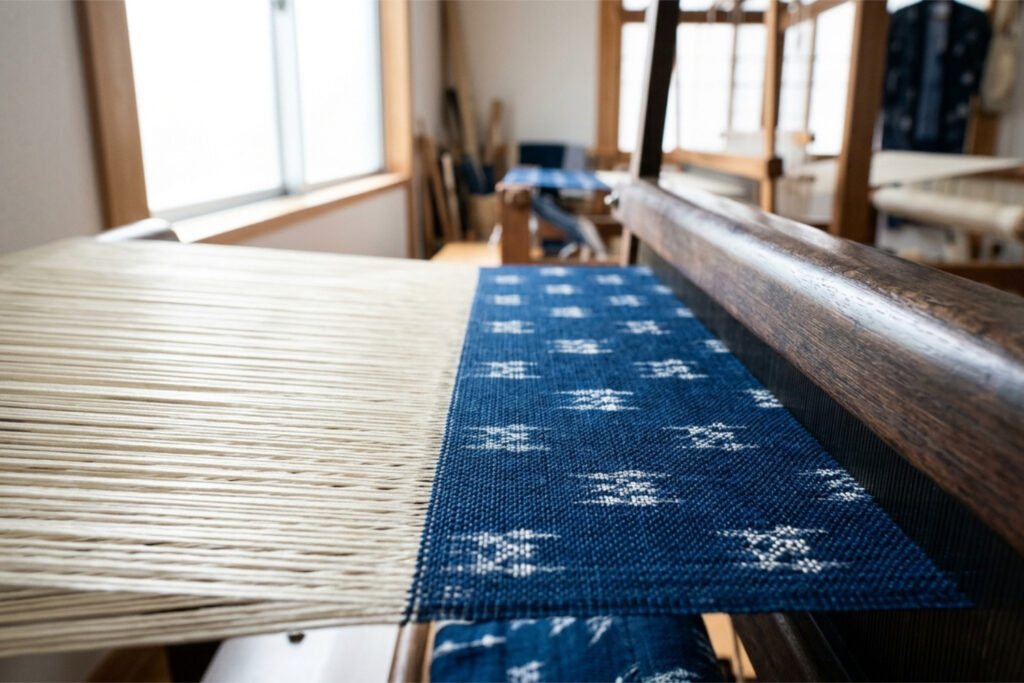
A handful of regions remain working centres of textile craft, not tourist curiosities. Kyoto Prefecture’s Tango district produces silk textiles that feed into kimono fabric. Yamagata Prefecture’s Yonezawa area makes both silk and synthetic fibre cloth. Fukuoka’s Kurume region is known for cotton kasuri, an ikat-style technique in which threads are bound and indigo-dyed before weaving. Kurume kasuri was designated an Important Intangible Cultural Property in 1957 and a national traditional craft in 1976. METI’s survey of production regions ranks all three among Japan’s top twenty textile areas by shipment value, based on 2019 figures for establishments with four or more employees. This is still functioning industry, not preserved tradition.
Why does Japan’s textile heritage matter to people relocating to Tokyo?
For high-net-worth residents, engaging with Japanese textile heritage, through bespoke kimono commissions, private ateliers, or heritage brand collaborations, works as a form of cultural fluency in Tokyo. It sits alongside things like collecting, tea ceremony, and architecture appreciation as part of a broader pattern of cultural participation among people relocating to the city.
This isn’t unlike how patronage of traditional craft is valued in other global luxury markets, whether that’s bespoke tailoring in London or ceramics collecting in parts of Europe. In Tokyo, access to skilled tailors, kimono ateliers, and textile houses is often mentioned by relocating professionals as part of what makes the city livable at a high level, spoken about in the same breath as access to fine dining or private members’ clubs, rather than as a separate curiosity.
Certain neighbourhoods have long associations with textile and craft retail, and these overlap with the residential districts people ask about when choosing where to live in Tokyo. Choosing to live near this kind of craftsmanship is less about a single purchase and more about ongoing access, the kind of quality-of-life detail that shows up in due diligence when deciding where in Tokyo to settle.
Moving, Living or investing in Tokyo? Search Prime Real Estate in Tokyo or see our Area Guides.
How has business dress in Japan changed?
Japanese office dress has moved from a near-uniform dark suit and tie to a much wider range, and energy policy drove most of that change. The Cool Biz campaign, launched by the government in the 2005 financial year, removed the jacket and tie in summer. Twenty years later, Tokyo’s own version reaches as far as T-shirts, trainers and shorts.
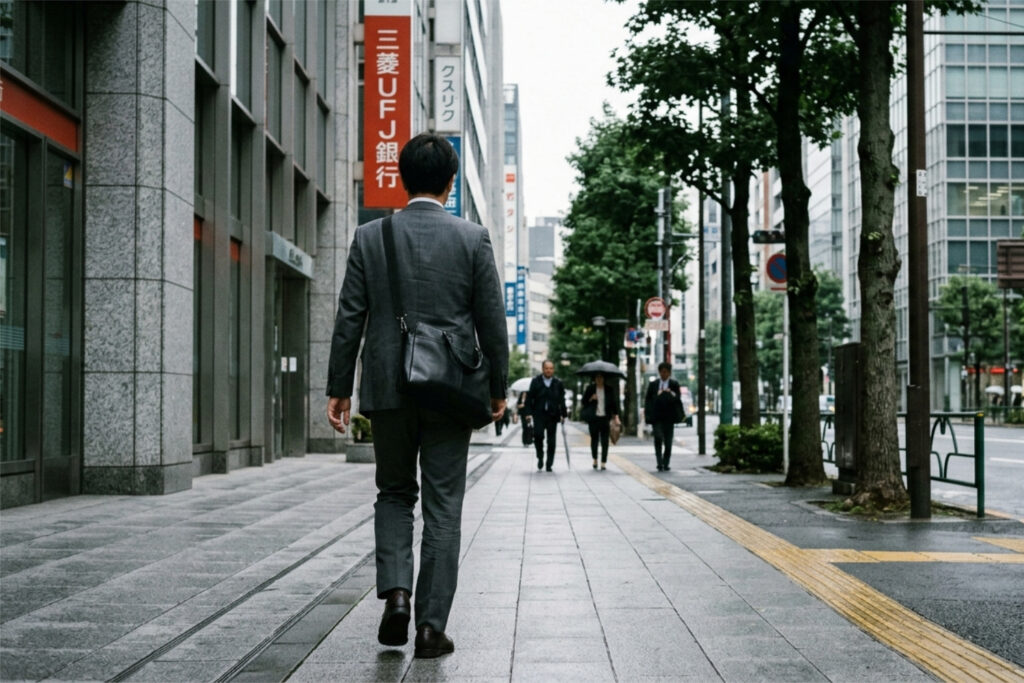
For most of the postwar period the salaryman uniform was fixed. Dark suit, white shirt, tie, leather shoes, worn year-round regardless of temperature. Cool Biz broke that. The Ministry of the Environment set 28°C as the guideline indoor temperature and asked office workers to dress for it. Yuriko Koike introduced the campaign as Environment Minister, a detail that matters for what happened later.
The programme has kept loosening. After the 2011 earthquake and the power shortages that followed, the government promoted Super Cool Biz, which went further on both clothing and energy saving. Then in the 2021 financial year the Ministry of the Environment stopped setting a single nationwide Cool Biz period. It now runs an intensive campaign at its own Tokyo offices from 1 May to the end of September and leaves the rest to individual workplaces and local conditions.
Two other forces have pushed in the same direction. Remote and hybrid work normalised looser dress after 2020. Recruitment did the rest, as employers competing for younger staff found strict dress codes a hard sell. The result is a genuine range rather than a single standard. Finance, law and client-facing roles remain formal. Technology, creative and design firms often have no dress code at all.
Can you wear shorts to the office in Tokyo?
At Tokyo metropolitan government offices, yes, since 3 April 2026. Governor Yuriko Koike announced a revised Tokyo Cool Biz programme encouraging polo shirts, T-shirts, trainers and, depending on the job, shorts. She cited a severe outlook for electricity supply and demand. The guidance applies to metropolitan offices only and is encouragement, not law.
The metropolitan government frames Tokyo Cool Biz around three areas rather than clothing alone: how people work, how they live, and how they dress. Alongside the dress change it promotes early-morning starts, teleworking and replacing old air conditioners with efficient models. The pressure behind it is real. Japan recorded its hottest summer since national records began in 1898 in 2025, and the Japan Meteorological Agency has since introduced a formal term for days above 40°C.
Retailers moved quickly. Yofuku no Aoyama, one of Japan’s larger business-wear chains, launched an office-specific shorts line in May 2026, adjusting length and cut for how the garment sits when the wearer is seated. That is a useful signal of how far this has travelled: a category that did not exist in Japanese business wear two years ago now has mainstream retail behind it.
For anyone moving to Tokyo, the practical takeaway is that there is no single dress code to learn. Read the industry, then read the individual office. A private company can and often does keep its own rules, and many still do.
Why is Tokyo considered one of the world’s most fashion-forward cities today?
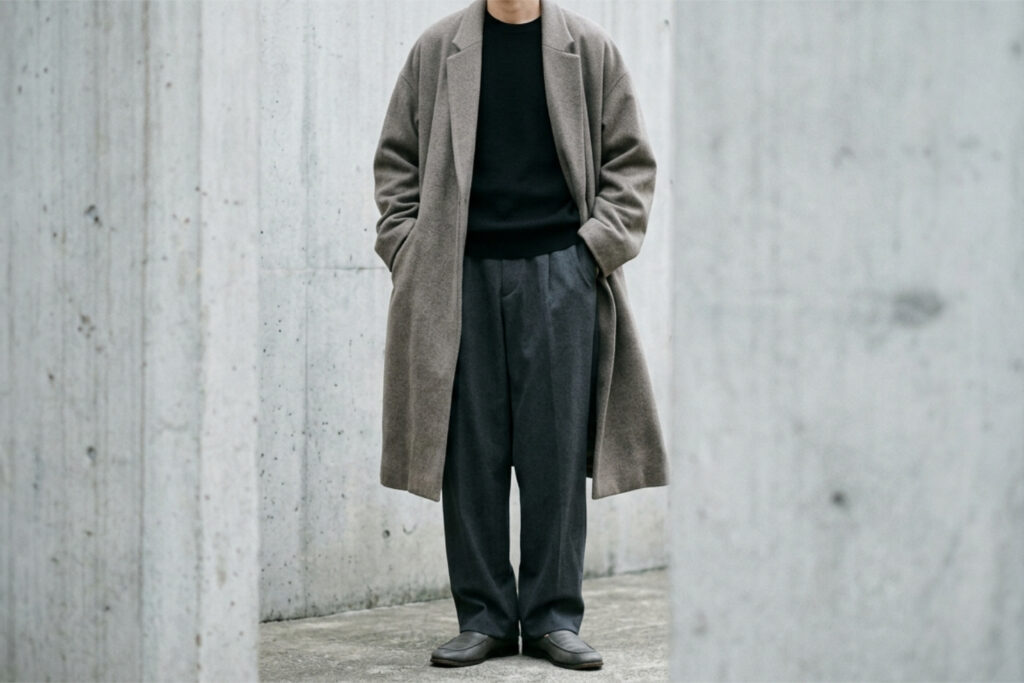
Tokyo’s fashion identity is now geographic rather than tribal. The named Harajuku subcultures of the 1990s and 2000s have largely faded, and style varies by district instead: designer restraint in Aoyama, flagship retail on Omotesando, independent labels on the Harajuku back streets, and second-hand across Shimokitazawa and Koenji.
The classic Harajuku scene is better understood as design history than as a live movement. Shoichi Aoki founded FRUiTS in 1997 to photograph the district’s youth looks, and the images reached designers worldwide. He closed the magazine in February 2017 after 233 issues, saying there were no longer enough new looks on the street to fill it. Takeshita-dori is now largely souvenir retail. Aoki returned to Harajuku in 2023 to shoot a post-pandemic generation, so the district is not finished, but it works differently.
The movement that travelled furthest started in the back streets rather than on Takeshita. Ura-Harajuku, from the mid-1990s, mixed high fashion with streetwear and built demand through limited drops and scarcity. That commercial model spread well beyond Japan and now underpins how much of the luxury industry releases product.
Which Tokyo districts have their own style?
| District | Character |
|---|---|
| Aoyama | Designer labels and restrained luxury |
| Omotesando | Flagship retail with named architects |
| Ura-Harajuku and Cat Street | Independent labels and the surviving creative scene |
| Takeshita-dori | Mass-market and tourist retail |
| Shibuya | Young mainstream, high volume |
| Ginza | Formal, established luxury |
| Naka-Meguro | Second-hand and low-key independents |
If there is one current thread, it is furugi, the Japanese approach to second-hand clothing. It differs from European vintage in that pieces are routinely cut up and rebuilt rather than worn as found, and designer items are mixed with thrifted ones. Several labels showing at Tokyo fashion week now build collections this way. The economics help: as the next section shows, roughly four in ten people in Japan buy or would buy second-hand.
Tokyo sits alongside Paris, Milan, London and New York on the international fashion week calendar. That standing is institutional, not just editorial. The Japan Fashion Week Organization was founded in 2005 and marked its twentieth anniversary in the 2026 spring/summer season.
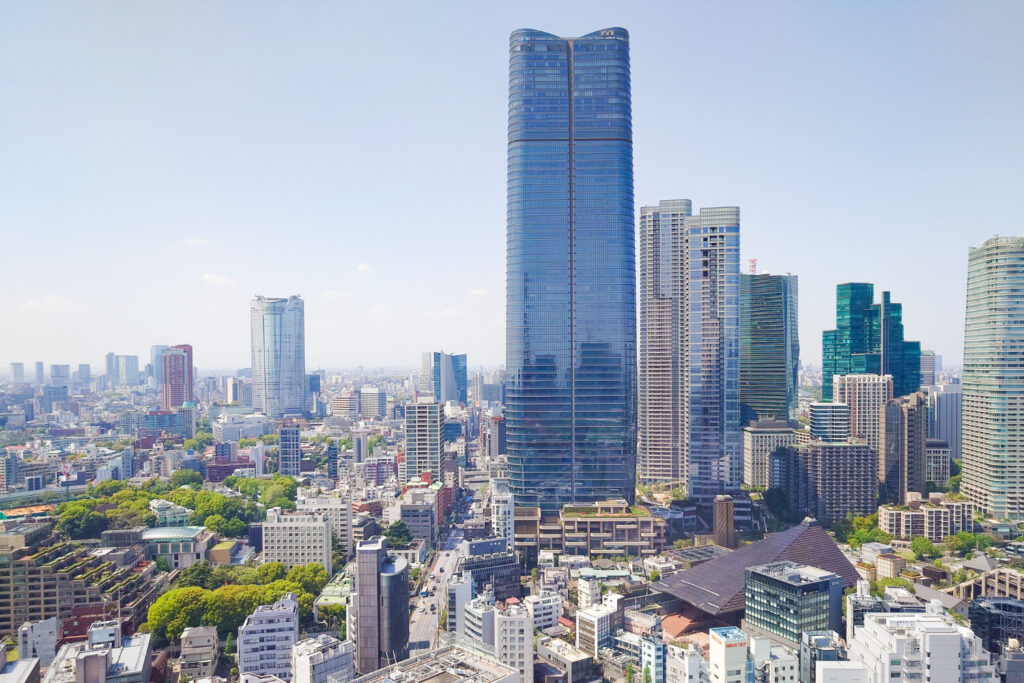
The city runs its own fashion week twice a year. Rakuten Fashion Week TOKYO is organised by the Japan Fashion Week Organization and held each spring and autumn, with Shibuya Hikarie as the main venue. The September 2025 edition scheduled 23 brands across 20 designer shows and three partnership shows, including five first-time participants and five overseas labels. The 2027 spring/summer season runs from 31 August to 5 September 2026. The Tokyo Metropolitan Government, Shibuya City and Minato City all support the event, which anchors it in the same central wards where most international buyers look for homes. Minato in particular has seen retail, architecture and residential development arrive together, most visibly at Azabudai Hills.
The thread back to the earlier sections of this article is the craft itself. Tokyo street style draws on the same textile knowledge, precise construction and willingness to rework a garment’s shape that the V&A traced through four centuries of kimono. What differs is the pace, not the lineage.
How is Japan’s clothing industry adapting to global sustainability expectations, and what does this mean for shoppers in Tokyo?
Japan is working to a national resource-circulation roadmap aimed at 2040, with a 2030 target of cutting household clothing waste by 25% against FY2020 levels and expanding fibre-to-fibre recycling. Tighter EU rules on textile sustainability and disclosure are part of the reason.
METI set up its Resource Circulation System Study Group in January 2023 and published its report that September, covering four stages: collection, sorting and fibre regeneration, design and manufacturing, and sales. The Textile Industry Subcommittee then produced a formal roadmap in June 2024, and the Ministry of the Environment followed with an action plan in March 2026. The numbers explain the urgency. About 42% of clothing that households let go is now reused or recycled, but fibre-to-fibre recycling, which turns old textiles directly back into new fibre, remains under 1%. Around 460,000 tonnes of clothing is still incinerated or landfilled each year in Japan, roughly 130 lorry loads a day.
External pressure matters too. The EU’s Ecodesign for Sustainable Products Regulation was adopted on 13 June 2024 and came into force that July. Its first concrete measure landed on 19 July 2026, when large companies across the EU were banned from destroying unsold clothing, accessories and footwear. Medium-sized companies follow in 2030. The European Environment Agency estimates that between 264,000 and 594,000 tonnes of textiles are destroyed in Europe each year before anyone wears them. Japanese brands selling into Europe have to work to those rules, and the same thinking is feeding back into domestic practice.
Tokyo shoppers are already moving, and second-hand is now a style choice as much as a budget one. The Ministry of the Environment’s most recent survey found around 60% of people in Japan recognise the term sustainable fashion and about 40% are interested or acting on it. Roughly four in ten say they buy or would buy second-hand clothing, and 18% of the clothes households let go are sold on as second-hand. Whether that changes what people buy at the luxury end is a separate question, but the direction is clear enough.
Frequently Asked Questions
What is the difference between a kimono and a yukata?
A kimono is a formal garment typically made from silk, worn with a structured obi sash and often reserved for ceremonial or formal occasions, while a yukata is an informal, unlined cotton garment traditionally worn in summer or at festivals and hot spring resorts. The obi, the sash used to secure a kimono, is itself a specialised textile craft, often woven separately from the garment and considered a significant artisan product in its own right.
Can men wear shorts to the office in Japan now?
At Tokyo metropolitan government offices, yes. Since 3 April 2026 the Tokyo Cool Biz programme has allowed staff to work in T-shirts and shorts, with Governor Yuriko Koike citing a severe electricity supply outlook. The guidance covers metropolitan offices only. It is not national law and does not bind private employers, most of whom set their own rules. Finance, legal and client-facing roles in Tokyo generally remain formal, while technology and creative firms are far more relaxed. Read the industry first, then the individual office.
Why is Tokyo considered a major global fashion capital?
Tokyo sits on the international fashion week calendar alongside Paris, Milan, London and New York. Rakuten Fashion Week TOKYO runs twice a year, organised by the Japan Fashion Week Organization, which was founded in 2005 and reached its twentieth anniversary in 2026. The city also combines flagship luxury retail architecture in Omotesando and Aoyama with grassroots street style in Harajuku, often within a short walk. That mix of heritage textile skill and constant experimentation is what draws international attention.
Where can I find bespoke or artisan kimono makers in Tokyo?
Tokyo has its own designated textile crafts, which is the best place to start. The metropolitan government recognises 42 traditional crafts, 22 of them designated nationally by the Minister of Economy, Trade and Industry. Seven are textile or dyeing crafts: Tokyo some-komon, Tokyo tegaki yuzen, Honba Kihachijo, Murayama Oshima tsumugi, Tama-ori, Tokyo muji-zome and Tokyo honzome chusen. Tokyo some-komon and tegaki yuzen are still produced in Shinjuku and Nerima, and the Tokyo Dyers’ Cooperative in Nishi-Waseda holds a permanent display. The metropolitan government’s traditional crafts directory lists registered artisans by craft.
How has traditional Japanese clothing influenced global luxury fashion brands?
Japanese textile thinking, including fabric-first construction, draping instead of fitted tailoring, and innovation in pleating, has shaped work by Issey Miyake, Yohji Yamamoto and Rei Kawakubo. The V&A’s Kimono: Kyoto to Catwalk exhibition traced the same influence through Yves Saint Laurent, John Galliano and Alexander McQueen. Curator Anna Jackson argued the effect shows up in construction and silhouette rather than direct copying, which is why it reads as design philosophy rather than costume borrowing.
Is Japan’s apparel industry mostly domestic or imported?
Imported. METI puts the import penetration rate for clothing sold in Japan at 98.5% by volume in 2022, up from about 20% in 1990. Japan’s remaining textile strength sits in fabric, yarn, non-wovens and carbon fibre rather than finished garments, which is why heritage Japanese textile production is more visible in speciality fabric exports than in mass-market clothing.
Is Harajuku street fashion still a thing?
Not in the form most people picture. The named subcultures that defined Harajuku in the 1990s and 2000s have largely dispersed, and FRUiTS magazine, which documented them, closed in 2017. Takeshita-dori is now mainly tourist retail. The independent scene continues in the Ura-Harajuku back streets and along Cat Street, and second-hand clothing has replaced subculture as the organising idea for young Tokyo style.
What Next?
The same instinct runs through Japanese clothing and Japanese houses. Choose the material first, work the proportions around it, and put the detail where you only notice it close up. Omotesando and Aoyama are read as fashion districts, but they are also a working record of contemporary Japanese architecture, and the residential streets behind them follow the same logic.
Housing Japan has specialised in central Tokyo luxury residential property since 2000. Our listings include architect-designed houses and low-rise residences across Minato, Shibuya and the surrounding wards, alongside apartments in the towers that define the skyline. We buy, sell, let and manage, and our bilingual team works with overseas buyers through each stage, from first viewing to registration.
If design is what you are looking for in a Tokyo home, browse our current houses for sale or contact us for a private consultation.
Sources:
Ministry of Economy, Trade and Industry — 繊維産業 (Textile Industry)
Ministry of the Environment — サステナブルファッション (Sustainable Fashion)
Tokyo Metropolitan Government, Bureau of Environment — 東京クールビズ (Tokyo Cool Biz)
Tokyo Metropolitan Government, Bureau of Industrial and Labour Affairs — 東京の伝統工芸品 (Tokyo Traditional Crafts)
European Commission — Ban on destruction of unsold clothes and shoes enters into application (17 July 2026)