The Shinjuku Grand Terminal redevelopment is rebuilding the area around the world’s busiest station in stages to FY2046. A 260-metre West Exit tower is due in FY2029, and the east–west deck and parts of the station plazas by FY2035. The new offices, shops and hotels are expected to support property demand in Shinjuku and along its rail lines. It adds large volumes of new office, retail and hotel space, improves pedestrian access, and strengthens Shinjuku as a business hub. This is expected to support demand for property in Shinjuku and along its rail lines.
Shinjuku Station handles around 2.7 million passengers a day, more than any other station in the world. Now developers are rebuilding the area around it. The Shinjuku Grand Terminal project pulls together several separate development plans that will change how people move through, work in, and experience this central part of Tokyo.
Shinjuku Grand Terminal: Key Facts
| Item | Detail |
|---|---|
| Official project name | Shinjuku Grand Terminal |
| Daily passengers | Daily passengers 2,704,703 in 2022 (Guinness World Record, world’s busiest) |
| Policy origin | Tokyo Metropolitan Government & Shinjuku City, 2018–2019 |
| Operators | 5 rail companies, 6 stations, 53 platforms |
| West Exit tower | ~260 m, 48 storeys above ground and 5 below, ~251,000 m²; completion FY2029 |
| West Exit developers | Odakyu, Tokyo Metro, Tokyu Land |
| Southwest (South Area) | ~225 m, 37 storeys; completion date to be confirmed (Keio / JR East) |
| Southwest (North Area) | ~110 m, 19 storeys; 2040s |
| West Exit plaza | East–west deck and station plazas | Partial completion FY2035 |
| East–west elevated deck | Land readjustment project (Tokyo Metropolitan Government) | ~10.1 ha, ~¥72.8 billion; completion FY2046 |
| Keio Line station works | Platforms extended towards Marunouchi Line; completion FY2031 |
What Role Does Shinjuku Play in Tokyo?
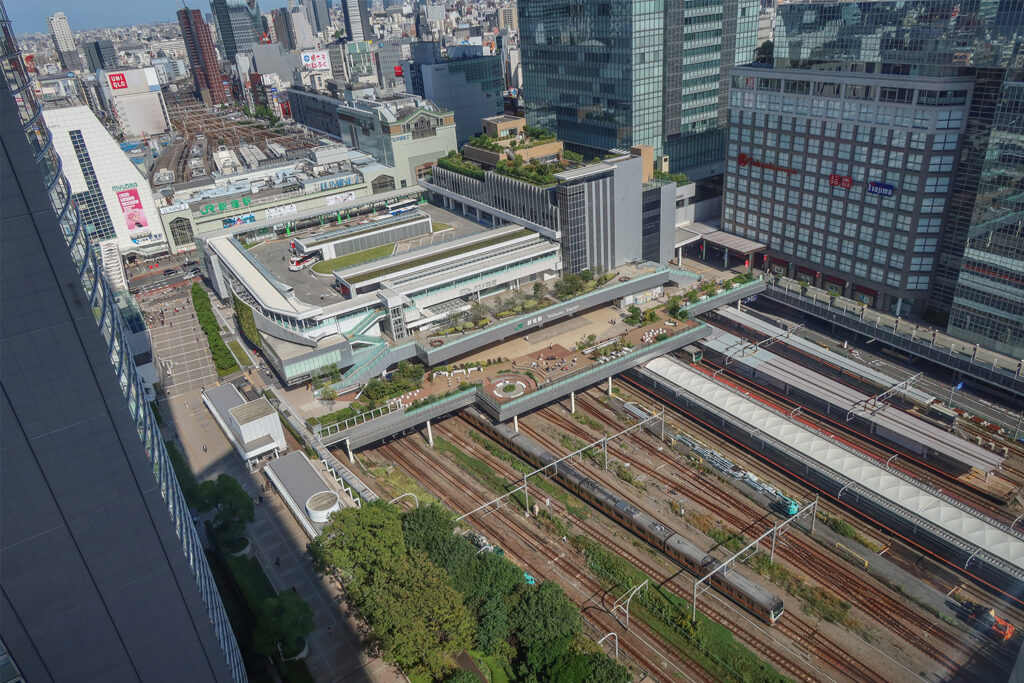
Shinjuku Station holds the Guinness World Record for the highest passenger throughput of any train station worldwide. The complex consists of six separate stations operated by five rail companies: JR East, Odakyu Electric Railway, Keio Corporation, Tokyo Metro, and Toei Subway. This creates a web of 53 platforms serving commuters from Tokyo’s northern, southern, and western suburbs.
Beyond transportation, Shinjuku is a major business district. The area houses the Tokyo Metropolitan Government Building and numerous corporate offices. The entertainment district of Kabukicho draws visitors day and night, while the skyscrapers of Nishi-Shinjuku create an impressive skyline.
The Shinjuku Grand Terminal Vision
The redevelopment centres on reorganising Shinjuku Station into the “Shinjuku Grand Terminal.” The Tokyo Metropolitan Government and Shinjuku City published development policies in 2018 and 2019 with three main goals: create better pedestrian networks with multiple levels of walkways, bring in business and commercial functions that strengthen Tokyo’s international position, and improve disaster response while reducing environmental impact.
Shinjuku Station’s Southwest Exit Area Development
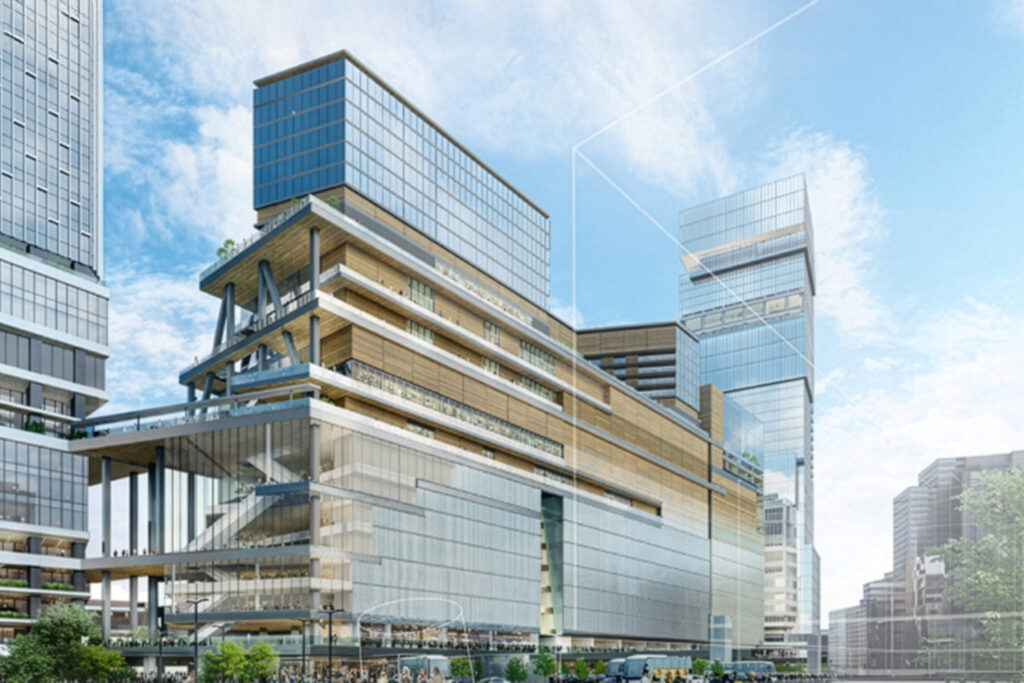
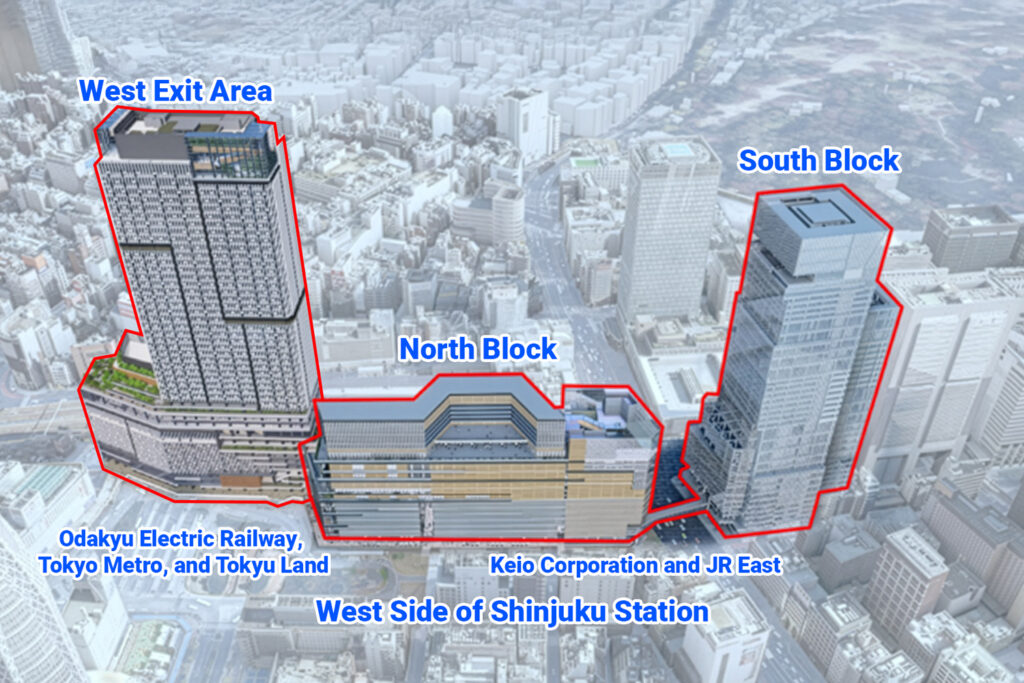
One of the major projects that is taking shape at the Southwest exit, is led by Keio Corporation and JR East. This plan consists of two separate building projects that will be built in phases.
The South Area project will create a 37-storey tower approximately 225 metres tall with about 150,000 square metres of floor space. This building will contain offices, shops, and a luxury hotel operated under a Keio Group brand. Keio Corporation revised the schedule in March 2025: construction runs from FY2023, with an end date still to be confirmed, and Keio had not announced a new date as of November 2026.
The North Area development will follow after the South Area is complete. This will involve reconstructing the current Keio Department Store and Lumine 1 buildings into a 19-storey complex approximately 110 metres tall, with completion expected in the 2040s. Until then, Keio Department Store’s Shinjuku store continues to trade, and it held events for its 62nd anniversary in October 2026.
What Is Changing at Keio’s Shinjuku Station?
Keio is extending its Shinjuku Station platforms on the second basement level northwards, towards the Tokyo Metro Marunouchi Line, and adding a new ticket gate at the north end to shorten transfers between the two lines. Keio’s FY2026 railway investment plan, published in May 2026, targets completion of these station works in FY2031.
Shinjuku Station’s West Exit Area Development
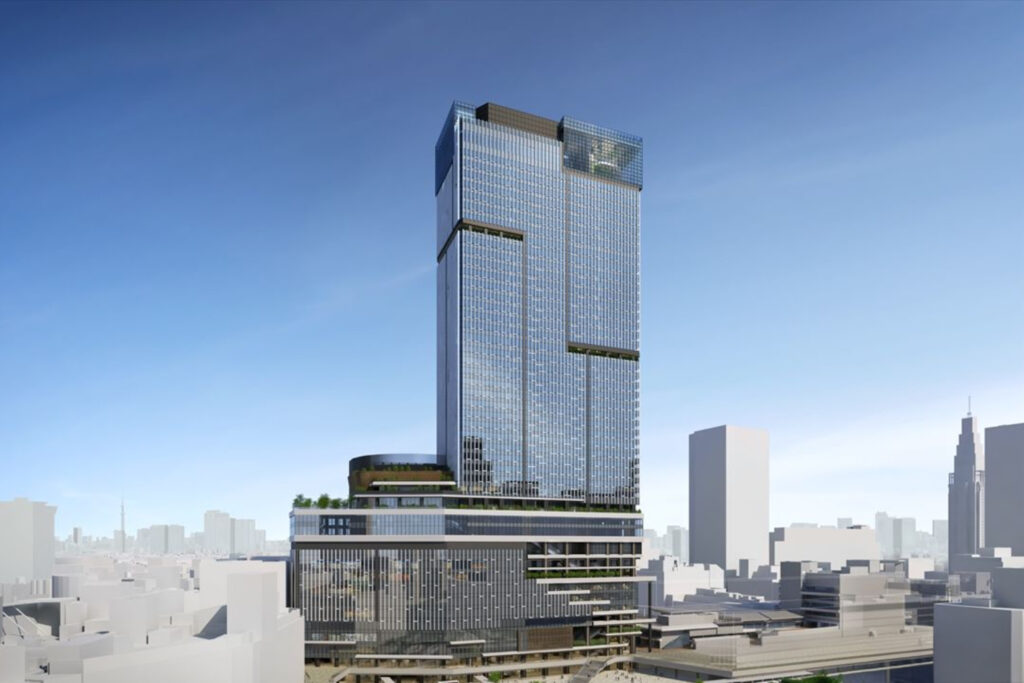
Odakyu Electric Railway, Tokyo Metro and Tokyu Land Corporation are building the West Exit project, the first of the station-building redevelopments to start construction. New construction began in March 2024, following demolition work that started in October 2022.
The centrepiece is a 48-storey tower in Nishi-Shinjuku reaching approximately 260 metres in height, taller than the 243-metre Tokyo Metropolitan Government Building. The tower will contain around 251,000 square metres of floor space, and a separate eight-storey Odakyu building over the Odakyu Line station adds about 28,000 square metres, with both due for completion in FY2029. Shops and restaurants will fill the tower from the second basement to the 10th floor, with a business innovation zone on floors 12 and 13. Office space will occupy floors 14 through 46, while floors 47 and 48 will offer views across Tokyo.
The building connects directly to Tokyo Metro’s Marunouchi Line through underground passages. The design by Nippon Sekkei and Taisei Corporation includes earthquake-resistant features and disaster prevention systems. In December 2023, the office portions achieved ZEB Ready certification. ZEB stands for “Zero Energy Building,” and ZEB Ready means the building is designed to cut energy use by 50% or more compared to standard buildings, a growing standard in new Tokyo office developments.
Where Can You See the West Exit Plans in Person?
Odakyu Electric Railway opened Shinjuku Future Gallery on 10 June 2026, a free information centre about a minute’s walk from the West Exit at Nishi-Shinjuku 1-5-11. Visitors can take a 15-minute VR tour of construction areas closed to the public and see a 1:350 scale model of the station area, including the 260-metre tower. It opens 10:00–20:00 and closes on Sundays and over the New Year holiday.
How Will Movement Through Shinjuku Station Improve?
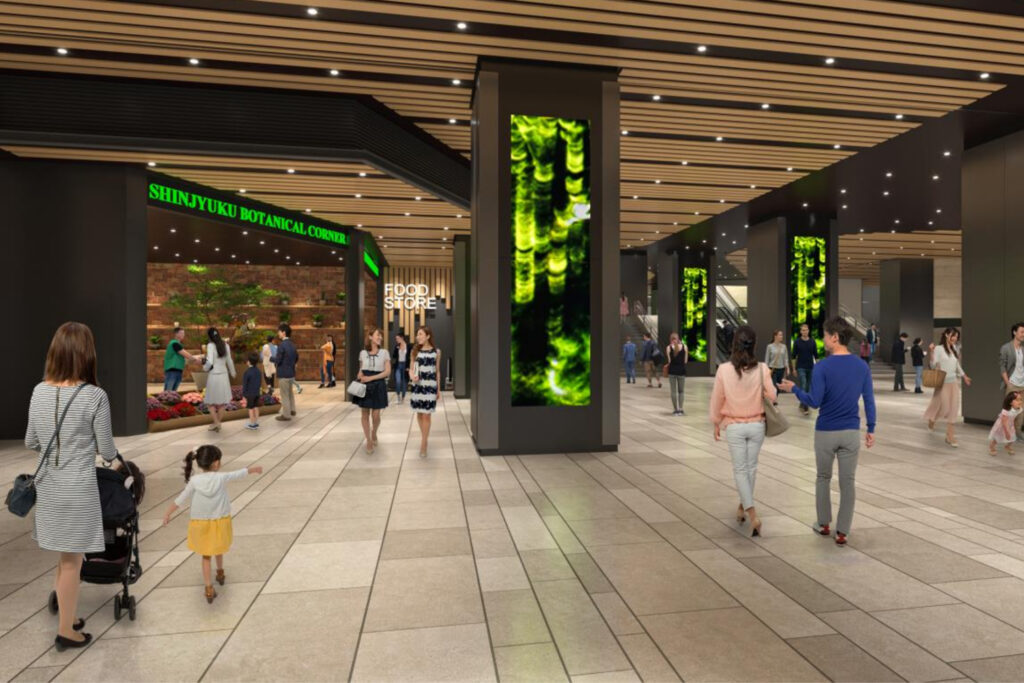
Making it easier to move through Shinjuku Station is key to the redevelopment. In 2020, a new east-west underground passageway opened beneath the JR tracks. This passage measures 25 metres wide and 100 metres long. Part of it features “The Color Bath,” an LED installation created by Moment Factory that shows changing colours and patterns. More underground pathways will be opened as part of this ongoing project.
Plans call for building an elevated deck that will also connect the east and west sides above the tracks. The Tokyo Metropolitan Government is delivering the deck and new station plazas through a land readjustment project covering about 10.1 hectares, with a total project cost of about ¥72.8 billion. Its schedule targets partial completion of the east–west deck and the east and west station plazas in FY2035, and completion of the whole project in FY2046.
The West Exit plaza is being redesigned from a car-centred roundabout to a people-centred plaza with public areas called “Shinjuku Central Plaza” and “Shinjuku Terrace.” The spiral parking lot entrance was relocated away from the station in January 2025, and since 27 September 2025 vehicles can no longer drive north–south through the plaza, so people can now walk across it east to west at ground level without crossing a road. In September 2026, the Tokyo Metropolitan Government published a design policy for the finished plaza, built around greenery, natural light and space for people to gather.
Shinjuku Station’s Redevelopment Impact on Tokyo’s Real Estate Market
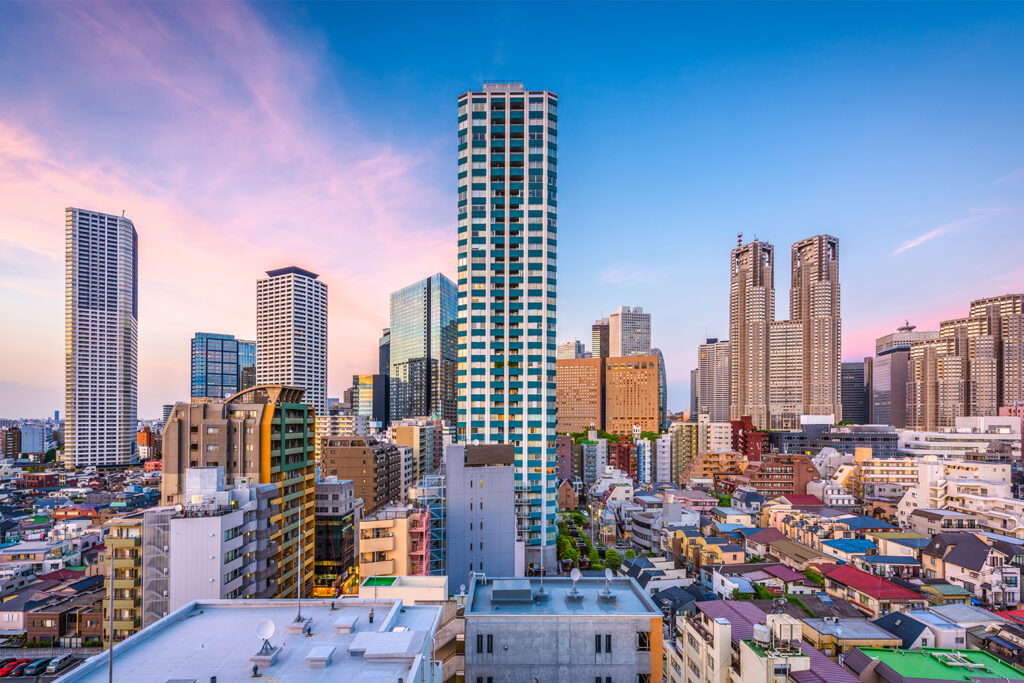
The Shinjuku redevelopment is expected to affect real estate values across a wide area. The introduction of new office space will increase the supply of modern workspaces in central Tokyo. The West Exit tower alone will add substantial office capacity, while the Southwest Exit buildings will contribute more.
Commercial real estate in the area will see changes as well. The large retail spaces will create new shopping and dining options. This could shift foot traffic patterns around Shinjuku Station and affect existing retail properties.
The hotel market in Shinjuku will see new supply with the addition of luxury hotels in both the West Exit and Southwest Exit projects. These hotels target both business travellers and tourists, particularly international visitors.
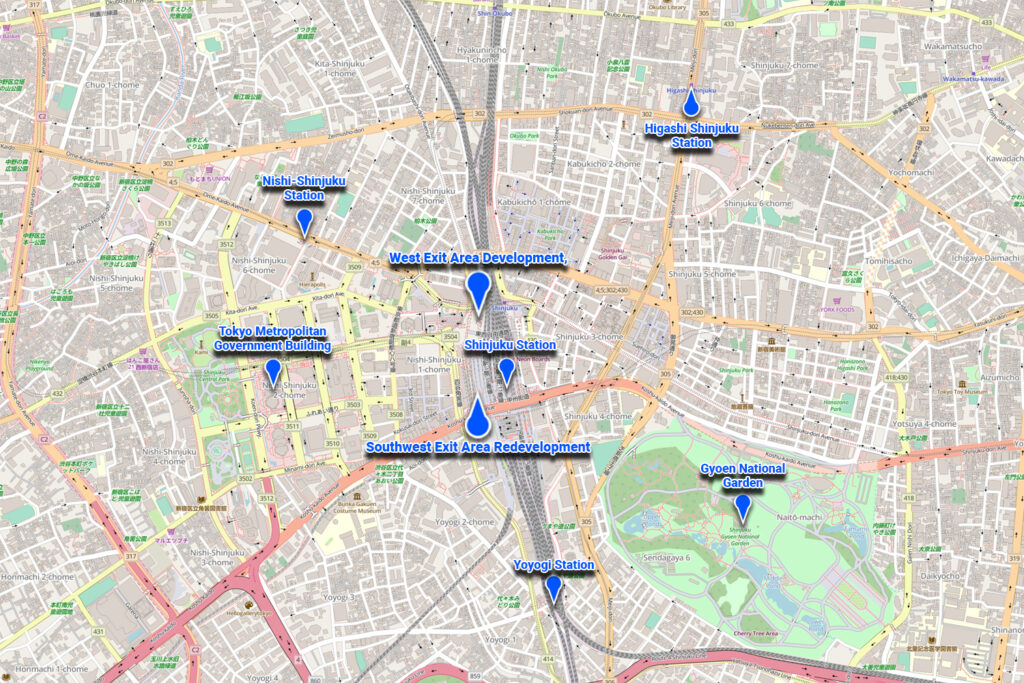
Residential real estate and property near Shinjuku Station could feel indirect effects. As Shinjuku strengthens its role as an employment centre, demand for housing along the railway lines connecting to Shinjuku Station may increase. Areas in Tokyo’s western suburbs with direct train service to Shinjuku could become more attractive to people working in the redeveloped buildings.
Shinjuku real estate both west and east of the station could see increased demand because of the redevelopment. This along with the already strong demand across Tokyo and Shinjuku’s strategic location along with good connections could influence property values in the surrounding area over time.
Who Benefits from the Shinjuku Redevelopment?
Office workers will find improved amenities and easier commutes. The new buildings provide modern workspace with better access to shops and restaurants. The enhanced pedestrian networks make it simpler to move between different parts of the station.
Tourists and visitors will benefit from easier navigation. The simplified station layout, better signage, and more intuitive connections between lines will make Shinjuku less intimidating for first-time visitors.
Local people see improvements to their neighbourhood. The public plazas and green spaces will create places to gather and relax. Better disaster preparedness, including facilities for people who can’t return home during emergencies, makes the area safer.
Connections to Other Tokyo Developments
The Shinjuku redevelopment is part of a broader wave of Tokyo urban renewal and large-scale redevelopment projects reshaping the city. Shibuya Station has undergone extensive reconstruction in recent years. Takanawa Gateway City, the large-scale development around Takanawa Gateway Station in Minato-ku, between Shinagawa and Tamachi, held its grand opening on 28 March 2026, bringing office, retail, and residential space to the area.
These projects share common goals: better pedestrian flow, modern infrastructure, improved disaster preparedness, and enhanced international competitiveness. Tokyo is preparing for a future with an ageing population, changing work patterns, and the need to attract international business and tourism.
Shinjuku Station Redevelopment Timeline and What to Expect
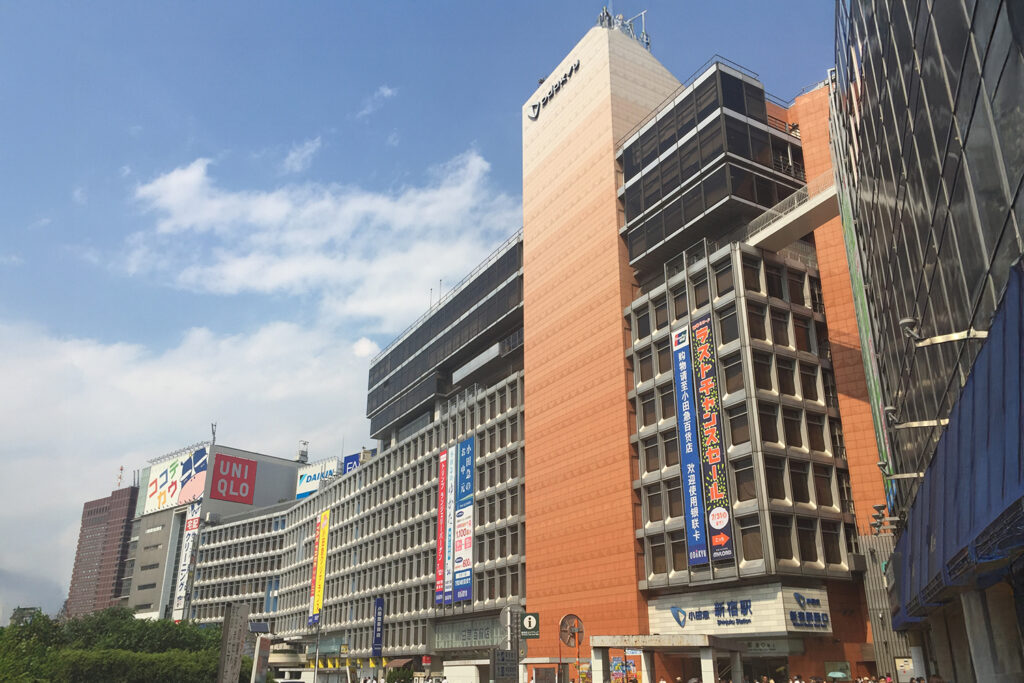
The Shinjuku redevelopment will unfold in stages through the mid-2040s. Construction of the West Exit tower is now well underway, with the tower crane and high-rise framework already visible in the impressive Shinjuku skyline. The building is scheduled to open by the end of fiscal year 2029.
From 2030, the West Exit tower will be open while work continues around it. Keio’s station improvement works are due to finish in FY2031, and the east–west deck and parts of the east and west station plazas are scheduled for completion in FY2035.
After the Southwest Exit South Area building opens, planning and construction begin on the North Area building, involving the eventual closure of Keio Department Store and Lumine 1. The North Area building is expected in the 2040s, and the Tokyo Metropolitan Government’s land readjustment project, which delivers the deck and station plazas, is scheduled to finish in FY2046.
Shinjuku Redevelopment Timeline at a Glance
| Date | Milestone |
|---|---|
| March 2018 | Tokyo Metropolitan Government and Shinjuku City adopt the Shinjuku Grand Terminal policy |
| 2020 | East–west underground passage opens beneath the JR tracks |
| March 2022 | Tokyo Metropolitan Government starts work on the station plazas |
| October 2022 | Demolition of the Odakyu Department Store main building begins |
| March 2024 | West Exit tower construction begins |
| September 2025 | West Exit plaza closed to north–south traffic; pedestrians cross east–west at ground level |
| June 2026 | Shinjuku Future Gallery opens |
| September 2026 | West Exit plaza design policy published |
| FY2029 | West Exit tower and Odakyu building complete |
| FY2031 | Keio Line station works complete |
| FY2035 | East–west deck and parts of the station plazas complete |
| 2040s | Southwest North Area building (Keio Department Store site) complete |
| FY2046 | Tokyo Metropolitan Government land readjustment project complete |
What This Means for Tokyo Property Buyers and Investors
For those considering property purchases in Tokyo, the Shinjuku redevelopment offers several angles to consider. Properties with good access to Shinjuku Station may benefit as the area’s amenities and transport improve. This includes buildings in Shinjuku itself and residential properties along the rail lines that connect to Shinjuku.
Because the redevelopment has been publicly known since 2018–2019, much of its anticipated effect may already be reflected in the current market. The main construction milestones run through to the 2040s, so the area’s transformation will unfold gradually rather than all at once.
The type of property also affects how the redevelopment creates opportunity. Residential properties benefit from improved access and amenities. Office buildings in the area may need to modernise to compete with the new space coming online.
The broader trend towards urban renewal in Tokyo suggests that areas with good transport links and potential for redevelopment will remain attractive. Shinjuku is one of several districts undergoing transformation.
Conclusion
The Shinjuku Station redevelopment represents one of Tokyo’s most significant urban renewal projects. By rebuilding the area around the world’s busiest train station, the project aims to create a modern terminal hub that serves Tokyo for decades to come.
The work involves multiple buildings totalling hundreds of thousands of square metres of space, improved pedestrian networks both above and below ground, and redesigned public areas. Three main development projects will reshape the skyline and change how people move through the area.
For the real estate market, the redevelopment brings new supply of office and commercial space in a prime location. It strengthens Shinjuku’s position as a business and commercial centre, which reinforces its standing as a central business district.
As construction continues through the 2020s and into the 2030s, Shinjuku will gradually transform. The first major milestone comes around 2030 when the West Exit tower opens. The full vision of Shinjuku Grand Terminal will take until the 2040s to complete, but the benefits will start appearing much sooner.
Frequently Asked Questions
What is the Shinjuku Grand Terminal project?
Shinjuku Grand Terminal is the official name for the reorganisation of Shinjuku Station and the area around it. Led by the Tokyo Metropolitan Government and Shinjuku City from 2018-2019, it combines several rail and developer projects to improve pedestrian flow, add office, retail and hotel space, and upgrade disaster preparedness.
How big is Shinjuku Station?
Shinjuku Station is a cluster of stations run by five operators: JR East, Odakyu, Keio, Tokyo Metro and Toei Subway. Guinness World Records lists it as the world’s busiest railway station, with an average of 2,704,703 passengers a day in 2022. The Tokyo Metropolitan Government’s redevelopment zone directly around the station covers about 10.1 hectares.
When will the Shinjuku Station redevelopment be finished?
The redevelopment runs in stages to FY2046. The West Exit tower is scheduled for completion in FY2029, Keio’s station works in FY2031, and the east–west deck and parts of the station plazas in FY2035. The Southwest Exit North Area building is expected in the 2040s, and the Tokyo Metropolitan Government’s land readjustment project finishes in FY2046.
Is Keio Department Store in Shinjuku closing?
Keio Department Store’s Shinjuku store is still open as of November 2026 and held events for its 62nd anniversary in October 2026. Its site forms the North Area of the Southwest Exit redevelopment, which Keio plans to start only after the South Area tower is complete, and Keio has not announced a closing date.
How tall is the new Shinjuku West Exit tower?
The West Exit tower in Nishi-Shinjuku will rise about 260 metres across 48 storeys, making it taller than the roughly 243-metre Tokyo Metropolitan Government Building. It holds around 251,000 square metres of floor space, with shops from the second basement to the 10th floor, offices on floors 14 to 46, and viewing space on floors 47 and 48.
How could the Shinjuku redevelopment affect property prices?
New office, retail and hotel space and better station access are expected to strengthen Shinjuku’s role as a business hub. This may support demand for property in Shinjuku and along the rail lines that feed it. Some of this may already be reflected in current prices, as the plans have been public since 2018.
Which companies are behind the Shinjuku Station redevelopment?
Several rail operators and developers are involved. The West Exit tower is led by Odakyu Electric Railway, Tokyo Metro and Tokyu Land Corporation. The Southwest Exit buildings are led by Keio Corporation and JR East. The wider Grand Terminal plan is coordinated by the Tokyo Metropolitan Government and Shinjuku City.
Looking for Property Near Shinjuku Station?
Housing Japan has helped people buy, sell, rent and manage property in central Tokyo since 2000, with a team that works in English, Japanese, Chinease, Spanish and Korean. We can help you find homes in Shinjuku and neighbouring central wards such as Shibuya and Minato, and before any purchase contract is signed, one of our licensed real estate agents (takken-shi) takes you through the jūyō jikō setsumei (重要事項説明), the legally required explanation of key property details.
Housing Japan K.K. is a licensed real estate brokerage: Tokyo Governor Licence (3) No. 98912 (東京都知事(3)第98912号).
About the authors

Maximilian Jacob is Research and Content Lead at Housing Japan K.K., a licensed real estate brokerage in Tokyo (Tokyo Governor (3) No. 98912) that has advised international buyers, sellers and tenants in central Tokyo since 2000. He researches the Tokyo prime residential market using primary Japanese sources, including Ministry of Land, Infrastructure, Transport and Tourism (MLIT) transaction and land price data, National Tax Agency (NTA) roadside land valuations, Bank of Japan policy statements and e-Stat national statistics. His work focuses on foreign buyer procedure, property taxation, non-resident financing, and the Minato, Shibuya and Chiyoda luxury markets.

Yudai Yamaguchi is Head of Sales and Head of Property Management at Housing Japan K.K. He has more than a decade of real estate experience across Japan and the United States, spanning development, sales operations, investment, acquisitions, leasing, construction and property management. He previously held management roles at the Open House Group in both countries, including General Manager of its Atlanta office, where he oversaw local real estate operations. He holds a bachelor’s degree in Liberal Arts from Waseda University and studied International Relations at the University of Washington.
Press Release Sources: Odakyu, JR East (JP Only)