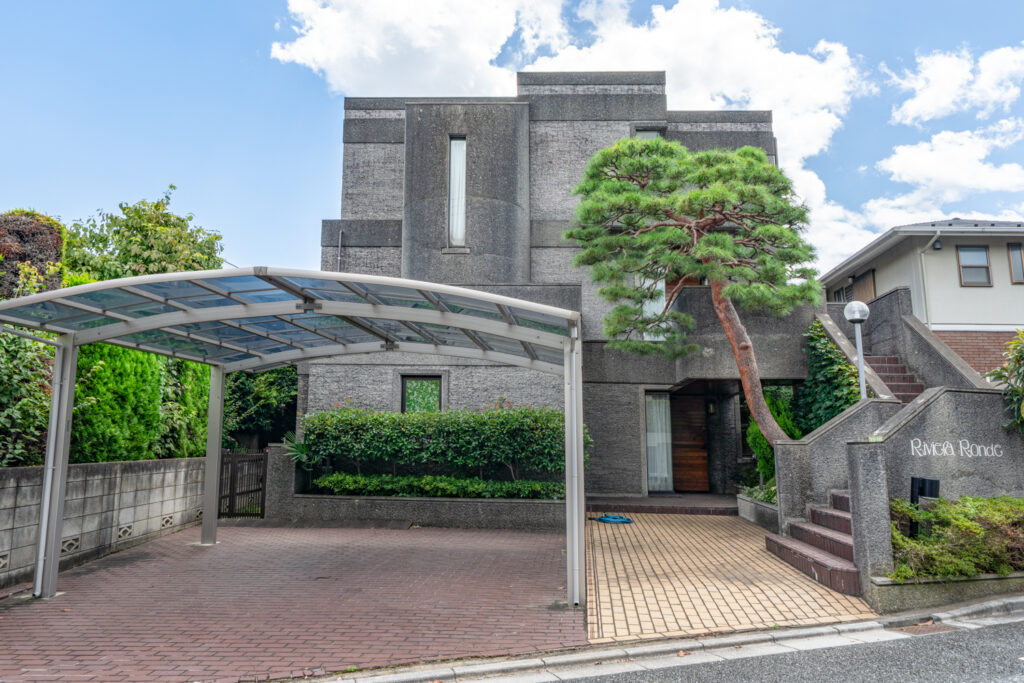
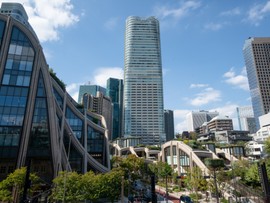
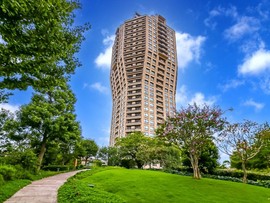
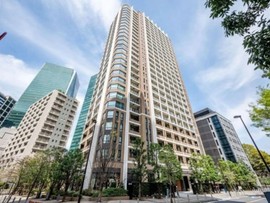
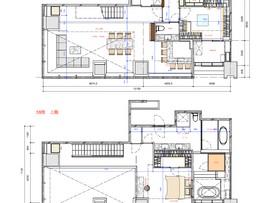
In early 2026, the average existing apartment in the Greater Tokyo Area sold for around ¥54.58 million (about ¥856,100 per square meter), according to REINS Market Watch data. New apartments in central Tokyo often exceed ¥120 million. A penthouse in a prime location, Azabudai Hills, sold for a record price of ¥20 billion. Rental costs typically range from a low of ¥85,000 for a studio to over ¥500,000 for a family unit in central wards.

Tokyo Apartment Prices in 2026: A Market Overview
The Tokyo apartment market has continued its long upward run into 2026. Greater Tokyo existing condominium prices have now risen for 70 consecutive months, and the Ministry of Land, Infrastructure, Transport and Tourism (MLIT) reported its 2026 Land Price Survey on March 17, 2026, showing the strongest annual increase since 1992.
For 2026, MLIT data shows that residential land in Tokyo’s 23 wards rose by an average of 9.0% year on year. The five central wards, Chiyoda, Chuo, Minato, Shinjuku, and Shibuya, averaged 13.0%, while the remaining 18 wards averaged 8.5%. This means central Tokyo is pulling away from outer areas in price growth, even though both are rising.
The most expensive residential land point in the country sits in Akasaka, Minato ward, priced at ¥7,110,000 per square meter in the 2026 MLIT survey. This marked the ninth consecutive year that Akasaka held the top position.
Apartment prices reflect both rising land values and higher construction costs. Demand from domestic buyers, returning expats, and international investors has stayed strong, while new supply remains tight.
How Much Does It Cost to Buy an Apartment in Tokyo?
The cost of buying an apartment in Tokyo depends mostly on three things: the ward, the size of the unit, and how new the building is. In 2026, an entry-level studio in an outer ward starts around ¥25 to ¥40 million, a typical two-bedroom in a central ward sits in the ¥80 to ¥150 million range, and luxury units in prime locations can reach the multi-billion-yen mark.
Average Apartment Prices Across Tokyo
The average price for an existing apartment in the Greater Tokyo Area reached ¥54.58 million in February 2026, up 9.5% year on year. The average price per square meter climbed to ¥856,100, marking 70 straight months of rising prices.
In Tokyo’s 23 wards specifically, prices are noticeably higher. Existing apartments in the 23 wards average around ¥1.4 to ¥1.5 million per square meter, while new apartments in central locations regularly exceed ¥2 million per square meter.
Typical Apartment Price Ranges by Type (2026)
| Apartment Type | Size | Typical Price Range (Tokyo 23 Wards) |
|---|---|---|
| Studio (1R / 1K) | 18–25 m² | ¥25–45 million |
| One-bedroom (1LDK) | 30–50 m² | ¥45–90 million |
| Two-bedroom (2LDK) | 50–70 m² | ¥70–180 million |
| Three-bedroom (3LDK) | 70–100 m² | ¥120–400 million |
| Luxury / Penthouse | 100 m²+ | ¥300 million to ¥20 billion+ |
These ranges reflect existing condominium stock in central and well-connected outer wards. New-build prices typically run 25 to 40 percent higher than existing units of the same size, driven by rising labor and material costs.
The Gap Between Central and Outer Wards
Within Tokyo’s 23 wards, the price gap is striking. According to MLIT-derived market data, the average price per square meter in Minato, Chiyoda, and Chuo can reach ¥2.3 to ¥4.5 million, while outer wards like Edogawa, Katsushika, and Adachi average ¥0.7 to ¥1.1 million per square meter. This gives the most expensive ward roughly four times the price of the cheapest on a per-square-meter basis.
Why Are Tokyo Apartment Prices Still Rising in 2026?
Several factors keep Tokyo apartment prices on an upward path:
- Limited new supply. New condominium releases in the Greater Tokyo Area have fallen, with developers pulling back on starts because of higher construction costs. With less new product coming to market, buyers are pushed toward the existing market, lifting prices there too.
- Higher construction costs. Material and labor costs have risen sharply over the past three years. This pressure feeds directly into both new-build pricing and the replacement value of existing stock.
- Major redevelopment projects. Ongoing projects like Shibuya Station Redevelopment, Takanawa Gateway City, and the Tsukiji Redevelopment are creating new commercial and residential capacity that lifts surrounding values. The Shibuya Sakuragaoka area alone rose 29% in the 2026 MLIT survey thanks to redevelopment.
- Sustained foreign and domestic demand. Tokyo continues to draw both Japanese buyers moving from suburbs back into the city and international purchasers attracted by a weak yen and stable property rights.
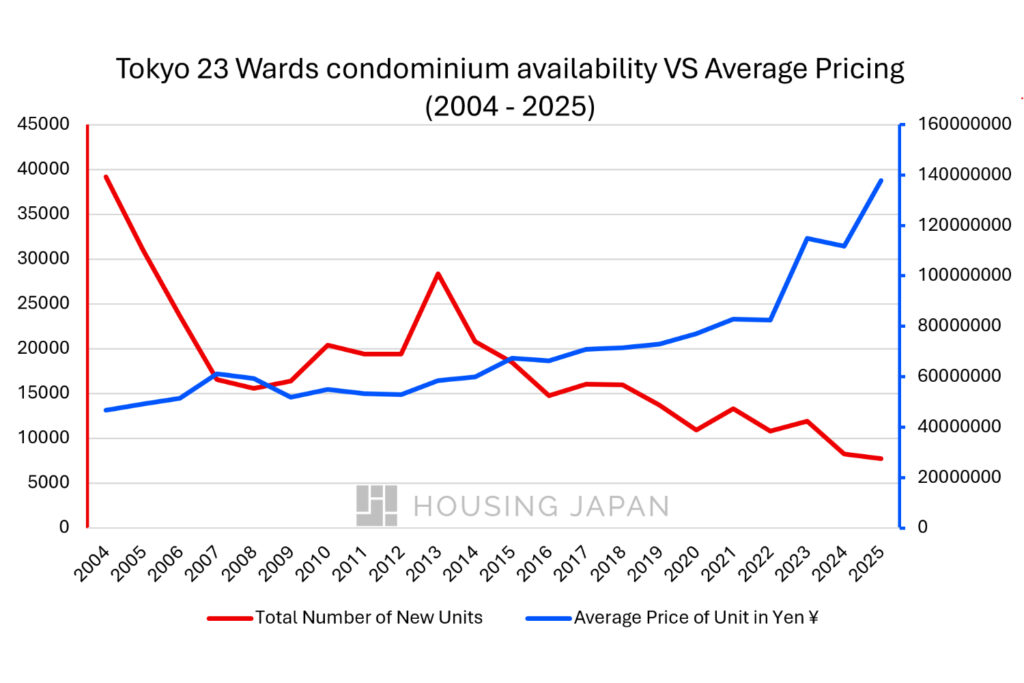
Source: Tokyo Condo Prices and Sales Keep Rising in 2026 (Updated) | Housing Japan
How Properties Near Stations Command Premium Prices
In Tokyo, walking distance to the nearest train station is one of the strongest single drivers of apartment value. A property within five minutes of a major station can be priced 10 to 30 percent higher than a comparable unit a 15-minute walk away.
Japanese real estate listings follow a national rule that defines walking time precisely: one minute equals 80 meters of road distance, with any partial minute rounded up. This standard is set under the Fair Competition Codes Concerning Representation of Real Estate, which means buyers and renters can compare listings on a like-for-like basis.
The pricing curve generally falls into three zones. Apartments under five minutes from a station are the most sought after and hold their value. The five-to-ten-minute range can be seen as a good compromise, close enough for convenience without the noise and congestion of being next to the station. Beyond 15 minutes, prices and rents drop noticeably.
For buyers thinking long-term, station proximity also helps with resale and rental demand. Tenants and buyers in Tokyo strongly prefer short walks, which means apartments near major stations on the Yamanote Line, the Tokyo Metro Hibiya Line, or the Toei Oedo Line tend to maintain their value better than equivalent units further out.
Central Tokyo Apartments: Why Prime Locations Demand a Premium
Central Tokyo refers to the five central wards: Chiyoda, Chuo, Minato, Shinjuku, and Shibuya. These wards saw an average residential land price increase of 13.0% in the 2026 MLIT survey, the strongest growth in the city.
Within these wards, the highest growth came from Konan in Minato (+22.2%), Hongo in Bunkyo (+20.8%), and Akasaka in Minato (+20.5%). These are all neighborhoods with strong condominium demand and limited buildable land.
Why the premium? Three reasons stand out:
The first is access. Central Tokyo apartments put residents within walking distance of major business districts, embassies, international schools, and luxury retail. A 10-minute train ride covers most of what a typical resident needs.
The second is brand value. Buildings in areas like Azabu, Hiroo, Aoyama, and Shirokane carry a recognized prestige that supports both purchase prices and rental rates. Brand-name developers such as Mitsui Fudosan Residential, Mitsubishi Estate Residence, and Mori Building have built reputations over decades, and their developments tend to hold value.
The third is scarcity. Land in central Tokyo is genuinely limited, and very little new supply enters the market each year. The combination of high demand and tight supply creates persistent upward pressure on prices.
Luxury Condos and Penthouses in Tokyo’s Prime Locations
Tokyo’s luxury apartment market has expanded sharply since 2023, driven by a wave of new ultra-premium developments and growing interest from both Japanese tech founders and overseas buyers. Luxury properties now typically range from ¥250 million to ¥1.5 billion, with the very top of the market reaching multi-billion yen prices.
Azabudai Hills and Aman Residences Tokyo
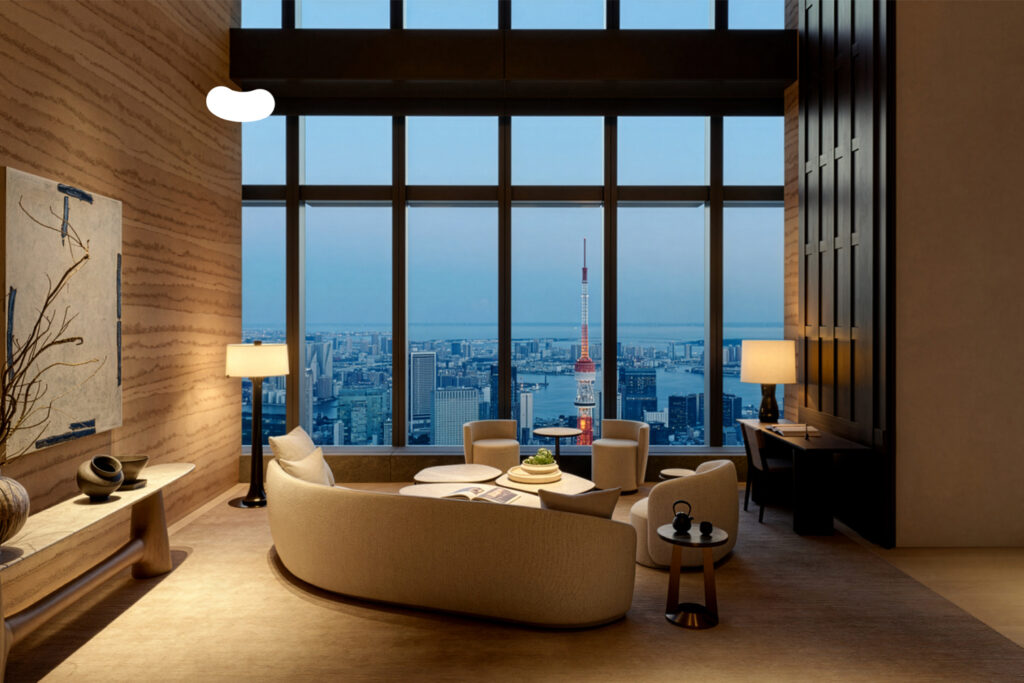

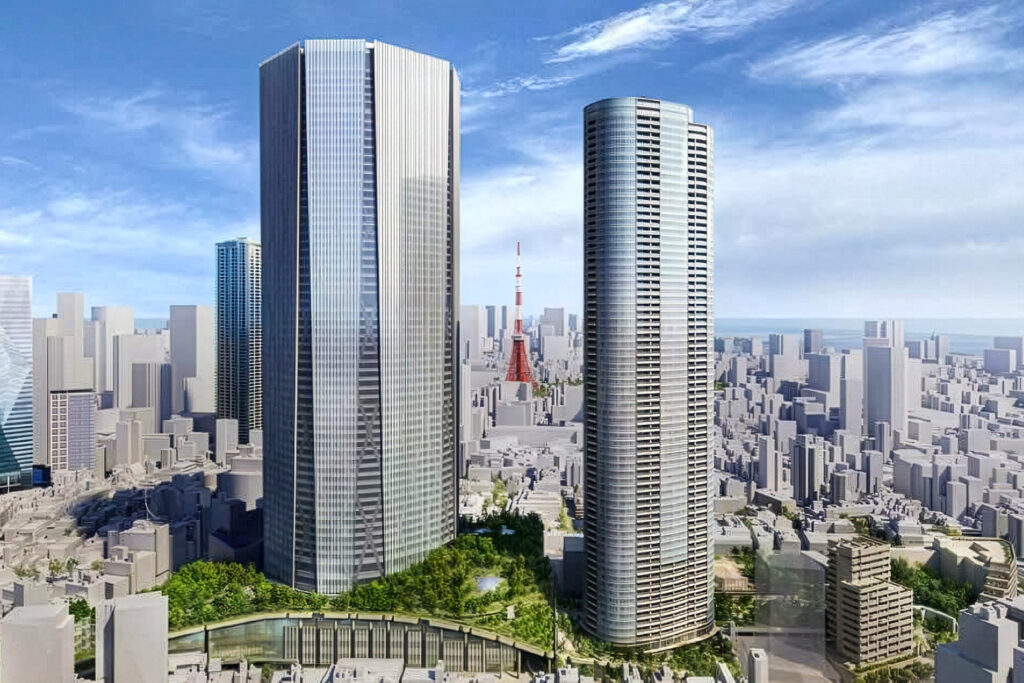
Azabudai Hills, completed in late 2023 by Mori Building, set a new benchmark for the Tokyo luxury market. The 330-meter Mori JP Tower at its center is currently Japan’s tallest building, and its top 11 floors house Aman Residences Tokyo, a collection of 91 branded residences.
A penthouse at Azabudai Hills reportedly sold for around ¥20 billion, the highest price ever recorded for a Japanese apartment. The unit spans roughly 1,500 square meters across the top floor and comes with hotel-grade services from the on-site Janu Tokyo and Aman.
Contact Housing Japan for Tokyo exclusive off market listings!
Toranomon Hills Residential Tower
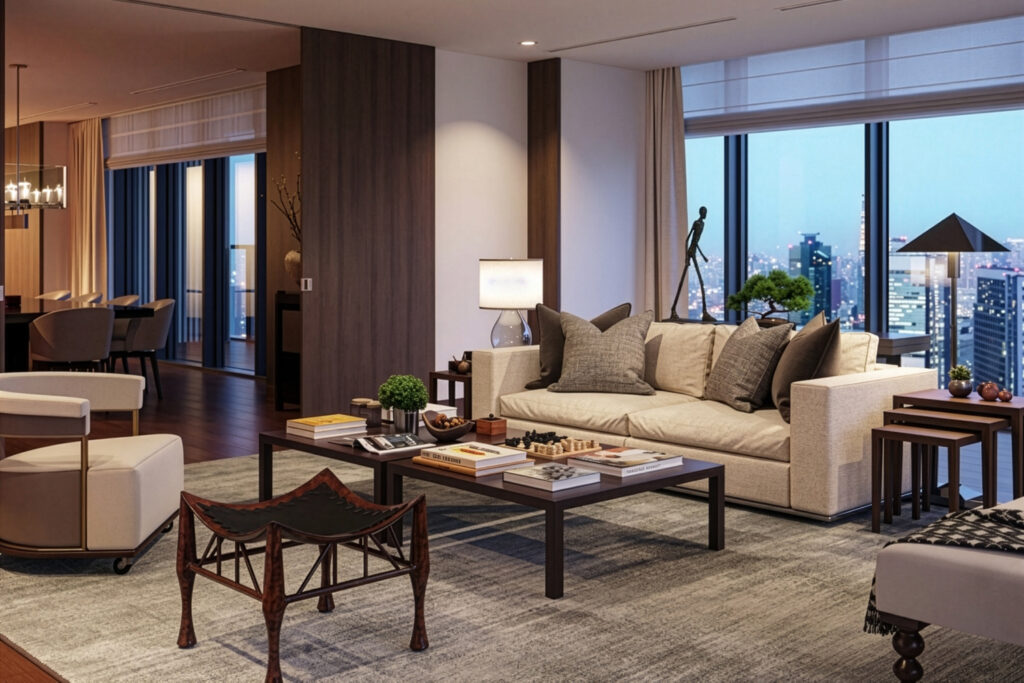
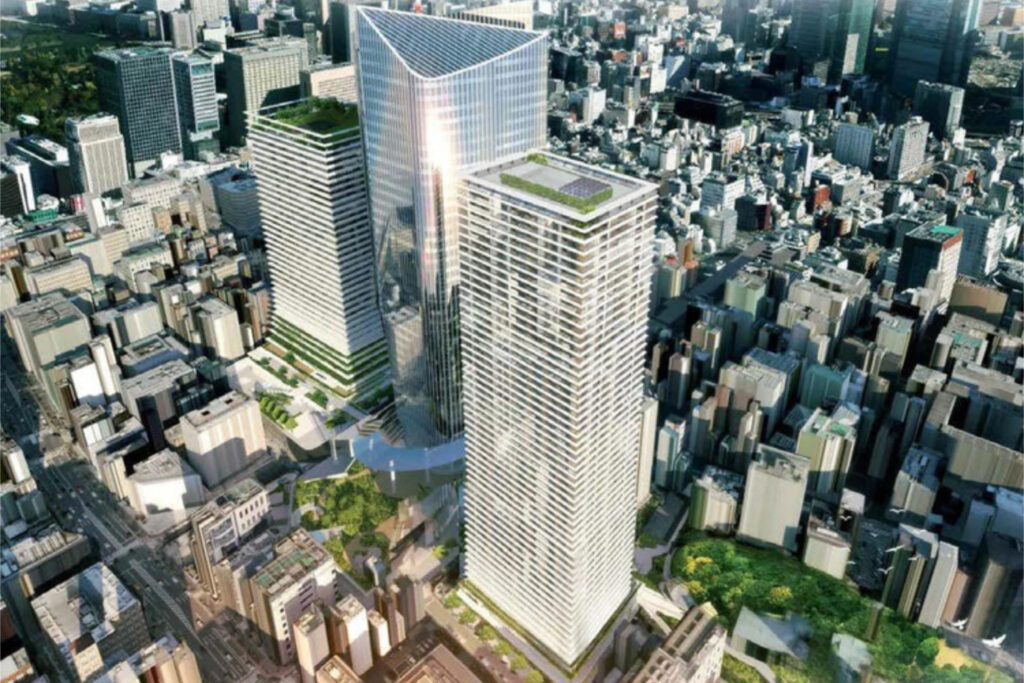
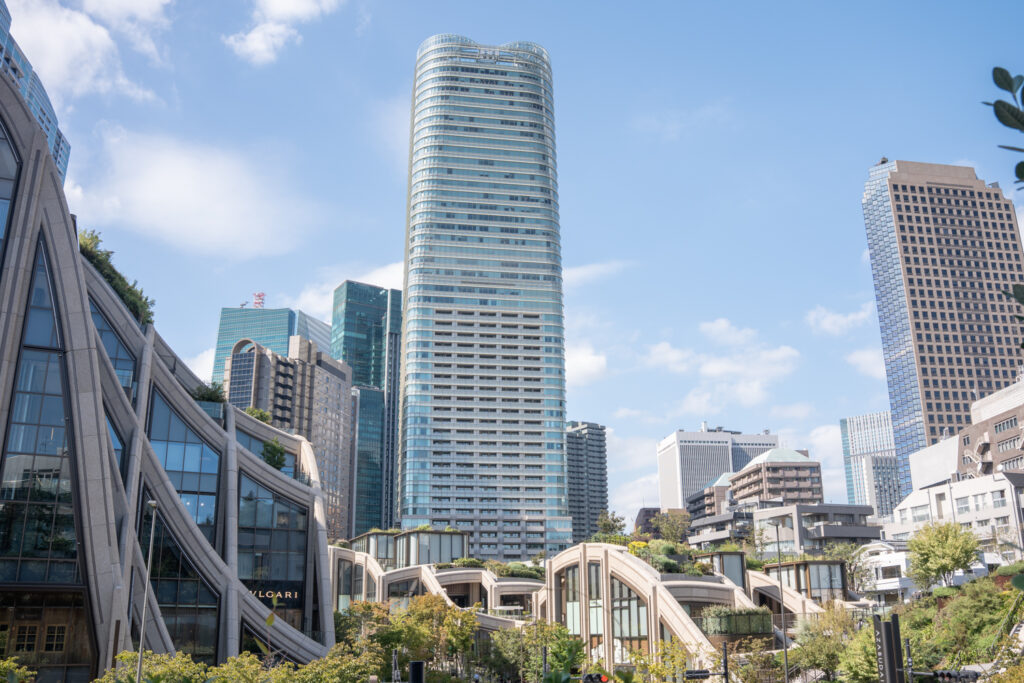
Toranomon Hills Residential Tower, also developed by Mori Building, is a 54-story luxury tower located within the broader Toranomon Hills development. Residents access spas, fitness facilities, an international preschool, a bilingual clinic, and 24-hour concierge service. Units come with floor heating, washer-dryers, and dishwashers as standard. The development sits inside Tokyo’s “Special Zone for Asian Headquarters,” reflecting its central position in the redeveloped Toranomon district.
Contact Housing Japan for exclusive Tokyo off market listings!
The Kita in Shibuya
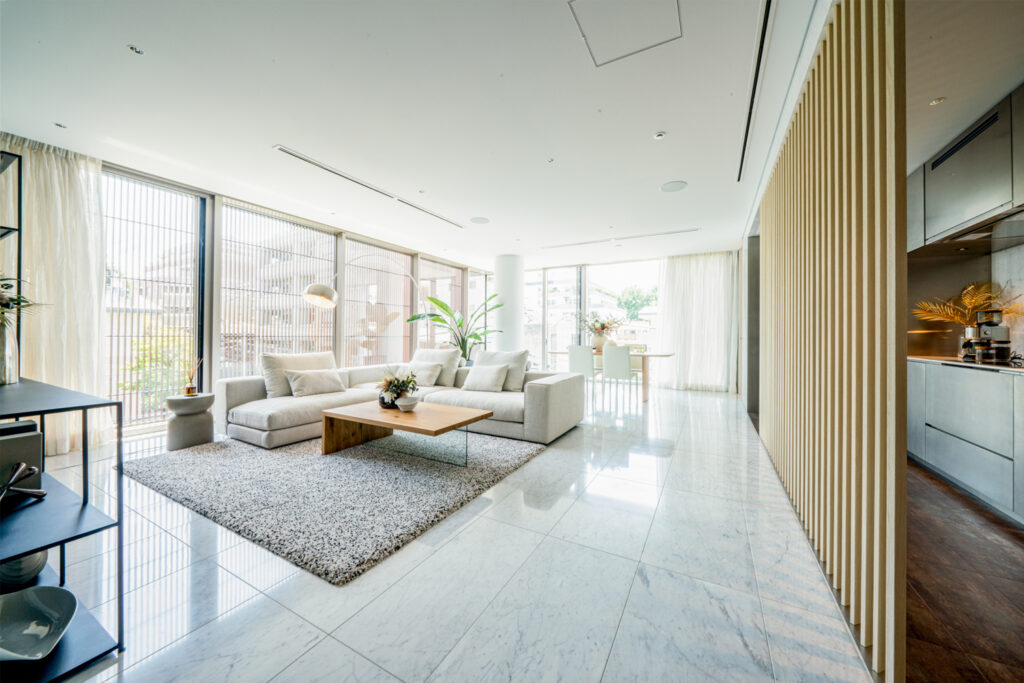
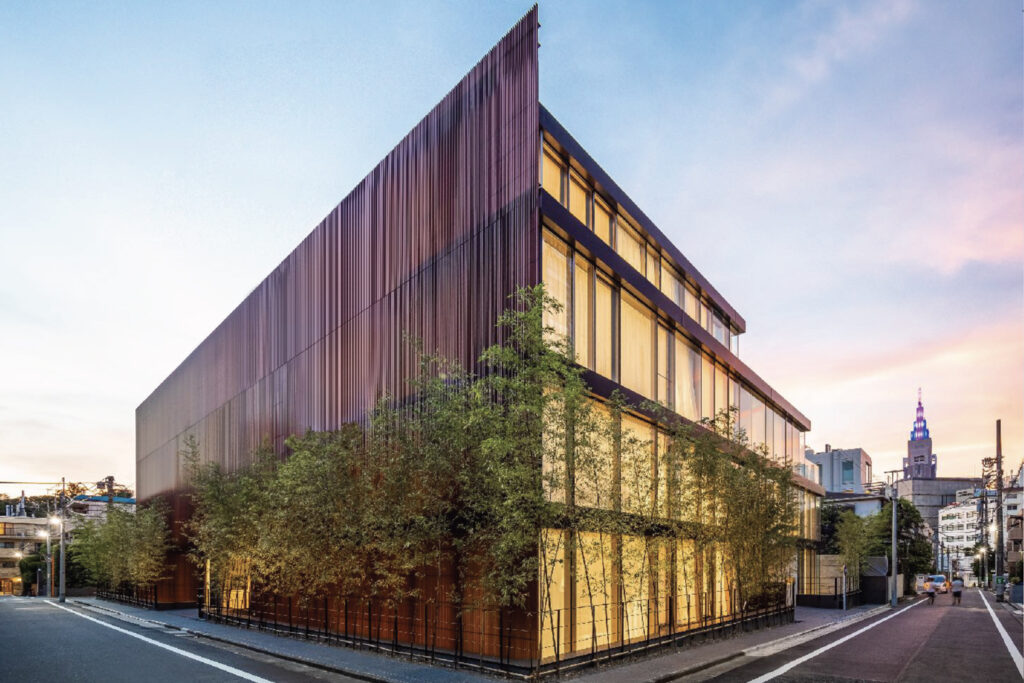
The Kita, designed by award-winning architect Kengo Kuma, is a boutique luxury residence in Shibuya ward. A 507-square-meter penthouse at The Kita, featuring a private rooftop infinity pool with views over the Meiji Shrine forest, sold for approximately ¥7.1 billion to an overseas buyer.
Mita Garden Hills
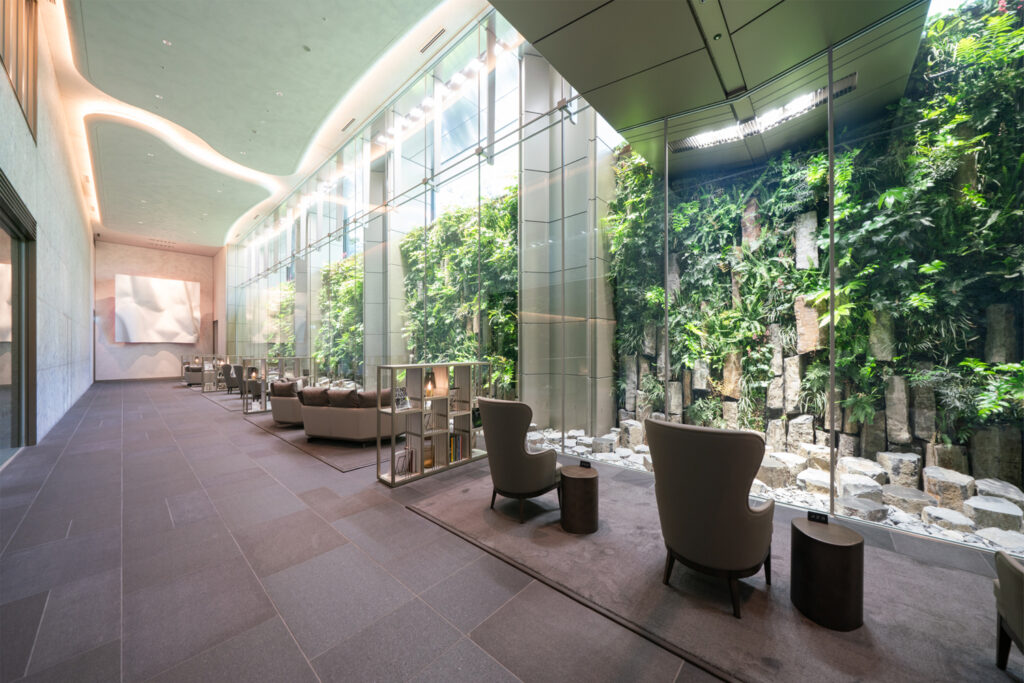
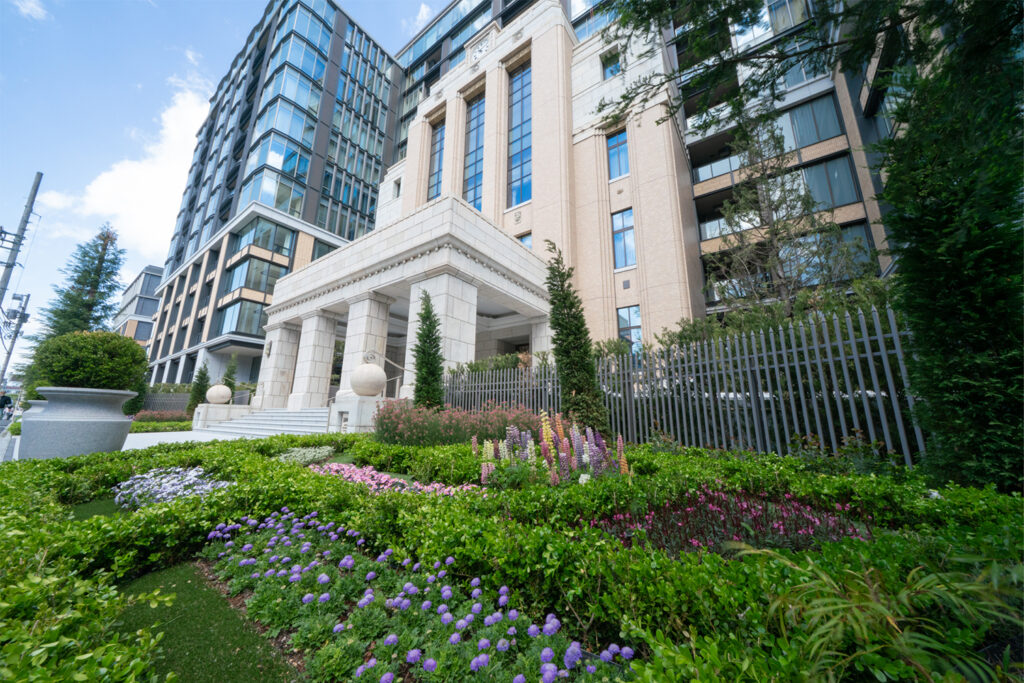
Mita Garden Hills, developed jointly by Mitsui Fudosan Residential and Mitsubishi Estate Residence, sits on the former site of the Ministry of Communications in central Minato ward. The 1,002-unit project covers seven buildings, Park Mansion, West Hill, East Hill, North Hill, Centre Hill, South Hill, and Villas, across roughly 7,000 square meters of landscaped grounds. It was the first Garden Hills development in central Tokyo since Hiroo Garden Hills opened 38 years earlier.
What Defines a Luxury Apartment in Tokyo?
Luxury apartments in Tokyo typically share a few characteristics. They occupy 100 square meters or more, sit in prime addresses across Minato, Shibuya, or Chiyoda, come with bilingual concierge service, and offer premium fittings such as floor heating, walk-in closets, and high-grade appliances. Many also provide access to spas, fitness centers, guest suites, and valet parking.
For a fuller picture, see Housing Japan’s existing coverage of Tokyo’s luxury market, including regular mark analysis with articles like Tokyo Condo Prices and Sales Keep Rising in 2026 and special development deep dives such as Mita Garden Hills: Tokyo’s New Luxury Standard in Azabu and The Tsukiji Redevelopment: Tokyo Fish Market to Mega Development.
How Much Does It Cost to Rent an Apartment in Tokyo?
Rental costs in Tokyo follow the same pattern as purchase prices: central wards command much higher rents than outer areas, and proximity to a station adds a significant premium. As of early 2026, the rental market in Tokyo’s 23 wards has been growing year on year for 26 straight months.
Average Rental Costs by Apartment Type (Tokyo 23 Wards, 2026)
| Apartment Type | Typical Size | Average Monthly Rent (23 Wards) |
|---|---|---|
| Studio / 1R / 1K | 20–25 m² | ¥85,000–¥120,000 |
| One-bedroom / 1LDK | 30–50 m² | ¥140,000–¥250,000 |
| Two-bedroom / 2LDK | 50–70 m² | ¥210,000–¥350,000 |
| Family unit / 3LDK+ | 70–100 m² | ¥300,000–¥500,000+ |
Across the 23 wards, the average rent reached approximately ¥4,237 per square meter in early 2024, with central five wards averaging closer to ¥5,027 per square meter. Rents have risen further into 2026, with industry data suggesting an additional 6.5% to 8.2% growth year on year.
Rental Costs in Central Wards
Central Tokyo wards lead the rental market by a wide margin:
- Minato-ku: Studios typically start around ¥110,000, with 1LDKs from ¥200,000 and family-size 2LDK units regularly above ¥400,000.
- Chiyoda-ku: Studios average around ¥114,000, and 1LDKs sit around ¥227,000.
- Chuo-ku: Similar to Chiyoda, with studios in the ¥110,000 to ¥130,000 range.
- Shibuya-ku: Premium lifestyle hub with one-bedrooms generally between ¥150,000 and ¥250,000.
- Shinjuku-ku: Lower prices can be seen away from stations but still well above the city average.
Initial Rental Costs to Plan For
Beyond the monthly rent, Tokyo apartments come with several upfront costs that international renters often find surprising. These typically add up to four to six months’ rent and include:
Key money (reikin), often one to two months’ rent, paid to the landlord and not refunded. Deposit (shikikin), one to two months’ rent, refundable subject to the condition of the apartment when you leave. Agency fee, typically one month’s rent. Renter’s insurance, usually around ¥15,000 to ¥20,000 per year. Guarantor company fees if you do not have a personal guarantor in Japan.
Maintenance fees (kanrihi) for shared building facilities and utilities are paid separately on top of the base rent.
Smaller Apartments and Outer Wards: Cheaper Options
Not every part of Tokyo carries central-ward pricing. Outer wards offer real value, especially for buyers and renters willing to trade a few extra minutes of commute time for more space.
In wards like Edogawa, Katsushika, and Adachi, new apartments often run between ¥400,000 and ¥500,000 per square meter, and complete units can be found between ¥28 and ¥35 million. Rentals in these areas can be 30 to 40 percent cheaper than equivalent units in central wards.
Setagaya and Suginami sit in the middle ground. They are popular family wards offering more space, good school districts, and quieter streets, while still keeping commute times to Shinjuku or Shibuya around 20 minutes by train. A 2LDK in Setagaya might rent for around ¥188,000, compared with ¥350,000 or more for the same layout in Minato.
These cheaper apartments do come with compromises however, such as further distance to Stations, longer commutes and usually older buildings.
What Apartment Sizes Are Common in Tokyo?
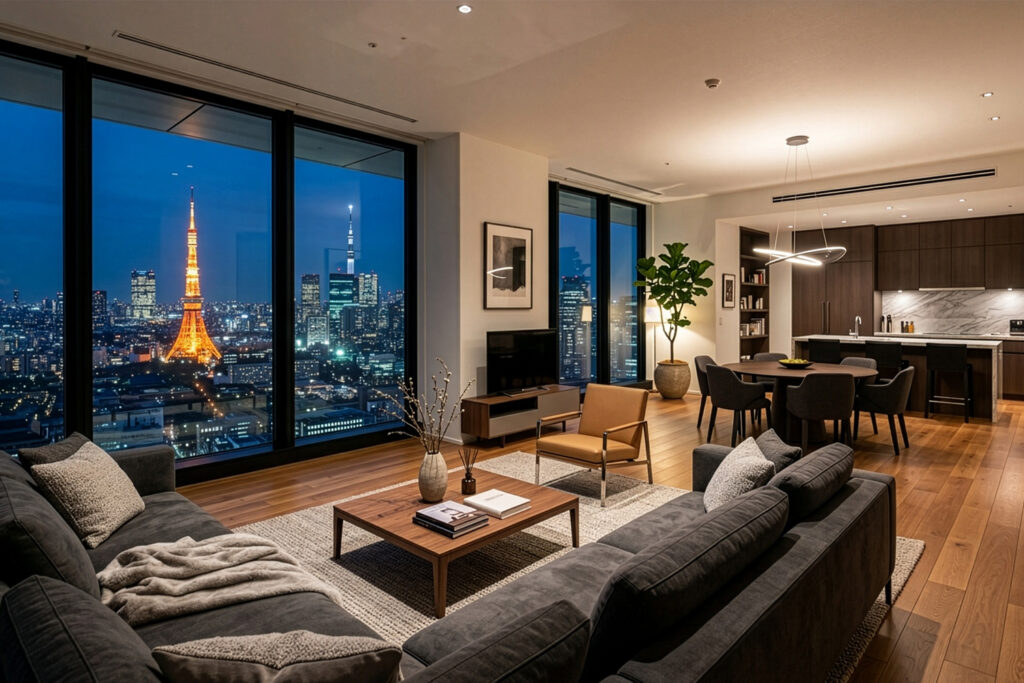
Apartment sizes in Tokyo are smaller than buyers from North America or Europe usually expect. According to MLIT housing guidelines, a single person living in a city should have at least 25 square meters for a healthy and culturally fulfilling life, with 40 square meters considered ideal. For a family of five, MLIT recommends approximately 95 to 115 square meters of floor space.
In practice, many central Tokyo studios fall under the 25 square meter recommendation, reflecting how scarce land affects what gets built. A typical one-bedroom (1LDK) ranges from 30 to 50 square meters, a two-bedroom (2LDK) from 50 to 70 square meters, and a three-bedroom (3LDK) from 70 to 100 square meters. The average floor area of an existing condo that sold in February 2026 was 63.75 square meters, which corresponds to a standard two-bedroom layout.
The Difference Between Apato and Manshon
In Japanese, two words describe residential apartment buildings, and the difference matters for both quality and price.
Apāto (アパート) are smaller buildings, often two to three stories, typically built with wood or light steel. They are common in outer wards and quieter residential neighborhoods. Apāto tend to be more affordable, but soundproofing, insulation, and amenities are usually limited.
Manshon (マンション), derived from the English word “mansion,” are modern reinforced concrete apartment buildings. These are the standard in central Tokyo and luxury residential areas. They offer better build quality, stronger soundproofing, and often include amenities like concierge services, parcel lockers, and fitness facilities. Most luxury and high-end condominiums in central Tokyo are manshon properties.
For buyers and renters in central Tokyo, especially those looking at premium addresses, manshon properties are the standard.
Tokyo Apartment Prices: Buying vs Renting in 2026

Whether to buy or rent in Tokyo depends on how long you plan to stay, your access to financing, and your view on currency. A few useful reference points:
The average existing apartment in the Greater Tokyo Area sells for around ¥54.58 million as of February 2026, while a comparable two-bedroom rental in central Tokyo runs ¥250,000 to ¥350,000 per month. On those numbers, monthly rent payments add up quickly over several years, especially when factoring in upfront costs of four to six months’ rent.
Mortgage rates in Japan remain among the lowest in the developed world, though banks have signaled approximately 0.25% increases to variable-rate benchmarks in spring 2026. Foreign buyers without permanent residency face additional hurdles in financing, though some banks, including SMBC, SBI Shinsei, Aeon, Tokyo Star, and Suruga, have started accepting applications from non-permanent residents under specific conditions.
For longer-term residents and investors, buying typically makes more financial sense once a stay extends beyond five to seven years. For shorter stays, renting in a serviced or furnished apartment often works better.
Frequently Asked Questions About Tokyo Apartments
How much is an apartment in Tokyo in 2026?
The average existing apartment in the Greater Tokyo Area sold for around ¥54.58 million in early 2026, at an average of ¥856,100 per square meter. New apartments in central wards average over ¥120 million, while luxury units in prime locations regularly exceed ¥250 million.
What is the average price of an apartment in central Tokyo?
In Tokyo’s 23 wards, existing apartments average roughly ¥1.4 to ¥1.5 million per square meter. In the five central wards (Chiyoda, Chuo, Minato, Shinjuku, and Shibuya), per-square-meter prices commonly range from ¥2.3 to ¥4.5 million. A standard two-bedroom (around 65 square meters) in central Tokyo therefore typically sits between ¥150 million and ¥300 million.
How much does it cost to rent an apartment in Tokyo?
Rental costs across Tokyo’s 23 wards generally range from ¥85,000 for a studio to over ¥500,000 for a family-sized apartment. Central wards like Minato and Chiyoda command the highest rents, with one-bedrooms often above ¥200,000 per month.
Are apartments in Tokyo expensive?
Tokyo apartments are expensive compared with most other Japanese cities, but on a global scale Tokyo is more affordable than New York, London, or Hong Kong on a per-square-meter basis.
Can foreigners buy apartments in Tokyo?
Yes. Japan has no restrictions on foreign property ownership. Buyers of any nationality can purchase land and buildings in Japan, with no government approval process and no requirement to hold residency. Financing as a non-resident is more challenging but possible through a growing number of banks.
Why are Tokyo apartment prices going up?
Tokyo apartment prices have risen for 70 consecutive months due to four main factors: limited new supply, sharp increases in construction costs, ongoing major redevelopment projects, and sustained demand from both domestic and international buyers. The 2026 MLIT survey showed the strongest annual increase in residential land prices since 1992.
How much does a luxury apartment in Tokyo cost?
Luxury apartments in Tokyo typically range from ¥250 million to ¥1.5 billion. The top of the market goes much higher: a penthouse at Azabudai Hills reportedly sold for ¥20 billion, and a penthouse at The Kita in Shibuya sold for ¥7.1 billion. Pricing for specific luxury properties is generally available upon request through licensed agents.
Which Tokyo wards are most expensive?
Minato, Chiyoda, Chuo, and Shibuya are the most expensive wards in Tokyo for both buying and renting. Within those, the Akasaka, Roppongi, Azabu, Aoyama, and Hiroo neighborhoods consistently rank among the highest-priced addresses in Japan.
Do Tokyo apartments near stations cost more?
Yes. Apartments within five to seven minutes of a major train station typically cost 10 to 30 percent more than comparable units more than 15 minutes away. Station proximity is one of the strongest predictors of value in Tokyo, both for resale and for rental demand.
Looking to Buy or Rent an Apartment in Tokyo?
Whether you are looking for a luxury condominium, a family home, or a serviced apartment for an extended stay, Housing Japan can help. We specialize in buying, selling, and managing residential luxury real estate in central Tokyo, with a one-stop service that covers property search, transaction, and ongoing management. Contact us to discuss your needs or browse our current listings of Tokyo apartments for sale and Tokyo rentals.
Written by the Housing Japan Editorial Team – Licensed Real Estate Specialists in Central Tokyo with over 25 years of experience in luxury residential property.
sources: MLIT – Ministry of Land, Infrastructure, Transport and Tourism: https://www.mlit.go.jp (JP only)