Tokyo has 292,300 US-dollar millionaires, the third-highest count of any city in the most rencent Henley & Partners’ ranking (2025), and that wealth supports demand for the city’s luxury homes. Residential land prices in Minato-ku rose 16.6% in the year to 1 January 2026, while buyers with overseas addresses accounted for 2.5% of Tokyo’s new condominiums in 2025.
Key facts at a glance
- Millionaires living in Tokyo: 292,300, plus 262 centi-millionaires and 18 billionaires (Henley & Partners, World’s Wealthiest Cities Report 2025, data as of end-2024)
- US-dollar millionaires in Japan: more than 2 million, one of six markets above that level; median wealth per adult US$135,745, the 10th highest in UBS’s ranking (UBS Global Wealth Report 2026, as of end-2025)
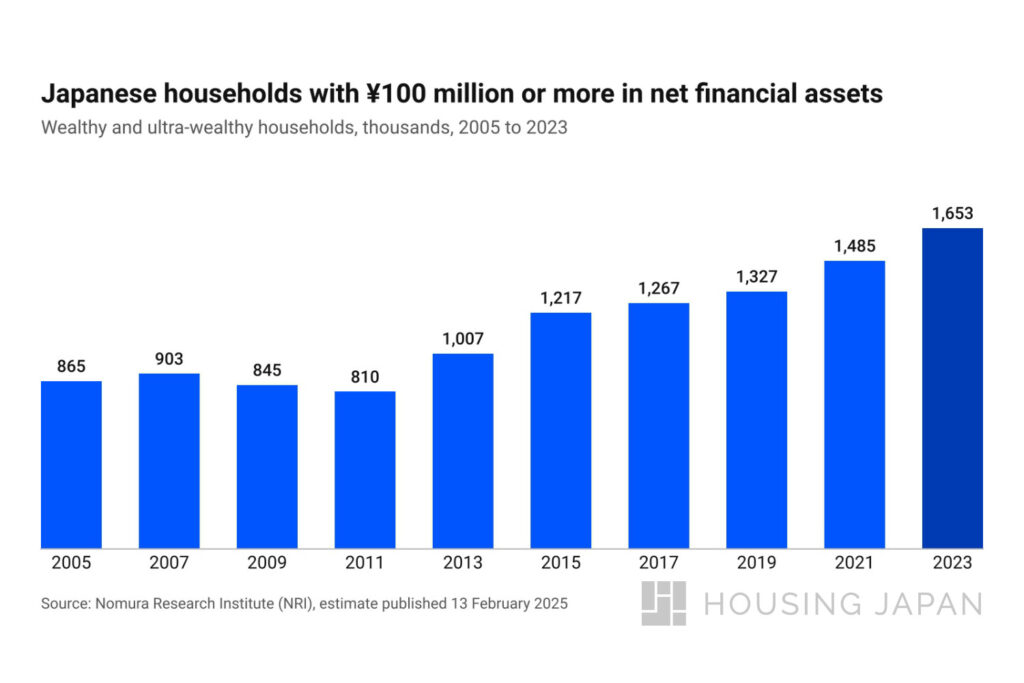
- Japanese households with ¥100 million or more in net financial assets: 1.653 million, a high for the series that began in 2005 (Nomura Research Institute, 2023 estimate published February 2025)
- Household financial assets in Japan: ¥2,519 trillion, up 11.0% year on year (Bank of Japan Flow of Funds, as of end-June 2026)
- Average resale condominium price in Tokyo’s 23 wards: ¥77.57 million, up 3.4% year on year (REINS, July 2026); MLIT condominium price index for Tokyo: 234.8, where 2010 = 100 (December 2025)
- Residential land price change in Minato-ku: +16.6%, the largest rise of the 23 wards (2026 Official Land Price Publication, as of 1 January 2026)
- Share of new condominiums bought from overseas addresses: 2.5% in Tokyo and 5.9% in the six central wards (MLIT, calendar year 2025)
How many millionaires live in Tokyo?
Henley & Partners and New World Wealth counted 292,300 millionaires living in Tokyo at the end of 2024, along with 262 centi-millionaires (US$100 million or more) and 18 billionaires (World’s Wealthiest Cities Report 2025, published 8 April 2025). That placed Tokyo third worldwide after New York and the San Francisco Bay Area, and first in Asia ahead of Singapore’s 242,400. Henley counts anyone with at least US$1 million in liquid investable wealth, meaning listed shares, cash, bonds and crypto. The count excludes real estate.
Japan is one of six markets with more than 2 million US-dollar millionaires, alongside the United States, mainland China, Germany, the United Kingdom and France, according to UBS’s Global Wealth Report 2026, published on 30 June 2026 with data as of the end of 2025. Japan’s median wealth per adult was US$135,745, the 10th highest in UBS’s ranking and about double the US median of US$68,998. UBS measures net worth, so its figures include homes and other property, minus debts such as mortgages.
Nomura Research Institute (NRI) counts households in yen rather than individuals in dollars. Its estimate, published on 13 February 2025, found 1.653 million Japanese households with ¥100 million or more in net financial assets in 2023, the highest number since the series began in 2005. Of these, 118,000 households held ¥500 million or more, a group NRI calls chō-fuyūsō (超富裕層), the ultra-wealthy. Together, the two groups held about ¥469 trillion, 28.8% more than in 2021.
| Measure | Source and date | What it counts | Figure |
|---|---|---|---|
| Millionaires living in Tokyo | Henley & Partners, end-2024 | People with US$1m+ in liquid investable wealth, excluding property | 292,300 |
| Millionaires in Japan | UBS, end-2025 | Adults with US$1m+ net worth, including property | More than 2 million |
| Wealthy and ultra-wealthy households in Japan | NRI, 2023 | Households with ¥100m+ in net financial assets (savings and investments minus debts) | 1.653 million |
| Ultra-wealthy households in Japan | NRI, 2023 | Households with ¥500m+ in net financial assets | 118,000 |
Exchange rates move the two dollar-based counts. A weaker yen lowers the dollar value of yen savings, shares and homes, so Henley and UBS totals can fall even in years when Japanese households grow wealthier in yen terms. NRI’s yen-based series avoids this, which makes it the steadier guide to trends inside Japan.
Why is so much of Japan’s wealth concentrated in Tokyo?
Around two-thirds of Japan’s ultra-wealthy households and about half of its wealthy households live in Greater Tokyo (shutoken, 首都圏), according to NRI analysis in a paper for the Ministry of Finance’s Policy Research Institute. NRI estimates that more than half of ultra-wealthy households own listed or unlisted companies. The wealthy group also includes landowners, listed-company executives and professionals such as doctors, lawyers and accountants.
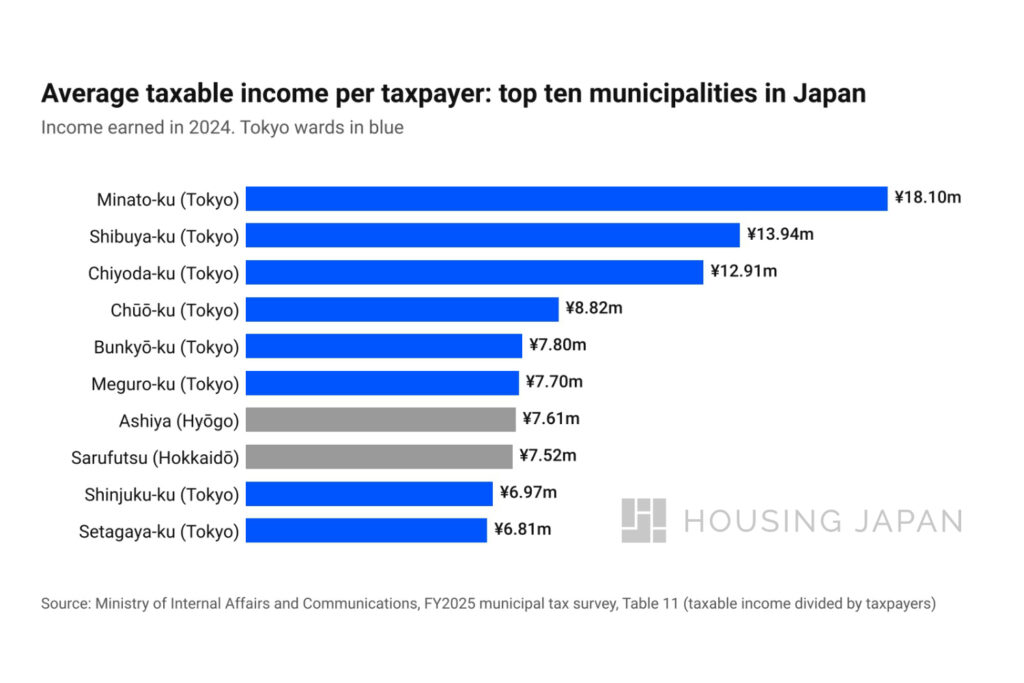
Minato-ku had the highest average taxable income per taxpayer of Japan’s 1,741 municipalities, at ¥18.10 million for income earned in 2024. Shibuya-ku (¥13.94 million) and Chiyoda-ku (¥12.91 million) came second and third, and eight of the top ten municipalities were Tokyo wards. These averages divide each municipality’s taxable income (kazei taishō shotoku, 課税対象所得) by its number of taxpayers, using Table 11 of the Ministry of Internal Affairs and Communications’ FY2025 municipal tax survey (Shichōson-zei Kazei Jōkyō-tō no Shirabe, 市町村税課税状況等の調). Taxable income combines salary, business and investment income, including gains on shares and dividends.
About ¥50 trillion in inherited assets will flow into Greater Tokyo from other regions between 2021 and 2030, according to an NRI estimate, as wealth passes from parents in regional Japan to children living in the capital. National Tax Agency data cited by NRI show 10,098 people died with estates above ¥300 million in 2022, about 25% more than in 2019.
Japanese households held ¥2,519 trillion in financial assets at the end of June 2026, a record and 11.0% more than a year earlier, according to the Bank of Japan’s Flow of Funds data released on 17 September 2026. Household shareholdings rose 47.0% over the same period to ¥486 trillion. NRI links the steady rise in wealthy households since 2013 mainly to higher share prices, which raise the value of shares held by company owners, executives and long-term investors.
Where do wealthy Japanese households keep their wealth?
Homes and land make up about three-quarters of the assets held by Japan’s top 1% of households by net worth, with financial assets making up the remaining quarter. NRI drew this from the Ministry of Internal Affairs and Communications’ 2019 National Survey of Family Income, Consumption and Wealth, in which these households held around ¥400 million in assets on average. NRI notes that this property share is far higher than the global average for high-net-worth individuals.
NRI describes Japan’s wealthy as holding real estate worth nearly three times their financial assets. In other words, the savings-and-shares counts in the table above understate how much of Japan’s private wealth sits in homes and land.
NRI also tracks two newer groups of affluent households. “Super power families” are households earning ¥30 million or more a year, often dual-income couples at large companies in major cities, and NRI’s interviews show they spend readily on home renovation, household services and education. The “wealthy without noticing” (itsu-no-ma-ni-ka fuyūsō, いつの間にか富裕層) are salaried workers whose shares, workplace pensions and company stock have grown past ¥100 million, often while their lifestyles stayed the same.
How is this wealth showing up in Tokyo’s luxury property market?
Resale condominiums in Tokyo’s 23 wards sold for an average of ¥76.42 million in fiscal 2025 (April 2025 to March 2026), up 12.3% year on year, according to the Real Estate Information Network for East Japan (Higashi Nihon Fudōsan Ryūtsū Kikō, 東日本不動産流通機構, known as REINS). The average price per sqm rose 13.2% to ¥1,345,400. In July 2026, the 23-ward average reached ¥77.57 million, or ¥1,357,700 per sqm, up 3.4% and 2.7% on a year earlier.
MLIT’s Real Estate Price Index for condominiums in Tokyo stood at 234.8 in December 2025, where 2010 equals 100. In other words, condominium prices in Tokyo were about 2.3 times their 2010 level. December 2025 is the latest month published, as MLIT has postponed its 2026 releases.
Residential land prices in Minato-ku rose 16.6% in the year to 1 January 2026, the largest increase of the 23 wards, according to the Official Land Price Publication (Chika Kōji, 地価公示) as summarised by the Tokyo Metropolitan Government. Taitō-ku (14.2%) and Shinagawa-ku (13.9%) followed, and residential land across the 23 wards rose 9.0% on average, up from 7.9% a year earlier. All 1,530 continuing survey points in the 23 wards increased in value.
Central Minato-ku and Shinagawa-ku sites took four of the top six residential price rises in the Tokyo area in the Prefectural Land Price Survey (Todōfuken Chika Chōsa, 都道府県地価調査), measured on 1 July 2026 and published by MLIT in September 2026.
| Survey site | Ward | Price per sqm (1 July 2026) | Change on 2025 |
|---|---|---|---|
| Kita-Shinagawa 5-chome | Shinagawa-ku | ¥1,960,000 | +18.8% |
| Shibaura 4-chome | Minato-ku | ¥2,600,000 | +18.7% |
| Nishi-Azabu 3-chome | Minato-ku | ¥2,760,000 | +17.4% |
| Roppongi 5-chome | Minato-ku | ¥3,520,000 | +17.3% |
Source: MLIT, 2026 Prefectural Land Price Survey, residential land ranking for the Tokyo area.
Are overseas buyers driving Tokyo’s luxury prices?
Buyers with overseas addresses acquired 2.5% of new condominiums in Tokyo in 2025, and 5.9% in the six central wards, according to a Ministry of Land, Infrastructure, Transport and Tourism (MLIT) study of property registration data published on 15 September 2026. MLIT found no particular tendency for overseas-address buyers to actively purchase properties priced at ¥200 million or more in the central six wards.
Buyers registered at Japanese addresses, including Japanese nationals and foreign nationals living in Japan, therefore account for most demand at the top of central Tokyo’s market. Japan’s property register records an owner’s address rather than nationality, so the study does not separate foreign residents of Tokyo from Japanese buyers.
Taiwan was the largest source of overseas-address buyers in Tokyo’s 23 wards in 2025, followed by the United Kingdom, mainland China and Singapore, MLIT reported. For international buyers, the main competition for central Tokyo homes comes from wealthy households already living in Japan.
Which Tokyo neighbourhoods attract high-net-worth buyers?
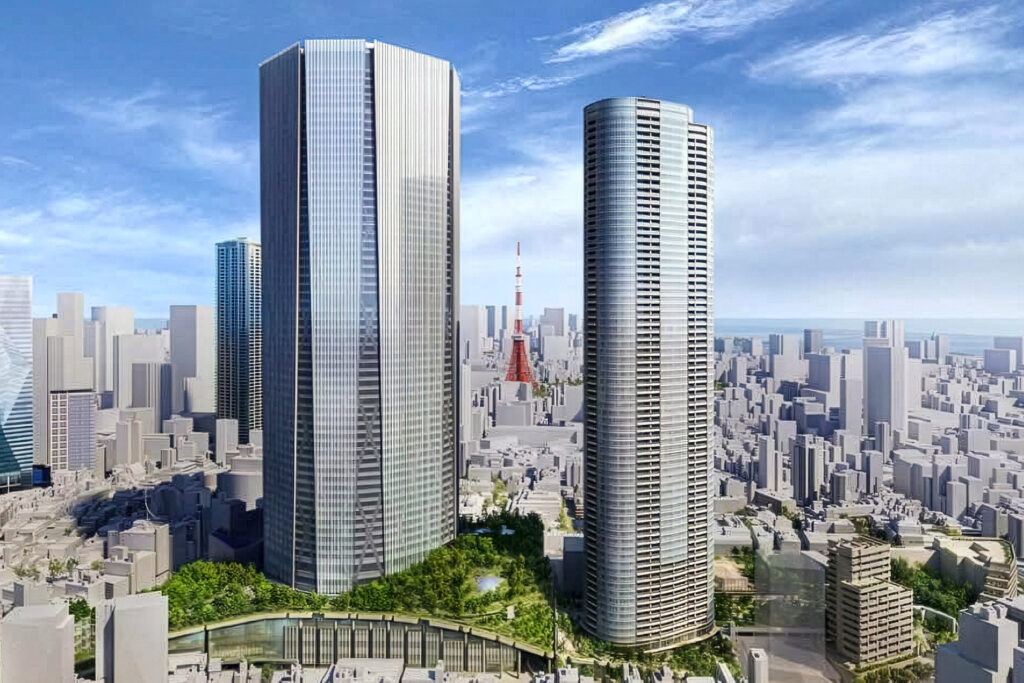
Minato-ku ranked first among the 23 wards for both average taxable income per taxpayer (¥18.10 million, 2024 income) and residential land price growth (+16.6%, year to 1 January 2026). Its residential neighbourhoods include Azabu, Roppongi, Akasaka, Hiroo and Mita. Large mixed-use developments such as Mori Building’s Azabudai Hills combine homes with offices, shops, restaurants and an international school campus.
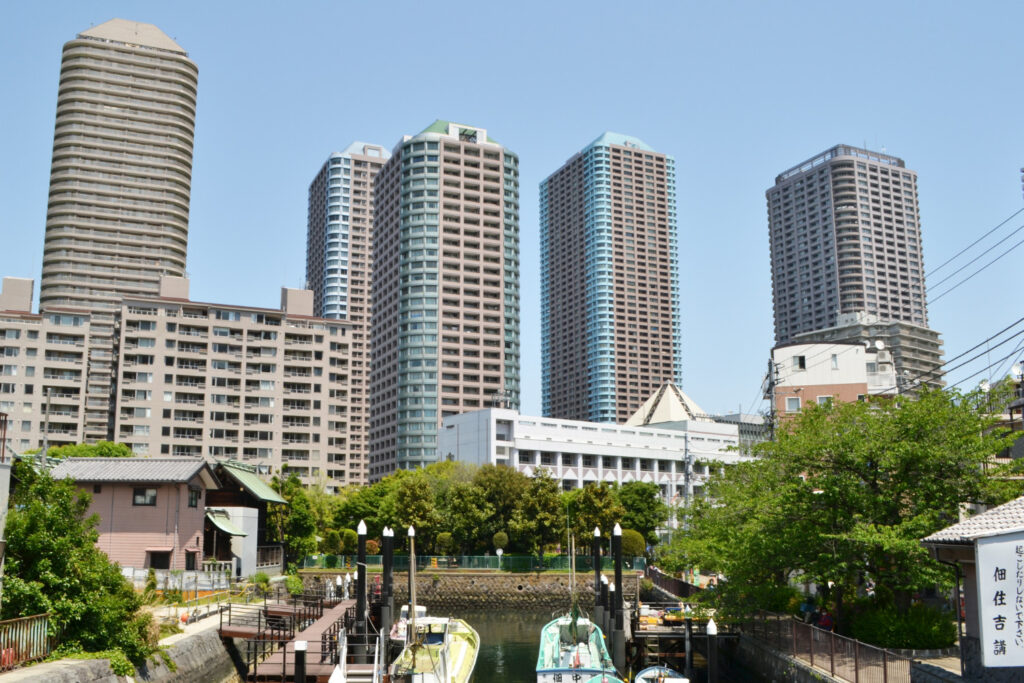
Shibaura 4-chome in Minato-ku and Kita-Shinagawa 5-chome in Shinagawa-ku recorded rises of 18.7% and 18.8% in the July 2026 Prefectural Land Price Survey, the top two residential gains in the Tokyo area. Shibaura 4-chome covers the canal-side Shibaura Island area east of Tamachi Station, while Kita-Shinagawa 5-chome lies in the Gotenyama area of Shinagawa-ku.
Shibuya-ku (¥13.94 million) and Chiyoda-ku (¥12.91 million) ranked second and third nationally for average taxable income per taxpayer in the FY2025 municipal tax survey. Shibuya-ku’s residential areas include Shōtō, Hiroo and Daikanyama. Chiyoda-ku’s Banchō district lies on the west side of the Imperial Palace grounds.
What does Tokyo’s growing wealth mean for luxury property buyers?
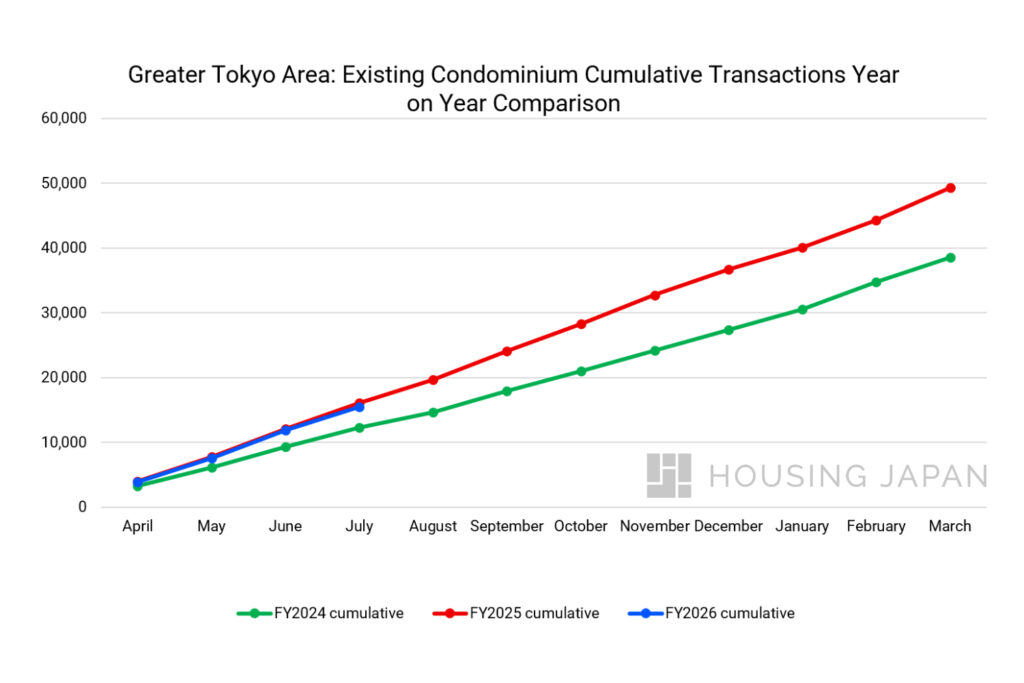
Buyers completed 21,723 resale condominium purchases in Tokyo’s 23 wards in fiscal 2025 (April 2025 to March 2026), 22.5% more than a year earlier, according to REINS, which notes that a 2025 change to its registration system may have affected the count. For buyers, this means resale homes in established buildings deserve as much attention as new developments.
Japan’s Real Estate Brokerage Act (Takken Gyōhō, 宅地建物取引業法) requires a licensed real estate transaction specialist (takken-shi, 宅地建物取引士) to explain the property’s legal and physical details before a contract is signed. This explanation is the jūyō jikō setsumei (重要事項説明), the mandatory explanation of key property details, and it covers ownership, zoning, building management and any restrictions on use. For buildings that received building approval before 1 June 1981, buyers should also check whether the structure meets the current earthquake-resistance standard (shin-taishin kijun, 新耐震基準).
Housing Japan has advised Japanese and international clients on central Tokyo homes since 2000. Many luxury homes in central Tokyo are not listed on public portals and only avalible through brokers with experience.
Frequently asked questions
How many millionaires live in Tokyo?
Tokyo had 292,300 US-dollar millionaires at the end of 2024, according to Henley & Partners’ World’s Wealthiest Cities Report 2025. The city also had 262 centi-millionaires, with US$100 million or more, and 18 billionaires. By millionaire numbers, Tokyo ranked third worldwide behind New York and the San Francisco Bay Area, and first in Asia.
How much does a luxury condominium cost in Tokyo?
Resale condominiums in Tokyo’s 23 wards sold for an average of ¥77.57 million in July 2026, or ¥1,357,700 per sqm, according to REINS. That average covers homes of every size and age. Many individual luxury homes are listed with the price upon request, and prices vary widely by building, floor, size and view.
Are foreign buyers pushing up luxury prices in Tokyo?
Buyers with overseas addresses acquired 2.5% of new condominiums in Tokyo in 2025, and 5.9% in the six central wards, according to MLIT’s September 2026 study. The ministry found no particular tendency for these buyers to actively purchase homes priced at ¥200 million or more. Most demand comes from households registered in Japan.
Can foreigners buy luxury property in Tokyo?
Yes. Japan sets no nationality or residency requirement for buying land or buildings, and foreign buyers hold ownership on the same legal terms as Japanese buyers. Since April 2026, buyers who live outside Japan must file a report under the Foreign Exchange and Foreign Trade Act (FEFTA) for property acquisitions, including homes for their own use.
Which Tokyo ward has the highest incomes?
Minato-ku had the highest average taxable income per taxpayer of any municipality in Japan, at ¥18.10 million for income earned in 2024, based on the Ministry of Internal Affairs and Communications’ FY2025 municipal tax survey. Shibuya-ku (¥13.94 million) and Chiyoda-ku (¥12.91 million) followed. Eight of the top ten municipalities were Tokyo wards.
Talk to Housing Japan about luxury property in Tokyo
Housing Japan K.K. is a licensed Tokyo real estate brokerage (Tokyo Governor Licence (3) No. 98912) that has helped clients buy, sell, rent and manage homes in central Tokyo since 2000. Our English-speaking team includes in-house licensed real estate transaction specialists (takken-shi), who give the legally required jūyō jikō setsumei before each contract is signed.
To discuss a purchase or ask about homes currently available, send us a message using the contact link below. To receive our property collections and, from time to time, exclusive listings, sign up for the Housing Japan newsletter.
About the authors
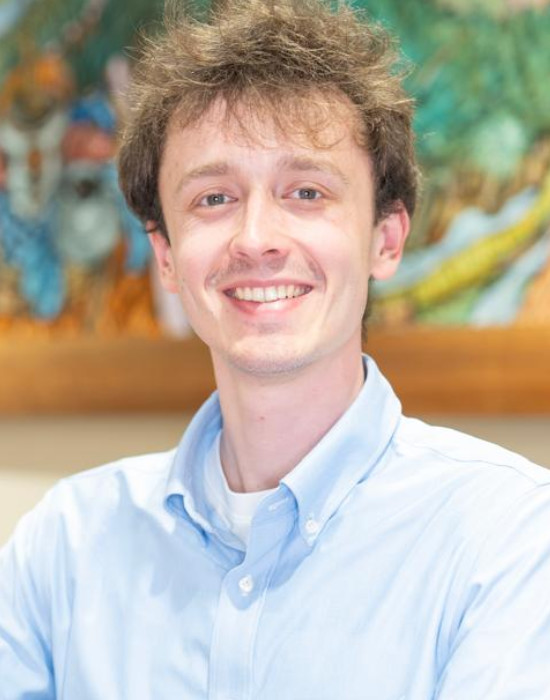
Maximilian Jacob is Research and Content Lead at Housing Japan K.K., a licensed real estate brokerage in Tokyo (Tokyo Governor (3) No. 98912) that has advised international buyers, sellers and tenants in central Tokyo since 2000. He researches the Tokyo prime residential market using primary Japanese sources, including Ministry of Land, Infrastructure, Transport and Tourism (MLIT) transaction and land price data, National Tax Agency (NTA) roadside land valuations, Bank of Japan policy statements and e-Stat national statistics. His work focuses on foreign buyer procedure, property taxation, non-resident financing, and the Minato, Shibuya and Chiyoda luxury markets.
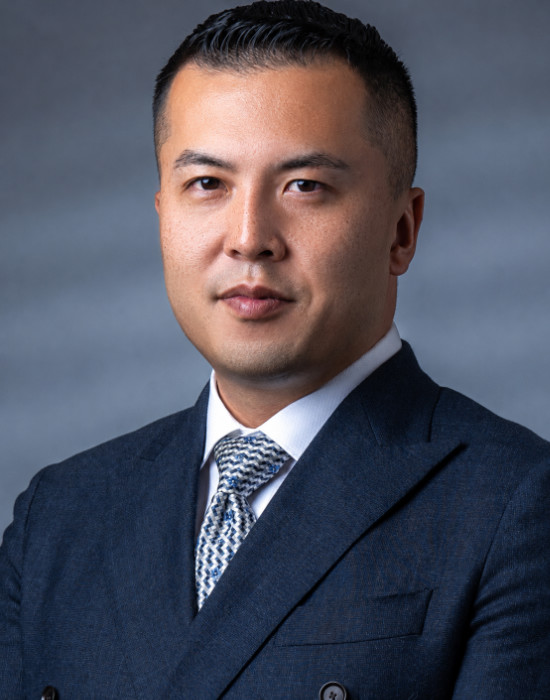
Yudai Yamaguchi is Head of Sales and Head of Property Management at Housing Japan K.K. He has more than a decade of real estate experience across Japan and the United States, spanning development, sales operations, investment, acquisitions, leasing, construction and property management. He previously held management roles at the Open House Group in both countries, including General Manager of its Atlanta office, where he oversaw local real estate operations. He holds a bachelor’s degree in Liberal Arts from Waseda University and studied International Relations at the University of Washington.
Sources
Henley & Partners, World’s Wealthiest Cities Report 2025 (8 April 2025)
UBS, Global Wealth Report 2026 media release (30 June 2026)
Nomura Research Institute, wealthy and ultra-wealthy household estimate for 2023 (13 February 2025, Japanese)
MLIT, new condominium transaction study using property registration data (15 September 2026, Japanese)
Tokyo Metropolitan Government, 2026 Official Land Price Publication for Tokyo (17 March 2026, Japanese)
Other figures in this article come from the Bank of Japan’s Flow of Funds (Q2 2026, released 17 September 2026), REINS Market Watch reports (fiscal 2025 and July 2026), MLIT’s Real Estate Price Index (December 2025) and 2026 Prefectural Land Price Survey, the Ministry of Internal Affairs and Communications’ FY2025 municipal tax survey, and NRI analysis published by the Ministry of Finance Policy Research Institute.