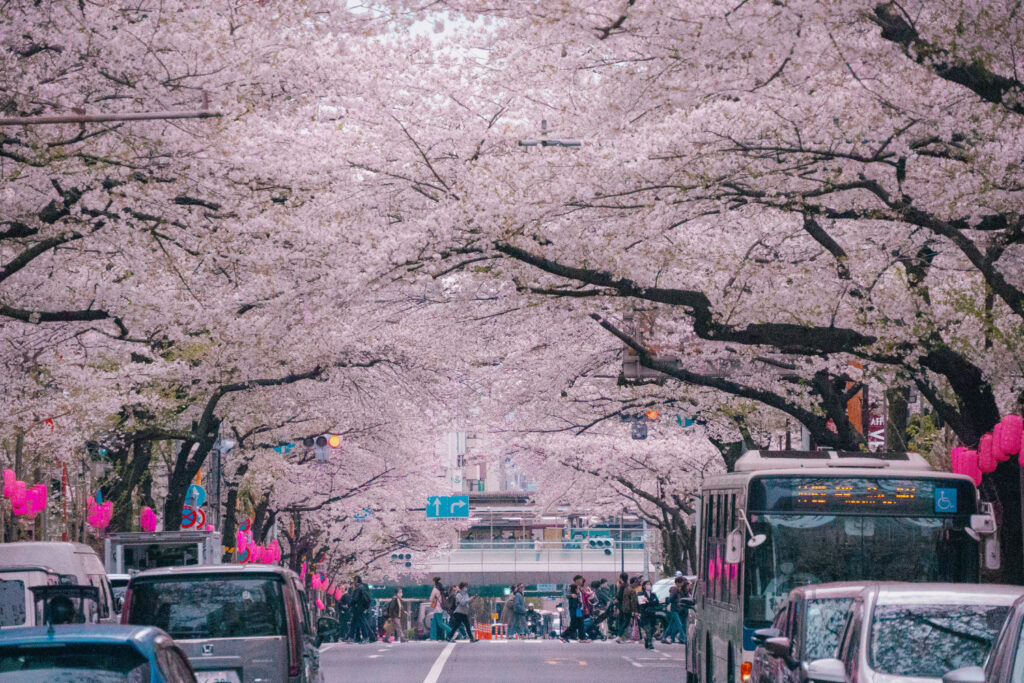
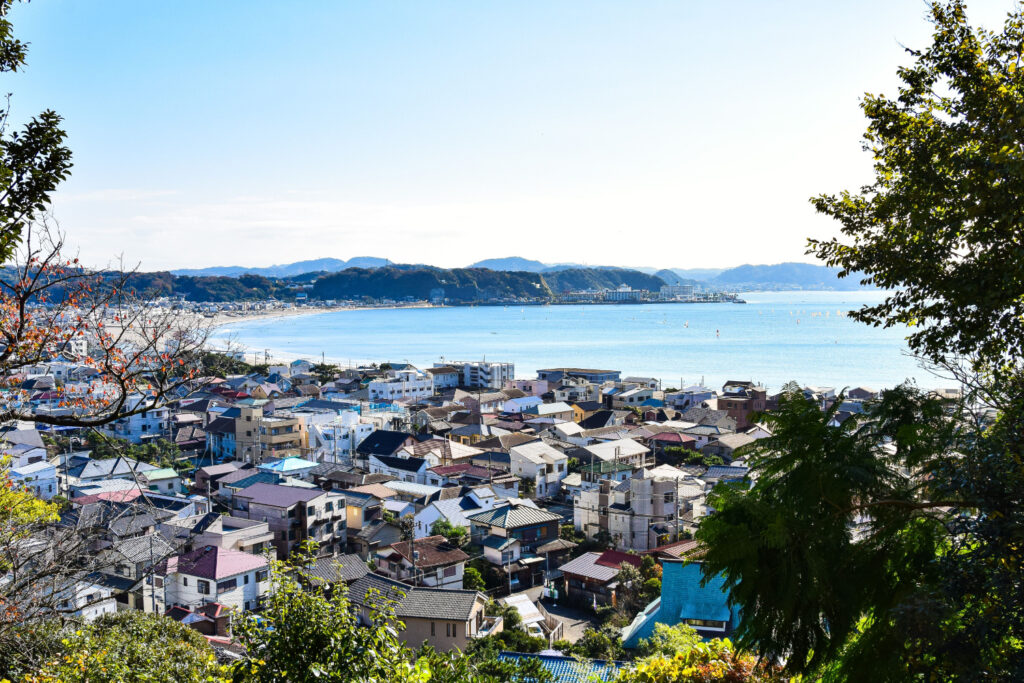
Kamakura is a historic coastal town roughly 50-60 minutes from Tokyo Station on the direct JR Yokosuka Line. Long favoured as a retreat by Tokyo’s business and creative class, it pairs beaches, temples and open space with a genuine commute, making it viable as a weekend villa, a second home or a full-time base.
For over a century, Kamakura has been where Tokyo’s business and creative class go to slow down, a coastal town of beaches, temples and wooded hills within reach of the city. What has changed is that it no longer has to be a weekend-only escape. A direct JR line puts Tokyo Station under an hour away, so Kamakura now works as a retreat, a second home, or a full-time base. This guide looks at the lifestyle, who is moving there, the dual residence pattern some buyers are adopting, and what to check before buying.
Key Facts
- JR Yokosuka Line: direct service, no transfer, Tokyo Station to Kamakura Station
- Typical journey time: approximately 50-60 minutes depending on train type (rapid vs. local service)
- Enoshima is reachable from central Kamakura in under 30 minutes by Enoden (Enoshima Electric Railway) or car
- Kamakura has a long-established history as a weekend/second-home retreat, dating to the Kamakura period (1185-1333) as Japan’s historic shogunate capital
How long is the commute from Kamakura to Tokyo Station?
The JR Yokosuka Line connects Kamakura Station directly to Tokyo Station in approximately 50 – 60 minutes with no transfer required. The line runs through Yokohama and Shinagawa on the way, so it serves more than just Marunouchi and Otemachi, anyone needing Shinagawa for a Shinkansen connection or a Haneda flight gets there on the same train.
What makes this commute unusual is not the time itself, which is in line with many established commuter towns, but where it ends. Instead of arriving home to another dense residential grid, the same journey delivers you to a coastal town with a beach roughly fifteen minutes away.
Some Yokosuka Line services run with a Green Car, a reserved first-class carriage with extra space, which suits people who would rather work or rest during the ride. The rise of hybrid work, with many Tokyo professionals now in the office only two or three days a week, changes the arithmetic further: a 50 – 60 minute ride is far easier to justify when it happens a few times a week rather than daily, and the trade-off shifts from “extra travel time” to “extra quality of life.”
| Journey | Time | Line | Change or Direct |
|---|---|---|---|
| Kamakura Station to Tokyo Station | 50-60 minutes | Yokosuka Line | Direct |
| Kamakura Station to Shinjuku Station | 55-65 minutes | Shonan-Shinjuku Line | Direct |
| Kamakura Station to Shibuya Station | 50-60 minutes | Shonan-Shinjuku Line | Direct |
| Kamakura Station to Yokohama Station | 20-30 minutes | Yokosuka Line or Shonan-Shinjuku Line | Direct |
| Kamakura Station to Haneda Airport | 60-70 minutes | Yokosuka Line and Keikyū Main Line | 1 Change (Yokohama Station) |
What makes Kamakura and Enoshima different from a typical Tokyo suburb?
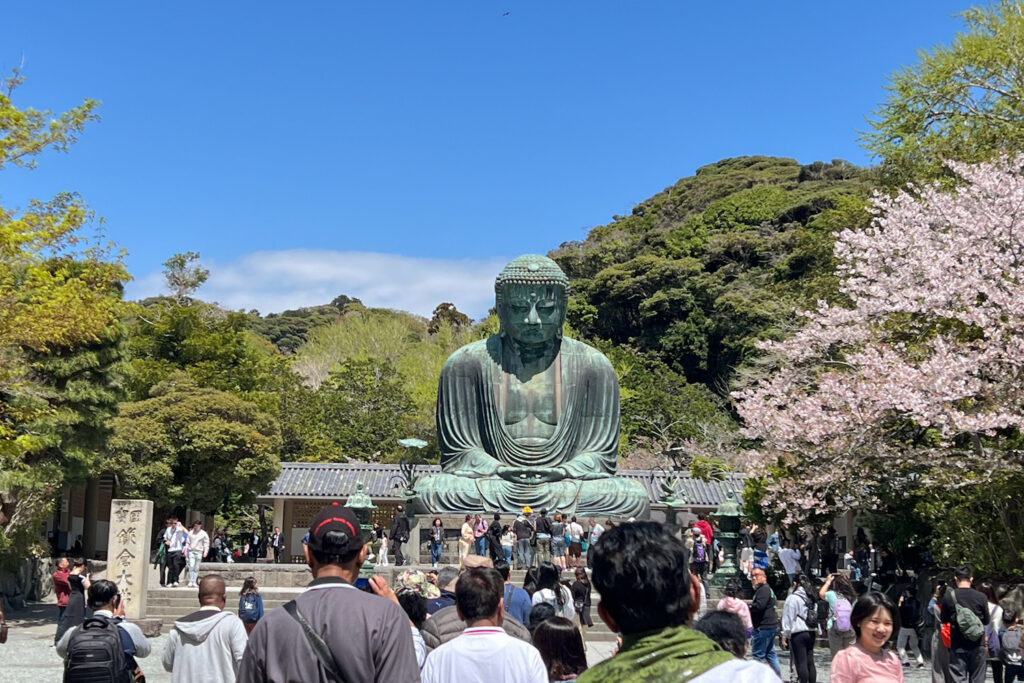
Kamakura offers historic prestige as Japan’s 12th and 13th century shogunate capital, home to the Great Buddha at Kotoku-in and dozens of temples and shrines, plus a long-standing culture of weekend homes for executives, writers, and creatives. Enoshima, a short ride or walk from central Kamakura, adds beach, surf, and sunset lifestyle that a landlocked Tokyo suburb cannot.
Kamakura served as Japan’s political capital during the Kamakura period, from 1185 to 1333, and that history left behind a dense concentration of temples and shrines, including Kotoku-in’s Great Buddha and Tsurugaoka Hachimangu. Walking through the city center today, that history is still visible in the layout of streets and the number of historic sites packed into a relatively small area.
Since the early 20th century, Kamakura has attracted Tokyo’s business and cultural elite as a weekend or retreat destination. That’s a different pattern from the purely commuter suburbs that grew up around Tokyo mainly to house people working in the city. Kamakura’s identity as a place people wanted to be, not just a place they could afford to sleep, predates the commuter-suburb model by decades.
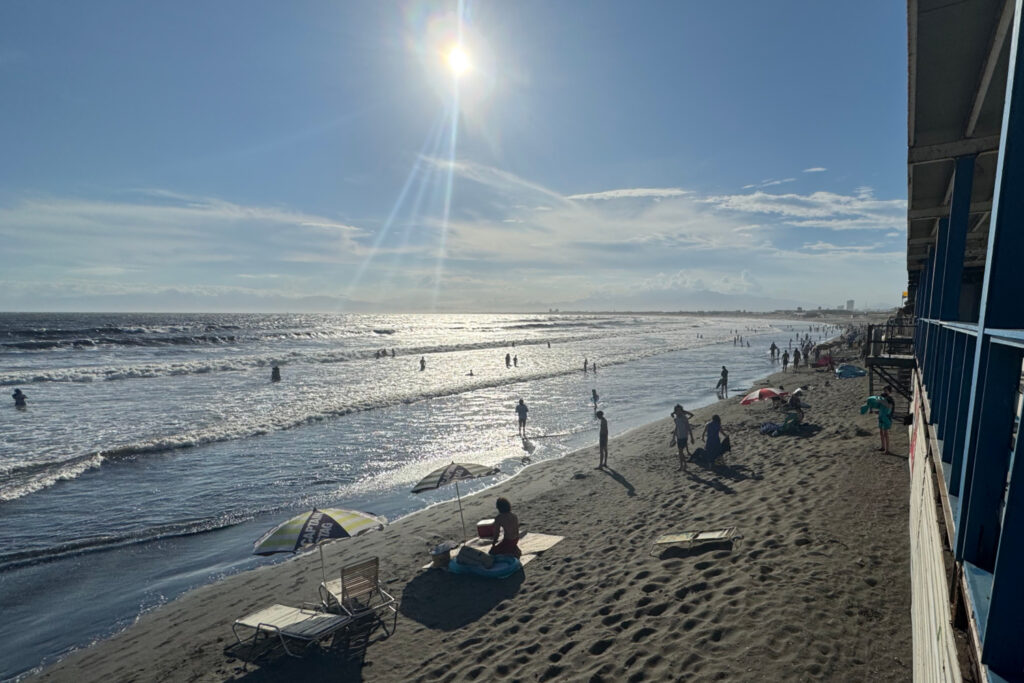
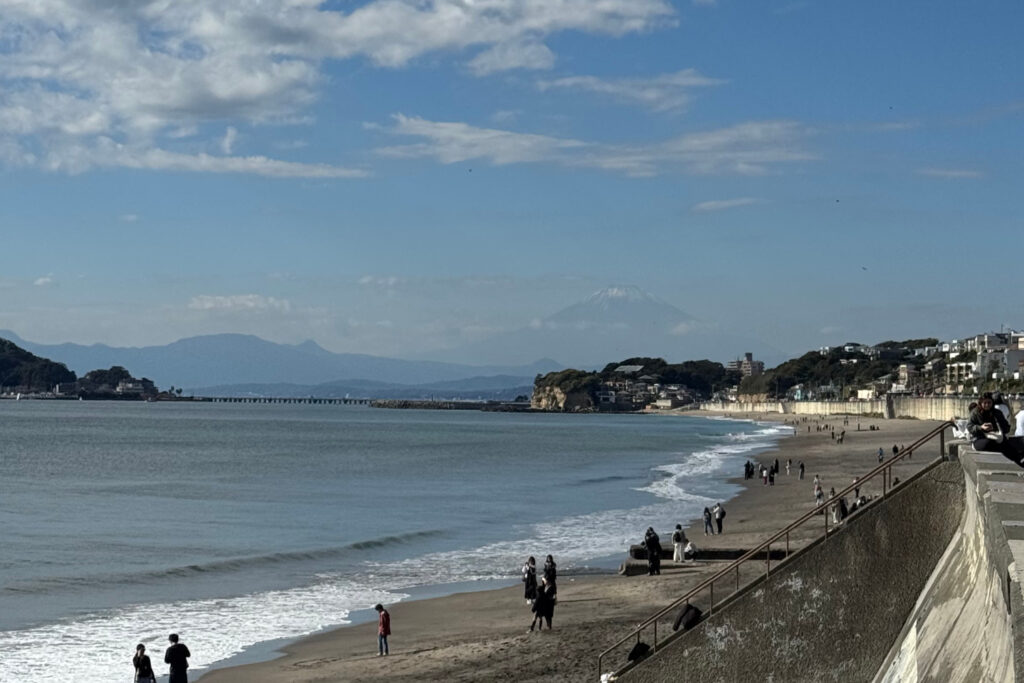
Enoshima connects to central Kamakura by the Enoden, a scenic tram-like railway, as well as by car or bicycle, typically taking 20 to 30 minutes. The Shonan coast around Enoshima, including the beaches at Yuigahama, Zaimokuza, and Inamuragasaki, supports a surf and beach culture that runs through the year, not just during the summer months.
For buyers, this means Kamakura and Enoshima aren’t just selling a house. They’re selling an identity and a daily environment, temples, mountains, sea, and a walkable town center, that sits alongside the property itself. It’s worth being descriptive and specific about what that daily environment actually involves, rather than leaning on vague claims about the area being special.
Who is actually buying property in Kamakura and Enoshima?
Buyers include remote and hybrid-capable executives, retirees seeking a slower pace within reach of Tokyo, second-home purchasers from central Tokyo, and foreign buyers, both residents of Japan and overseas purchasers, drawn to the lifestyle without cutting ties to Tokyo. This is a shift from Kamakura’s historic role as a purely seasonal or weekend retreat.
Hybrid work arrangements, typically two to three office days per week, have expanded the pool of people who can justify a 50-60 minute one-way commute as a full-time residential choice rather than a weekend indulgence. When the commute happens two or three times a week instead of five, the calculation around where to live changes considerably.
Retirees and pre-retirees purchasing in Kamakura or Enoshima benefit from staying within reach of Tokyo’s hospitals and family members, while gaining a lower-density, nature-oriented environment that’s harder to find inside the city itself.
Second-home buyers from central Tokyo wards also continue to use Kamakura and Enoshima properties for weekends and extended stays, consistent with the area’s century-long tradition as a retreat for Tokyo’s business and literary class.
Foreign buyers fall into two groups: people already living in Japan, and overseas buyers purchasing from abroad. Japan restricts neither, buyers of any nationality can own land and homes on the same terms as Japanese buyers, with no visa or residency condition. What draws them to Kamakura and Enoshima is the same mix that draws domestic buyers: beach access, a historic townscape, and a direct line to central Tokyo for work. Coastal areas within easy reach of the city hold particular appeal for buyers who want a lifestyle change without giving up their connection to Tokyo.
One practical point for overseas buyers: since 1 April 2026, a non-resident who buys property in Japan must file a report with the Ministry of Finance, through the Bank of Japan, within 20 days of the purchase. A previous exemption for homes bought to live in was removed, so the rule now covers residential purchases too. It is a reporting step, not a barrier to ownership. Anyone approaching this for the first time may find it useful to start with our guide to foreign buyer property purchases in Japan.
Can you keep a Tokyo base and a Kamakura home at the same time?
Yes, and it is now a recognised pattern. Living across two bases is common enough in Japan that the government has given it a legal definition: 二地域居住, or dual-region living, was defined in law under a revised national act that took effect on 1 November 2024. An MLIT survey of around 120,000 people found that roughly 30% of those not already living this way were interested in doing so.
For a Tokyo worker, one version pairs a compact central-Tokyo apartment for weekday work and school runs with a larger Kamakura home for weekends, holidays and remote-work days. With a direct 50 – 60 minute line connecting the two, the pair can function as one flexible household rather than a choice between city and coast.
This arrangement is sometimes called keeping a pied-à-terre, a small city apartment held as a secondary base rather than a main home. The idea is straightforward: a modest Tokyo flat covers the nights when work, school or a late event makes staying in the city easier, while the Kamakura home carries the parts of life that benefit from space and quiet.
Hybrid schedules have made this practical for a wider group of people. When the office expects you two or three days a week, a compact weekday flat near the station and a larger weekend home an hour away stop competing with each other and start complementing each other. For a household on that schedule, Kamakura can shift from a weekend escape to where the larger part of the week is actually spent.
For families, the appeal is practical rather than abstract. A Kamakura home can offer more room, a garden and weekends within walking distance of the sea, while the Tokyo base keeps weekday access to central offices and schools intact. Children can grow up with the beach and the hills close by without the household giving up the connections that tie a working parent to the city.
Running two homes does carry two sets of costs, utilities, fixed asset tax on each property, and upkeep on the home that sits empty during the week. Buyers weighing this pattern often arrange property management for the less-used residence and factor both running costs into the budget from the start. It suits some households well and others less so, and is worth modelling honestly before committing.
How do Kamakura and Enoshima property prices compare to central Tokyo?
Kamakura and Enoshima property prices are often comparable to, and in some cases may offer better relative value than, mid-tier central Tokyo wards, particularly when factoring in the lifestyle upgrade of beach and historic-town access. Exact comparative price bands require current market data.
The most useful way to think about this section is relative value. For a similar budget to a mid-tier Tokyo ward, such as Setagaya, Nakano, or Suginami, buyers may find they can access a larger property, a meaningful land component, or a more distinctive setting in Kamakura or Enoshima.
Prices vary significantly depending on proximity to Kamakura Station, whether a property has a sea view or beachfront position, and whether it sits within a historic-designated zone or a landslide or tsunami hazard zone. Two properties a few streets apart can carry very different price tags once these factors are accounted for.
On a per-square-metre basis, residential land in Kamakura and Fujisawa is priced well below the inner Tokyo wards. Kamakura’s average residential land price is around ¥249,000/m² and Fujisawa’s (which covers Enoshima) around ¥230,000/m². By comparison, Suginami averages roughly ¥703,000/m² and Nakano roughly ¥783,000/m², about three times the Kamakura figure. This is the practical basis for the relative-value point above: for a comparable budget, the lower land cost can translate into more floor space, a garden, or a larger plot than the same money buys inside the city.
| Area | Average residential land price (2026, per m²) | Year-on-year price change |
|---|---|---|
| Fujisawa (incl. Enoshima) | approx. ¥230,000 | +5.4% |
| Kamakura | approx. ¥249,000 | +5.0% |
| Tokyo (prefecture-wide residential average) | approx. ¥565,000 | +9.7% |
| Suginami | approx. ¥703,000 | +8.4% |
| Nakano | approx. ¥783,000 | +9.0% |
What are schools and hospitals like in Kamakura?
Kamakura City runs its own municipal primary schools and ten junior high schools, with places assigned by home address. Full international schooling is centred in Yokohama, roughly 30 minutes to an hour away. On healthcare, Kamakura has its own designated tertiary emergency hospital, with further university-hospital care available in nearby Yokohama.
Kamakura City operates its own municipal primary schools and ten junior high schools, among them Ofuna, Tamanawa, Fukasawa and Koshigoe. Places are assigned by home address under a fixed catchment system, so the school a child attends depends on where the family lives. Requests to attend a school outside the assigned catchment are granted only in limited circumstances, and the city revised these rules in December 2022. Because boundaries are reviewed periodically, families should confirm the current catchment for a specific address with the Kamakura City Board of Education. A national alternative also exists in the area: Yokohama National University’s affiliated Kamakura Elementary School.
For international or bilingual schooling, the established options sit in Yokohama rather than Kamakura itself. Yokohama International School and Saint Maur International School both run full programmes from kindergarten to Grade 12 and offer the International Baccalaureate, and the German School Tokyo Yokohama and Horizon Japan International School are also in the city. From central Kamakura, these are roughly 45 minutes to an hour away by train through Yokohama, longer than the work commute, not shorter. Nearer Enoshima, Shonan International School in Fujisawa covers the early years only, up to around age six, so older children still travel to Yokohama. This is a real trade-off against central Tokyo, where international schools are more numerous and closer together.
Healthcare in the area is stronger than the town’s size suggests. Shonan Kamakura General Hospital, in Kamakura, is one of Kanagawa’s designated tertiary emergency centres (救命救急センター) and handles the most serious cases around the clock. Fujisawa City Hospital, near Enoshima, is also a tertiary emergency centre and a designated paediatric emergency hospital. For university-hospital-level specialist care, Yokohama adds further centres such as Yokohama City University Medical Center, reachable on the same Yokosuka and Tokaido line corridor used for the Tokyo commute. In practice, routine, emergency and much advanced care are all available locally, with Yokohama and Tokyo close by for anything more specialised.
Kamakura station to Yokohama Station can take less than 25 minutes on the quicker trains.
How much tsunami or flood risk does a Kamakura property carry?
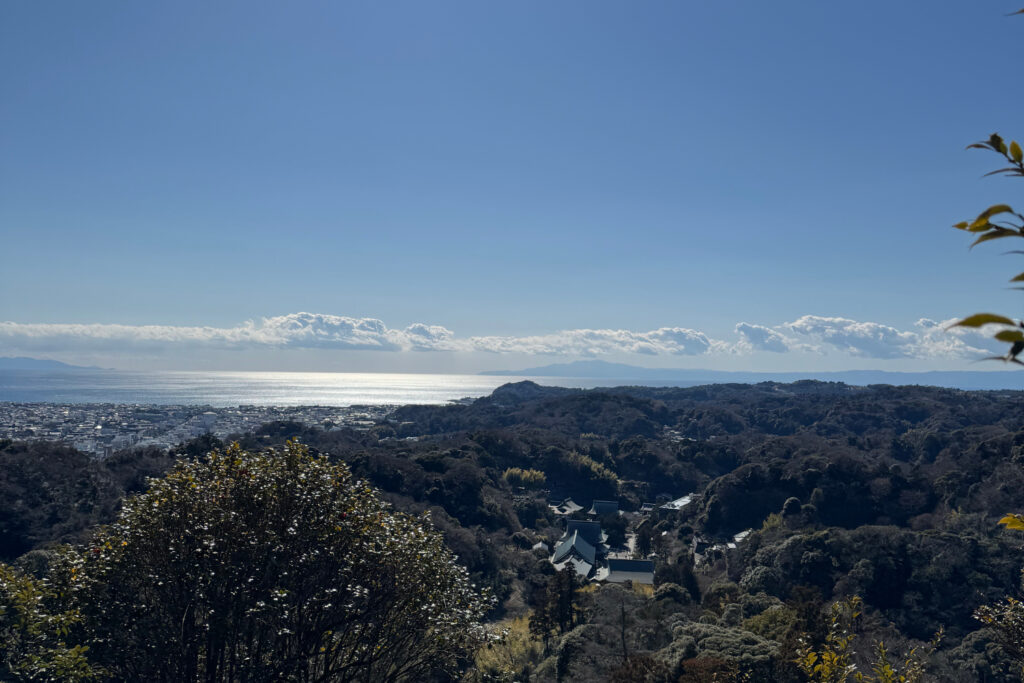
It depends heavily on where the property sits. Kamakura is ringed by hills and cut through with valleys, so elevation and distance from the shore change sharply over short distances. The low-lying beachfront areas do falls within designated tsunami inundation zones, while many homes set back from the coast or on higher ground sit outside them.
Because these designations shift almost street by street, the neighbourhood name tells you little on its own. A property two streets back from the beach may sit outside an inundation zone while a beachfront home down the road does not. Checking the specific address is what matters.
Kanagawa Prefecture and the Kamakura and Fujisawa city governments publish tsunami and flood hazard maps covering the Shonan coast, and these are the reliable way to check a given location. Buyers can review them through the Kamakura City or Fujisawa City hazard-map portals before going further.
Japanese law also builds in a safeguard. Any known hazard-zone status must be disclosed to the buyer before purchase through the important matters explanation (juyo jiko setsumei), a formal step in every qualifying property sale. Buyers should confirm a property’s status in writing through that disclosure rather than relying on a general impression of the area.
What does this lifestyle look like in practice?
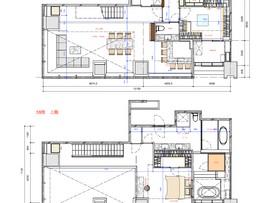
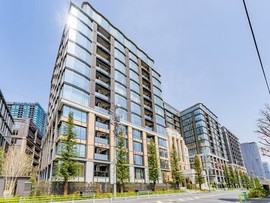
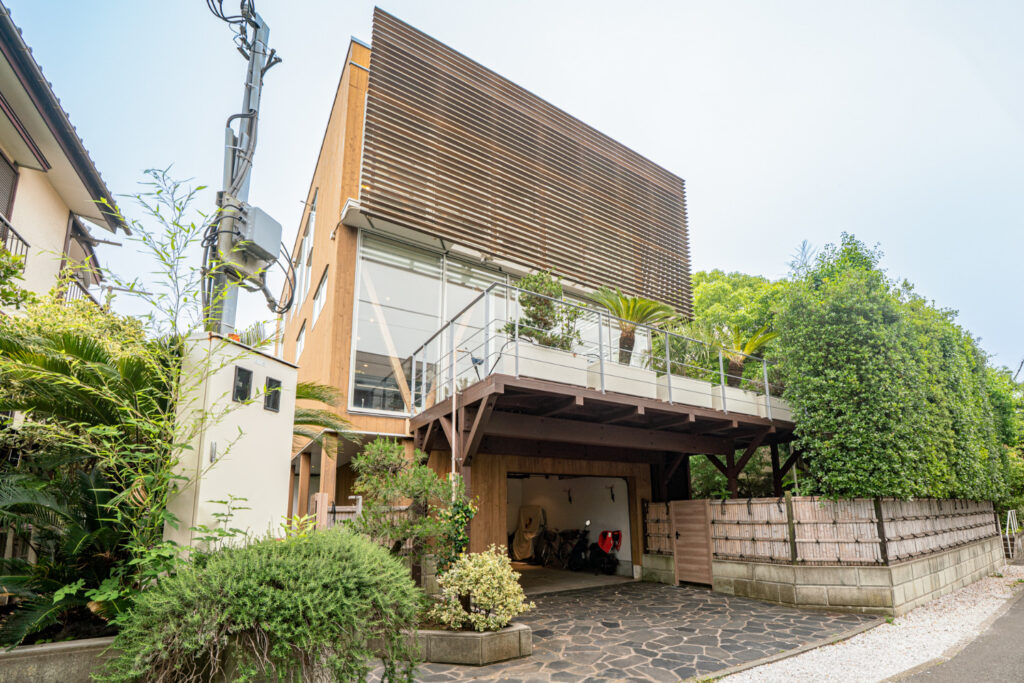
A current Housing Japan listing in Hase, a few minutes’ walk from Yuigahama Beach, shows what this lifestyle looks like in practice. It is a five-bedroom wooden house of about 229 m², set on a 362.82 m² plot, a little under 110 tsubo, with a garden, a pool and a rooftop terrace facing the sea.
The house combines a wood frame with a reinforced-concrete foundation and concrete ground-floor walls, and is arranged around a central atrium that draws daylight through the middle of the home. Central Kamakura Station is a short ride away on the Enoden, and from there the JR Yokosuka Line reaches Tokyo Station in roughly 50 to 60 minutes. This is the sort of space and land that is uncommon in central Tokyo.
Outdoor space is a large part of the design. The rooftop terrace looks over the sea and the garden below and has a jacuzzi set into it, while the ground level has a private pool and a landscaped garden with an automated watering system. On the second floor, the south-west living room opens onto an exterior deck, so the indoor and outdoor space run together. Inside, an open kitchen with an oven, dishwasher and gas hob sits at the centre of the home, and the dining room has a Danish wood-burning stove. Operable skylights above the atrium and openings to the north and south allow natural ventilation, and solar panels on the roof contribute to the home’s energy use.
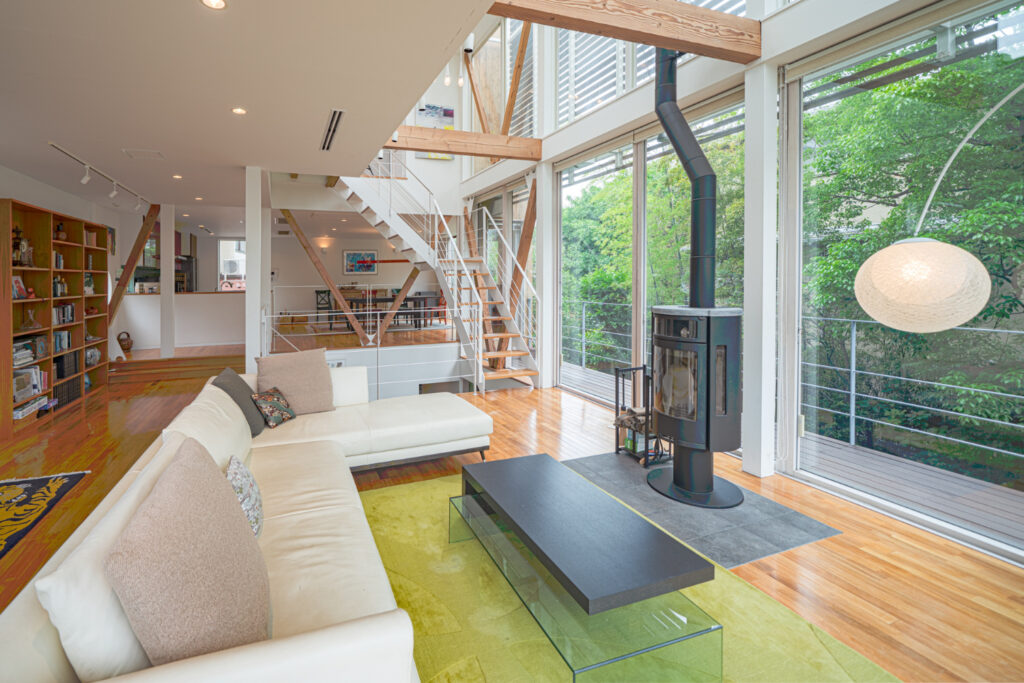
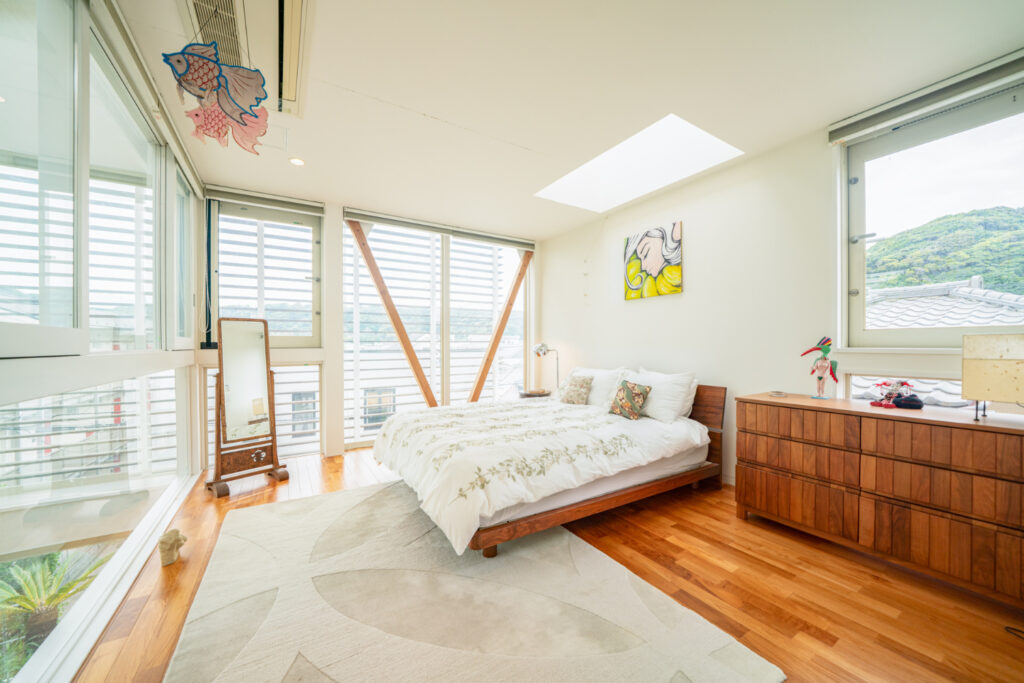
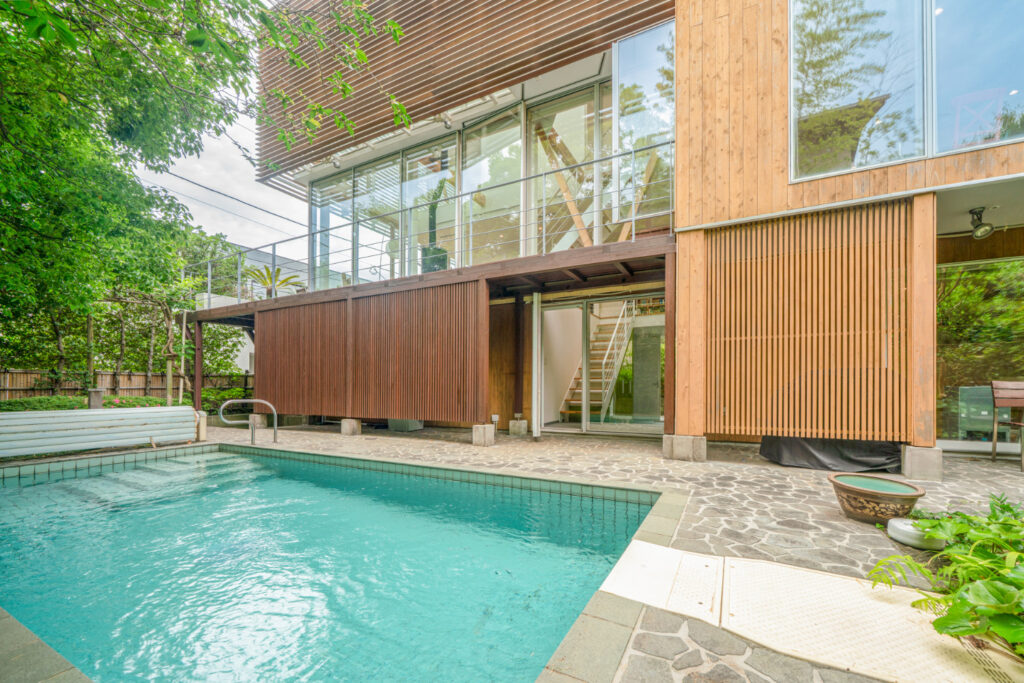
For a family, this is the practical version of the dual-life idea running through this guide: a home with space, a garden and the sea a few minutes away, while a working parent keeps a direct line to central Tokyo. It is one house rather than a category, but it shows what the Kamakura side of that arrangement can look like. Price is available on the listing page. To see more or arrange a viewing, visit the Kamakura (Hase / Yuigahama) listing or contact Housing Japan below.
Frequently Asked Questions
How long does it take to commute from Kamakura to Tokyo Station?
The JR Yokosuka Line runs directly from Kamakura Station to Tokyo Station in approximately 50–60 minutes with no transfer required. Exact timing varies slightly by train type and time of day. Because the line passes through Yokohama and Shinagawa, commuters connecting onward to Shinagawa or beyond add only a few minutes on the same train.
Is Enoshima part of Kamakura?
No, Enoshima is a small island administered primarily by neighboring Fujisawa City, not Kamakura City, though it sits directly adjacent to Kamakura and is commonly grouped with it in lifestyle and tourism contexts. The two areas are connected by the Enoden railway and coastal roads, making them function as a single lifestyle zone even though they are separate municipalities.
Is Kamakura a good place to live year-round, or just for weekends?
Kamakura has functioned as a residential city for over a century, not merely a weekend destination, and its direct Tokyo rail access makes full-time residence practical for commuters and remote/hybrid workers alike. It also retains a strong tradition as a second-home and retreat location for Tokyo’s business and creative class, so both full-time and part-time living patterns are well established.
Can you own a home in both Tokyo and Kamakura?
Yes. Living across two bases is common enough in Japan that the government gave it a legal definition in 2024 (二地域居住, or dual-region living). One version pairs a compact central-Tokyo apartment for weekday work and school with a larger Kamakura home for weekends and remote-work days, with the direct 50–60 minute JR Yokosuka Line linking the two.
Are Kamakura property prices comparable to central Tokyo?
On a per-square-metre basis, residential land in Kamakura averages around ¥249,000 (2026), against roughly ¥703,000 in Suginami and ¥783,000 in Nakano, about a third of those mid-tier Tokyo wards. For a comparable budget, that lower land cost can mean more space, a garden, or a larger plot. These are area averages from MLIT’s land price publication, not transaction prices, and Kamakura itself varies widely. Proximity to Kamakura Station, a sea view, and whether a plot sits in a hazard or historic-designated zone all move the price sharply. Two homes a few streets apart can differ substantially, so any comparison is best made property by property rather than on broad averages.
Do foreign buyers purchase property in Kamakura and Enoshima?
Yes, a growing number of foreign buyers and long-term residents in Japan are purchasing property in Kamakura and Enoshima, drawn to the combination of beach lifestyle, historic character, and direct Tokyo rail access. This mirrors a broader pattern of foreign interest in Japanese lifestyle-driven real estate outside central Tokyo, though buyers should still confirm financing, disclosure, and residency-related requirements specific to their situation.
Sources: