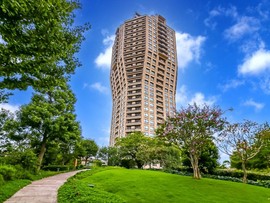
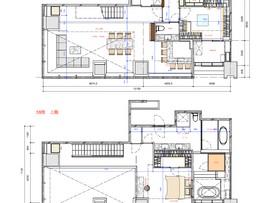
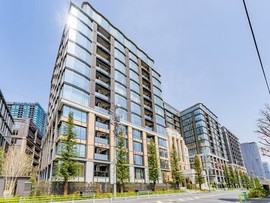
Nagoya is Japan’s fourth-largest city and the economic engine behind Toyota, Denso, Aisin, and Mitsubishi Aircraft. Its luxury residential market concentrated in Chikusa-ku, Showa-ku, Higashi-ku and Higashiyama, trades at a material discount to comparable Tokyo addresses, supported by deep corporate demand and an incoming maglev connection to Tokyo.
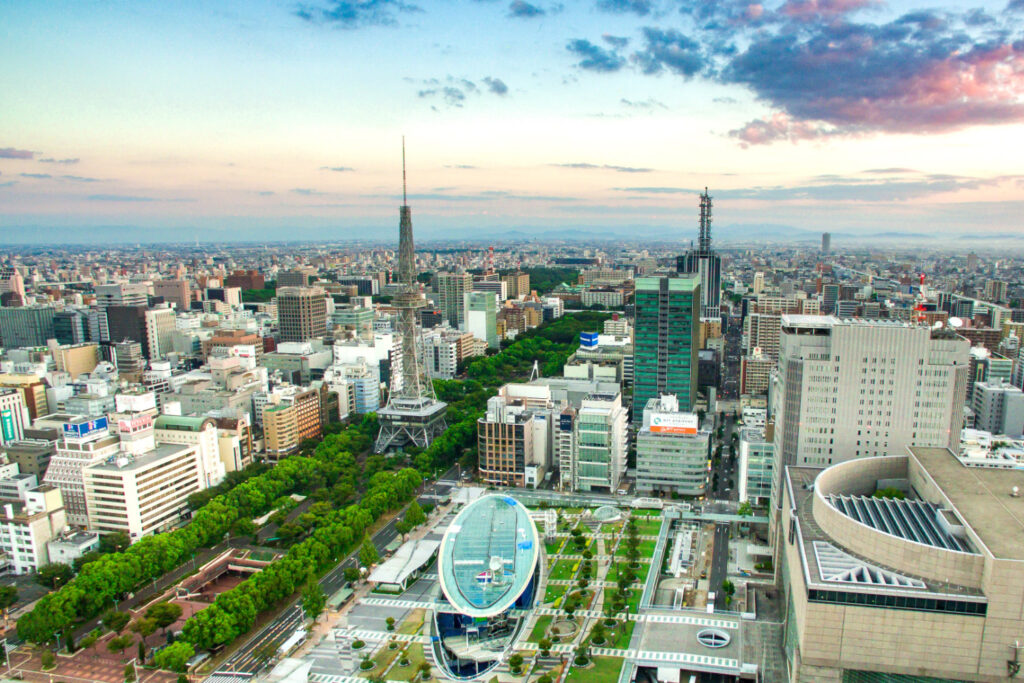
Key facts about Nagoya’s property market
- Nagoya is the capital of Aichi Prefecture, which has recorded the highest value of manufactured goods shipments of any Japanese prefecture every year since 1977 (Aichi Prefectural Government)
- Toyota Motor Corporation, Denso, Aisin, and Mitsubishi Aircraft are all headquartered in or near Nagoya
- Chikusa-ku, Showa-ku, and Meito-ku recorded zero declining residential land price points in the post-2011 recovery period, according to Ministry of Land, Infrastructure, Transport and Tourism (MLIT, 国土交通省) data
- Approximately 74% of all residential survey points in Nagoya City showed price increases or stability in the 2023 MLIT land price survey, versus roughly 12% the prior year
- The Linear Chuo Shinkansen maglev will connect Nagoya and Tokyo in approximately 40 minutes when completed No earlier than 2035
- Nagoya’s premium residential districts price broadly 50% or more below comparable Tokyo addresses, widening to 80%+ against Tokyo’s ultra-prime areas, based on 2024–2025 public land-price surveys (国土交通省 地価公示 / 都道府県地価調査)
What is the Toyota economy, and why does it make Nagoya a notable property market?
Nagoya and the wider Aichi Prefecture form the industrial and corporate backbone of Japan’s automotive and aerospace supply chain. The concentration of major employers, Toyota, Denso, Aisin, and Mitsubishi Aircraft, creates a large, stable population of high-earning professionals who drive consistent demand for premium residential property.
One important distinction worth making from the start: Nagoya is not Toyota City. Toyota-shi is a separate municipality around 30 kilometres to the east, where the main production facilities sit. Nagoya is the regional capital, the management and executive hub where senior employees live, entertain, and send their children to school. Think of the difference between a factory town and the city where its leadership class builds its life.
Aichi has recorded the highest value of manufactured goods shipments of any Japanese prefecture every year since 1977, and manufacturing makes up about 35% of the prefecture’s GDP (Aichi Prefectural Government). What MLIT data adds is that the West Mikawa region, covering cities like Kariya and Anjo, home to Denso and Aisin, shows a residential land market characterised by what MLIT describes as firm, stable movement (堅調な動き), driven directly by employees of major automotive manufacturers.
The result is a luxury residential market underpinned by corporate rather than speculative demand. That is a meaningfully different profile from Tokyo’s premium segment, which can be more sensitive to finance cycles and international capital flows. Nagoya is, in a practical sense, the city where the people who run Japan’s industrial economy actually live.
What is ‘Nagoya-jin’ culture, and why does it create a less visible luxury property market?
Nagoya’s established residents have a cultural identity distinct from Tokyo or Osaka. The term Nagoya-jin (名古屋人) refers to this regional character, and one of its most relevant traits for property is a combination of serious long-term wealth accumulation alongside understated lifestyle display. This is old manufacturing and supplier family money, multigenerational, quietly held, and not interested in advertising itself.
In practical terms, this means Nagoya’s premium residential market is largely invisible to outside observers. Properties in established neighbourhoods frequently change hands through introductions, through established agent networks, and through relationships built over years. They are not typically marketed internationally.
This is not a weakness in the market; it is a structural feature of it. Contrast this with Tokyo, where luxury property is globally visible, actively marketed to international buyers, and priced to reflect that exposure. Nagoya luxury is domestic and quiet by disposition. For an international investor or relocating executive, that means access depends heavily on having a trusted local intermediary with the right connections.
It also means Nagoya has stayed almost entirely off the radar of international real estate commentary. For those paying attention, that gap between reality and perception is itself worth noting.
How have Nagoya property prices performed, and how do they compare to Tokyo?
Nagoya’s premium residential districts have moved from broad decline to broad stability and selective appreciation over the past decade. The shift visible in recent MLIT data is significant.
According to the MLIT land price survey, approximately 74% of Nagoya City residential survey points showed price increases or stability in 2023, compared to roughly 12% the prior year. The average residential land price change across the city was -0.1% in 2023, versus -1.4% the year before, a substantial improvement in momentum. In raw terms, 12 survey points showed rising prices in 2023 against just 5 the prior year, while 87 points held stable compared to only 10 previously.
Chikusa-ku, Showa-ku, and Meito-ku, Nagoya’s established premium residential districts, recorded zero declining price survey points in the post-earthquake recovery period. MLIT specifically describes these areas as zones with high residential demand (住宅地として需要が高い). This is not a distressed or recovering market. It is a maturing one with clear premium pockets that have shown consistent resilience.
How does this compare to Tokyo? The gap is wide, and it widens the more prestigious the Tokyo address. Using public land-price data (国土交通省 地価公示 and 都道府県地価調査, 2024–2025 valuations), Nagoya’s premium residential districts sit at roughly half the level of an established Tokyo address like Denenchofu, and at a fraction of Tokyo’s ultra-prime neighbourhoods such as Hiroo and Minami-Aoyama.
| District | Residential land (¥/sqm) | Basis |
|---|---|---|
| Chikusa-ku, Nagoya | ~¥317,000 / ~¥352,000 | 公示 2025 / 基準 2025 |
| Showa-ku, Nagoya | ~¥327,000 / ~¥336,000 | 基準 2025 / 公示 2026 |
| Meito-ku, Nagoya | ~¥218,000 | 基準 2025 |
| Denenchofu (Ota), Tokyo | ~¥781,000 | combined avg, 2024 |
| Hiroo (Shibuya), Tokyo | ~¥1,660,000 | 公示 2025, residential |
| Minami-Aoyama (Minato), Tokyo | ~¥4,470,000 | 基準 2025, residential |
Figures are indicative averages from the 2024–2025 公示地価 (MLIT, 1 January) and 都道府県地価調査 (prefectural survey, 1 July) datasets; the Nagoya ward figures blend a range of locations within each district. On these numbers, Chikusa-ku sits around 55% below Denenchofu, roughly 80% below Hiroo, and close to 90% below Minami-Aoyama, a far larger spread than the 30–50% often cited in casual comparisons.
For a broader view of how Tokyo’s premium market is priced, our guide to How much Apartments cost in Tokyo covers the key districts and current price benchmarks in detail.
What are Nagoya’s top luxury neighbourhoods for executives and investors?
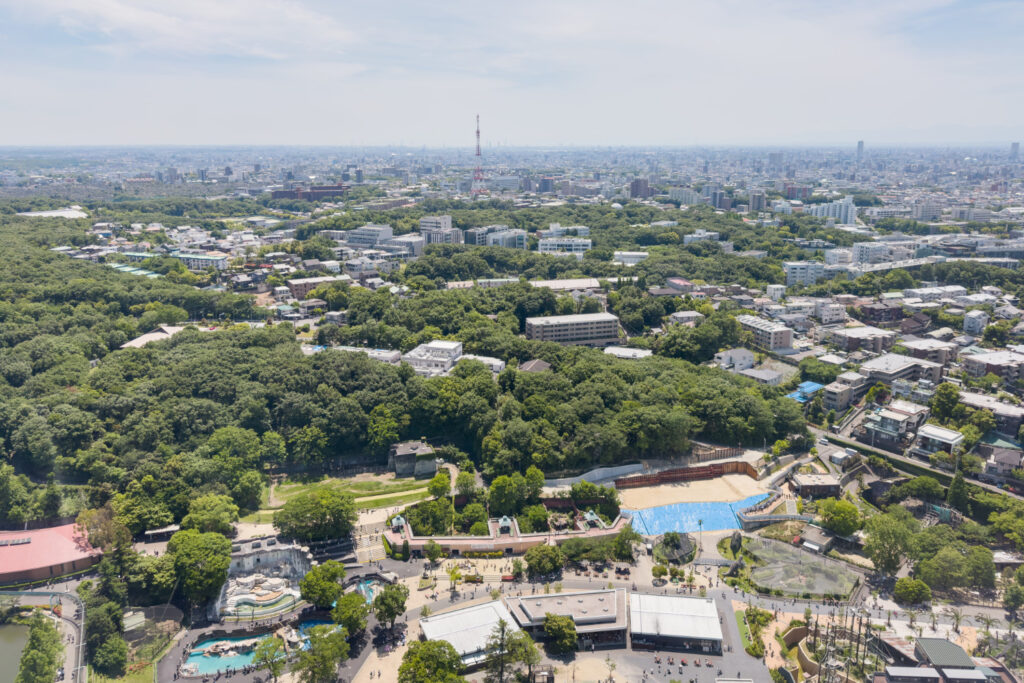
The primary luxury residential districts in Nagoya are Chikusa-ku (including the Higashiyama area), Showa-ku, and Meito-ku. These areas function as Nagoya’s equivalents of Tokyo’s Denenchofu or Hiroo, low-density, green, and home to senior executives and established industrial families.
Chikusa-ku, and particularly the Higashiyama area within it, is among Nagoya’s established residential addresses. It sits close to Higashiyama Park, one of the city’s larger green spaces, and has the low-rise, large-plot character that appeals to buyers looking for space and quiet within easy reach of the city centre. The comparison to Denenchofu in Tokyo is a reasonable one in terms of residential feel and social profile.
Showa-ku is quieter and sits in the mid-city ring, well connected to central Nagoya’s business districts. It attracts professional families who want an established neighbourhood without the higher price premium of Chikusa-ku. Parts of Tokyo’s Setagaya ward offer a loose parallel in terms of residential character.
Meito-ku sits to the east and has a slightly more suburban quality. It is particularly popular with automotive industry executives, in part because road access toward Toyota City and the West Mikawa corridor is straightforward from there. For executives who commute regularly to Kariya or Anjo, Meito-ku offers a practical balance between city access and proximity to work.
According to MLIT data, all three districts, Chikusa-ku, Showa-ku, and Meito-ku, recorded zero declining residential price survey points in the post-2011 recovery, and are specifically characterised as high-demand residential areas.
Beyond Nagoya City proper, Kariya and Anjo in the West Mikawa region are worth noting for investors focused on the Tier 1 supplier executive market. MLIT’s 2023 survey confirms price-increasing survey points are emerging in both cities, driven by the documented residential demand of employees at the major automotive manufacturers based there.
On amenities, the city’s main English-medium international school, Nagoya International School (preschool to Grade 12, IB programmes), sits in Moriyama-ku in eastern Nagoya, within easy reach of the Chikusa, Showa and Meito residential areas, and several international preschools operate within these wards. Healthcare is well covered: Nagoya University Hospital, one of the region’s largest teaching hospitals, is in Tsurumai, Showa-ku, and a number of Chikusa and Showa clinics list English-speaking staff. The Miyoshi Country Club and East Nagoya Country Club are large well equipped golf clubs found east of Nagoya towards Toyota city, both offering large courses, club houses and hosting competitions.
What is the Linear Chuo Shinkansen, and how could it affect Nagoya property values?
The Linear Chuo Shinkansen is JR Tokai’s maglev project connecting Nagoya and Tokyo. When complete, the journey time between the two cities will fall to approximately 40 minutes. Today, the fastest Nozomi Shinkansen service takes around 95 minutes. The estimated completion date of this new maglev bullet train is no sooner than 2035.
The logic for property is straightforward. When high-speed infrastructure cuts travel time between a major capital and a regional city, residential values in that regional city have historically adjusted to reflect the new accessibility. A senior executive could live in a large-plot Chikusa-ku house at a fraction of the cost of a comparable Hiroo or Denenchofu address, while maintaining practical access to Tokyo meetings within a working morning.
That said, the timeline for this project deserves honest treatment. The maglev has faced delays, and any effect on property values depends entirely on the line actually opening. This is a medium-term structural factor worth monitoring, not a near-term certainty, and not a reason to make rushed decisions. Anyone building this into their thinking should follow JR Tokai’s official project communications and form their own view on timing.
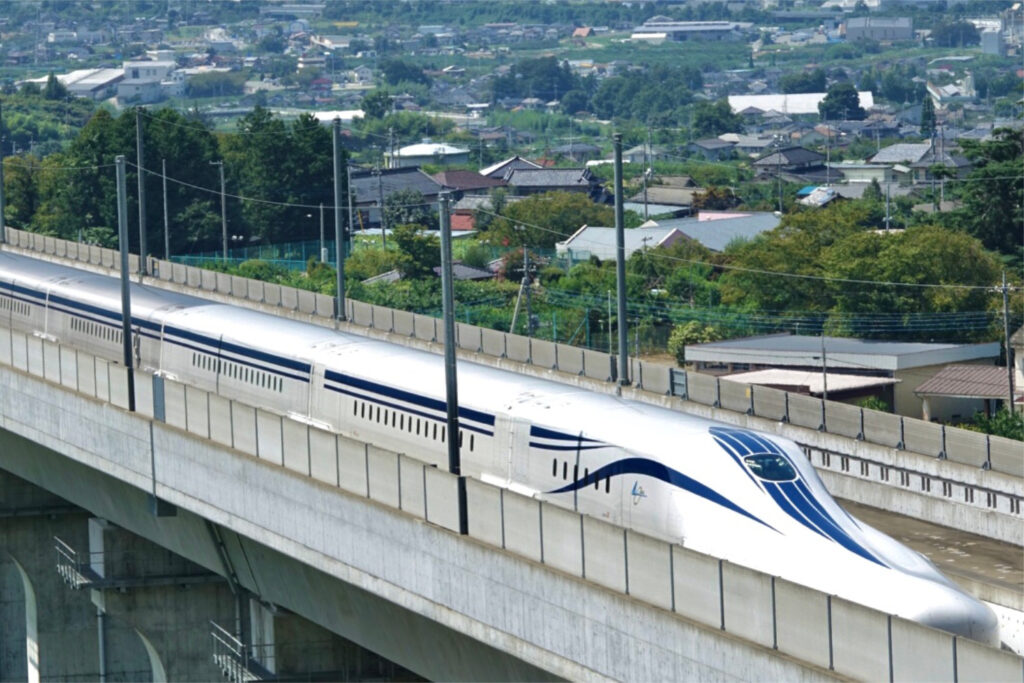
“Series L0-950” by Saruno Hirobano, via Wikimedia Commons, licensed under CC BY-SA 4.0 (https://creativecommons.org/licenses/by-sa/4.0/).
What is the investment case for Nagoya’s upper-tier rental and residential market?
Nagoya’s luxury residential rental market rests on a structural corporate demand base: a large, stable group of senior domestic and expatriate executives employed by Toyota group companies, global automotive suppliers, and the regional aerospace and manufacturing industries. This produces a more predictable occupancy pattern in premium properties than markets driven primarily by tourism or short-term finance cycles.
Toyota Motor Corporation employs approximately 71,515 people in Japan as of June 2026. The broader Toyota group, including Denso, Aisin, Toyota Industries, and affiliated suppliers, extends that employment base considerably across Aichi Prefecture.
Aichi is home to a dense cluster of major automotive suppliers, led by Denso and Aisin, both headquartered in Kariya, alongside JTEKT, Toyota Industries and Toyota Boshoku. Global suppliers also keep a foothold close to their largest customer: Bosch and Continental both run Aichi offices in and around Toyota City, though their Japan headquarters sit in Yokohama. Together this creates steady demand for English-accessible housing from senior domestic and non-Japanese staff.
Corporate lease arrangements, both company-managed housing (shakataku, 社宅) and direct executive-level leases, tend toward multi-year terms with lower turnover than standard retail residential tenancies. MLIT data confirms that residential land values in the West Mikawa automotive corridor remain firm and stable, directly attributed to employee housing demand from the major manufacturers.
On rental yields, Nagoya’s lower entry prices relative to Tokyo’s prime districts generally mean buyers pay less for comparable rental income, which tends to translate into somewhat higher rental yields. This is a structural feature of a smaller, more domestically driven market rather than a sign of weakness. Exact yields vary by property and district and are best confirmed with a qualified local agent or valuer.
Off-market luxury homes in Nagoya with Housing Japan
Much of Nagoya’s premium market never reaches public listings. In established central districts such as Chikaramachi and the wider Higashi-ku, the most distinctive homes often change hands quietly, through trusted networks rather than open advertising. For exciting off-market luxury properties in Chikaramachi, Higashi-ku, and other exclusive areas across Nagoya, contact our sales team. Our multilingual, English-speaking, licensed real-estate agents can help with access to off-market homes and guide you through the full purchase process.
Frequently asked questions
Is Nagoya a good place to buy property as a foreign investor?
Nagoya offers a documented lower price relative to Tokyo in comparable premium districts, a large corporate tenant base, and moving land price momentum. Foreign nationals face no restrictions on purchasing real estate in Japan, though financing conditions and due diligence requirements apply. The Nagoya luxury market is less internationalised than Tokyo’s, meaning access typically requires a locally connected intermediary. The Linear Chuo Shinkansen maglev, when complete, is a structural factor that could narrow the gap between Nagoya and Tokyo residential values over time.
Which are the top neighbourhoods in Nagoya for executives and high-net-worth residents?
Chikusa-ku (particularly the Higashiyama area), Showa-ku, and Meito-ku are among Nagoya’s established residential districts. All three are identified in MLIT government land price surveys as high-demand areas and recorded zero declining price points in the post-2011 market recovery. Executives working in the West Mikawa automotive corridor sometimes prefer Meito-ku or the West Mikawa municipalities themselves for proximity to their workplaces, with Kariya and Anjo both showing emerging price appreciation.
How do Nagoya property prices compare to Tokyo?
Nagoya’s premium residential districts are broadly estimated to be priced below comparable Tokyo addresses, with figures in the range of 30–50% lower commonly referenced. The gap reflects Nagoya’s lower international profile and more domestic buyer base, not a fundamental difference in residential quality in comparable districts. MLIT 2023 data shows Nagoya City residential prices stabilising and selectively appreciating, suggesting the discount may narrow over the medium term.
What is the Linear Chuo Shinkansen Maglev and what does it mean for Nagoya property?
The Linear Chuo Shinkansen is JR Tokai’s maglev project connecting Nagoya and Tokyo in approximately 40 minutes, compared to roughly 95 minutes today. If completed as planned, the journey-time compression would materially increase Nagoya’s appeal as a primary residence for executives with Tokyo-facing careers. The project has faced construction and environmental challenges, and the opening timeline should be confirmed from JR Tokai’s current official guidance. The potential property market impact is a structural consideration rather than a near-term certainty.
Who rents luxury properties in Nagoya?
The primary luxury rental tenant base in Nagoya consists of senior domestic executives and expatriate professionals employed by Toyota Motor Corporation, Toyota group companies, global automotive suppliers, and the regional aerospace and manufacturing industries. Corporate leases, both company-managed (shakataku) and executive direct leases, tend to produce multi-year tenancy arrangements. Global Tier 1 automotive suppliers maintain significant Aichi operations, providing a non-Japanese executive tenant base alongside domestic senior employees.
Can foreigners buy property in Nagoya?
Yes. Foreign nationals face no legal restrictions on purchasing real estate anywhere in Japan, including Nagoya. Standard Japanese purchase procedures apply: due diligence, a licensed judicial scrivener (shiho shoshi) for registration, and real estate acquisition tax based on assessed value. Financing from Japanese banks as a non-resident or non-citizen is more restricted than for domestic buyers, and conditions vary by lender and applicant profile. For a full overview of the purchase process, see our guide to buying property in Japan as a foreigner.