For a foreign buyer, Japan is the most open of the five markets compared here. Foreigners own freehold land and buildings on the same terms as Japanese citizens, pay no foreign-buyer tax and need no approval. Non-residents just have to file one report after the purchase. Singapore charges foreigners 60% extra stamp duty. Mainland China limits them to one home for their own use. Seoul requires a permit and two years’ residence. Hong Kong is open again, but its land is leasehold and its foreign-buyer rules have changed sharply over the past decade.
This page compares the five markets on what matters to a foreign individual buying a flat or house to hold or let: ownership rights, foreign-buyer taxes and permits, bank lending, how often the rules change, rental demand and currency. All rules are as of 6 November 2026.
Japan vs Singapore, Hong Kong, China and South Korea at a glance
| Japan | Singapore | Hong Kong | Mainland China | South Korea | |
|---|---|---|---|---|---|
| What a foreigner can own | Freehold land and building, same as a Japanese buyer | Condominiums without approval; landed houses need Singapore Land Authority approval | Flats and houses on government land leases; no foreign-specific limits | The building plus a 70-year land-use right; one home, for own use | Freehold; a permit is needed across the Seoul capital region |
| Extra tax for foreign buyers | None | 60% Additional Buyer’s Stamp Duty | None since 28 Feb 2024 | No surcharge, but buy-to-let is not allowed | None |
| Approval or permit | None; non-residents file a report within 20 days of buying | Only for landed property | None | Must work or study in China; cities add their own checks | Prior permit in Seoul, most of Gyeonggi and most of Incheon |
| Must the buyer live in it? | No | No | No | Yes | Yes in the permit zone: move in within 4 months, stay 2 years |
| Bank lending | No government cap; up to 80% of valuation for foreign residents, and 65 to 70% for non-residents through specialist and overseas lenders | Government cap of 75% on a first loan | Government cap of 70% for all residential property | Generally needs local income | Government cap of 40% in regulated Seoul areas |
| Foreign-buyer rule changes since 2023 | Reporting widened in 2026; nationality-based curbs considered and shelved | Foreign rate doubled from 30% to 60% (Apr 2023) | Extra duty halved (Oct 2023), then abolished (Feb 2024) | National rule unchanged since 2015; local purchase rules change often | Permit zone from Aug 2025, extended to Aug 2027 |
| Rental demand, latest | Tokyo 23-ward flat asking rents above a year earlier in every size band (Sep 2026) | Private rents up 1.3% in Q3 2026 | Rental index at a record high (Sep 2026) | Not available to foreign landlords | Buyer must occupy for 2 years in the permit zone |
| Currency | Yen floats freely; no capital controls | Singapore dollar managed by the Monetary Authority of Singapore | Pegged to the US dollar at HK$7.75 to 7.85 | Renminbi not freely convertible | Won floats |
| JLL Transparency Index 2026 rank (of 88) | 12th | 13th | 14th | 30th (Tier 1 cities) | 24th |
The JLL Global Real Estate Transparency Index, published every two years by JLL and LaSalle Investment Management, ranks 88 countries and territories on 260 factors, including the quality of market data, the legal and regulatory framework and how property transactions are carried out.
Singapore: open to foreigners, but taxed at 60%
Singapore lets foreigners buy private condominiums without approval, then makes it expensive. Since 27 April 2023, a foreign individual pays 60% Additional Buyer’s Stamp Duty (ABSD) on any home, on top of normal buyer’s stamp duty. On a S$2 million flat, that is S$1.2 million of extra tax before any rent comes in.
The rate has only gone up since ABSD started at 10% in December 2011: 15% in 2013, 20% in 2018, 30% in 2021 and 60% in 2023. Landed houses need approval from the Singapore Land Authority, which decides case by case (Sentosa Cove has a separate route). Banks can lend up to 75% on a first loan. Private rents rose 1.3% in the third quarter of 2026.

Hong Kong: no foreign-buyer tax since 2024, but the rules swing
Hong Kong now treats foreign buyers the same as local buyers. On 28 February 2024 it abolished the Buyer’s Stamp Duty on non-permanent residents, along with the other extra duties. That levy had been 15% from 2012 and was halved to 7.5% only four months before it went. The Hong Kong Monetary Authority has allowed loans of up to 70% on all residential property since October 2024, and it no longer cuts the limit for borrowers whose income comes from outside Hong Kong.
Rental demand has kept climbing, with the official rental index reaching a record 212.2 in September 2026, its 11th monthly rise in a row, and prices were up 9.3% on a year earlier. Land is held on government leases rather than freehold. The currency peg ties Hong Kong interest rates to US rates.

Mainland China: one home, for your own use
Mainland China is the most restricted of the five for a foreign investor. All urban land belongs to the state, so a buyer owns the building plus a land-use right, which runs for 70 years for residential land. A 2015 national notice allows foreigners who work or study in China to buy housing for their own use. Cities with purchase limits add their own conditions; in Shanghai that typically means about a year of local tax or social insurance records.
The self-use rule means a foreign individual cannot buy a flat to let. Prices are also still falling: new home prices across 70 cities were 2.8% lower in September 2026 than a year earlier, the 39th month in a row of annual decline. Because the renminbi is not freely convertible, buyers bring money in and take it out through bank and foreign-exchange paperwork.

South Korea: freehold, but a permit and two years’ residence in Seoul
South Korea lets foreigners own freehold property, but since 26 August 2025 a foreign buyer in the capital region needs a permit before signing. The zone covers all 25 Seoul districts, 23 cities and counties in Gyeonggi Province and most of Incheon. Once approved, the buyer must move in within four months and live there for at least two years, so the home cannot be bought to let.
The government extended the zone in August 2026 to 25 August 2027 and added 353 outlying islands. Purchases by foreign nationals in the capital region fell 27% between September and June, compared with the year before. From February 2026, buyers must also disclose their visa status and where their funds come from. Banks cap loans at 40% of value in regulated Seoul areas, and the government-backed mortgage products are for Korean nationals only.

Japan: the same ownership rights as a Japanese buyer
Japan places no nationality, residency or visa condition on buying property, and charges no foreign-buyer tax. A foreign individual or company takes freehold title to land and buildings on exactly the same legal basis as a Japanese citizen. Apartment buyers own their unit plus a share of the land beneath the building. The full rules are in our guide: can foreigners buy property in Japan.
The FEFTA report and the nationality declaration are the only extra steps
The first step applies to non-residents only. Under the Foreign Exchange and Foreign Trade Act (FEFTA), a non-resident who acquires Japanese real estate files a report with the Minister of Finance, through the Bank of Japan, within 20 days of the purchase. There is no minimum size or price. Since 1 April 2026 the report also covers a home bought to live in and a purchase from another non-resident. It is a notification for statistics, not an approval, and a broker or judicial scrivener can file it for the buyer.
The second step applies to every buyer, Japanese or foreign. Since 5 October 2026, any individual who becomes the registered owner of land or a building declares their nationality to the Legal Affairs Bureau. The bureau keeps this as internal search data, and it does not appear on the public register.
Farmland is the exception, read Can Foreigners Buy Property in Japan to find out more.
How stable are Japan’s rules?
In 2026 Japan looked hard at foreign buyers and chose not to restrict them. The government shelved curbs on condominium purchases by foreigners on 1 June 2026, citing the difficulty of targeting buyers by nationality. A transport ministry survey had found that buyers with overseas addresses made up 3.0% of new condominium purchases in Tokyo in the first half of 2025, more than half of the foreigner population which which live there at 5.7%. The 2026 changes added reporting duties; none of them limits what a foreigner may own.
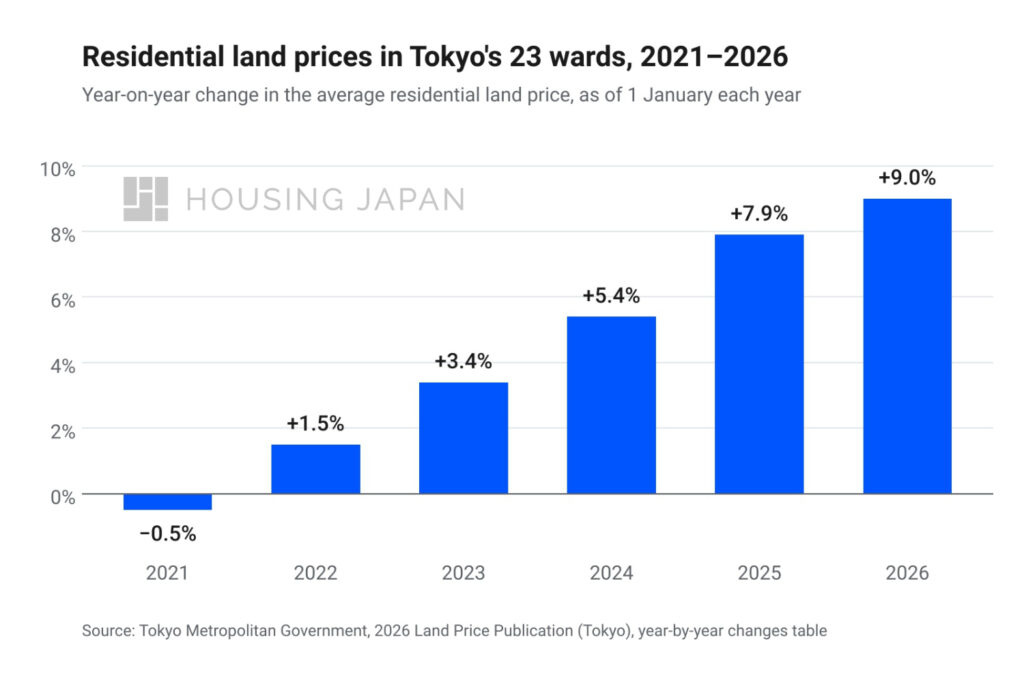
Rental demand in Tokyo has held up: the city gained 65,219 more residents from other prefectures than it lost in 2025. In September 2026, average asking rents for flats in Tokyo’s 23 wards were above a year earlier in every size band. JLL ranks Japan 12th of 88 markets for real estate transparency in 2026, the highest in Asia.
The weak yen also works in a foreign buyer’s favour. The US dollar averaged ¥156.4 in September 2026, against ¥109.8 across 2021, so a dollar buys about 42% more yen than it did five years ago. For a dollar-based buyer, the same yen price costs about 30% less than it would have in 2021. Currencies move both ways, so an owner who later sells and converts back gains if the yen strengthens and loses if it weakens further. The Bank of Japan held its policy rate at 1.25% on 30 October 2026. For lenders and loan terms, see investment property loans in Japan.
What makes a property market safe for a foreign investor?
A market is safe for a foreign investor when the law protects the owner the same way whoever they are, and when the rules are unlikely to change after purchase. Six questions cover most of it:
- Can a foreigner hold freehold title on the same terms as a citizen?
- Can they buy without paying a surcharge or getting approval first?
- Can they let the property, or must they live in it?
- Will banks lend to them, even on stricter terms?
- Do rule changes add paperwork rather than take rights away?
- Are there tenants to rent to, and can money move in and out freely?
Japan is the only one of the five markets where all six answers are yes today. Legal safety does not mean prices only rise, though. Our Japanese real estate investment guide covers the buying process, costs and yields.
FAQ
Can foreigners buy property in Japan in 2026? Yes, foreigners can buy land, houses and apartments in Japan without residency, a visa or government approval, on the same terms as Japanese citizens.
Is Japan banning foreign property buyers? No law or bill limits property purchases by nationality, and the government shelved a proposed curb on foreign condominium purchases in June 2026.
Does Japan charge foreigners extra tax on property? Japan has no foreign-buyer surcharge. Foreign and Japanese buyers pay the same purchase taxes, although non-residents must appoint a tax representative for annual filings. Housing Japan’s Property Management Team can help arrange this.
What do non-residents have to file after buying in Japan? A FEFTA report to the Minister of Finance, through the Bank of Japan, within 20 days of the purchase. Every buyer also declares their nationality when the purchase is registered.
How does Japan compare with Singapore for foreign buyers? Both let foreigners buy flats without approval. Singapore adds 60% stamp duty for foreigners and needs approval for landed houses; Japan adds no tax and needs no approval for any property type except farmland.
Invest in Japan with Housing Japan’s investment sales team
Housing Japan K.K. is a licensed Tokyo real estate brokerage (Tokyo Governor (3) No. 98912) that has worked with Japanese and international buyers since 2000. It is also registered as a Financial Instruments Business Operator (Kanto Local Finance Bureau Director (Kinsho) No. 3522). Our bilingual investment team works in English and Japanese from our office in Azabudai, Minato-ku, and handles investment property across Japan.
We can help you compare buildings and areas, find a lender, deal with the FEFTA report and go through the important matters disclosure (重要事項説明) with you before you sign. Through relationships built since 2000, we may be able to introduce investment properties that are not publicly advertised. Contact our investment sales team today.
About the authors

Maximilian Jacob is Research and Content Lead at Housing Japan K.K., a licensed real estate brokerage in Tokyo (Tokyo Governor (3) No. 98912) that has advised international buyers, sellers and tenants in central Tokyo since 2000. He researches the Tokyo prime residential market using primary Japanese sources, including Ministry of Land, Infrastructure, Transport and Tourism (MLIT) transaction and land price data, National Tax Agency (NTA) roadside land valuations, Bank of Japan policy statements and e-Stat national statistics. His work focuses on foreign buyer procedure, property taxation, non-resident financing, and the Minato, Shibuya and Chiyoda luxury markets.
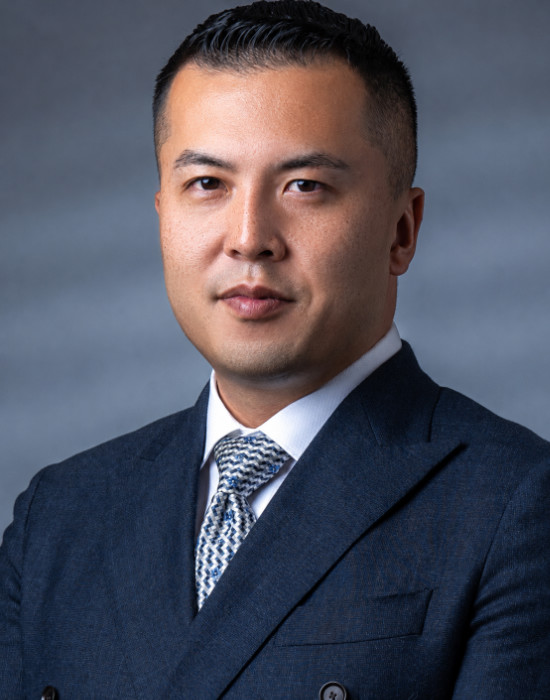
Yudai Yamaguchi is Head of Sales and Head of Property Management at Housing Japan K.K. He has more than a decade of real estate experience across Japan and the United States, spanning development, sales operations, investment, acquisitions, leasing, construction and property management. He previously held management roles at the Open House Group in both countries, including General Manager of its Atlanta office, where he oversaw local real estate operations. He holds a bachelor’s degree in Liberal Arts from Waseda University and studied International Relations at the University of Washington.
Sources
JLL and LaSalle: Global Real Estate Transparency Index 2026
Ministry of Finance: FEFTA real estate report FAQ (Feb 2026)
Ministry of Justice: nationality declaration at registration, effective 5 Oct 2026
SRX: Singapore ABSD history and current rates
Korea Herald: foreign land transaction permit zone extended (Aug 2026)